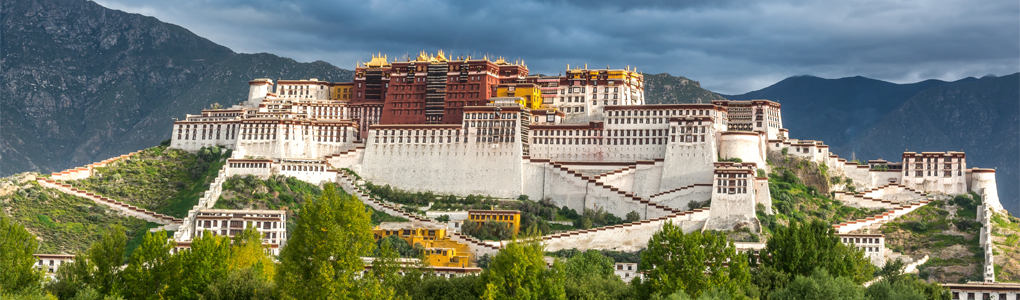
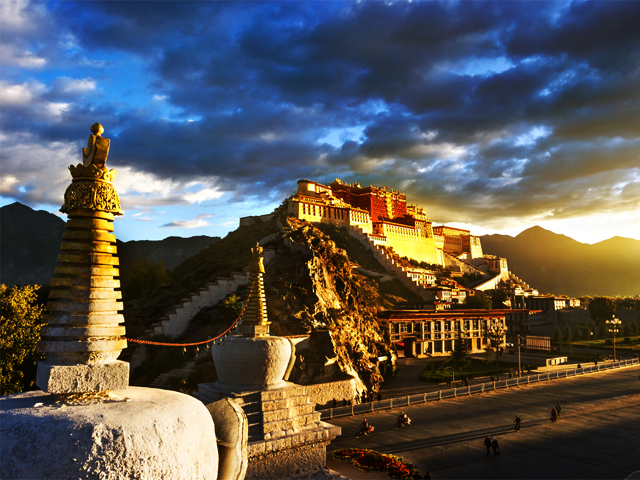
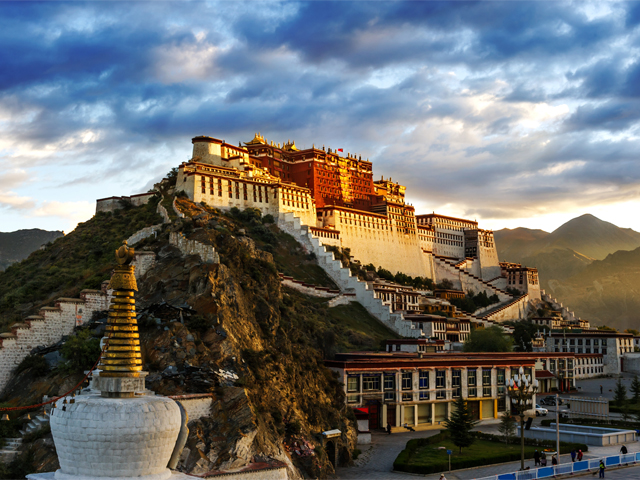
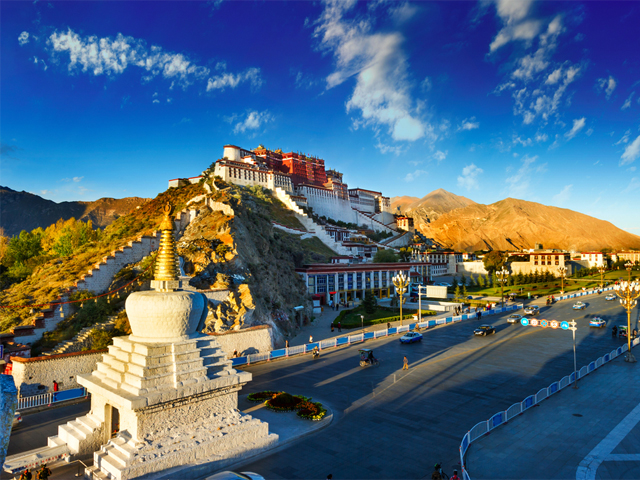
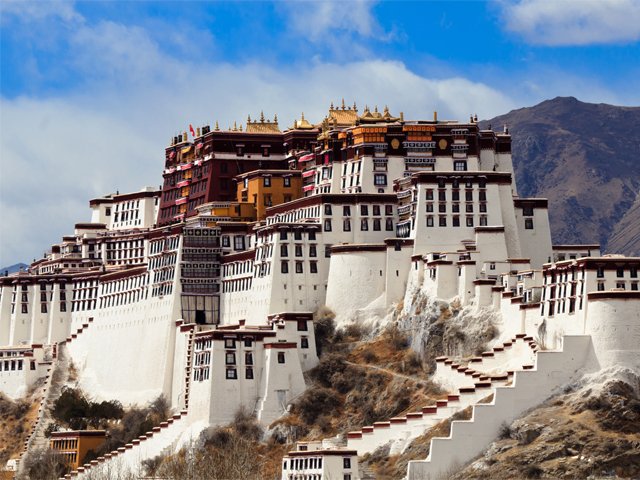
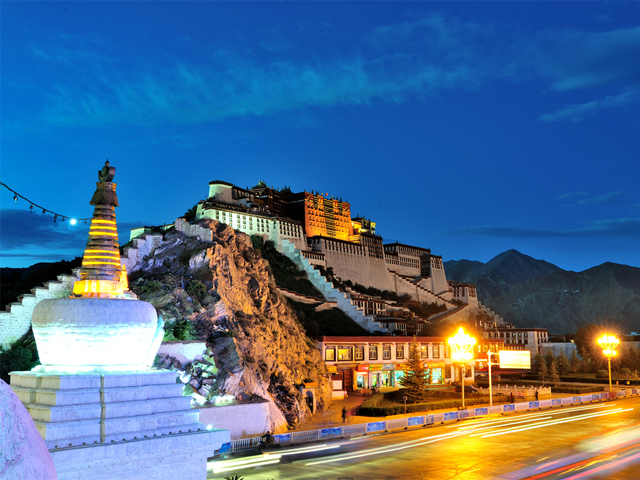
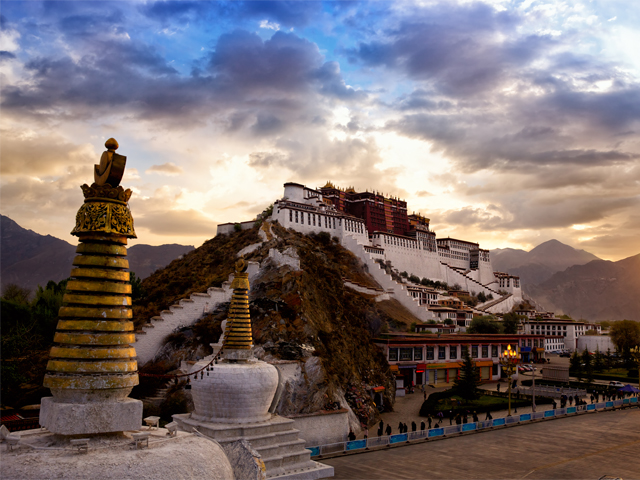
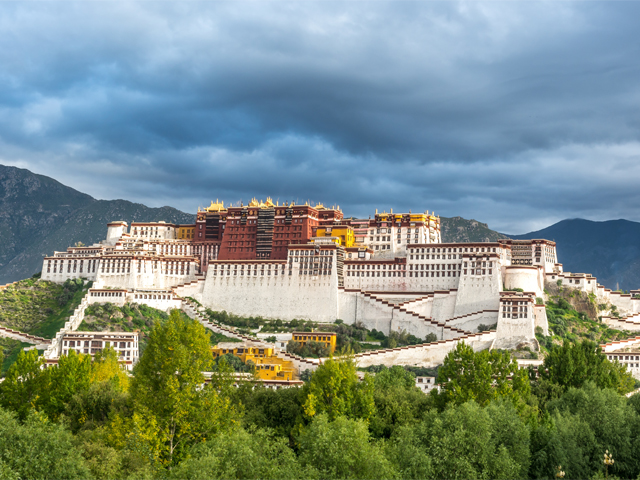
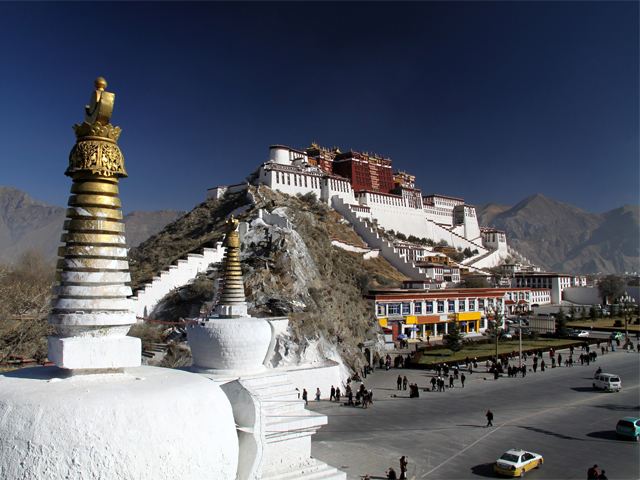
Few buildings announce a place as completely as the Potala announces Lhasa. It climbs the slopes of Marpo Ri, the Red Hill, in thirteen visible storeys of whitewashed stone and deep crimson, and from almost anywhere in the valley your eye ends up on it. For centuries it was the winter palace of the Dalai Lamas and the seat of Tibet's government; the 14th Dalai Lama lived here until he fled to India in the uprising of 1959. Today it is a museum and a World Heritage Site.
The name comes from Mount Potalaka, the mythical home of Avalokitesvara, the bodhisattva of compassion whom Tibetans see embodied in each Dalai Lama. The 5th Dalai Lama began the present palace in 1645, after his adviser Konchog Chophel pointed out that the hill was ideally placed: between Drepung and Sera monasteries on one side and the old city on the other, a seat of government that was both central and commanding. Tradition adds that the site already held a fortress built by King Songtsan Gampo in 637, which would make it a place of power for well over a thousand years.
Inside, the palace divides into the White Palace, which held the living quarters and offices, and the Red Palace, which is given over to chapels, golden stupa-tombs of earlier Dalai Lamas and walls of old murals. Visitors climb a long staircase, so arrive in Lhasa with a few days of acclimatisation behind you; at roughly 3,700 m, the hill makes most people breathe hard. Entry is by timed ticket and visit length is limited, so book ahead in peak season. Many travellers combine the Potala with the Jokhang and Norbulingka on a single cultural day before heading out on the Friendship Highway or to Everest Base Camp on the Tibetan side.
Featured Adventure

Quick Answers about Potala Palace
Where is Potala Palace located?
Potala Palace is in Asia, Tibet, at latitude 27.546425, longitude 88.186243.
When was Potala Palace founded?
Potala Palace dates from 637 and was founded by Songtsan Gampo.