Frequently Asked Questions
About Mera Peak
How high is Mera Peak and what is special about it?
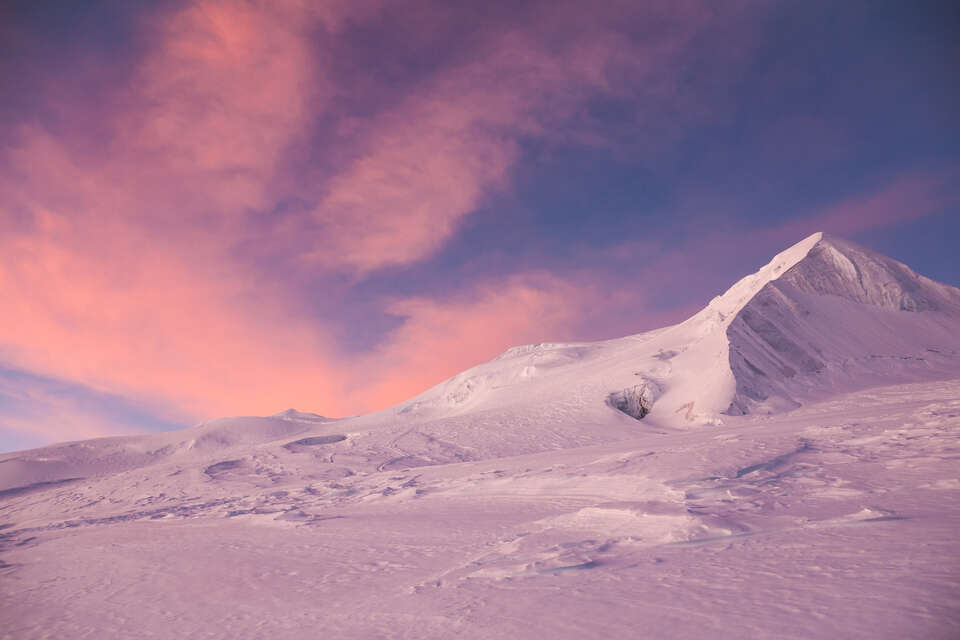
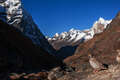
Mera Peak is a trekking peak in the Hinku Valley, listed at 6,476m. It is one of the highest peaks that can be climbed without technical rock or ice skills, and the summit gives panoramas of Everest, Lhotse, Makalu, Cho Oyu and Kanchenjunga on a clear day.
What is the route on this 17-day trip?
After arriving in Kathmandu you fly to Lukla, then cross the Zatrwa La (4,600m) into the remote Hinku valley. You walk via Chutanga, Kothe and Tangnang to Khare, take an acclimatisation day, practise on the glacier at Mera Base Camp (5,300m), sleep at High Camp (5,780m), and summit on Day 12 before returning by the same valley.
Why does Mera Peak feel quieter than the Everest trails?
The Hinku valley has far fewer trekkers and fewer lodges, and the first days cross a pass rather than following the main trail. The scenery is wilder, but facilities are more basic.
How long is the summit day?
Start around 1am from High Camp. Expect about 6 to 8 hours up, a short time on the summit and a long descent back to High Camp or Khare. A strong day for most fit climbers, but very cold.
Difficulty and skills
Is Mera Peak technically difficult?
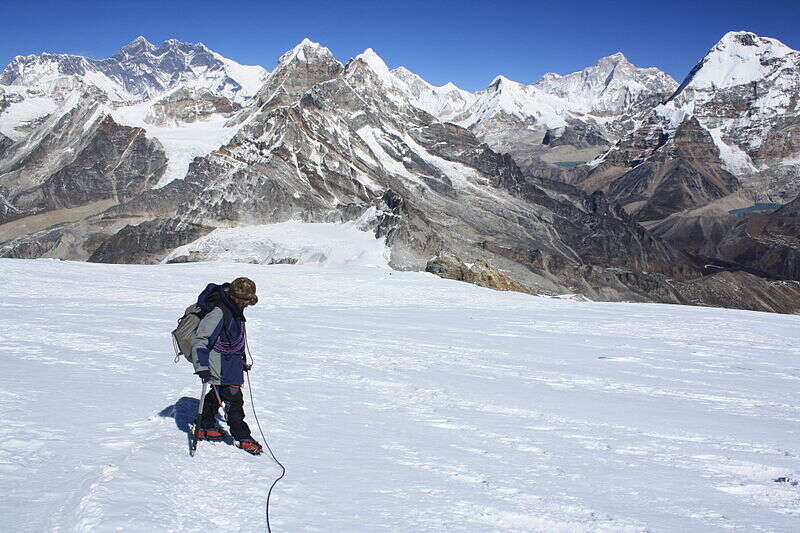
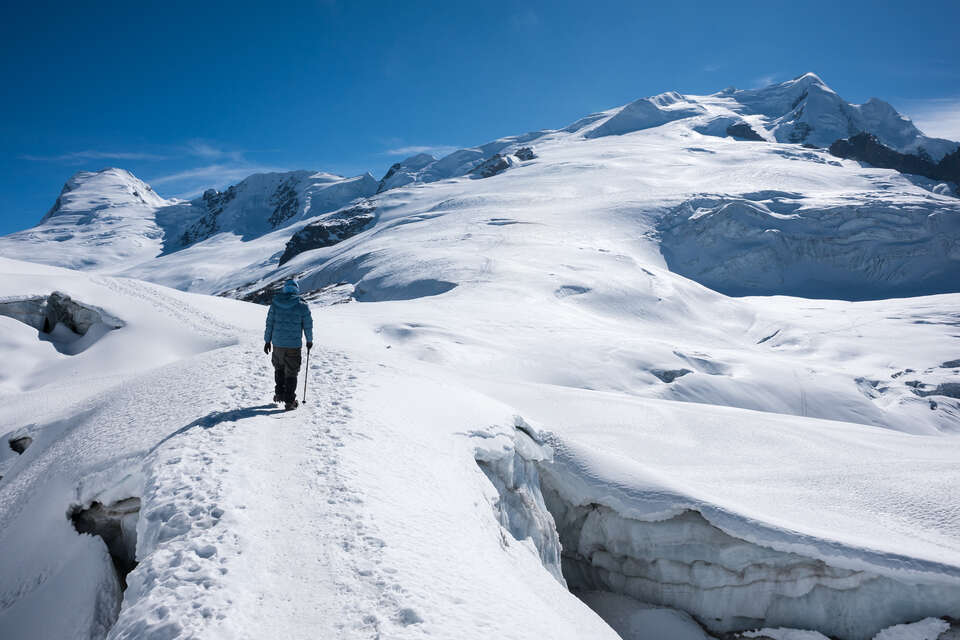
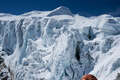
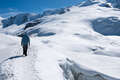
No steep ice or rock climbing is needed, but you will cross glaciers in crampons roped together, so you need basic mountaineering skills, which we teach at Mera Base Camp. The challenge is altitude and cold, not technique.
Do I need previous mountaineering experience?
You do not, but previous multi-day trekking above 4,000m is a significant advantage. If you have never been to altitude, plan some time on high ground before the trip, or consider another trek first.
How fit do I need to be?
You should be able to walk 5 to 7 hours a day for two weeks, carrying a daypack, then manage a long summit day. Three months of regular cardio and hill hikes is a sensible start.
Is Mera Peak harder than Island Peak?
It is longer and higher, with a more remote approach and the highest camp above 5,700m, but its summit slopes are less steep than Island Peak's headwall. Many climbers describe Island as more technical and Mera as more demanding on endurance and altitude.
What is the climber-to-guide ratio?
Two climbers per guide. The guide leads on the glacier, sets the pace and decides whether the team continues. Their decision is final.
Altitude and acclimatisation
How does the itinerary protect me from altitude sickness?
We spread the ascent over several days, with an acclimatisation day at Tangnang (4,350m) before Khare and Base Camp. Sleeping height rises gradually, and High Camp at 5,780m is the biggest single gain. Your guide checks your oxygen saturation daily.
What are the warning signs I must report?
Persistent headache, nausea, dizziness, breathlessness at rest, poor sleep or loss of appetite. Report early. Descending is the most effective treatment, and the guide has the final say.
What if the weather turns bad on summit day?
We wait if there is time, or turn back if conditions are unsafe. Extra days on the mountain are charged at INR 6,000 per day, covering your stay and three meals, and are not guaranteed to produce a better window.
How cold does it get at High Camp?
Night temperatures at 5,780m are commonly minus 15 to minus 25°C, often with wind. Bring a warm sleeping bag, insulated boots and a good down jacket. Rental of a sleeping bag and down jacket is available.
Permits, gear and age
Which permits do I need?
A Mera Peak climbing permit from the Nepal Mountaineering Association, plus the trekking and national park permits listed in your package. We arrange them once we have your passport scan.
What climbing gear is included?
Climbing boots, harness and helmet are in the package, with a baggage allowance of 20 kg (44 lbs) per person. Confirm the full technical list with us, including crampons, ice axe and ascender, before you pack.
Can I rent gear?
Yes. A sleeping bag or a down jacket is about INR 100 per item per day.
Is there an age limit?
Permits are currently issued to climbers aged 17 and over, and younger travellers must follow Nepal's guardian rules. Please confirm before booking.
Flights, camping and meals
Where do the flights leave from?
Lukla flights usually depart from and return to Ramechhap, about 5 to 6 hours by road from Kathmandu, depending on road conditions. Transport is included, and so is your return flight.
What are the accommodation and food like?
Basic teahouses until Khare, then tents at Mera Base Camp and High Camp, where meals are prepared from dried and instant food by your guide's team. Teahouse meals earlier in the trek include dal bhat, noodles and eggs.
Is drinking water provided?
No. Treat water with tablets or a filter, or buy bottled water, which costs about INR 100 to 300 and is only available at some stops. On the mountain your guide boils water.
How much extra money should I carry?
Budget USD 300 to 400 (INR 25,000 to 40,000) for extras and tips. The Hinku valley has few shops and no reliable ATMs, so take cash from Kathmandu. Tipping about 10% of the trip price is customary.
Insurance, safety and your guide team
What insurance do I need for Mera Peak?
Mountaineering cover for a trekking peak above 6,000m, emergency medical treatment and helicopter evacuation. Standard trekking cover often stops at 4,000m. Send a copy of your policy before you arrive and see the insurance section of our terms.
How would a rescue work in the Hinku valley?
Your guide contacts our Kathmandu office, which coordinates with your insurer and a helicopter operator. A rescue can cost USD 5,000 or more and you are responsible for medical and evacuation costs. Keep a hospital report after treatment.
Who are the guides?
Licensed climbing guides, porters and drivers employed by Himalayan Wonders Adventure Pvt. Ltd., our Nepal operator. Read about them on our team page.
What if my Lukla flight is cancelled?
We rebook you on the next flight. A chartered helicopter may be possible at USD 600 or more (INR 65,000 or more), with a USD 150 refund of your flight fare (INR 10,000 for Indian nationals). Extra hotel nights are INR 3,000, 3,500 or 4,500 for single, double or triple rooms. Add two to four buffer days at the end.
Money, booking and cancellations
How do I pay for the Mera Peak climb?
Pay a deposit before you travel. Indian guests pay by bank transfer or UPI, since we do not take credit cards in India. Guests outside India can pay by transfer or online card (4.5% processing fee). You settle the balance at our Kathmandu office on arrival in INR, USD, EUR, GBP or another major currency, at the NPR conversion rate on the date of payment (local conversion charges apply); cards used in Nepal add 13%, so cash is cheaper.
Is my deposit refundable?
50% is refundable for 30 days after you book, and after that it is not. The deposit remains valid for 365 days and can be moved to any trek or climb we offer. If you do not contact us and do not arrive, it is forfeited.
Can I change my climbing dates?
Yes. Rescheduling is free as many times as you need with at least 6 weeks' notice. With 2 to 6 weeks' notice a fee of INR 5,000 (Indian guests) or USD 100 (other guests) applies, and any change needs at least 14 days' notice. You pay any price increase between the old and new date.
What if I leave the Mera Peak trip early?
We cannot refund unused days or services, because the guides and porters are paid for the whole period. We help you return, but extra hotel nights, meals and flight changes are your cost. Some insurers reimburse unused days, so check your policy.
Do I pay extra for a solo climb?
There is no single supplement for rooms. Rooms are shared by gender, and couples, families and friends share together. If you climb solo, meaning you are the only person booked on a fixed departure or you are not joining a group, an additional INR 20,000 is mandatory. It covers your solo climb arrangements and a dedicated porter. We tell you at booking, or as soon as it arises.
 Most popularEverest Base CampThe classic trek to the foot of Everest

 Not sure which trek suits you?Free, no-obligation advice from Nishes and Anand.+91 932 595 1234 WhatsApp Send an enquiry →
 Most popularIsland PeakA classic first 6,000 m climb
 Short on time?Everest View Heli Trek7 days, trek up and fly back