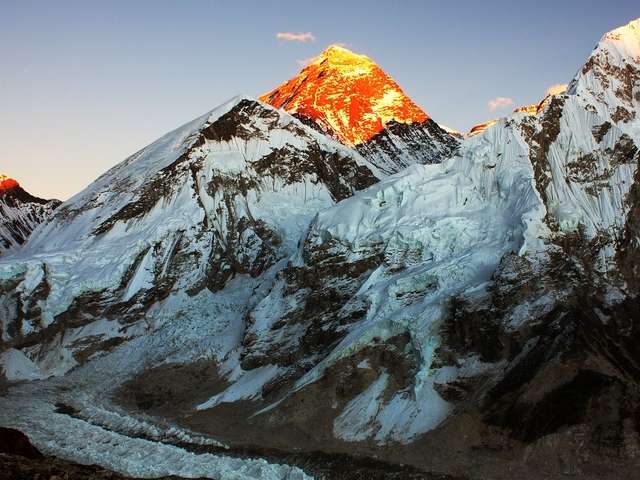
By
Almost every Everest Base Camp trek begins with a short flight to Lukla, a mountain airstrip at about 2,860 m. The flight is short and scenic, but it depends entirely on weather and visibility, so delays and cancellations are common. In busy seasons many flights run from Ramechhap instead of Kathmandu. The most useful things to know are: take an early flight, keep one to four spare days at the end of your trip depending on the season, carry valuables and medicines in your hand baggage, and know your backup options if flights stop.
Flying to Lukla in short
- Airport: Tenzing-Hillary Airport, Lukla, about 2,860 m, with one short runway.
- Flight time: about 30 to 45 minutes from Kathmandu, and about 12 minutes from Ramechhap.
- Best slot: the first flights of the morning, when weather and visibility are steadier.
- Delays: common in every season, most of all in the monsoon and the shoulder weeks.
- Spare days: keep 2 to 4 days at the end, based on the season (table below).
- Backup: helicopters, or a long overland route if flights stop.
Last checked: 28 October 2026. Flight schedules, routes and prices change often, so confirm current details with your operator.

A small aircraft of the type used for Lukla flights.
In this guide: Flight facts | Safety | Early flights | Delays | Spare days | Baggage | Helicopters | Backup options | Insurance | FAQ
What are the key facts about the Lukla flight?
| Fact | Detail |
|---|---|
| Airport | Tenzing-Hillary Airport, Lukla, about 2,860 m (9,400 ft) |
| Runway | One short runway with a slope, ending at a drop to the valley below |
| Flight time | About 30 to 45 minutes from Kathmandu, and about 12 minutes from Ramechhap |
| Aircraft | Small, light aircraft and helicopters only |
| Departure city | Kathmandu or Ramechhap. In busy seasons, most flights use Ramechhap, which means an early road transfer |
| What you see | Terraced hills and one isolated valley after another, then the Himalaya |
| Operating hours | Mornings are the main window. Afternoons are more often closed by cloud and wind |
Read the Lukla vs Ramechhap guide for the transfer, the timing and how to choose. The usual morning start from Ramechhap means leaving Kathmandu in the middle of the night.
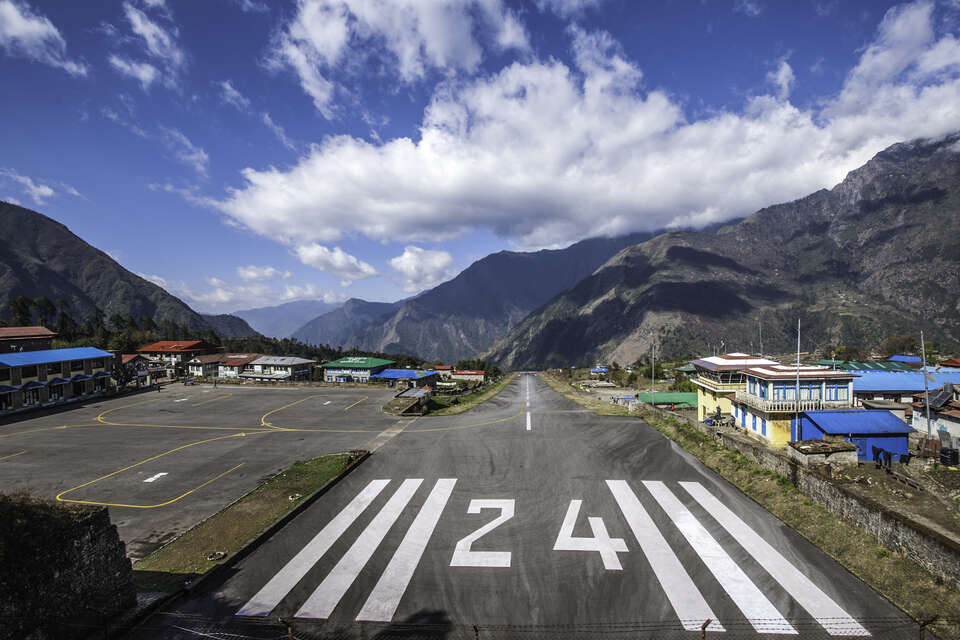
Lukla airstrip, the gateway to the Everest region.
Is the Lukla flight safe?
Lukla has a reputation as one of the most demanding airports in the world, because of the short sloped runway, the single approach and the changing weather. It is more demanding than a typical commercial airport, but the system is built around caution. Airlines and pilots fly only in good visibility, and they turn a flight back at any point if conditions change, rather than risk a landing. That caution is why delays are so common. You can reduce your risk and your stress by choosing a morning flight, staying flexible with your schedule, and carrying proper insurance. If the flight worries you, tell your guide, and consider the alternatives in this guide.
Why does an early flight matter?
Mornings are usually clearer and calmer, and afternoon cloud and wind build up in the valley. The first flights of the day are the most reliable, which is why operators try to book them. Booking early helps: send your passport details as soon as you pay your deposit, because airlines need names and passport numbers to issue tickets. The earlier the booking, the better your chance of an early slot. Your operator will confirm your flight time and pickup before the trek.
What happens if your flight is delayed?
Lukla’s runway ends at a cliff, the approach is through a windy valley, and weather and visibility can change within minutes. Delays happen in every season, and they are most likely in the monsoon, from late May to early September, and on days with low cloud. The usual pattern:
- A delay of a few hours is routine. Carry a book and snacks.
- If your flight is cancelled, your operator rebooks you on the next available flight, which may be later that day or a few days later.
- Aircraft can turn back to Kathmandu even after takeoff if the weather changes.
- Flights do not always run in the order they were booked, so staying close to your operator and the airline desk helps.
How many spare days should you plan?
Spare days belong at the end of the trip, not the start, because a delay on the way back can make you miss an international flight. Base Camp Hikes suggests these guidelines, which have been enough most of the time, though the weather decides in the end.
| Dates | Suggested spare days |
|---|---|
| 10 September to 10 May | 2 days |
| 10 May to 1 June | 3 days |
| 1 September to 10 September | 3 days |
| 1 June to 15 June | 4 days |
| 10 August to 30 August | 4 days |
Monsoon months are not recommended for Everest treks. See the month-by-month guide.
What about luggage and baggage limits?
Domestic flights to Lukla have strict weight limits, and the usual guidance is about 10 kg for the main bag and about 5 kg of hand baggage. Confirm the current limits with your operator before you pack, and leave extra items in a Kathmandu hotel. Occasionally, bags are shifted to a later flight, so keep your valuables, passport, medicines, a warm layer and a charger in your hand baggage. See the packing checklist.
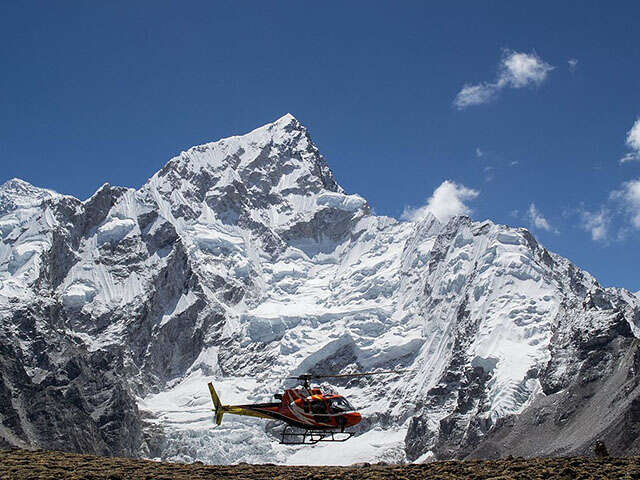
Helicopters can sometimes fly when small aircraft cannot.
Can a helicopter replace the flight?
Helicopters have more flexibility in their approach and can sometimes fly in weather or visibility that grounds small aircraft. Switching is sometimes possible, but it costs more and does not guarantee an on-time departure. In the past, a shared seat has cost roughly USD 400 to 600 extra per person, and prices rise when demand rises. They are often cheapest on clear days and most expensive when many people are stranded. If you are stuck in Lukla, it can be worth asking both your operator and the local office. Ask your operator how the unused fixed-wing ticket is handled if you switch. See the helicopter return guide.
What are your options if flights are cancelled?
The best plan is to keep spare days and wait for clear weather. If you must get out, these are the other routes.
| Option | How it works | Trade-off |
|---|---|---|
| Wait in Lukla | Rebook on the next available flight | Cheapest, but uncertain |
| Helicopter to Kathmandu | Shared or chartered, when available | Expensive and also weather-dependent |
| Helicopter to Phaplu | Shuttles to a lower airstrip near Salleri, then a jeep to Kathmandu | A 10 to 14 hour jeep journey on rough roads |
| Helicopter to Surkhe | A small village below Lukla where helicopters sometimes land when visibility is better | About an hour’s walk up to Lukla |
| Hike out to Salleri | About two long days of walking, then a jeep to Kathmandu | Hard and slow, and the jeep ride is long |
| Trek in from Jiri | Overland on the original route, instead of flying | Adds days and rough trails. See the Jiri trek |
If you have extra days in Nepal, waiting a day at Lukla for the weather to clear is often better than a long, rough overland journey.
Does travel insurance cover Lukla flight delays?
Some policies cover trip interruption that results from a rescheduled or cancelled flight, and may reimburse extra travel costs or a missed connection. Check the exact wording before you travel, because many policies exclude weather delays. Keep airline notices, boarding passes and receipts. Your operator can provide the documents your insurer asks for. Read the insurance guide.
How to make the Lukla flight go smoothly
- Send your passport details to your operator as soon as you book.
- Ask for the first flight of the day.
- Keep spare days at the end of the trip, using the table above.
- Carry valuables, medicines, a warm layer and a charger in your hand baggage.
- Stay in touch with your guide and the operator’s team in Kathmandu on flight days.
- Check your insurance wording for flight delays.
For more on the trek itself, read the training guide, the altitude sickness guide and the tea house trekking guide.
FAQ
How long is the flight to Lukla? About 30 to 45 minutes from Kathmandu and about 12 minutes from Ramechhap.
How high is Lukla? About 2,860 m (9,400 ft).
Why do flights go from Ramechhap? In busy seasons, flights move to Ramechhap to ease traffic at Kathmandu. It adds an early road transfer.
Is it dangerous? It is demanding, so airlines fly only in good visibility and cancel rather than risk it. Choose morning flights and keep spare days.
Why are flights delayed? Weather and visibility change quickly at Lukla. Airlines turn flights back if conditions change.
How many spare days do I need? Two to four at the end of the trip, depending on the season. See the table.
Can I fly in the afternoon? Sometimes, but mornings are more reliable.
How much baggage can I take? Guidance is about 10 kg for the main bag and about 5 kg of hand baggage. Confirm with your operator.
What if my bag is delayed? Carry valuables and medicines in hand baggage. Your operator will help forward bags.
Can I take a helicopter instead? Sometimes, at an extra cost, with no guarantee of an on-time departure.
How much does a helicopter cost? In the past, roughly USD 400 to 600 extra per person. Prices vary with demand.
What if flights are cancelled for days? Wait with spare days, or use a helicopter, a Phaplu or Surkhe shuttle, or an overland route.
Can I avoid the flight completely? Yes, by trekking in from Jiri, but it adds days.
Does insurance cover flight delays? Some policies do. Check the wording and keep airline notices.
When should I send my passport details? As soon as you pay your deposit, so the flight can be booked early.
Fly to Lukla with Base Camp Hikes
For dates and a quote, see the 14-day Everest Base Camp trek, or message the team on WhatsApp or phone at +91 932 595 1234 (9 am to 7 pm IST), write to info@basecamphikes.com, or use the enquiry form.
Sources
- Nepal Tourism Board: safety in the mountains