Small deposit in India. Balance in Nepal.

Island Peak & Everest 18 Days

  • 18 Days
  • Island Peak, Nepal
  • Customizable
  • Small deposit to book
  • Local licensed guides
Upcoming departures

Join our Fixed Departure

  • Oct 30, 2026 – Nov 16, 2026
    18 days · Departure guaranteed
    Rs. 180,000
    10 seats
  • Nov 06, 2026 – Nov 23, 2026
    18 days · Departure guaranteed
    Rs. 180,000
    10 seats
  • Nov 13, 2026 – Nov 30, 2026
    18 days · Departure guaranteed
    Rs. 180,000
    10 seats
  • Nov 20, 2026 – Dec 07, 2026
    18 days · Departure guaranteed
    Rs. 180,000
    10 seats
  • Nov 27, 2026 – Dec 14, 2026
    18 days · Departure guaranteed
    Rs. 180,000
    10 seats

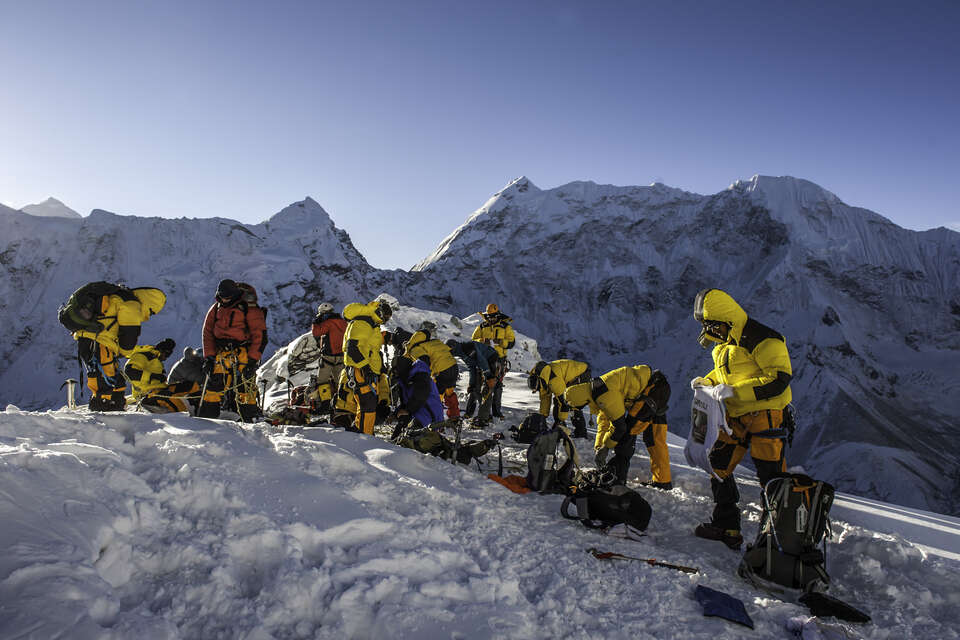
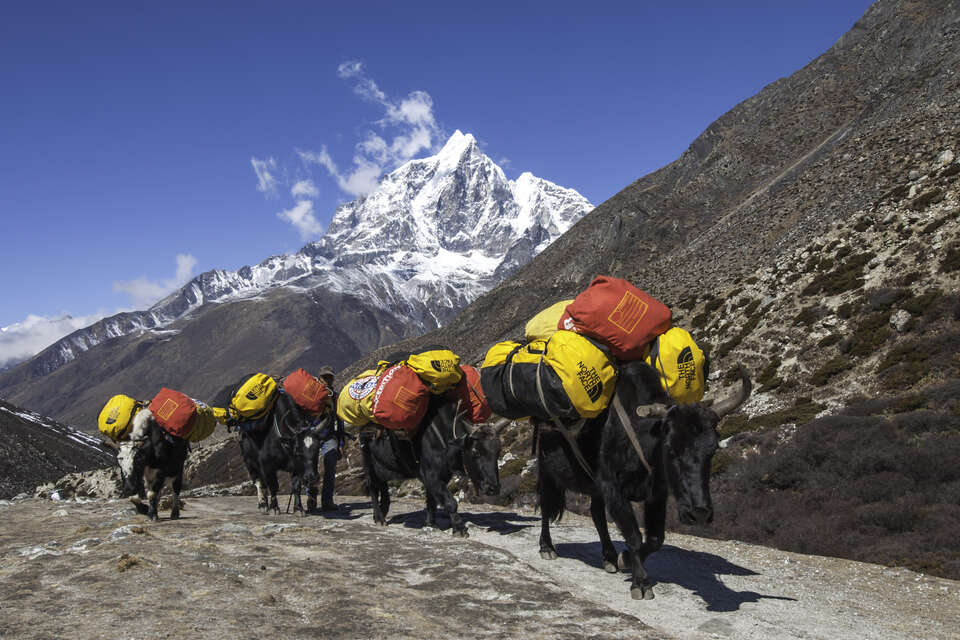
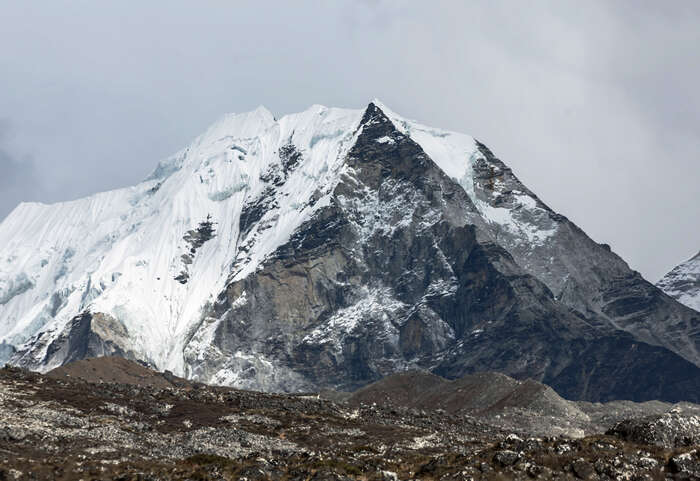
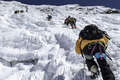
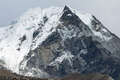
Climb a 6,000m Himalayan peak after trekking to Everest Base Camp. This 18-day Island Peak (Imja Tse, 6,189m) climbing expedition from Kathmandu combines the classic Khumbu trek with a summit attempt, so you gain altitude gradually before the climb. You walk to Everest Base Camp (5,364m) and Kala Patthar (5,545m), then break away at Dingboche for Chhukung and Island Peak Base Camp, where Sherpa guides train you with the ice axe, crampons and fixed ropes before a midnight summit push.

Island Peak is the most popular of Nepal's designated trekking peaks and a common first step for climbers with bigger ambitions. No prior climbing experience is required, though fitness matters. Guides are experienced Sherpas, the ratio is two climbers to one guide, and climbing gear, including boots, is part of the package.

What's Included?

  • Airport pick-up and drop-off
  • 18 day adventure, 14 of which include 3 meals a day
  • 3 nights in a Kathmandu hotel, breakfast included
  • Flights between Kathmandu or Ramechhap and Lukla *
  • All Climbing Gear (Including boots, harness and helmet)
  • 20kg baggage allowance in flight and during trekking
  • Licensed English-speaking trekking guide
  • Licensed English-speaking climbing guide
  • Porter service
  • All applicable trekking and climbing permits
  • All local and government taxes
  • Farewell dinner in Kathmandu
  • Trek completion certificate
 
* Lukla flights can be delayed: read how we handle delays
* Travel insurance is required on every trek: see what cover you need
* Extra Fees for Solo Travelers: see the solo traveler details

Day 1 - Kathmandu: Arrival Day

Altitude: 1,350m/4,428ft

Welcome to Kathmandu, the capital and cultural hub of Nepal! We'll be waiting with a warm greeting and easy transfer to your hotel. Take a rest after the long flight and explore Thamel the hub of Kathmandu.

Day 2 - Kathmandu: Preparation

Altitude: 1,350m/4,428ft

Today our team will meet with you in the early afternoon to review the gear you have brought and to take you to the gear rental shop. We will make sure you have quality climbing boots that fit well before you head off to the mountain. Plan on an evening briefing on last-minute specifics about your trek and an early lights-out: you have a big day ahead.

Day 3 - Kathmandu to Lukla Flight and Phakding

Altitude: 2,800m/9184ft (Lukla) & 2,652m/8,698ft (Phakding)
Walking Distance: 8km (3-4 hours)
*

Flight time: 15 min from Ramecchap
Drive time: 4 hours & 30mins (Kathmandu to Ramecchap)

After a short morning flight to Lukla, you'll be introduced to your guide and porter. Kick off your trek with an easy walk through Chaurikharka village and descent towards Dudhkoshi Ghat (2,530m/8,300ft). The trail follows the bank of the Dudhkoshi River until Phakding (2,652m/8,700ft), where we will be staying for the night to acclimatize. Enjoy your free time in Phakding, a popular stopping point.

Please Read: Lukla Flights are departing and returning to Ramechhap instead of Kathmandu due to ongoing upgrades at Kathmandu Airport. Its about a 4 hour drive to Ramechhap from Kathmandu so we will get started for the airport around 2 am. The return drive at the end of the trek is between 4 and 6 hours depending on traffic.

Day 4 - Phakding to Namche Bazaar

Altitude: 3,440m/11,283ft
Walking Distance: 10-12km (5-6 hours)

We'll have breakfast in Phakding before gearing up for the trek to Namche Bazaar, the biggest sherpa village in Nepal. Our trail takes us first over the Dudhkoshi River via a long suspension bridge, and then through a beautiful pine forest to Monjo, about two hours away. Soon thereafter, we will approach the entrance to Sagarmatha National Park for a brief permit check and then descend to Dudh Kosi River (spotting Mani stones along the way!) en route to Jorsale. Lunch will be served here, and then it's uphill to Namche. Our path along the riverbank is flanked by two crossings, one of which is the Hillary Suspension Bridge. It's a tough climb up the hill to our resting place, but you'll be rewarded in Namche Bazaar with your first glimpse of Everest in its majesty.

Day 5 - Namche Bazaar: Rest and Acclimatization Day

Altitude: 3,440m/11,283ft

At this point, we take a well-deserved break! Today will be spent resting and allowing our bodies to become acclimatized to the lofty altitude. There's an optional 2 hour hike to Everest View Point, an uphill walk that will help speed acclimatization. Otherwise, spend the day exploring Namche Bazaar. Check out the Sherpa museum for an overview of the Sherpa culture and history of mountaineering. On Saturdays, the Hatt Bazaar is open for trading and an intimate look at the locals' marketplace. It is part of the larger Namche Bazaar, a shopping hub filled with all manner of trekking and mountaineering clothing and equipment.

Day 6 - Namche Bazaar to Debouche/Melingo

Altitude: 3,700m/12,139ft
Walking Distance: 10km (6 hours)

Breakfast in Namche Bazaar fuels us for another day of trekking towards Everest Base Camp today! Breathtaking views of the Himalayas - Everest, Nuptse, Lhotse, Ama Dablam, Thamserku and Kwangde - are some of the highlights not to be missed. Our destination, Phortse, is known as one of the most beautiful places in the Everest region. Its views, which include Ama Dablam, are legendary.

Day 7 - Debouche/Melingo to Dingboche

Altitude: 4,400m/14,435ft
Walking Distance: 11km (6 hours)

The trail today parallels the canyon of the raging Imja Khol River with its glacial blue waters. It's a gradual climb up to the village of Pangboche, the biggest settlement of Sherpas in the region. Enjoy a great opportunity to observe a typical Sherpa village and have lunch with the locals! The intrepid can brave a brief hike to the Pangboche monastery, one of the oldest in the area. Our afternoon trek will be a difficult one, as the landscape gives way to dry, deserted mountains and we hike towards Dingboche.

Note: Depending on trail conditions and tea house availability we may take the route on the other side of the river through Phortse. This trail diverges after Namche on Day 5 and basically parallels the trail to Debouche but on the opposite side of the river. The two trails merge back together in Pangboche.

Day 8 - Dingboche: Rest and Acclimatization Day

Altitude: 4,400m/14,435ft

This is your chance to rest up before the last leg of our adventure! Savor a full day of exploring Dingboche and the surrounding valleys of Chhukung and Imja, the latter of which links with Island Peak, the high passes of Amphu Laptsa, and Makalu Barun National Park. Taking an optional trek to the valleys will pay off in rewarding views, but taking it easy is the most important thing today. You'll need your rest for the penultimate day of ascent tomorrow.

Day 9 - Dingboche to Lobuche

Altitude: 4,900m/16,076ft
Walking Distance: 11-12km (6-7 hours)

The next part of our adventure brings over craggy mountain terrain to Lobuche, a small settlement with amazing views of Mt. Lobuche, Mt. Pumari and the Nuptse. Prepare to snuggle up for a cold night, as we are now almost three miles above sea level and the evenings can be downright chilly!

Day 10 - Lobuche to Gorakshep and Everest Base Camp

Altitude: 5180m/16,994ft (Gorekshep) & 5364m/17598 (EBC)
Walking Distance: 15km (6-8 hours)

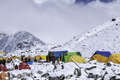
Our day kicks off with an initial, relatively easy trek from Lobuche to Gorekshep. The subsequent, straight trail to Everest Base Camp is harder, involving rocky dunes and moraine, formed accumulation of unconsolidated glacial debris. On the way to our destination, we'll approach the famed Khumbu Glacier and icefall, located on the slopes of Everest. At the Base Camp, our goal, you'll have the chance (during the spring climbing season) to meet climbers attempting to scale the mountain's summit. Break out your cameras for unbelievable views of breathtaking beauty.

Day 11 - EBC to Kalapathar and Chukhung

Altitude: 5,545m/18,192ft (Kalapathar) & 4,730m/15,518ft (Chukhung)
Walking Distance: 16km (7-8 hours)

Today starts with a climb up to Kalapather for some of the finest panoramic views of the Himalayas to be found! Once we finish the morning climb we will head back down the mountain to Dingboche where we break off from the main Everest Base Camp Trail and head towards Chukhung and Island Peak. It's another 5km to Chukhung where we spend the night.

Day 12 - Chukhung to Island Peak Base Camp, Climbing Training

Altitude: 5,200m/17,060ft
Walking Distance: 5km (3-4 hours)

This morning will start with the relatively short hike to Island Peak Base Camp. It is possible to make the Island Peak summit with no prior climbing experience (assuming sufficient physical fitness), but having past climbs under your belt will make you a stronger and more confident climber. You'll enjoy the summit more if you aren't quite so anxious about the actual climbing! Staff will give you hands-on training on the use of implements like the ice axe and climbing boot, and demonstrate moving up and down on ropes. Get some rest, we push for the summit at midnight!

Day 13 - Island Peak: Summit, Return to Chukhung

Altitude: 5,200m/17,060ft to Island Peak (6,189m/20,305 ft) to Chukhung (4730m/ 15518ft)
Walking Distance: 10km (12-14 hours)

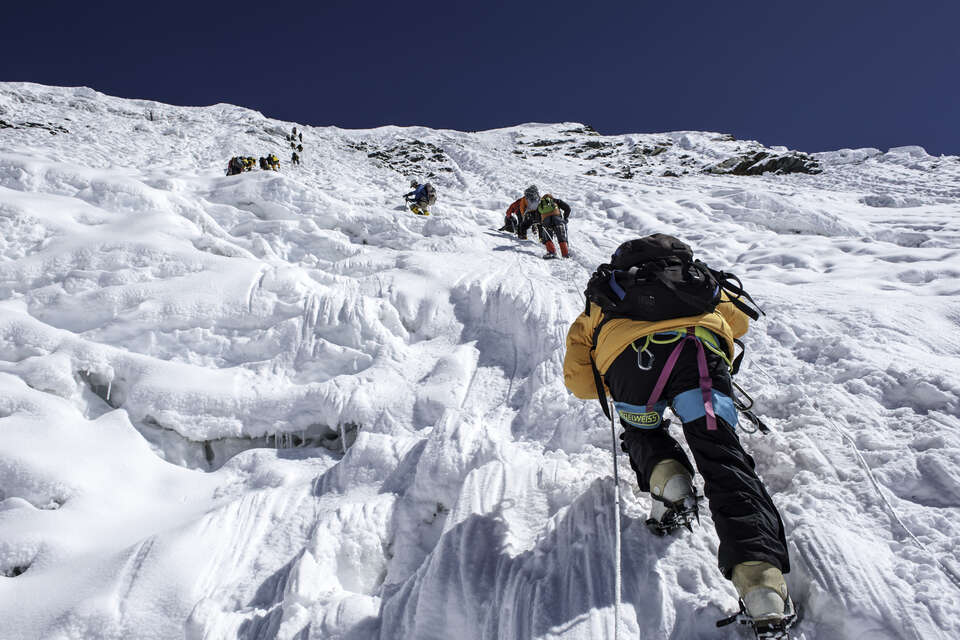
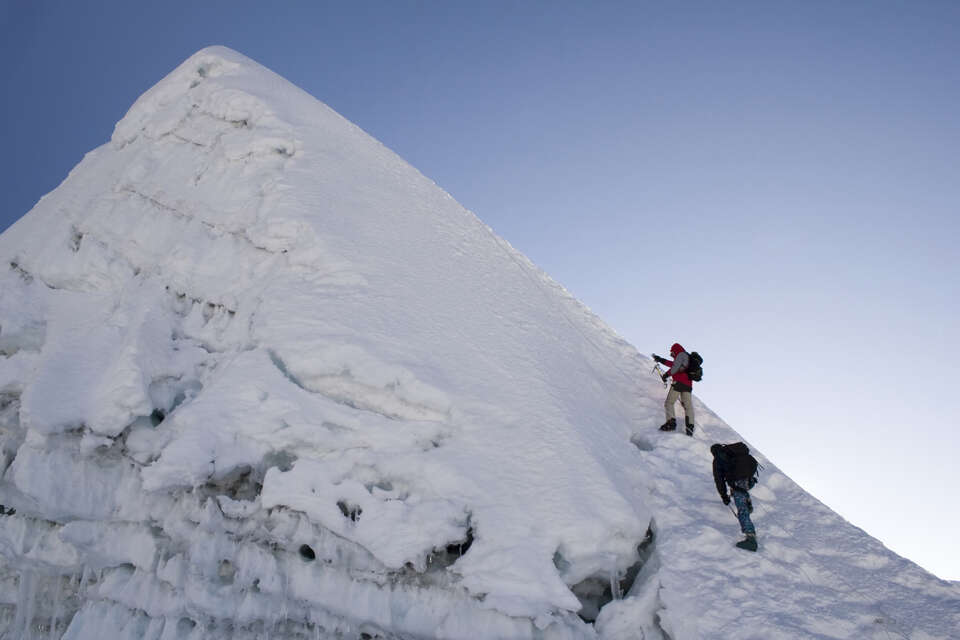
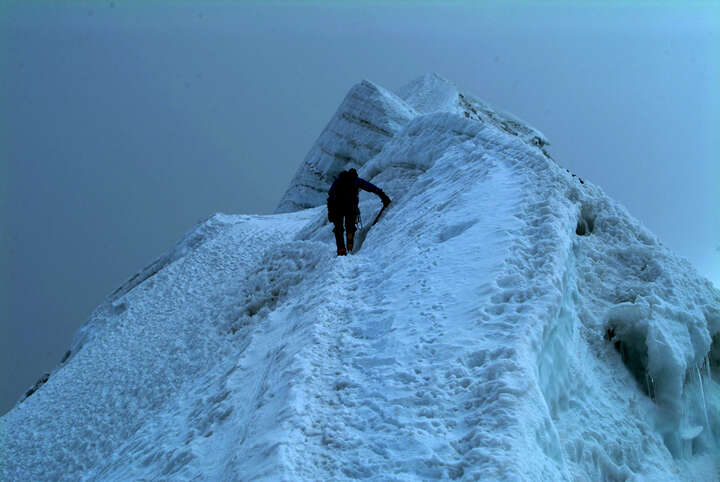
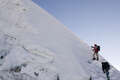
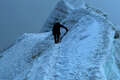
Today's the big day! Prepare to get started before the thin light of dawn as we make our ascent with head lamps, scaling the rocky trail up. Our timing is superb: we'll drink in a glorious Himalayan sunrise atop a shining glacier and prepare for the tough, ultimate climb. A brief trek against a plateau of virginal snow brings us to the steep, precipitous final headwall. Time to put those climbing skills to use! The scramble for the summit is arduous, but you'll never be more proud of yourself! After a brief, triumphant time at what feels like the top of the world, it's (carefully!) downwards towards the charming village of Chukhung.

Day 14 - Chukhung to Tengboche

Altitude: 4,400m/14,435ft
Walking Distance: 14km (12-14 hours)

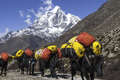
We retrace the original steps of our ascent as we make our way back down the mountain again. The fascinating culture of the Sherpas is on display once more - don't miss a peak at the yak-herding stations.

Day 15 - Tengboche to Namche

Altitude: 3,440m/11,283ft
Walking Distance: 10km (6 hours)

The walk from Pheriche back to Tengboche is mainly downhill, although it does, counterintuitively, require an hour scaling a hill. We'll be in Namche by late afternoon and off to bed before our last day on the mountain.

Day 16 - Namche to Phakding and Lukla

Altitude: 2,800m/9,184ft
Walking Distance: 16km (6-8 hours)

After breakfast, we trek toward the Hillary Suspension Bridge and then pass through several local villages. Our arrival in Lukla brings an evening in a proper hotel and, traditionally, a party with your trekking crew: you made it! Thanks to great teamwork and perseverance, you've accomplished a physical feat of which others only dream. This is your last night on the mountain, which can be bittersweet.

Day 17 - Lukla to Kathmandu

In the morning, you'll hop a brief flight from Lukla to Kathmandu (See Note), where your journey both began and ends. You'll transfer to your hotel upon landing for some much-needed solo rest and reflection after your trek conquering the Himalayas. We'll reunite in the evening for a farewell dinner at one of the best Nepalese restaurants in town, where we'll be eager to hear your feedback on the trip.

Please Read: Lukla Flights are departing and returning to Ramechhap instead of Kathmandu due to ongoing upgrades at Kathmandu Airport. Its about a 4 to 6 hour drive from Ramechhap back to Kathmandu depending on traffic.

Day 18 - Kathmandu: Departure Day

It's your last day in Nepal! Grab some breakfast, and then take in some last-minute shopping in Kathmandu. We'll make sure you arrive at Kathmandu International Airport with plenty time before your flight home. At this time, we'll say our goodbyes and bid you farewell, armed with warm memories and gorgeous photos to show your loved ones.

* All distances and time estimates are approximate.

Before you pay a deposit for your Nepal trek, read our booking terms and conditions. They explain what your trek price covers, which costs are extra, and what happens if flights are delayed or your plans change.

These are the sections trekkers check most often:

Not sure about something? Call or WhatsApp us on +91 932 595 1234, or send us a message. We will explain any term before you book.

The following are what we advise you obtain in the way of equipment and gear before trekking in Nepal, and are meant to keep you mobile and comfortable in a range of expected weather conditions. Trekking gear can be rented or purchased in Kathmandu at cheaper prices, remember Nepal is the home of Mount Everest, there is plenty of choice and our staff can assist you with the necessary arrangements. Except for your day pack, all luggage will be carried by porters. There is an allowance of 33lbs/15kg per person. Additional personal items not needed for the trekking portion of the trip can be checked in the hotel’s storage room for no extra cost.

    Climbing

  • Ice axe
  • Crampons
  • Harness
  • Screw gate
  • Descended abseil device
  • Prussic loops
  • Plastic mountaineering boot


    Head

  • Sun hat or scarf
  • Light balaclava or warm fleece hat
  • Sunglasses
  • Head torch


    Upper Body

  • Cotton t-shirts or thermals
  • Fleece jacket
  • Waterproof jacket
  • Down jacket


    Lower Body

  • Lightweight cotton pants (long)
  • Waterproof Pants


    Feet

  • Thin inner socks
  • Thick, warm wool hiking socks
  • Comfortable hiking boots


    Hands

  • Gloves


    Accessories

  • Sleeping bag rated to 0°C
  • Trekking bag/duffel bag
  • Large plastic bags (for keeping items dry inside trek bag)
  • Trekking poles (optional, recommended)
  • Water bottle or camel bag
  • Toiletries
Start your adventure here with us!

Frequently Asked Questions

About Island Peak (Imja Tse)

How high is Island Peak and where is it?

Island Peak, also called Imja Tse, rises to about 6,189m in the Khumbu region of the Everest area. Some maps list 6,160m, but our itinerary uses 6,189m. The base camp sits at 5,200m above Chukhung.

How is this 18-day itinerary built?

You trek the classic Everest route to Everest Base Camp and Kala Patthar first (Days 3 to 11), then head east to Chukhung and Island Peak Base Camp. Day 12 is crampon and rope training, Day 13 is the summit day with a return to Chukhung, and then you walk down to Lukla. The Base Camp trek doubles as acclimatisation.

Why combine Everest Base Camp with Island Peak?

Climbing high with little preparation is risky. Spending more than a week above 3,400m, including nights at 4,900m and 5,180m, gives your body the best chance to cope with a summit at 6,189m. You also see the Khumbu valley before specialising on the peak.

What is the summit day like?

You leave base camp in the dark, scramble over rock and moraine, climb a glacier and then face a steep snow and ice headwall, normally protected with fixed rope, before the summit ridge. Expect around 10 hours in total, including the descent, and temperatures well below freezing.

Difficulty and skills

Is Island Peak suitable for a first-time climber?

Yes, with a good guide. It is one of the standard first Himalayan summits, but it is still serious. The altitude and cold are the main challenges, and the headwall requires you to use a jumar on fixed rope. We teach the basics on Day 12 before you go up.

What technical skills do I need?

You do not need prior mountaineering experience. You will learn to walk in crampons, use an ice axe and ascend a fixed line. Comfort on steep ground and following instructions matter more than athletic ability.

What fitness level is required?

You need strong endurance for 6 to 8 hours of trekking daily for over two weeks, then a long summit day. We recommend cardio training for at least three months, with weekend hikes carrying a pack, and a medical check-up before you book.

How does Island Peak compare with Mera Peak and Lobuche East?

Island Peak is shorter than Mera and has a steeper, more technical finish. Lobuche East is a little harder, with more exposed rock and ice. Mera is higher at 6,476m but less steep. Many first-timers choose Island Peak because of its short summit section.

Do I need a group, or can I climb alone?

No law forces you to join a group, but we do not support unguided climbing. Our ratio is two climbers per guide, and a licensed climbing guide leads every summit attempt.

Permits, gear and rules

Which permits are needed?

You need a climbing permit from the Nepal Mountaineering Association, a trekking permit and the Sagarmatha National Park entry. We arrange these as part of your package and need your passport scan after your deposit.

Is there an age limit?

The Nepal Mountaineering Association currently issues permits to climbers aged 17 and over, and younger people need a parent or guardian under Nepal rules. Rules can change, so confirm with us before you book.

What climbing gear is included?

The package lists climbing boots, harness and helmet, with a baggage allowance of 20 kg (44 lbs) per person. Ask us for the full technical gear list, including crampons, ice axe and ascender, and confirm what we supply and what you must bring. Sleeping bag and down jacket rental is available at about INR 100 per item per day.

What should I wear on summit day?

Layers: thermal base, fleece, insulated jacket, hard shell, windproof trousers, warm gloves with liners, a balaclava, goggles and double boots. Everything should be broken in before the trip.

Altitude, safety and guides

How do you manage altitude sickness?

We build in rest days at Namche Bazaar and Dingboche, and your guide checks your oxygen saturation every day. Report headaches, nausea or poor sleep at once. The guide has the final say on whether you continue, rest or descend.

Who leads the climb?

A government-licensed climbing guide employed by Himalayan Wonders Adventure Pvt. Ltd., our Nepal operator, leads the summit team with a maximum of two climbers per guide. See the team page for the guides.

What insurance does Island Peak require?

Insurance is mandatory and must include mountaineering cover for a trekking peak above 6,000m, emergency medical treatment and helicopter evacuation. Standard trekking policies often stop at 4,000m, so confirm with your insurer before paying the deposit. See the insurance section of our terms.

What happens if the summit attempt is called off?

Weather, snow conditions or your health can end the attempt. The guide decides, and the decision is final. Extra days on the mountain cost INR 6,000 per day, covering your stay and three meals, if there is time for another try.

Is there phone reception on the route?

Reception is patchy: mobile signal works at some lower villages, while the higher camps usually have none. Your guide can contact our Kathmandu office, and teahouses offer paid Wi-Fi at INR 300 to 500 per hour in some places.

Season, flights and logistics

When is the best time to climb Island Peak?

April and May, and October and November, are the best windows, with stable weather and clear skies. March and early December are possible but colder. The monsoon makes the approach wet and the peak unsafe.

Do we fly from Ramechhap?

Yes. Lukla flights currently depart from and return to Ramechhap airport, which is about 5 to 6 hours by road from Kathmandu, depending on road conditions. The drive starts early in the morning. Transport is included.

What if my Lukla flight is delayed or cancelled?

We rebook you on the next available day, with no service fee for changing a Lukla reservation. Weather often delays flights, so add 2 to 4 days at the end of your trip, not the start. Extra hotel nights and meals in Kathmandu or Lukla are your cost. If flights stay grounded, we can try to arrange a chartered helicopter at your cost. See the flights section of our terms.

How many spare days should I plan?

Weather often delays Lukla flights. We suggest at least two extra days at the end of your trip, three in shoulder seasons and four in peak monsoon months. If you take a helicopter back, budget USD 600 or more (INR 65,000 or more), with a USD 150 refund of the flight fare (INR 10,000 for Indian nationals).

Where do we stay along the way?

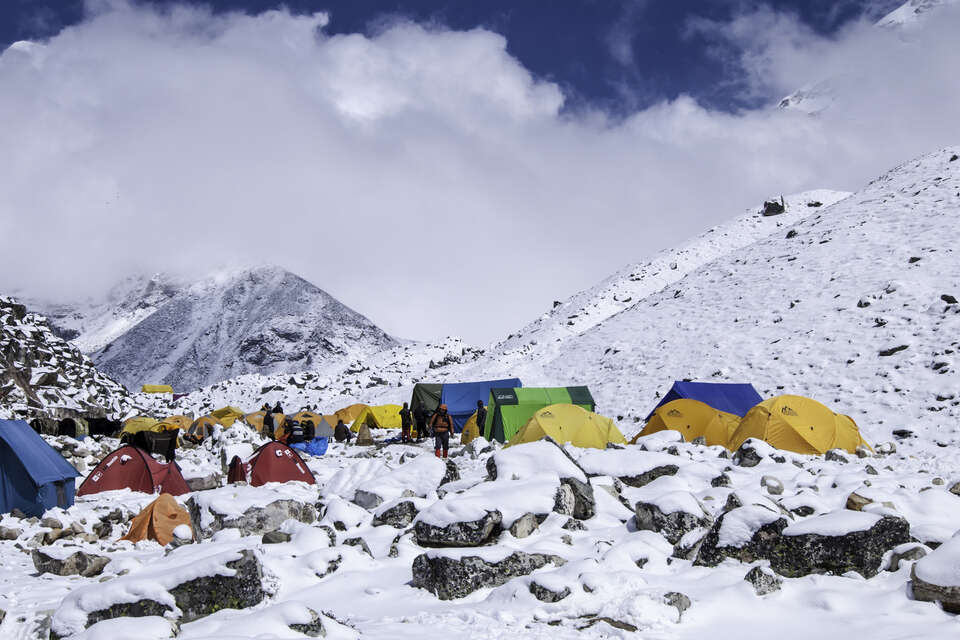
Teahouses and lodges until Chukhung, then tents at Island Peak Base Camp, with meals cooked by your Sherpa guide. At busy high stops such as Lobuche, Gorak Shep and Chukhung, rooms can be shared by up to four guests, depending on the crowd. Kathmandu is three nights bed and breakfast at Hotel The Address Kathmandu.

How much extra should I budget?

We suggest USD 300 to 400 (INR 25,000 to 40,000) for extras and tips. Typical items are bottled water at INR 100 to 300, showers at INR 200 to 300 and charging at INR 100 to 400. Tipping about 10% of the trip price is customary.

Money, booking and cancellations

How do I pay for the Island Peak climb?

Pay a deposit before you travel. Indian guests pay by bank transfer or UPI, since we do not take credit cards in India. Guests outside India can pay by transfer or online card (4.5% processing fee). You settle the balance at our Kathmandu office on arrival in INR, USD, EUR, GBP or another major currency, at the NPR conversion rate on the date of payment (local conversion charges apply); cards used in Nepal add 13%, so cash is cheaper.

Is my deposit refundable?

50% is refundable for 30 days after you book, and after that it is not. The deposit remains valid for 365 days and can be moved to any trek or climb we offer. If you do not contact us and do not arrive, it is forfeited.

Can I change my climbing dates?

Yes. Rescheduling is free as many times as you need with at least 6 weeks' notice. With 2 to 6 weeks' notice a fee of INR 5,000 (Indian guests) or USD 100 (other guests) applies, and any change needs at least 14 days' notice. You pay any price increase between the old and new date.

What if I leave the Island Peak trip early?

We cannot refund unused days or services, because the guides and porters are paid for the whole period. We help you return, but extra hotel nights, meals and flight changes are your cost. Some insurers reimburse unused days, so check your policy.

Do I pay extra for a solo climb?

There is no single supplement for rooms. Rooms are shared by gender, and couples, families and friends share together. If you climb solo, meaning you are the only person booked on a fixed departure or you are not joining a group, an additional INR 20,000 is mandatory. It covers your solo climb arrangements and a dedicated porter. We tell you at booking, or as soon as it arises.

Plan your Island Peak climb

All Island Peak guides →

Tailor-made
Your climb, your way

Tell us your group, your dates and your experience. We will shape this climb around you.

  • Small groups or private. Friends, families and climbing partners.
  • Your pace. Add acclimatization days before the summit or extend the trek. Extra days on the mountain are INR 6,000 per day (stay and 3 meals).
  • Your budget. Share it with us and we will plan around it.
  • Your dates. Reschedule free, as often as you need, with 6 weeks’ notice.
Customise this climb
Why book with us
  • One local team. Your climbing guide, porters and driver are all employed by Himalayan Wonders Adventure Pvt. Ltd., our licensed operator in Nepal.
  • Led by experienced specialists. Your guide leads on the approach trek and on the mountain. The guide has the final say on whether you continue up, rest or descend, and that decision is made for your safety.
  • Safety first. Guides are trained in Wilderness First Aid, and they check your oxygen levels every day.
  • Clear pricing. Our Terms list the extras up front, so Kathmandu holds no surprises.
  • Flights sorted early. We book your Lukla flight as soon as your deposit and passport details arrive, and aim for the first flight of the day.
  • A deposit that stays flexible. It is 50% refundable for 30 days and valid on any trek or climb for a year.
  • Real people, quick replies. We answer every email within 24 hours. You can also call us on +91 932 595 1234, 9am to 7pm IST.
Climbing Facts
Altitude:
6,160m (20,196ft)
Elevation:
6,160m (20,196ft)
Location:
Khumbu Region
Coordinates:
27.92°N, 86.93°E
First Ascent:
Everest British First Ascent Team 1953
Climb Season:
Spring (April, May) and Autumn (October, November)
Expd Duration:
18 Days (typically)
Climb Duration:
2 Days (typically)
Group Size:
01-10 Person
All inclusiveRs. 180,000 INR
WhatsApp Enquire now