Island Peak, also called Imja Tse, is one of the most popular climbing peaks in Nepal. It is classed as a trekking peak, which describes the permit category, not the effort. Reaching the summit takes real fitness, a good head for heights and basic snow and ice skills.
What makes it demanding
- Altitude: The summit is above six thousand metres, which is higher than most trekkers have ever been.
- Summit day: It begins in the middle of the night and can last ten to fourteen hours or more.
- Cold: Temperatures at high camp and on the summit ridge are very low, with wind.
- Terrain: A rocky scramble leads to a glacier, then a steep snow and ice slope to the summit ridge.
Technical elements
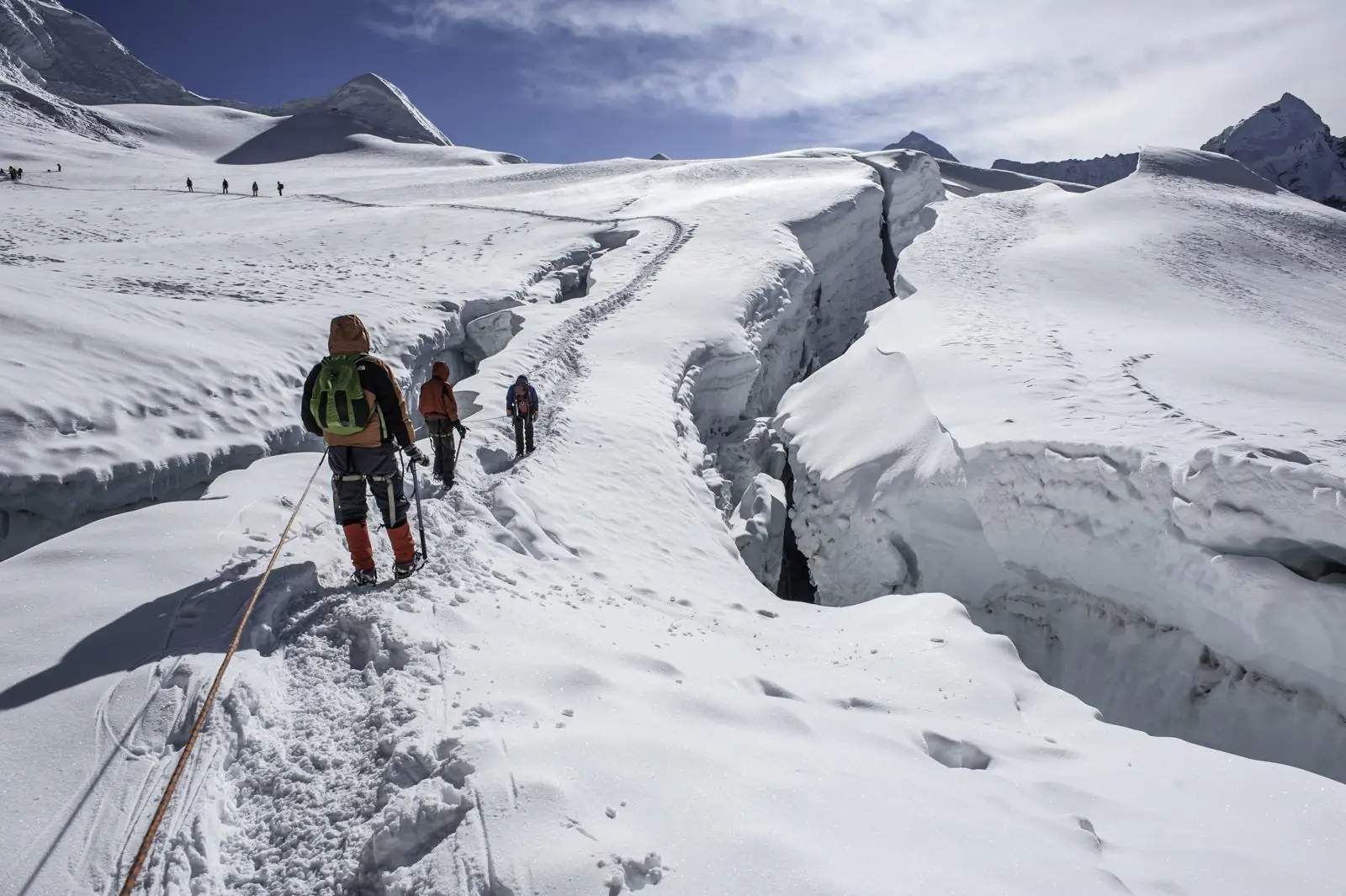
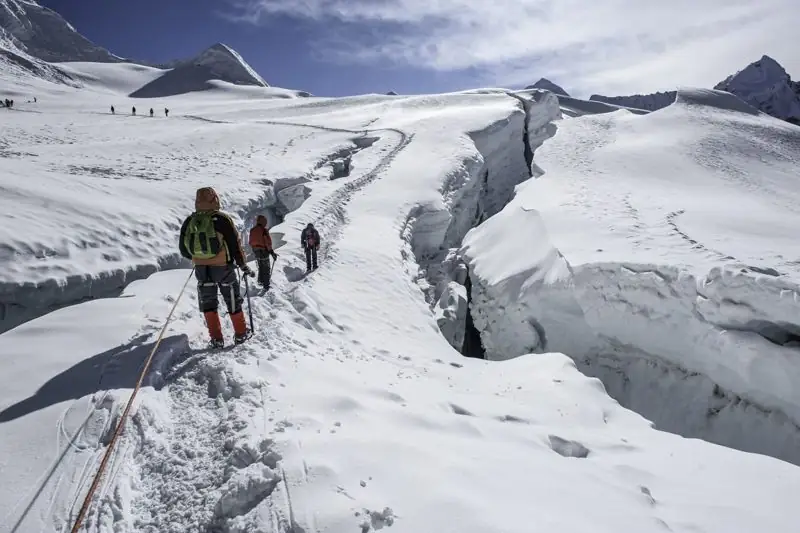
You will wear a harness, helmet and crampons, and use an ice axe and a jumar or ascender on fixed ropes. The glacier may include crevasses crossed by ladders or snow bridges, depending on the season. Your guide sets the ropes and decides which sections are safe. Pre-trip instruction in basic skills is part of most programmes, usually at base camp.
Fitness
You should have a strong aerobic base and the ability to carry a pack for long days. Previous high-altitude trekking, such as Everest Base Camp, is a useful foundation, but it does not by itself prepare you for the summit push.
Who can do it
Motivated people with good health, proper training and no major medical issues often succeed with an experienced guide. Not everyone reaches the top, even with good preparation, because weather and altitude are decisive.
Honest expectations
No operator can guarantee a summit. A good plan includes extra days and a willingness to turn back.
Tell us your experience and we will help judge whether Island Peak suits you.
How it feels compared with a trek
Many people arrive at Island Peak after a successful Everest Base Camp trek and assume the climb is a modest step up. In reality it is a different kind of day. A trekking day ends in a warm lodge by mid-afternoon; summit day begins around midnight, lasts ten to fourteen hours, and asks you to keep moving in the cold on very little sleep. The effort is sustained rather than spectacular, and tiredness, not fear, is what most climbers say they remember.
The mental side of the headwall
The steep snow and ice wall below the summit ridge is short but psychologically loud. You clip onto a fixed rope, kick your crampons in and climb with an ascender while the slope falls away below. Climbers who have practised the movement on a gentle slope near base camp usually find it easier than expected. Those who see the wall for the first time in the dark can feel overwhelmed, so a practice session the day before is valuable.
What separates summiters from turn-backs
Experience matters less than preparation and patience. Climbers who reach the top tend to have spent enough days at altitude, eaten and drunk well on the approach, carried a pack in training and listened to their guide on pace. Those who turn back are more often held up by headaches, cold feet, poor sleep or an unplanned stomach illness than by the climbing itself.
- Practise walking slowly and steadily for many hours.
- Learn to use an ascender and descend on a figure-eight or belay device before you travel.
- Test every layer of clothing and your boots on cold training days.
- Accept that the mountain sets the timetable, not you.
The numbers behind the climb
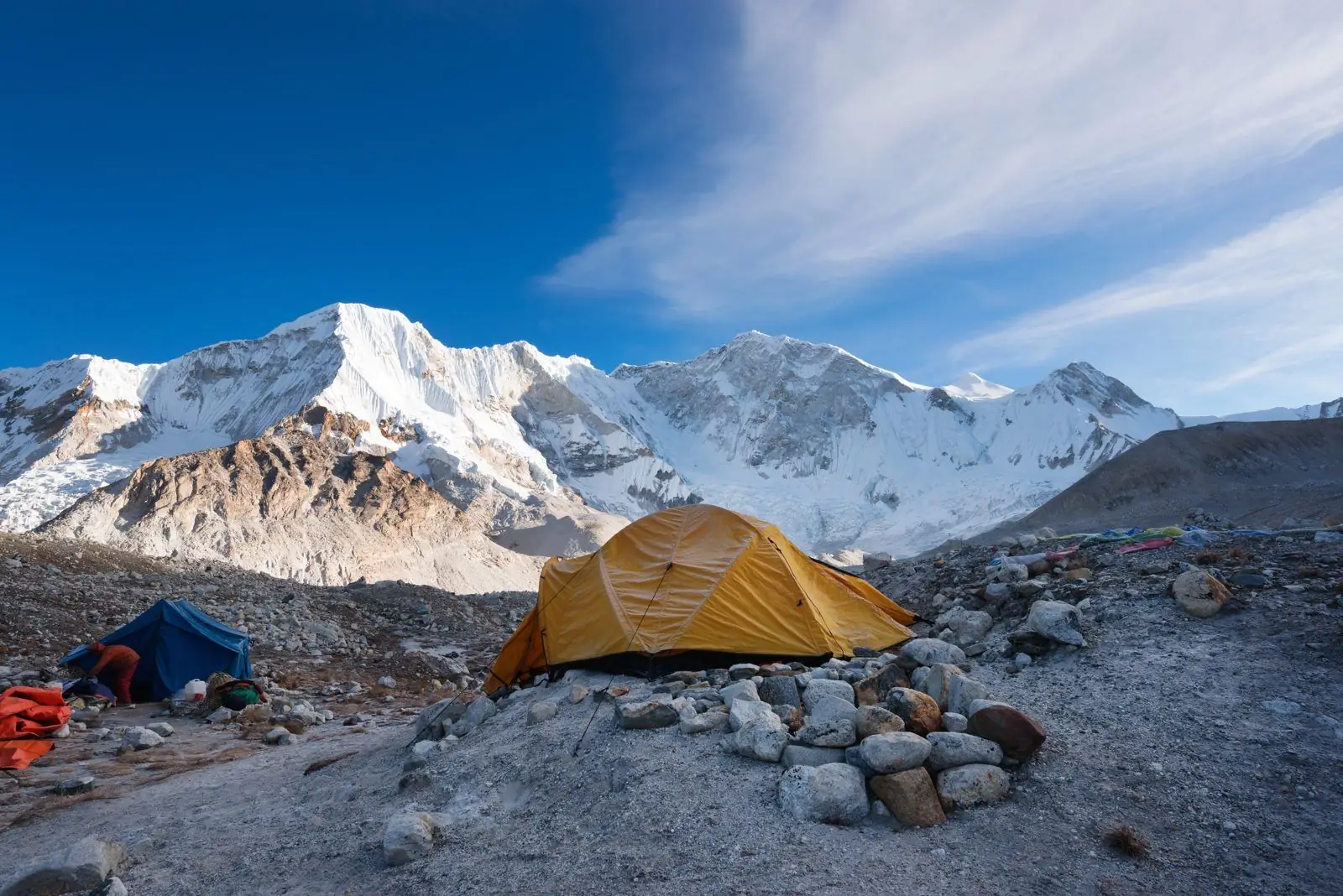
Island Peak, also called Imja Tse, rises to about 6,189 metres, and base camp sits at roughly 5,000 metres. That means the whole climbing phase takes place at an altitude where the air holds about half the oxygen found at sea level. Walking on flat ground feels like climbing stairs, and climbing stairs feels like a sprint. This is why the pace on summit day is deliberately slow and why spare days matter so much.
What a guide actually does
Your climbing guide fixes ropes on the headwall, checks your harness and crampons, sets the pace, watches for signs of altitude illness and decides when to turn around. A good guide also manages the tempo of the whole team so that nobody is left alone, and keeps you eating and drinking when you do not feel like it. The best guides talk calmly and explain each step before it happens.
How to judge whether you are ready
- You have trekked for at least a week at altitude, ideally above 4,500 metres.
- You can walk eight hours with a daypack without feeling wrecked.
- You have tried crampons and an ascender, even on a small slope or a training day.
- You are comfortable with cold, early starts and basic camping.
Children, age and health
There is no fixed age limit, but climbers are usually adults in good health. Older climbers can succeed if they are fit and have trekked extensively before. Any heart, lung or circulation condition should be checked by a doctor who understands altitude. Honest conversations with your operator before booking prevent hard decisions on the mountain.