


 By
The Everest Base Camp packing list comes down to three things: warm layers that you can add and remove, broken-in boots, and a sleeping bag rated for freezing nights. This guide gives the full checklist by category, with how many of each item to bring, how the two-bag system works on the trail, and what to rent or buy in Kathmandu instead of carrying from home. It also works for most other teahouse treks in Nepal.
The short answer
- Two bags: a duffel of up to 10 kg that porters carry, and a daypack of up to 5 kg that you carry. The Lukla flight allows 15 kg in total.
- Clothing: a base layer, an insulating layer and a waterproof shell, plus a warm hat, gloves and sun protection.
- Footwear: broken-in hiking boots with ankle support, plus light shoes for the evenings.
- Sleeping: a sleeping bag rated to about -18 C (0 F), which can be rented in Kathmandu, and a liner and pillowcase.
- Buy in Kathmandu: most gear except boots. Never buy new boots at the last minute.
Last checked: 26 October 2026. Weight limits, rental prices and rules can change, so confirm them with your trek operator before you fly.
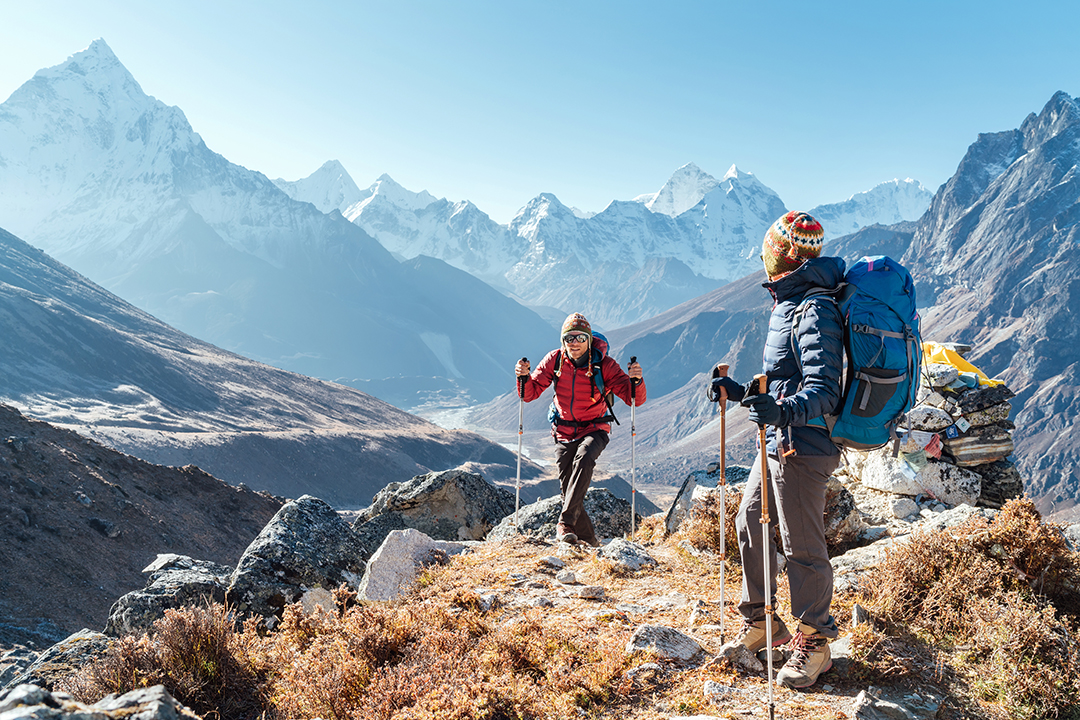
Layers laid out for the trek: a base layer, a warm mid layer and a waterproof shell.
In this guide: Two-bag system | Full checklist | Layering | Boots and socks | Sleeping bag | Health kit | Documents and money | Buy or rent in Kathmandu | FAQ
How the two-bag system works
Your belongings travel in two bags. The porters carry the duffel from one teahouse to the next, and you carry the daypack. Anything you leave at your Kathmandu hotel is stored until you return, so only pack what you will use on the trail.
| Duffel bag | Daypack | |
|---|---|---|
| Carried by | A porter, ahead of you | You, all day |
| Weight limit | Up to 10 kg | Up to 5 kg |
| When you can reach it | In the evening, at the teahouse | All day |
| What goes in | Sleeping bag, spare clothes, toiletries, evening layers | Water, snacks, camera, rain jacket, warm layer, sun protection, headlamp, medicines, cash |
Porters leave early, so you cannot reach your duffel during the day. Keep everything you may need before the evening in your daypack. The Lukla flight limit is 15 kg in total, which is 10 kg checked and 5 kg of hand baggage, so weigh both bags at home. Use two or three dry bags inside the duffel to separate clean clothes, dirty laundry and wet items, and fit a rain cover over the daypack.
Everest Base Camp packing list: the full checklist
Use this list as a tick-off sheet. Quantities assume a 12 to 14 day trek and can be reduced by washing a few items on the way.
Clothing
| Item | How many | Notes |
|---|---|---|
| Long-sleeve base layer tops | 2 | Synthetic or merino wool, not cotton |
| Short-sleeve t-shirt | 1 | For warm days at lower altitude |
| Fleece jacket or mid layer | 1 | Easy to zip and unzip |
| Down jacket | 1 | Rent one if you do not own one |
| Waterproof jacket with hood | 1 | Breathable shell works best |
| Windproof jacket | 1 | Optional if your shell is light |
| Trekking trousers | 2 | Quick-drying and lightweight |
| Thermal leggings | 2 | For nights and the upper trail |
| Fleece trousers | 1 | For teahouse evenings |
| Waterproof trousers | 1 | Pack in the daypack on wet days |
| Hiking shorts | 1 | Optional |
| Underwear | 5 to 7 | Quick-drying |
| Rain poncho | 1 | Optional, covers you and your daypack |
Footwear
| Item | How many | Notes |
|---|---|---|
| Hiking boots with ankle support | 1 pair | Broken in before the trek |
| Camp shoes or sandals | 1 pair | Light, for the evenings and showers |
| Hiking socks | 5 to 6 pairs | Wool or synthetic, wash and rotate |
| Warm thermal socks | 1 pair | For sleeping |
| Sock liners | 2 pairs | Reduce friction and blisters |
| Gaiters | 1 pair | Useful in winter and on muddy or dusty trails |
| Microspikes | 1 set | Only for the Three Passes or Gokyo routes, to cross icy passes |
Head, hands and sun
| Item | Notes |
|---|---|
| Wide-brimmed sun hat | Sun is strong at altitude |
| Warm wool hat or balaclava | Should cover the ears |
| Neck gaiter or bandana | Sun, wind and dust |
| Sunglasses with UV protection | Category 3 or 4, with side shields |
| Glove liners | Thin, for light cold and for tying laces |
| Insulated gloves or mittens | Wool or down, for cold mornings and summit points |
Trekking gear
| Item | Notes |
|---|---|
| Duffel bag | Usually supplied by the trek operator |
| Daypack, about 30 to 40 L | With a waterproof cover |
| Sleeping bag rated to about -18 C (0 F) | Can be rented in Kathmandu |
| Sleeping bag liner and pillowcase | For warmth and hygiene |
| Trekking poles | Take pressure off knees on long descents |
| Headlamp and spare batteries | For night toilet trips and early starts |
| Water bottles or hydration bladder | Carry at least 2 litres |
| Water purification tablets or filter | Refill from lodges and avoid single-use bottles |
| Dry bags and stuff sacks | To separate clean, dirty and wet items |
| Small padlocks | For the duffel and daypack |
| Power bank or solar charger | Charging is paid at teahouses |
| Hand warmers | Optional but welcome at high camp |
How to layer for Everest Base Camp
The trek climbs from warm river valleys to freezing high camps, so you wear different amounts of clothing during the same day. Layering lets you add or remove clothes quickly instead of carrying one thick garment.
On lower days in the main seasons, a t-shirt and trekking trousers are often enough. Temperatures fall with every 1,000 m of height, so expect freezing nights at the top whatever the month. The Nepal Tourism Board (NTB) gives about 6 C of cooling per 1,000 m. See Everest Base Camp weather by month to choose your layers for your travel dates.
Hats, gloves and sun protection
A wide-brimmed hat and sunglasses protect against strong sun in the day, and a wool hat that covers your ears is essential in the morning and evening. Use two pairs of gloves: thin liners for light cold and for fiddly tasks, plus insulated gloves or mittens on top for the coldest hours. Apply sunscreen to your face, lips and the back of your neck even on cloudy days, because the ultraviolet exposure is higher at altitude.

Well-fitting, broken-in boots matter more than any other item.
Boots and socks for Everest Base Camp
Footwear decides how much you enjoy the trek. Bring boots you have already walked in for at least a few weeks, and do not buy them in Kathmandu the day before the trek.
- Fit: leave a little room for thick socks, but not enough for your heel to slip. A pair that is too small is the most common mistake.
- Support: boots with ankle support and a grippy sole cope best with loose rock and steps. Trail shoes are lighter but offer less support and warmth.
- Socks: wear a thin liner under a wool or synthetic sock, and change socks daily. Cotton absorbs sweat and rubs.
- Blisters: stop at the first hot spot and cover it with moleskin or tape before it grows.
- Camp shoes: a light pair for evenings rests your feet and keeps the teahouse floor clean.
If you are doing the Gokyo or Three Passes routes, microspikes help on icy passes. They are slip-on grips that fit over your boots and are not the same as crampons. They are rarely needed in the peak seasons, but the passes can hold ice at any time.
Sleeping bag and bedding
Teahouse rooms are not heated, and bedding is basic. A room normally has two beds with a mattress, a sheet and a pillow, and extra blankets can often be requested. Bring or rent a warm sleeping bag rated to about -18 C (0 F), and add a liner and your own pillowcase. A sleeping bag and a down jacket can be rented in Kathmandu for Rs 1,200 each through Base Camp Hikes. Check the item before you leave the shop: look for even stitching, working zips and a fill that springs back when squeezed. More about rooms and what to expect is in the teahouse guide.
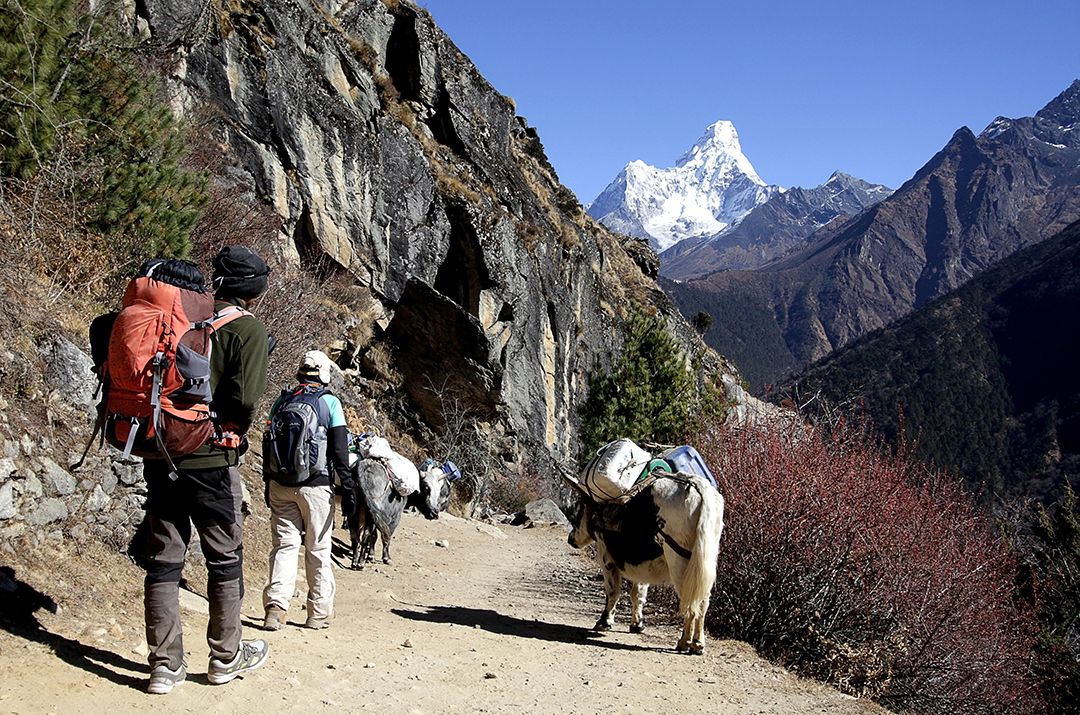
Carry only the essentials in your daypack.
Health kit and toiletries
The trek team carries a first-aid kit, but you should bring your own medicines and personal items. Ask your doctor about altitude medicine before you travel, and read the altitude sickness guide.
| Category | Items |
|---|---|
| Medicines | Painkillers, personal prescriptions, altitude medicine as advised by your doctor, an anti-diarrhoea kit and rehydration salts |
| Blister care | Moleskin, medical tape and an anti-chafe balm |
| Sun and lips | Sunscreen and lip balm with sun protection |
| Hygiene | Toilet paper, wet wipes, hand sanitiser, soap, toothbrush and toothpaste |
| Comfort | Earplugs for thin walls, a quick-drying towel and feminine hygiene products as needed |
| Snacks | Protein and carbohydrate snacks, and electrolyte powder to add to water |
Toilet paper is often not supplied in lodges, and the weight limits make it worth bringing only what you need. Keep medicines in the daypack, not the duffel.
Documents and money
- Passport: needed for entry and for permit checks.
- Visa: NTB says Indian nationals do not need a visa. Other nationalities should check the current rules on the NTB visa information page before they fly.
- Travel insurance: mandatory for the trek. It must cover your highest altitude and helicopter evacuation.
- Cash: carry rupees in small notes for snacks, showers, charging and tips. Cash machines on the trail are few and unreliable.
- Permit photo: a passport-sized photo, in case it is needed for permits.
Tips for the guide and porters are best given at the end of the trek. See Everest Base Camp trek cost from India for a full budget.
What to buy or rent in Kathmandu
Kathmandu has shops for almost everything on the list, at lower prices than at home. Buy or rent a sleeping bag, down jacket, poles, gloves, hats and a daypack there. Do not buy boots at the last minute. Many items on sale are imitations, so check zips, stitching and strap joins before you pay. Read 6 tips for buying trekking gear in Kathmandu.
If you forget something
You can replace many items on the trail. Namche Bazaar, reached on the second evening, has shops, pharmacies and bookshops, and a weekly Saturday market. Selection thins out above Namche and prices rise with altitude, so buy the essentials in Kathmandu first. See the first-timer’s guide and Lukla vs Ramechhap flights for the rest of your preparation, and how to train.
Downloadable packing list
Download the checklist as a PDF or a Word document.
FAQ
What should I pack for Everest Base Camp? Layered clothing, broken-in boots, a sleeping bag rated to about -18 C, a daypack, a headlamp, sun protection, a basic health kit and your documents.
How much weight can I carry on the Lukla flight? 15 kg in total: 10 kg in the duffel and 5 kg in the daypack.
Do I need my own sleeping bag? You can bring one or rent one in Kathmandu, where a sleeping bag costs Rs 1,200 to rent.
Can I rent a down jacket? Yes, in Kathmandu, for Rs 1,200 through Base Camp Hikes.
Should I buy boots in Kathmandu? No. Bring boots you have already broken in.
How many socks do I need? Five or six pairs of hiking socks and one warm pair for sleeping. Change them daily and wash a few on the way.
Do I need trekking poles? They are optional but ease the long descents.
Do I need gaiters or microspikes? Gaiters help in winter and on dusty or muddy trails. Microspikes are only needed for the Three Passes or Gokyo routes.
Is there electricity? Yes in lodges, but charging is paid and sockets are in the dining room. Bring a power bank.
Can I drink the tap water? No. Treat water with tablets or a filter, or buy boiled water from the lodge.
Do I need cash? Yes. Carry rupees, because machines on the trail are scarce.
Do Indian citizens need a visa? NTB says no. Other nationalities should check the NTB visa page.
What about porters and tips? Tips for the guide and porters are normally given at the end of the trek.
Can I leave luggage in Kathmandu? Yes, extra luggage stays at the hotel until you return.
What can I buy on the trail? Basic gear and medicines in Namche Bazaar, but selection and value fall with altitude.
Trek Everest Base Camp with Base Camp Hikes
For dates and a quote, see the Everest Base Camp trek, or message the team on WhatsApp or phone at +91 932 595 1234 (9 am to 7 pm IST), write to info@basecamphikes.com, or use the enquiry form.
Sources
- Nepal Tourism Board: visa information
- Nepal Tourism Board: climate
- Nepal Tourism Board: safety in the mountains



Comments