By
Choose the classic Everest Base Camp trek if you want the famous goal, the shortest schedule and the closest view of Everest from Kala Patthar. Choose Everest Base Camp with Gokyo Lakes if you have three more days, good fitness and want a loop over the Cho La pass with turquoise lakes and a wider panorama from Gokyo Ri. Choose Gokyo with Renjo La if you want quieter trails and the lakes without Base Camp or the Cho La crossing. This guide compares the three side by side, with days, price, season, difficulty, views, crowds and who each trek suits.
The three treks at a glance
- Everest Base Camp: 14 days, INR 85,000. The classic out-and-back route.
- Everest Base Camp and Gokyo Lakes: 17 days, INR 105,000. Adds Gokyo and the Cho La pass.
- Gokyo and Renjo La Pass: 14 days, INR 90,000. Lakes and a pass, without Base Camp.
Last checked: 28 October 2026. Prices are per person on two sharing, as listed on the package pages, and can change. Confirm dates, route and conditions before you book.
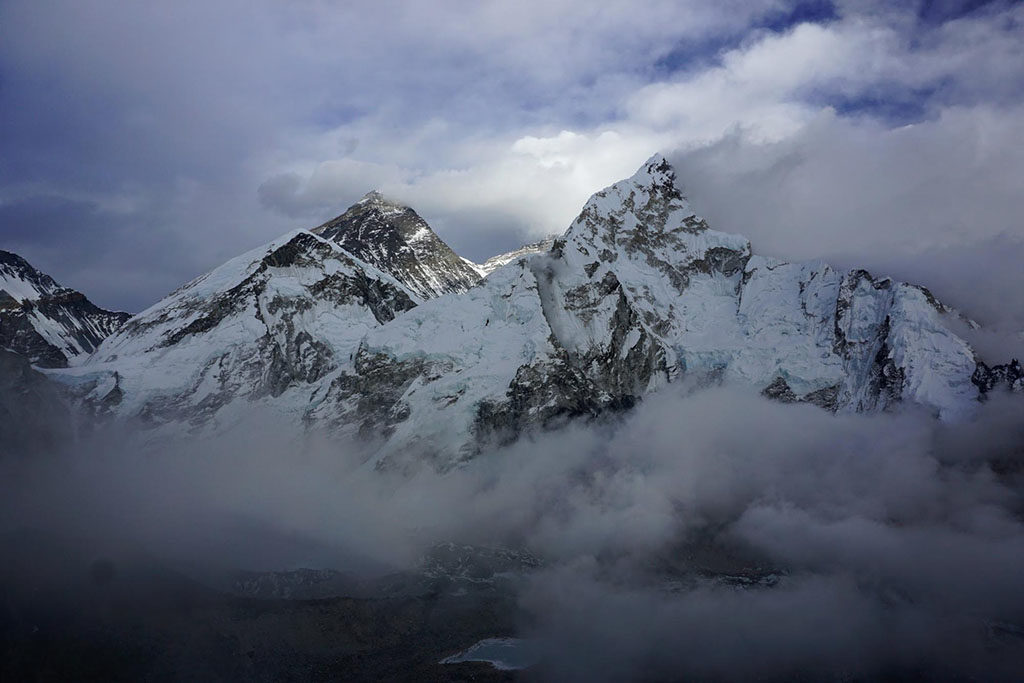
Everest and Nuptse from Kala Patthar, the high point of both Base Camp treks.
In this guide: Side-by-side | Views | Difficulty | Season | Crowds | Direction | Renjo La | Which to pick | FAQ
How do the three treks compare?
| Everest Base Camp | Base Camp and Gokyo Lakes | Gokyo and Renjo La | |
|---|---|---|---|
| Days | 14 | 17 | 14 |
| Price (per person) | INR 85,000 | INR 105,000 | INR 90,000 |
| Reaches Base Camp | Yes | Yes | No |
| High point | Kala Patthar, about 5,545 m | Kala Patthar, about 5,545 m, plus Gokyo Ri about 5,357 m | Gokyo Ri, about 5,357 m |
| Pass crossing | None | Cho La, snow and ice possible | Renjo La |
| Route shape | Up and down the same valley | A loop | A loop, with a different way back |
| Crowds | Busiest | Busy at Base Camp, quieter after Cho La | Quietest of the three |
| Difficulty | Moderate to hard (altitude) | Hard | Moderate to hard, with a long pass day |
| Best for | First-timers and a fixed schedule | Fit trekkers wanting the full Khumbu | Trekkers who prefer quiet and lakes |
All three start and end in Kathmandu. Flights to Lukla can leave from Ramechhap in the busy season, so read the Lukla vs Ramechhap guide. Package details: Everest Base Camp, 14 days, Everest Base Camp and Gokyo Lakes, 17 days and Gokyo and Renjo La Pass, 14 days.
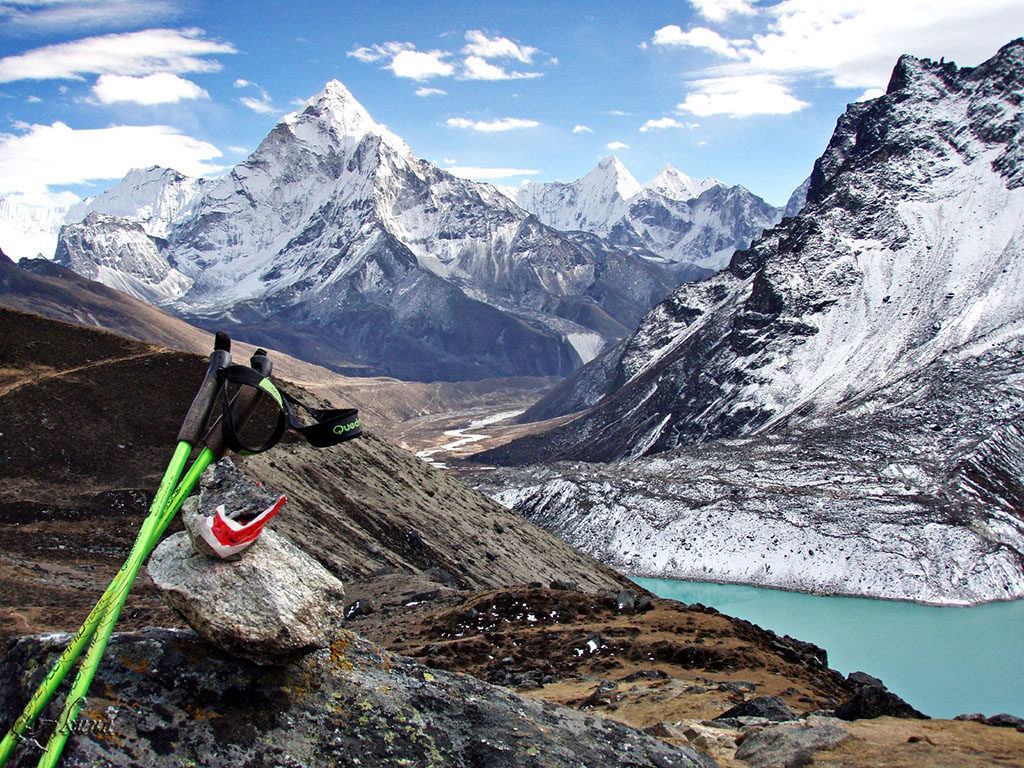
Walking along the shore of the Gokyo Lakes.
What are the views like on each trek?
Everest Base Camp: close mountains and the classic summit view
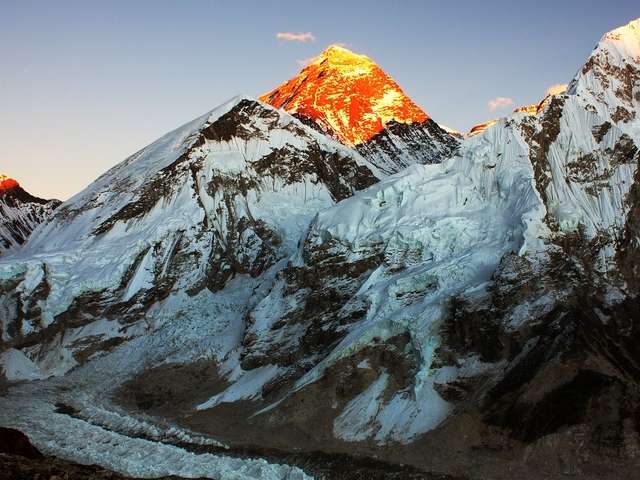
The classic route runs through Sherpa villages, forests and the area around Tengboche monastery before climbing into the high, stony valleys. The highlight is the sunrise view from Kala Patthar, where Everest and Nuptse stand close, with Lhotse and Changtse alongside. The Base Camp itself is a rubble-covered camp area, and in the spring it is busy with expedition tents. The view of the Khumbu icefall is close and impressive, while the full height of Everest is better seen from Kala Patthar.
Gokyo Lakes: turquoise water and a wide panorama
Gokyo is a chain of glacial lakes at roughly 4,700 m to 5,000 m, beside the Ngozumpa glacier, one of the longest glaciers in the Himalaya. The climb to Gokyo Ri, about 5,357 m, gives a wide panorama of four of the world’s 14 peaks above 8,000 m: Everest, Lhotse, Makalu and Cho Oyu. Many trekkers say the Gokyo Ri view is wider and calmer, while Kala Patthar is closer to Everest. Neither beats the other, they are different views.
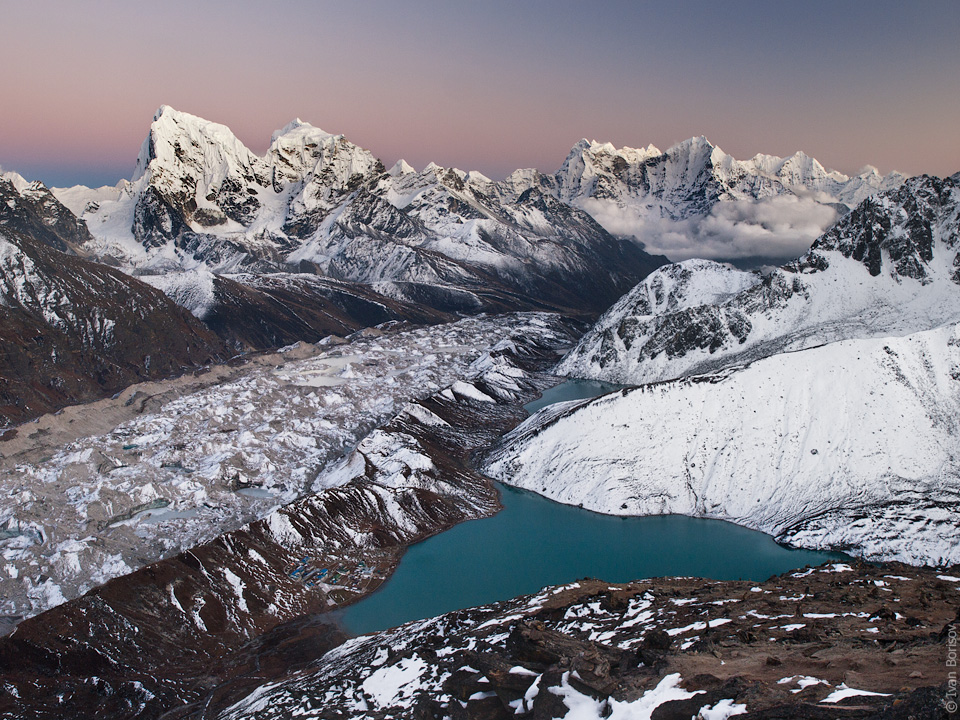
A view from Gokyo Ri, with four of the world’s 8,000 m peaks in the panorama.
Which trek is harder?
All three reach high altitude, so the main difficulty is the same: thin air, cold nights and long days. The longer Base Camp and Gokyo trek adds the Cho La pass, which crosses a glacier section where snow and ice can make the footing hard. Having already been to Base Camp helps, because your body is better acclimatised before you cross. Microspikes and trekking poles can help in icy conditions, and your guide decides on the day whether the pass is safe. The Renjo La route has a long, steep climb and descent on pass day, but avoids the glacier crossing of Cho La. Both passes are above 5,300 m.
| Factor | Everest Base Camp | Base Camp and Gokyo | Gokyo and Renjo La |
|---|---|---|---|
| Total days of walking | Shortest | Longest | Medium |
| Pass crossing | None | Cho La, with glacier section | Renjo La |
| Ice and snow risk | Low to medium, higher on summit mornings | Highest, on Cho La | Medium on Renjo La |
| Altitude exposure | High for several nights | Very high for more nights | High for several nights |
| Fitness needed | Good, with training | Very good, with training | Good to very good |
Start training early with the 12-week training plan, and read the altitude sickness guide.
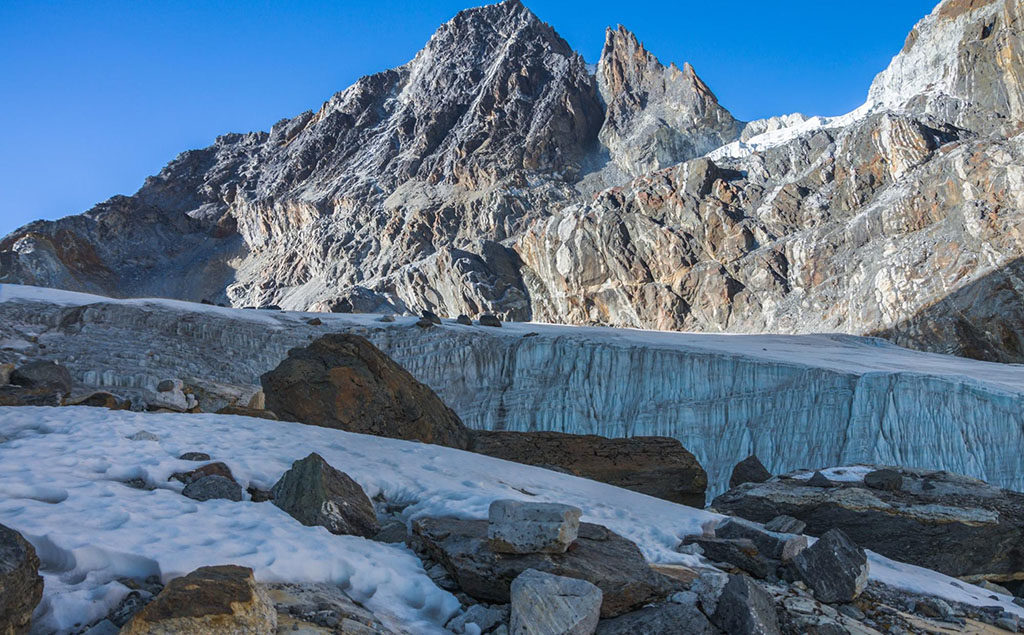
Cho La pass, where snow and ice can make the crossing difficult.
When is the best time for each trek?
Autumn (late September to November) and spring (March to May) are the main seasons for all three. Monsoon months from June to early September bring rain, cloud and flight delays, so most trekkers avoid them. In winter, Cho La is often snowbound, so the loop can be unsafe. Gokyo itself can still be reached, but if you also want Base Camp you would walk back down the main valley and not cross the pass. Your operator will tell you if the pass is open for your dates.
| Month | Everest Base Camp | Base Camp and Gokyo | Gokyo and Renjo La |
|---|---|---|---|
| March to May | Good, busy in April | Good, check pass conditions early in March | Good |
| June to early September | Not recommended | Not recommended | Not recommended |
| Late September to November | Best views, busy in October | Best months for the loop | Best months |
| December to February | Cold but possible | Cho La often closed, route changes | Cold, passes may be closed |
For the full picture, read the month-by-month guide.
Which trek has fewer crowds?
The main Base Camp trail is the busiest in the Himalaya, especially between Namche and Tengboche in the peak weeks. Gokyo is quieter, and the trail after Namche splits away from the main route, so lodges are less packed. The loop through Cho La gives you both: busy trails up to Base Camp, then quiet ones through Gokyo. If crowds are your main concern, Gokyo and Renjo La is the quietest of the three.
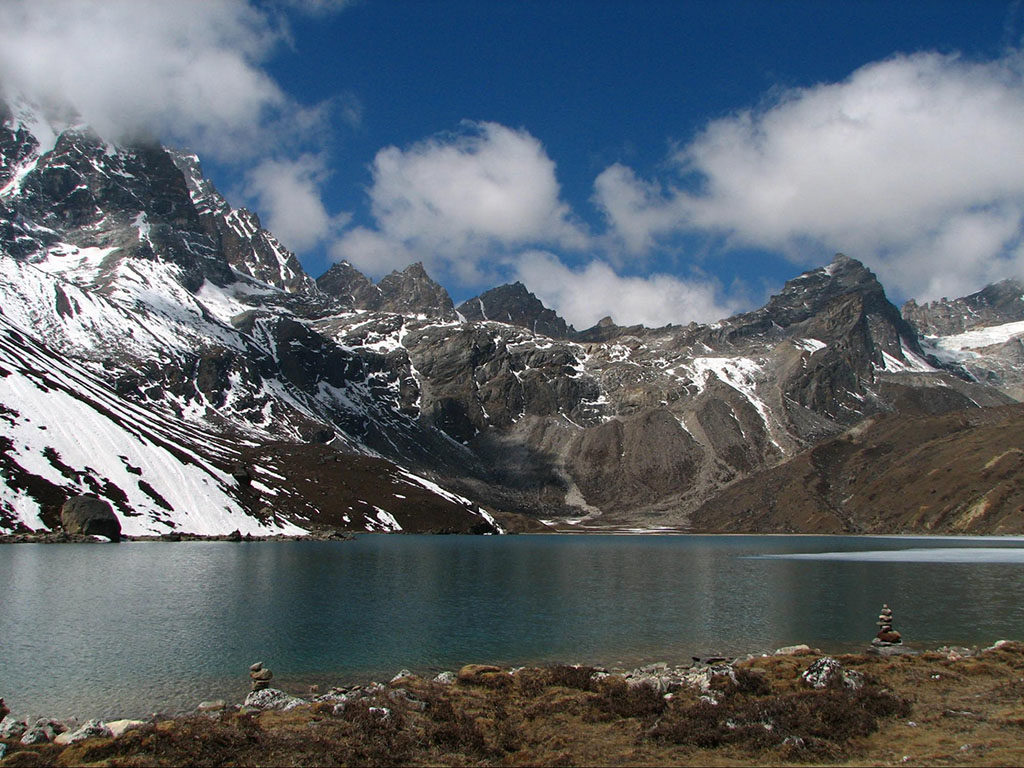
One of the Gokyo lakes beside the trail.
Should you go to Base Camp first or Gokyo first?
Some itineraries go to Gokyo first and some go to Base Camp first. Base Camp Hikes’ Base Camp and Gokyo itinerary goes counter-clockwise: Base Camp first, then across Cho La to Gokyo, then back to Namche. The reasons:
- Acclimatisation: the profile is better, because you reach high altitude gradually and cross the pass after you have been high.
- Pass direction: many guides find Cho La easier to cross from the Base Camp side to the Gokyo side.
- Experience: the trip ends with the quieter, wider Gokyo views.
Either direction works, and the right choice depends on conditions and your guide’s advice.
What is the Gokyo and Renjo La option?
The Gokyo and Renjo La trek is a 14-day route that leaves the main Base Camp trail after Namche Bazaar. It climbs through rhododendron forest, stone villages and yak pastures, through Dole and Machhermo, to the Gokyo lakes. It then crosses Renjo La and continues down the valley beyond. You climb Gokyo Ri for the view instead of Kala Patthar, you skip Base Camp and the Cho La glacier crossing, and you meet fewer people. It suits trekkers who value scenery and quiet over reaching Base Camp itself.
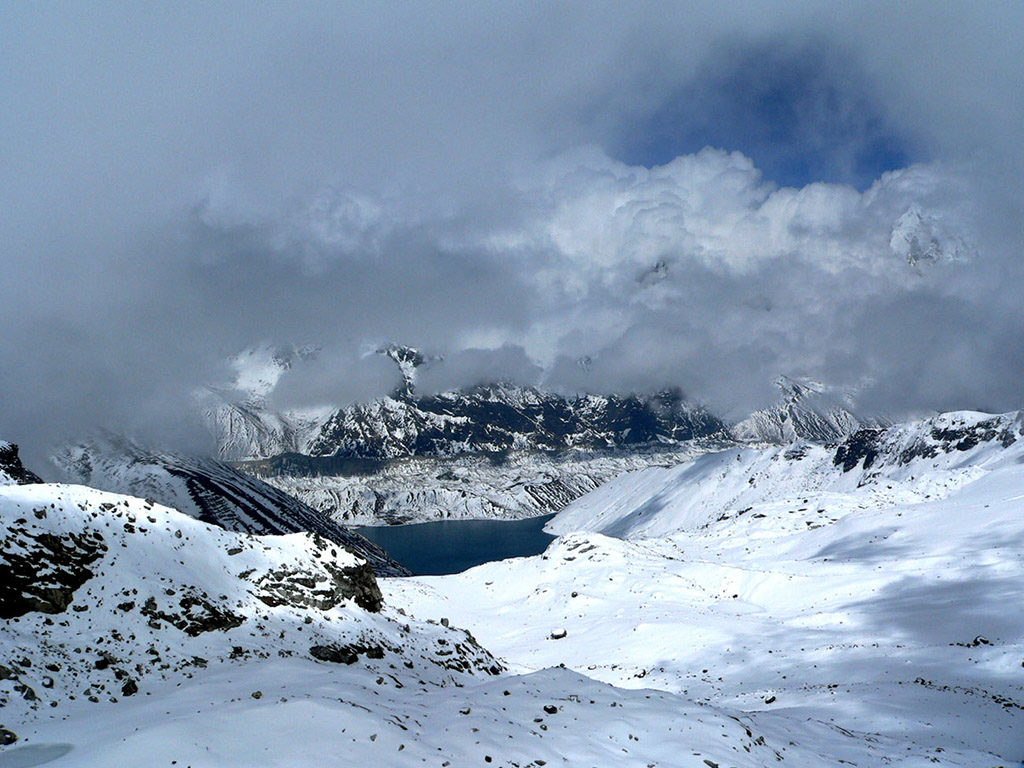
A view from Renjo La pass above the Gokyo valley.
Can you trek Gokyo without Base Camp, or add it to another trek?
Yes. Most trekkers visit Gokyo as an add-on to Base Camp, but Gokyo can be a stand-alone trek or combined with other routes. If you have a different schedule in mind, send your dates and the team will suggest a route. See the Gokyo Lakes guide for the details.
Which trek should you choose?
| If you… | Choose |
|---|---|
| Want the famous goal in the shortest time | Everest Base Camp, 14 days |
| Have three extra days, strong fitness and want a loop | Everest Base Camp and Gokyo Lakes, 17 days |
| Prefer quiet trails and lakes more than Base Camp | Gokyo and Renjo La, 14 days |
| Are trekking in winter | Everest Base Camp, or Gokyo without the pass loop |
| Are a first-time high-altitude trekker | Everest Base Camp, 14 days |
| Want the biggest high-pass challenge | The 20-day Three Passes and Everest Base Camp trek |
| Are short of time | The Everest helicopter trek or the 7-day Everest View trek |
For planning and costs, read the Everest Base Camp trek cost from India, the 32 trek tips, the guide on what to expect, and the insurance guide. For a pass crossing, check that your insurance covers trekking to the highest point on your route.
FAQ
Is Gokyo better than Everest Base Camp? Neither is better. Base Camp offers the famous goal and a close view of Everest, while Gokyo offers lakes, quieter trails and a wide panorama.
How many extra days does Gokyo add? The Base Camp and Gokyo trek is 17 days, three days longer than the 14-day Base Camp trek.
Is Cho La pass dangerous? It is a high, glaciated pass where snow and ice can make footing difficult. Guides check conditions and decide on the day. Microspikes and poles help.
Can I do Gokyo in winter? Gokyo itself can often be reached, but Cho La is often snowbound, so the loop may not be safe. Ask your operator.
Which is harder, Gokyo or Base Camp? The Base Camp and Gokyo loop is harder because it is longer and adds Cho La. Both reach high altitude.
Which has better views, Kala Patthar or Gokyo Ri? Kala Patthar is closer to Everest. Gokyo Ri gives a wider panorama of four 8,000 m peaks. Many trekkers like both.
Which trek is less crowded? Gokyo and Renjo La is the quietest. The Base Camp trail is the busiest.
Can I trek Gokyo without Base Camp? Yes. The Gokyo and Renjo La trek does this in 14 days.
Is it better to go to Base Camp first? Our itinerary does, for a better acclimatisation profile and an easier pass direction. Either direction is possible.
How high is Gokyo Ri? About 5,357 m.
How high are the Gokyo Lakes? The chain of lakes sits at roughly 4,700 m to 5,000 m.
What is the best month for Gokyo? Late September to November, and March to May. Winter limits the pass.
Do I need extra gear for Cho La? Microspikes and trekking poles are helpful in icy conditions. Your operator will advise.
What does each trek cost? Package pages list INR 85,000 for Base Camp, INR 105,000 for Base Camp and Gokyo and INR 90,000 for Gokyo and Renjo La, per person, on two sharing.
Is insurance different for the longer trek? The policy must cover the highest altitude on your route, including the passes. Check the altitude limit.
Choose your trek with Base Camp Hikes
For dates and a quote, message the team on WhatsApp or phone at +91 932 595 1234 (9 am to 7 pm IST), write to info@basecamphikes.com, or use the enquiry form.
Sources
- Nepal Tourism Board: safety in the mountains
Photo credits (Flickr): Zielonamapa.pl, akunamatata, Steve Upton, Leon Kovacic, Ivan Borisov, McKay Savage, Mahatma4711