
 By
Almost every Everest Base Camp trek begins with the same 15-minute flight into Lukla, and almost every delay on the trek starts with that flight too. Two questions decide how smoothly it goes: which airport you fly from, Kathmandu or Ramechhap (Manthali), and how many spare days you keep at the end. This guide answers both, using the official airport data published by the Civil Aviation Authority of Nepal (CAAN) and the terms of our own packages.
The short answer
- Which airport? Our package pages state that Lukla flights leave from and return to Ramechhap in busy periods, with a road transfer of about 4 to 4.5 hours from Kathmandu and a start around 2 am. Plan for Ramechhap unless we confirm Kathmandu for your dates.
- How many spare days? Two between 10 September and 10 May, three in the shoulder weeks of May and early September, and four in the monsoon windows. Always add them after the trek, never before.
- International flight home? Book it for after your spare days, not for the last day of the itinerary.

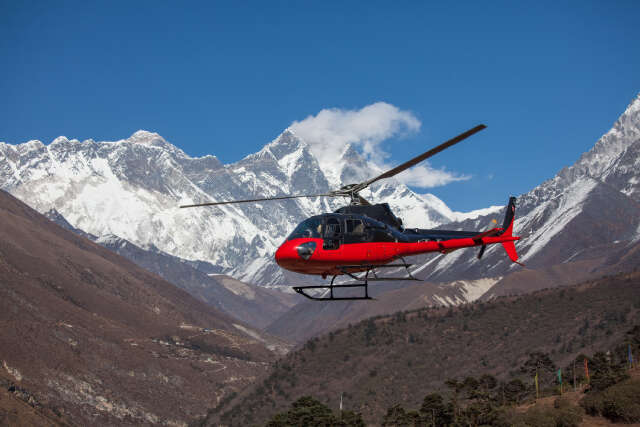
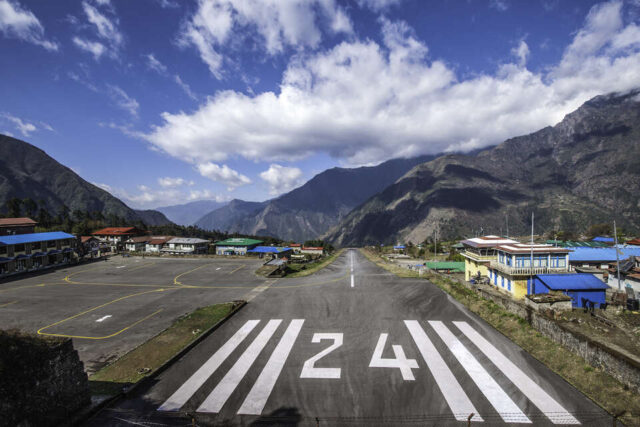
Tenzing-Hillary Airport in Lukla: a 527 m runway at 2,846 m, and the one point every Everest trek has to pass through.
Kathmandu or Ramechhap: which airport will you fly from?
Kathmandu is the capital’s international airport. Ramechhap (Manthali) is a small airport about 495 m above sea level, east of Kathmandu, that is used for Lukla flights when Kathmandu is busy. The airline schedule decides which one applies on your date, not the traveller. CAAN lists Kathmandu, Ramechhap and Phaplu as the scheduled connections of Lukla airport.
| What changes for you | From Kathmandu | From Ramechhap (Manthali) |
|---|---|---|
| Road transfer | None, you check in at the airport | About 4 to 4.5 hours by road, leaving around 2 am (our package pages) |
| Flight time to Lukla | About 35 minutes (our package pages) | About 15 minutes (our package pages) |
| Airport hours (CAAN) | Not covered in this guide | 16 Feb to 15 Nov: 06:00 to 12:15 Nepal time. 16 Nov to 15 Feb: 06:30 to 12:15 Nepal time. Morning flights only. |
| Night before the flight | Normal night, normal breakfast | Early night, wake-up in the small hours |
| Return day | Land in Kathmandu in the morning | Land in Ramechhap, then a 4 to 6 hour road transfer to Kathmandu |
| Best for | The easiest day for tired legs | The routine in busy periods, so plan for it |
Where we could not confirm. We found no CAAN notice that states which airport is used in which months. The season in which Ramechhap applies is therefore taken from our package pages, which say it is used during busy periods. Send us your dates and we will tell you which airport they are likely to use.
What the official airport data says about Lukla and Ramechhap
CAAN publishes an airport profile for Lukla and lists both airports in Nepal’s Aeronautical Information Publication (AIP). The figures below come from those pages.
| Item | Lukla (Tenzing-Hillary, VNLK) | Ramechhap (VNRC) |
|---|---|---|
| Elevation | 2,846 m (9,337 ft) | About 495 m (1,624 ft) |
| Runway | 527 m x 20 m, asphalt, direction 06/24 | About 580 m x 20 m, asphalt, direction 03/21 |
| Slope | 11.7% upslope: take-off on runway 24, landing on runway 06 | About 0.35%, nearly flat |
| Traffic rule | Visual flight rules only | Not stated on the AIP page |
| Listed hours (Nepal time) | About 06:00 to 18:30 (16 Feb to 15 Nov); about 06:30 to 18:00 (16 Nov to 15 Feb) | 06:00 to 12:15 (16 Feb to 15 Nov); 06:30 to 12:15 (16 Nov to 15 Feb) |
| Status | In operation; may change by NOTAM | In operation; may change by NOTAM |
Three points follow from the data.
- The height gain is large. The two airports sit roughly 2,350 m apart in height, so a 15-minute flight lands you at an altitude where some people notice the first effects. Our itinerary then drops you to Phakding at 2,652 m for the first night.
- Visual flight rules explain the cancellations. Pilots need to see the terrain. Cloud or fog on the mountain side can stop flights even when the sky above Kathmandu or Ramechhap is clear.
- One short strip serves both directions. Landings are uphill on runway 06 and take-offs downhill on runway 24, so conditions at both ends of the strip matter.
CAAN’s operating-status line says arrangements for these small airports can change and are notified by NOTAM, the official notice to airmen. That is a further reason to confirm the details with us close to your departure.
How the flight day works
This is the order of events for a Ramechhap departure, based on our package pages.
- Night before. Pack your day bag, then sleep early. Passport, medicines and valuables go in your hand baggage.
- Around 2 am. Leave the Kathmandu hotel by road for Ramechhap, a drive of about 4 to 4.5 hours.
- At the airport. Luggage is limited to 10 kg checked plus 5 kg hand baggage, 15 kg in total.
- The flight. About 15 minutes to Lukla. We aim for the first flight of the day, when conditions are usually steadiest.
- The first walk. From Lukla at 2,800 m, a gentle 3 to 4 hour walk of about 8 km to Phakding.
Extra luggage can stay in the Kathmandu hotel while you trek. Your trek bag is carried by a porter in the duffel we provide.

The Dudh Kosi valley below Lukla, where the first afternoon’s walk to Phakding begins.
How many buffer days do you need?
A buffer day is a spare day after the trek that you hope not to use. Our guidance for the 14-day Everest Base Camp trek is that the plan has no slack for weather, so spare days are required rather than optional.
| Travel window | Spare days to add | Where they go |
|---|---|---|
| 10 September to 10 May (the main trekking seasons) | 2 | After the trek, in Kathmandu |
| 10 May to 1 June, and 1 to 10 September | 3 | After the trek, in Kathmandu |
| 1 to 15 June, and 10 to 30 August | 4 | After the trek, in Kathmandu |
| 15 June to 10 August, and 31 August | Not covered by our guidance | Ask us before you book |
Put the spare days at the end because that is where the flight risk sits for most travellers, and because unused days can be spent in Kathmandu rather than lost on the trail. It also means your international flight must leave after the last spare day.
What do spare days cost?
Extra Kathmandu nights are not in the package price. They are charged at INR 3,000 for a single room, INR 3,500 for a double and INR 4,500 for a triple, per room per night, as shown on our package pages. Meals are extra. These are hotel-only totals per room:
| Spare nights | Single room | Double room | Triple room |
|---|---|---|---|
| 2 nights | INR 6,000 | INR 7,000 | INR 9,000 |
| 3 nights | INR 9,000 | INR 10,500 | INR 13,500 |
| 4 nights | INR 12,000 | INR 14,000 | INR 18,000 |
Two people sharing a double room for the standard two spare nights pay INR 7,000 between them for the hotel. Read our guide to booking extra hotel nights in Kathmandu for the full detail.
If your flight is cancelled
Cancellations do happen, and the package terms set out what follows.
| Option | What it means | Cost to you |
|---|---|---|
| Wait and rebook | We rebook you on the next available flight. In peak season that can be a later day. We try to book the first flight of the day. | No service fee for changing the Lukla reservation. Extra hotel nights and meals are yours. |
| Helicopter charter | We try to arrange a charter, depending on demand. You take it in place of the scheduled flight. | US$600 or more per person (INR 65,000 or more). US$150 of the flight fare is refunded (INR 10,000 for Indian nationals), so the net is about US$450 or INR 55,000 or more. |
| Shorten the trek | The itinerary may change if flights are cancelled. Unused days and services are not refunded. | Depends on what is cut |
Set against that, three spare nights in a double room cost INR 10,500 per room. For most travellers the spare days are the cheaper insurance. The helicopter is the answer when a fixed date, such as a connecting flight, cannot move.
The return flight is the one that matters
The 14-day itinerary has you walk from Namche to Lukla on Day 12, fly out on Day 13 and leave Kathmandu on Day 14. That leaves no room for a delay. Three rules keep it safe:
- Never book the international flight for Day 14. Book it for Day 14 plus your spare days, which is Day 16 in the main seasons.
- If the return flight lands at Ramechhap, allow 4 to 6 hours for the road to Kathmandu. Do not plan a same-day connection.
- Carry travel insurance that covers trekking to at least 5,545 m, the height of Kala Patthar, and helicopter evacuation. Our terms require cover up to 6,000 m.
What each of our Everest packages assumes
Every package that flies into or out of Lukla includes the flights and a licensed guide. None of them includes delay costs, so the spare days sit on top of the price. Prices are as shown on our website on 21 October 2026.
| Package | Price | Lukla flights | Spare days |
|---|---|---|---|
| Everest Base Camp, 14 days | Rs 85,000 | Day 2 out, Day 13 back | Add 2 to 4 days at the end |
| Everest Base Camp and Gokyo Lakes, 17 days | Rs 105,000 | Day 2 out, Day 16 back | Add 2 to 4 days at the end |
| Everest View, 7 days | Rs 70,000 | Day 2 out, Day 6 back | Add 2 to 4 days at the end |
| Everest Base Camp Luxury, 14 days | Rs 250,000 for two sharing | Day 2 out, Day 13 back | Add 2 to 4 days at the end |
| Three Passes and Everest Base Camp, 20 days | Rs 120,000 | Day 2 out, Day 19 back | Add 2 to 4 days at the end |
| Gokyo and Renjo La Pass, 14 days | Rs 90,000 | Day 2 out, Day 13 back | Add 2 to 4 days at the end |
| Everest Base Camp from Jiri, 22 days | Rs 120,000 | No flight in (bus to Jiri); Day 21 flight out | Add 2 to 4 days at the end |
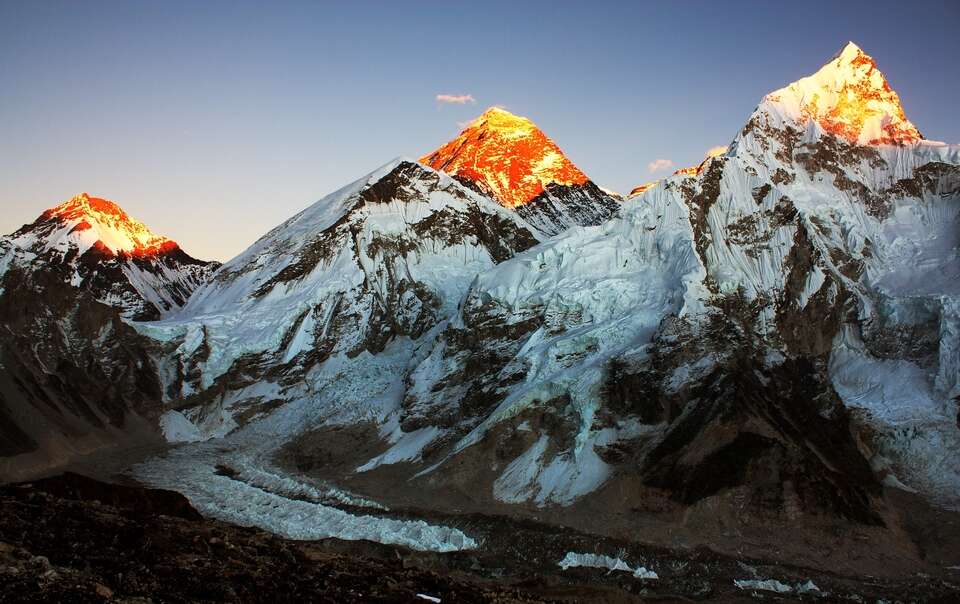
Everest Base Camp, 14 days, Rs 85,000 all-inclusive. The core route to Base Camp and Kala Patthar. View itinerary | Enquire now
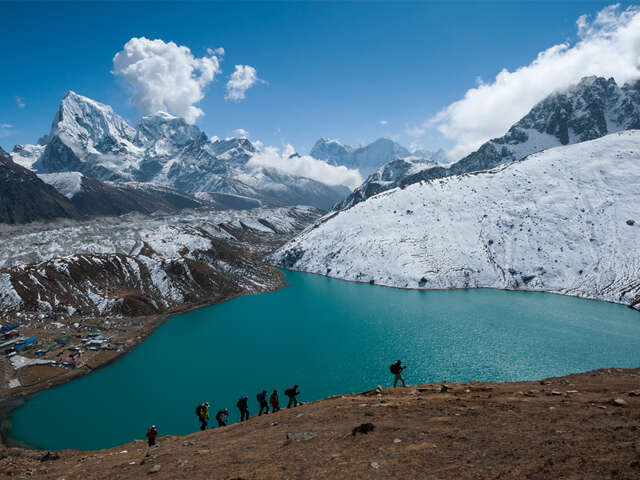
Everest Base Camp and Gokyo Lakes, 17 days, Rs 105,000 all-inclusive. Adds the Gokyo lakes; suits trekkers who can walk 5 to 8 hours a day. View itinerary | Enquire now
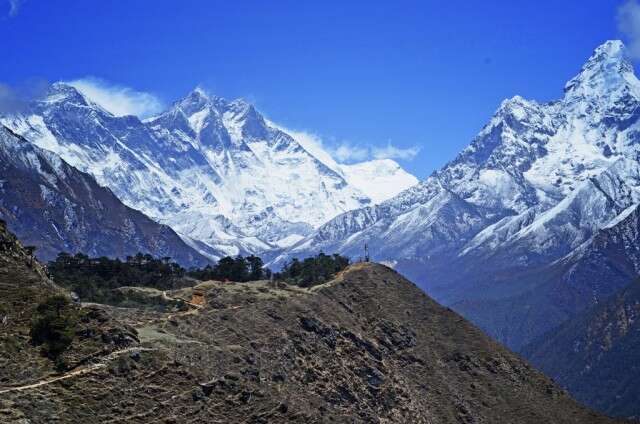
Everest View, 7 days, Rs 70,000 all-inclusive. The short route to Namche and the Everest View Hotel, for travellers with a week. View itinerary | Enquire now
Everest Base Camp Luxury, 14 days, Rs 250,000 for two sharing. Two nights in a five-star Kathmandu hotel and luxury lodges for five nights on the trek. View itinerary | Enquire now
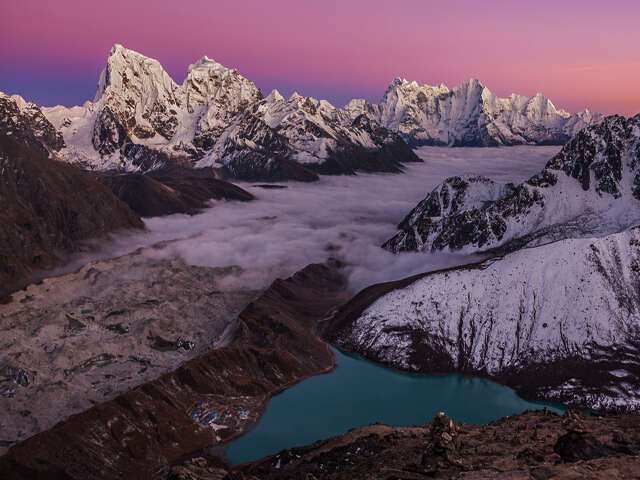
Three Passes and Everest Base Camp, 20 days, Rs 120,000 all-inclusive. The high-pass circuit with Base Camp, for experienced trekkers. View itinerary | Enquire now
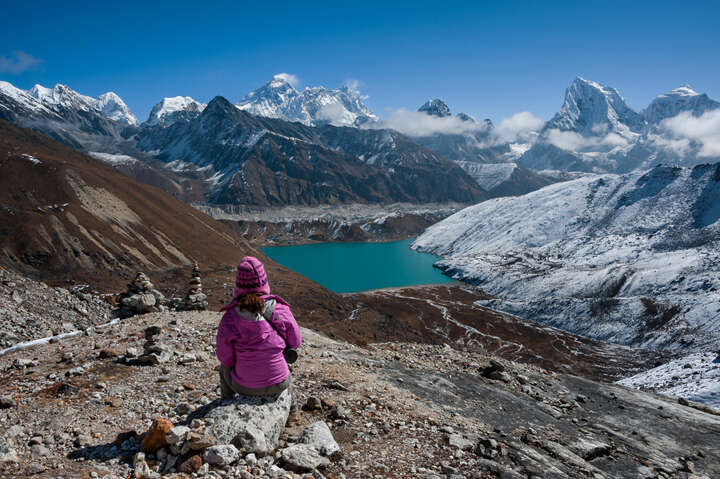
Gokyo and Renjo La Pass, 14 days, Rs 90,000 all-inclusive. The Gokyo lakes and the Renjo La pass, away from the main Base Camp trail. View itinerary | Enquire now
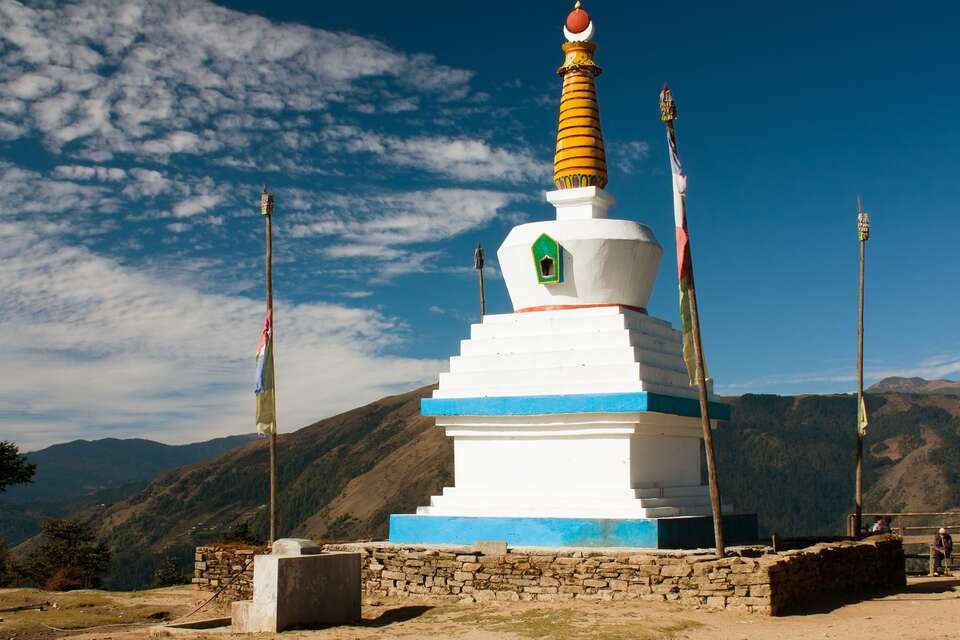
Everest Base Camp from Jiri, 22 days, Rs 120,000 all-inclusive. The classic walk-in from Jiri: no flight in, so only the flight out can be delayed. View itinerary | Enquire now
Related reading: our complete Everest Base Camp guide for 2027 and the post on trekking Everest Base Camp without a guide.
Flight-day checklist
- Passport, medicines, cash and valuables in your 5 kg hand baggage.
- Checked luggage at 10 kg or less. Leave the rest in Kathmandu.
- A warm layer for the early start, and snacks for the road to Ramechhap.
- Insurance papers that include helicopter evacuation, kept where your guide can see them.
- A phone charged the night before, because charging on the trail costs extra.
- Your international flight booked for after the spare days.
FAQ
Do Lukla flights leave from Kathmandu or Ramechhap? Both airports are listed by CAAN as scheduled connections of Lukla. Our package pages say flights leave from and return to Ramechhap in busy periods. Send us your dates and we will tell you which airport is likely.
How far is Ramechhap from Kathmandu? Our package pages give a drive of about 4 to 4.5 hours out, leaving around 2 am, and 4 to 6 hours coming back. The times vary with traffic and road conditions.
How many spare days should I keep? Two between 10 September and 10 May, three from 10 May to 1 June and 1 to 10 September, and four from 1 to 15 June and 10 to 30 August. Add them after the trek.
Can I fly home the day after I return from Lukla? We advise against it. The 14-day itinerary leaves no slack, so book your international flight for after the spare days.
Why do Lukla flights get cancelled? CAAN lists Lukla as a visual flight rules airport with a 527 m runway that slopes up at 11.7%. Pilots need to see the terrain, so cloud or fog on the mountain side stops flights.
Who pays if my flight is cancelled? We rebook you on the next available flight and charge no service fee for changing the Lukla reservation. Extra hotel nights and meals during a delay are paid by the traveller.
How much is a helicopter instead of the flight? We try to arrange a charter at US$600 or more per person (INR 65,000 or more), depending on demand. US$150 of the flight fare is refunded, or INR 10,000 for Indian nationals.
What is the baggage limit on the Lukla flight? 10 kg checked plus 5 kg hand baggage, 15 kg in total. We provide a duffel bag, and extra luggage stays at the Kathmandu hotel.
Is Lukla airport open all year? CAAN lists operating hours for the whole year, in two seasonal periods, and says the operating status can change by NOTAM. Weather, not the calendar, is what stops flights.
Does the package price cover a delay? No. Extra hotel nights, meals and any extra days are paid by the traveller, so keep a cash budget for them.
Plan your Lukla flight with us
Tell us your travel month and we will confirm the likely departure airport, the spare days to keep and the best date for your international flight. Call or WhatsApp +91 932 595 1234 (9 am to 7 pm IST), email info@basecamphikes.com or use the enquiry form. Indian citizens should contact us for the documents and fees that apply.
Sources
- Civil Aviation Authority of Nepal, Tenzing-Hillary Airport profile (elevation, runway, visual flight rules, hours)
- Civil Aviation Authority of Nepal, Aeronautical Information Publication, AFIS and STOL aerodromes (Lukla and Ramechhap data, amendment 03/2025)
- Our package pages: Everest Base Camp, 14 days, Everest Base Camp and Gokyo Lakes, 17 days, Everest View, 7 days, Everest Base Camp Luxury, 14 days, Three Passes and Everest Base Camp, 20 days, Gokyo and Renjo La Pass, 14 days, Everest Base Camp from Jiri, 22 days (itineraries, flights, baggage, delay and helicopter terms, prices)
- Not found: no official notice stating which months use Ramechhap, and no official flight or road times. Those figures come from our package pages.
Information correct as of 21 October 2026.