
 By
Search this question and you get two confident answers. One says a guide is now compulsory and solo trekking is banned. The other says nobody checks, so go alone. Both quote something real, so we read the government pages behind each claim. This post shows what they say, what they leave out and what we would do.
The short answer, as of 19 October 2026
The national rule says you need a guide. The Nepal Tourism Board (NTB) states that trekkers on listed routes, Everest Base Camp included, must go with a licensed guide and an agency-issued TIMS card.
The local page says nothing about guides. The Khumbu municipality sells its own Trek Card for a passport and a photo.
Our advice: treat a licensed guide as required until an official notice says otherwise. We found no notice since 2023 that settles the difference.
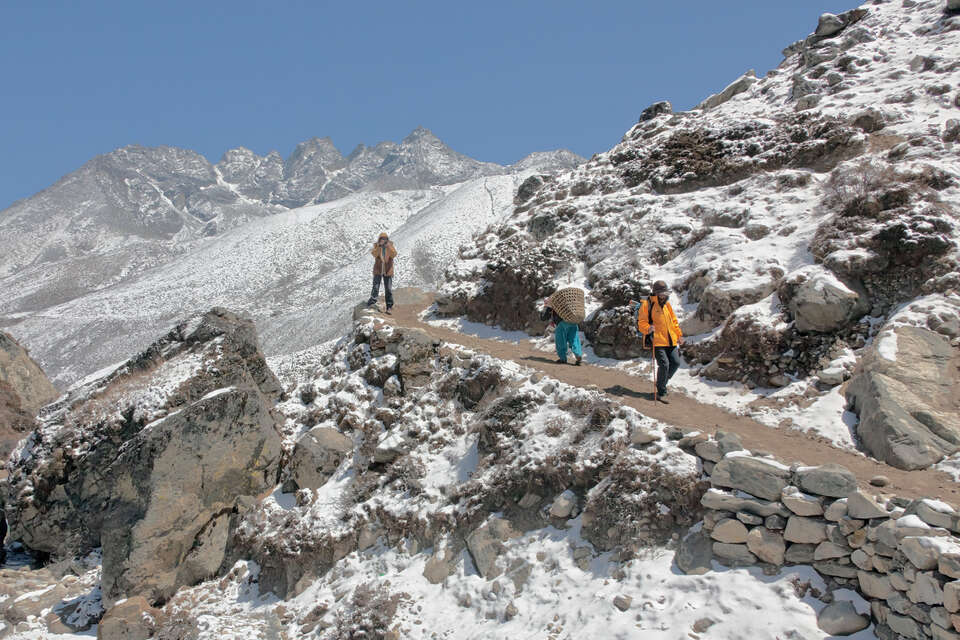
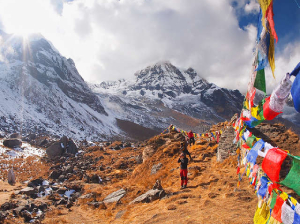
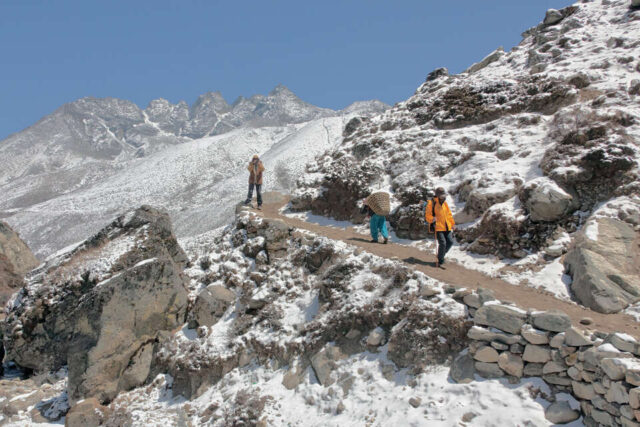
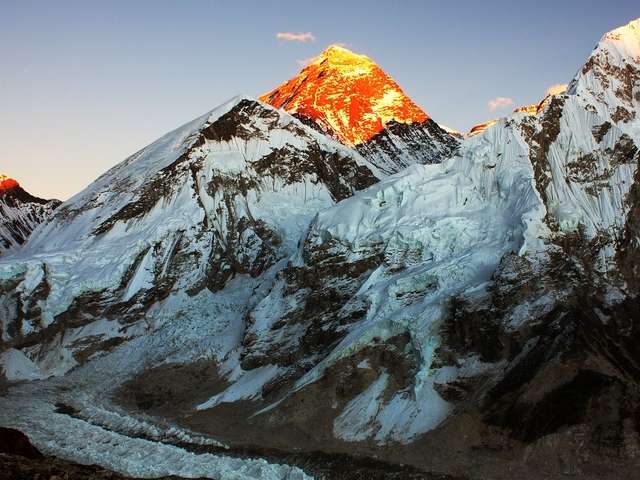
The trail above Lobuche: well worn, but at 4,900 m the rules of altitude matter more than the rules of paperwork.
Which answer fits you?
| Your situation | What we would do |
|---|---|
| First time above 3,000 m | Take a licensed guide. The rule question is the smaller worry. |
| Have trekked above 4,000 m and can read your own symptoms | Confirm the guide and TIMS question with an agency before you fly. Go independent only with insurance and spare days. |
| Indian citizen | You pay the SAARC rate for permits. The guide question is the same. Contact us for the documents and fees that apply. |
| Heading to Manaslu, Upper Mustang, Tsum, Nar-Phu or Dolpa | A licensed guide and an agency are required. These are restricted areas. |
| Short on leave | Book a guided package. Permits, flights and lodging are settled for you. |
Who decides, and what does each page say?
Four bodies touch an Everest trek: the NTB, the Khumbu Pasang Lhamu municipality, Sagarmatha National Park and the Department of Immigration. Only the first one sets a guide rule for this route.

Nepal Tourism Board: guide and TIMS required on listed routes
The NTB’s TIMS card page says that since 31 March 2023, trekkers in specific protected areas must be accompanied by a licensed guide and carry a TIMS card issued through a registered trekking agency. The Everest entries on the list are Everest Base Camp, Gokyo, Chho La, Renjo La, Three Passes, Everest View, Mera Peak and Amphu Labtsha. The same list names Manaslu, Langtang, Upper Mustang, the Annapurna Circuit and many other routes.
The page describes the card as an eCard with a QR code, which agencies buy online for each trekker. That has a practical effect. If you walk in alone, the page gives you no obvious way to get one.
Khumbu Pasang Lhamu municipality: a Trek Card, no guide mentioned
The municipality’s Trek Card page lists NPR 3,000 for most visitors and NPR 2,000 for SAARC and Chinese citizens. It asks for a passport and a recent photo, names the Tourist Information Centre in Lukla as the place to get it and quotes about 15 minutes. It does not say whether a guide is needed, and it does not mention the NTB rule.
Sagarmatha National Park: entry fee only
The NTB’s Sagarmatha National Park page gives the entrance fee as NPR 3,000 per person per entry for foreigners and NPR 1,500 for SAARC nationals. It lists no guide rule.
Department of Immigration: restricted areas only
Trekking permits from Immigration apply to restricted areas. The NTB’s trekking permit page adds that trekking in any area or on any route outside those specified is deemed a violation of law. Its fee list includes part of Khumbu Pasang Lhamu municipality (ward 5) at USD 20 per person per week for the first four weeks. We could not confirm from that listing which villages sit in that ward, so ask us about your exact route before you assume the standard trail is unrestricted.
So why do the two camps disagree?
Because each is quoting a different, real page, and neither page mentions the other. The NTB rule is national and dates from 2023. The Trek Card is local and sold at Lukla. We found no official document since then that withdraws the NTB rule, restates it for Everest or exempts the municipality.
Government pages also lag each other. An older NTB trade-site page still lists different TIMS fees and says the card is available from several offices, which does not match the newer TIMS page. When pages disagree, the newer, more specific one is the safer guide.
What is the proof for each claim?
Every claim below comes from a government page we opened on 19 October 2026. None of them carries a publication date, so we treat them as current but unconfirmed.
| Claim | Source | Type |
|---|---|---|
| Guide and agency TIMS required on listed routes, including EBC, Gokyo and Three Passes (from 31 Mar 2023) | NTB TIMS card page | Official, national |
| TIMS fee NPR 2,000; SAARC NPR 1,000 | NTB TIMS card page | Official, national |
| Trek Card NPR 3,000; SAARC and China NPR 2,000; passport and photo; no guide mentioned | Khumbu Pasang Lhamu Trek Card page | Official, local |
| Park entry NPR 3,000 per entry; SAARC NPR 1,500; no guide rule listed | NTB Sagarmatha National Park page | Official, national |
| Restricted areas need an Immigration permit; part of Khumbu Pasang Lhamu (ward 5) is on the fee list | NTB trekking permit page | Official, national |
| Altitude rules, Himalayan Rescue Association aid posts | NTB safety in the mountains page | Official, national |
| A 2026 notice withdrawing or enforcing the guide rule on Everest | Not found | Gap |
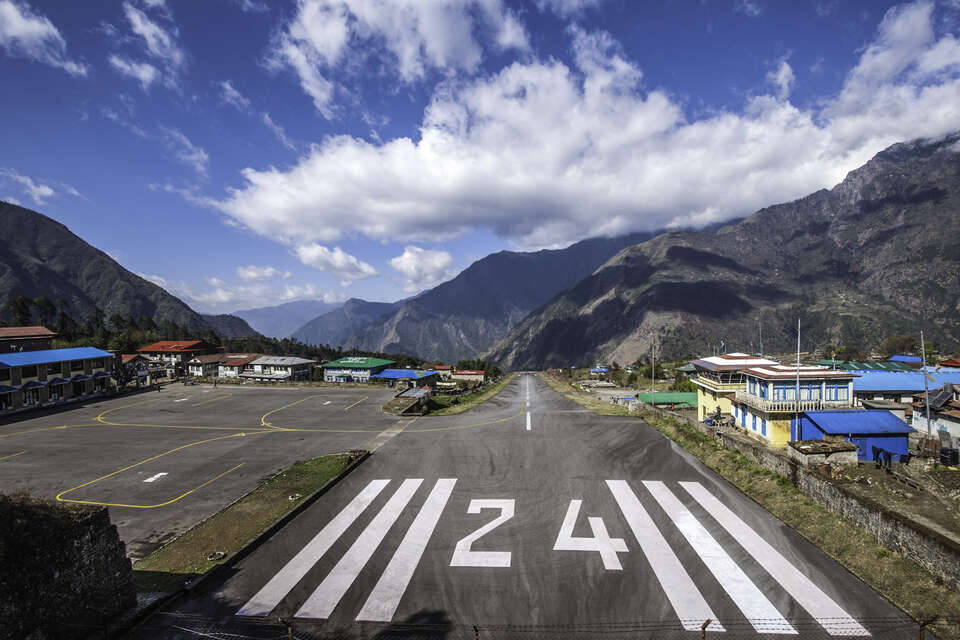
Lukla, where the Trek Card is sold and where most Everest treks begin.
Does the 2026 “solo trekking is back” news apply to Everest?
No. The change concerns restricted areas such as Manaslu, Tsum Valley, Nar-Phu, Upper Mustang and Dolpa. As reported, the Department of Immigration let individual foreigners apply for those permits from 22 March 2026, but only through a registered agency with a licensed guide, so it is closer to “solo with a guide” than “solo alone”. We could not open the notice text itself, so confirm current conditions before you plan around it.

What will the permits cost?
Most foreigners pay about NPR 6,000 on the trail: NPR 3,000 for the park and NPR 3,000 for the Trek Card. SAARC nationals pay about NPR 3,500. TIMS comes on top, at NPR 2,000 (SAARC NPR 1,000), and it applies only if the NTB rule is enforced on your route. Indian citizens pay the SAARC rate. Contact us for the documents and fees that apply.
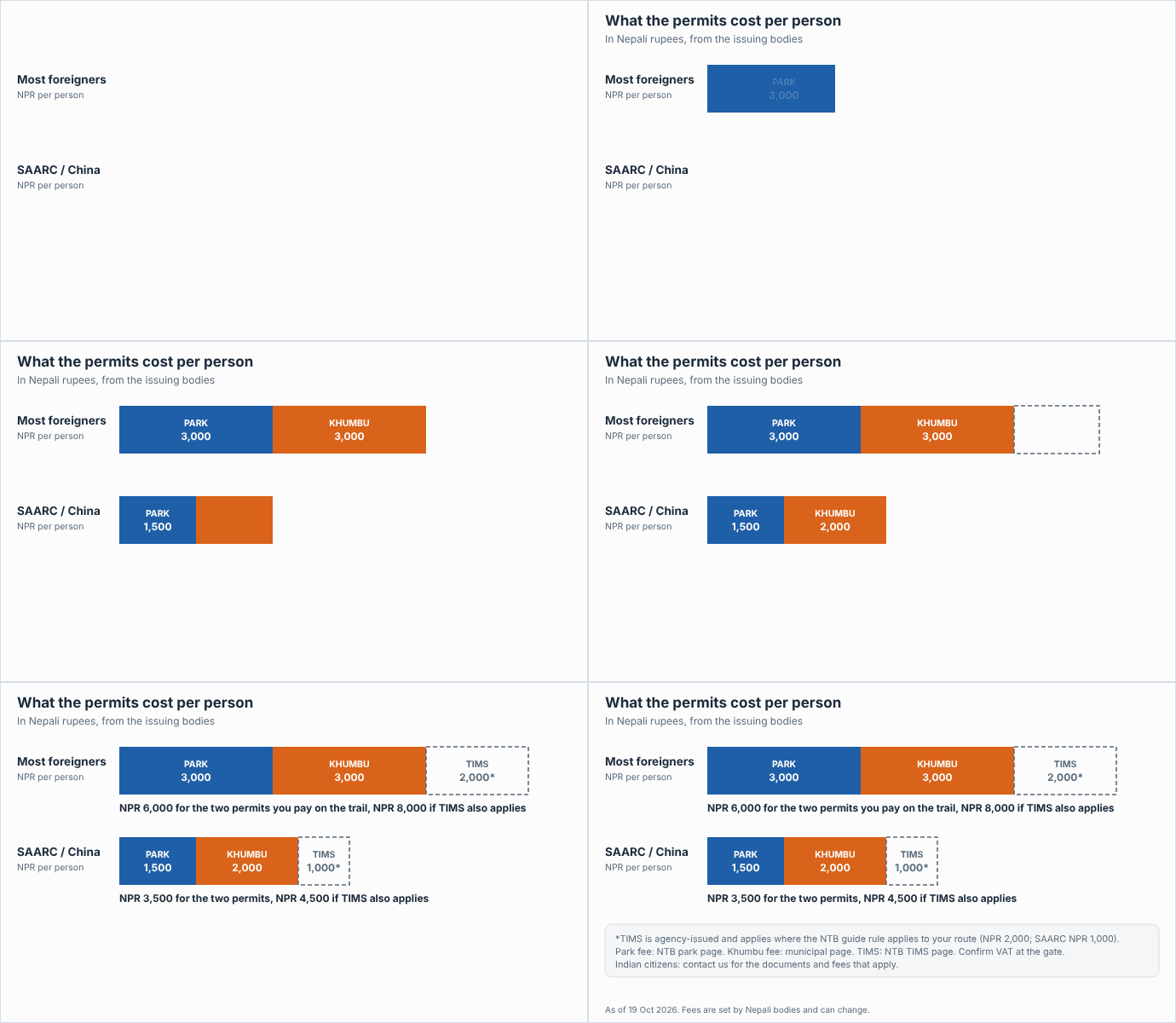
Permits are the small part of the bill. Flights, food, lodging, visa and insurance come on top. For comparison, our 14-day Everest Base Camp package is Rs 85,000, listed as all-inclusive on our website on 19 October 2026. It covers a licensed guide, porter service, the Everest permit and TIMS card, Lukla flights, teahouse lodging and two Kathmandu nights. Visa and insurance are not included, and the page does not say whether the price is per person, so confirm that when you enquire.
What actually goes wrong without a guide?
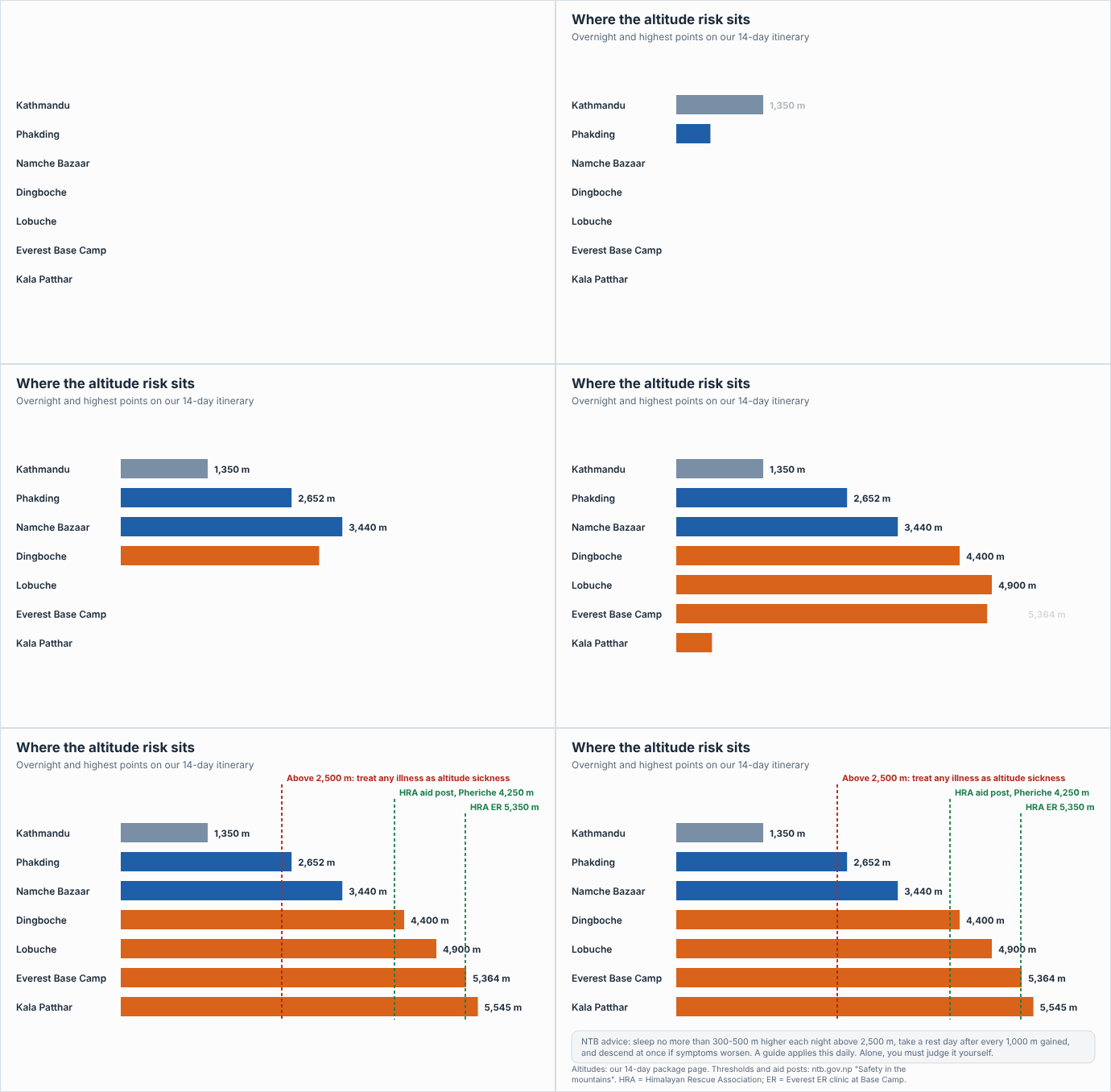
Mostly altitude. On our itinerary Base Camp is at 5,364 m and Kala Patthar at 5,545 m. The NTB’s safety advice is short: treat any illness above 2,500 m as possible altitude sickness, sleep no more than 300 to 500 m higher each night above that height, take a rest day after every 1,000 m gained and descend if symptoms get worse. The Himalayan Rescue Association runs aid posts at Pheriche (4,250 m) and Base Camp (5,350 m).
A guide applies those rules for you every day. Alone, you have to be honest with yourself when you feel fine, the weather is perfect and a rest day looks like a waste.
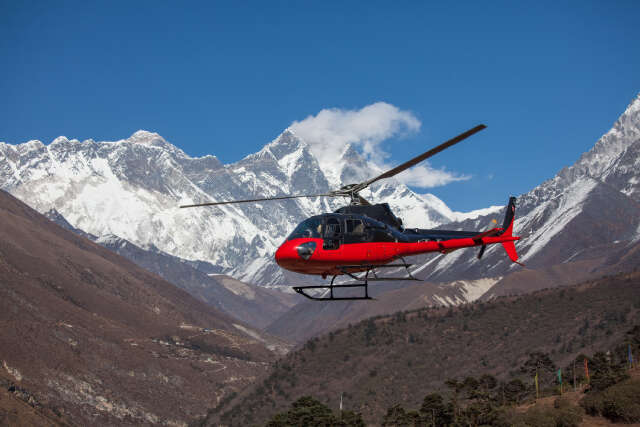
The rest is logistics. Cloud can delay or cancel Lukla flights for a day or more, so keep spare days. Wi-Fi and charging are paid extras on the trail, so a phone is not a safety plan. If a flight is cancelled and you charter a helicopter, Lukla to Kathmandu costs US$600 or more (INR 65,000 or more) per person and rises with demand.

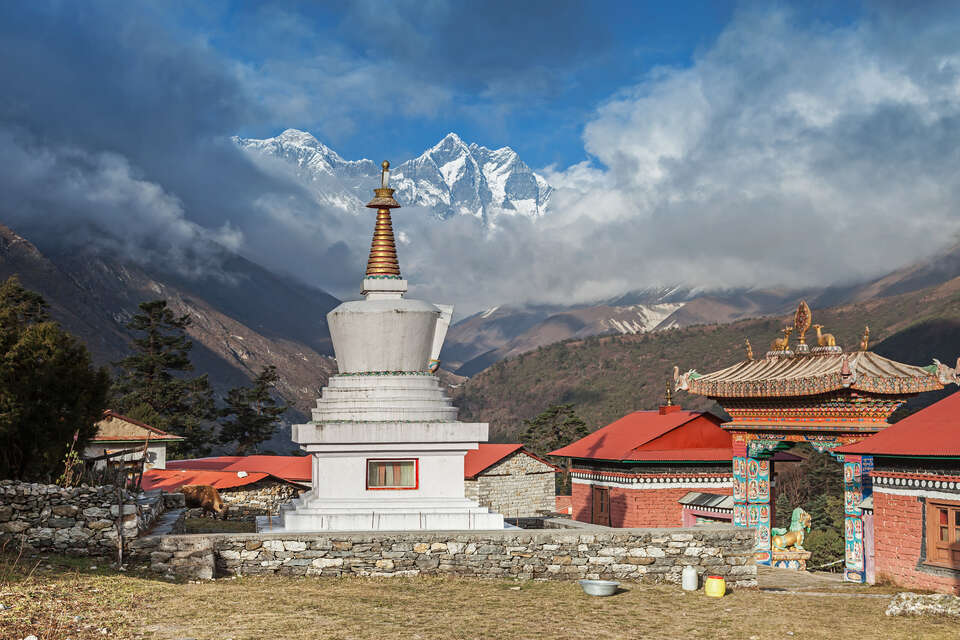
Namche Bazaar, the first acclimatisation stop: where independent trekkers are most tempted to skip the rest day.
Which days test your judgment most?
Altitude does not arrive as one hard day. On our 14-day itinerary it shows up at a few predictable moments, and each one is a decision a guide makes for you.
| Day | Where | Why it needs a decision |
|---|---|---|
| 4 | Namche Bazaar, 3,440 m | A rest day that feels optional when you are feeling strong. It is your first acclimatisation buffer. |
| 7 | Dingboche, 4,400 m | Second rest day, with sleeping altitude now above 4,000 m. |
| 9 | Gorakshep, 5,180 m, and Base Camp, 5,364 m | The highest overnight stay on this plan, combined with a push on to Base Camp. |
| 10 | Kala Patthar, 5,545 m | The highest point. Going down afterwards is the response the NTB advises when symptoms worsen. |
| 2 and 13 | Lukla flights | Cloud can delay flights. A buffer day protects your international flight home. |
So, should you go without one?
An independent trek is only realistic if you:
- ✅ have trekked above 4,000 m before and know how your body reacts;
- ✅ have confirmed the guide and TIMS question with an agency before you fly;
- ✅ carry insurance with altitude and helicopter evacuation cover;
- ✅ add two spare days and tell someone at home your plan;
- ✅ stay on the standard route and turn back at the first serious symptom.
Take a guide if you:
- ⚠️ are new to altitude;
- ⚠️ are travelling alone or have limited leave;
- ⚠️ want permits, flights and meals settled before you leave India.
Our honest take
We sell guided treks, so weigh this accordingly. Here is what we would tell a friend. The national page is clear that a guide is required on this route, and nothing official has replaced it. So the safe reading is that you need one. Even setting the rule aside, if you have never been above 4,000 m, a guide is the cheapest safety equipment you can buy.
Six questions to ask any agency before you pay
- Is the guide licensed by the government?
- Is TIMS included, and is it issued in my name before I fly?
- Which rest days are built into the itinerary?
- What is the plan if Lukla flights are delayed, and who pays for extra nights?
- What must my insurance cover? (Ours must cover trekking up to 6,000 m and helicopter evacuation, with proof emailed before arrival.)
- What is not included, such as visa, insurance, bottled water, Wi-Fi and tips?
Pick your level of support
Each package lists a licensed guide, porter service, permits and Lukla flights. Prices are as shown on our website on 19 October 2026, with a small deposit in India and the balance in Nepal.
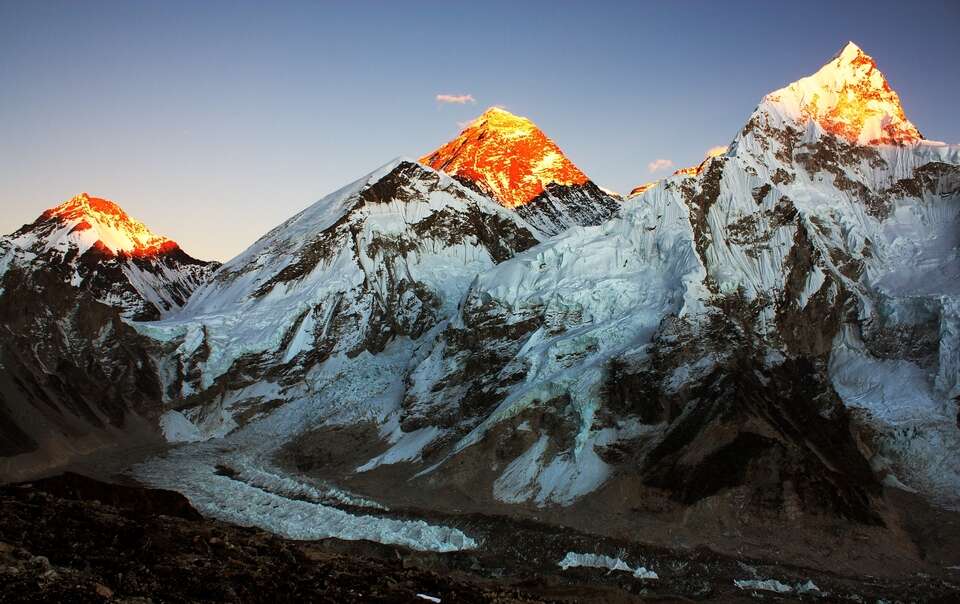
Everest Base Camp, 14 days, Rs 85,000 all-inclusive. The core route to Base Camp and Kala Patthar. View itinerary | Enquire now

Everest Base Camp and Gokyo Lakes, 17 days, Rs 105,000 all-inclusive. Adds Gokyo; suits trekkers who can walk 5 to 8 hours a day. View itinerary | Enquire now
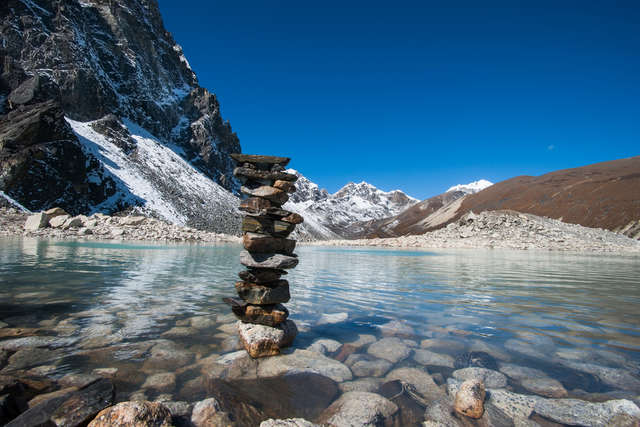
Three Passes and Everest Base Camp, 20 days, Rs 120,000 all-inclusive. Base Camp plus three high passes; suits fit trekkers. View itinerary | Enquire now
Short on time? Try the Everest View 7 Day Trek (Rs 70,000) or browse our fixed departures.
“Everything was handled professionally and with great attention to detail, from permits to on-ground support.”
Ashish Thakral, Everest Base Camp, April 2026 · more reviews
Not sure which way to go? Ask us
Tell us your dates, your fitness and the treks you have done. We will say honestly whether a guided or an independent trek suits you, and which permits apply to your passport. Free advice, reply within 24 hours.


Start planningWhatsApp usMeet the team
Call +91 932 595 1234 (9am to 7pm IST) · info@basecamphikes.com
FAQ
Can you trek Everest Base Camp without a guide in 2027? The NTB says trekkers on listed routes, Everest Base Camp included, must have a licensed guide and an agency-issued TIMS card. The Khumbu municipality’s Trek Card page lists no guide rule. We found no official notice that settles the difference, so we advise taking a guide.
Is a guide mandatory in Nepal? On the NTB’s list of routes, yes. The list covers many regions, including Manaslu and Upper Mustang. Restricted areas also need an Immigration permit through an agency.
Is a TIMS card required for Everest Base Camp? The NTB’s TIMS page says yes on listed routes and gives NPR 2,000 (SAARC NPR 1,000). Agencies issue it. Confirm with us or the NTB before you travel.
Which permits do I need for Everest Base Camp? A Sagarmatha National Park entry permit and a Khumbu Trek Card, about NPR 6,000 together for most foreigners (about NPR 3,500 for SAARC nationals), plus TIMS where the NTB rule applies.
Where do I buy the Khumbu Trek Card? The municipality’s page names the Tourist Information Centre in Lukla. You need your passport and a recent photo, and it quotes about 15 minutes.
Can Indian citizens trek Everest Base Camp without a guide? Indian citizens pay the SAARC rate for permits, and the guide question is the same as for everyone else. Contact us for the documents and fees that apply.
Is it safe to trek Everest Base Camp alone? It is riskier. Altitude sickness, weather and flight delays are the main dangers, and nobody else watches your symptoms.
What happens if I trek without the required permits? The NTB’s TIMS page lists no penalty. For restricted areas, the NTB’s permit page says trekking outside specified routes is a violation of law. Ask us before you go.
Do I need a porter? We found no rule requiring one for foreigners. Our packages include porter service for your duffel bag.
How much does a guided Everest Base Camp trek cost? We found no official guide tariff. Our 14-day package is Rs 85,000, listed as all-inclusive on our website on 19 October 2026, and it includes the guide.
Sources
All permit and rule information comes from government pages:
- Nepal Tourism Board: TIMS card (guide and TIMS on listed routes, TIMS fees)
- Nepal Tourism Board: Sagarmatha National Park (entry fees)
- Nepal Tourism Board: trekking permit (restricted areas, Khumbu ward 5 fee entry)
- Nepal Tourism Board: safety in the mountains (altitude advice, aid posts)
- Khumbu Pasang Lhamu Rural Municipality: Trek Card (fees, documents, Lukla office)
- Base Camp Hikes: Everest Base Camp 14-day package and insurance terms
Not found: a dated 2026 notice that withdraws or enforces the NTB guide rule on Everest, and a readable copy of the March 2026 Immigration notice on restricted areas.
Information correct as of 19 October 2026.




Comments