
 By
Island Peak is the climb that turns trekkers into mountaineers. It stands above the Chhukung valley in Nepal’s Khumbu, with the bulk of Lhotse looming over its summit, and it asks for something Everest Base Camp never does: crampons, a harness and a pre-dawn start. This guide covers the background of the mountain, who climbed it first, what the route and summit day involve, what it costs and whether you are ready for it. It is written for climbers who are close to booking and want straight answers.
The short version, as of 17 October 2026: our Island Peak climbing package is 18 days at Rs 180,000 (the package page says the price is based on two people sharing). It includes the climbing permit, government-licensed guides, porters, climbing gear and transfers. The route goes via Everest Base Camp and Kala Patthar first, then to Island Peak base camp. Summit day takes 12 to 14 hours.
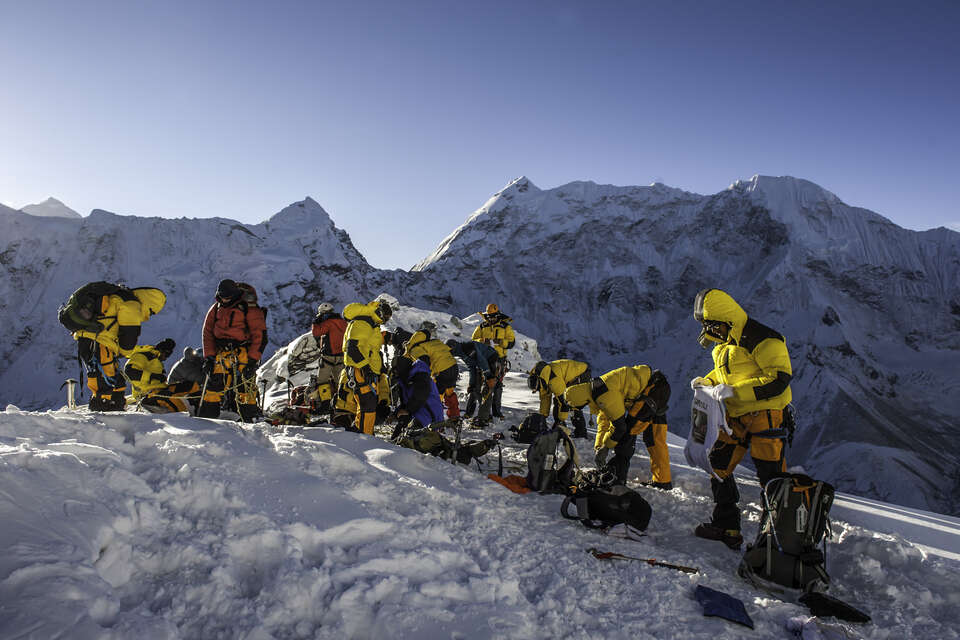
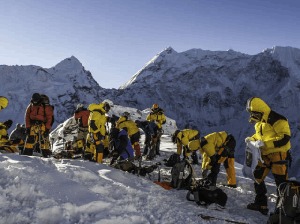
Gear check before the climb: harness, crampons and ice axe come out at base camp.
What is Island Peak?
Island Peak, also called Imja Tse, is a snow and ice peak in Sagarmatha National Park, in the Khumbu region of eastern Nepal. Our itinerary gives its height as 6,189 m (20,305 ft). Published figures vary a little, from about 6,165 m to 6,189 m, so you will see both. Everest, Lhotse and Makalu are all in view from the summit, which is a large part of why the climb is so popular.
Nepal classes it as a trekking peak. Despite the label, trekking peaks are real mountains that need the right gear, guides and acclimatisation. That description fits Island Peak well. You do not need technical climbing experience, but you do need fitness, acclimatisation and a guide you trust.
Why is it called Island Peak?
The name comes from the way the mountain looks from the valley near Dingboche, like an island in a sea of ice. According to published histories, members of the British Everest expedition gave it the name in 1953. The peak was later given the Nepali name Imja Tse, in 1983, but most climbers and operators still say Island Peak.
Who climbed Island Peak first?
The history has two chapters.
- ⛰️ 1953, a training climb. During the build-up to the first ascent of Everest, members of the British expedition climbed the southwest summit as practice for what lay ahead. Island Peak was, from the start, a rehearsal for bigger things.
- 🧗 1956, the main summit. A Swiss team member, Hans-Rudolf von Gunten, reached the main summit with two Sherpas. The Himalayan climbing records list this as the first ascent of the peak.
The same records add that the mountain may have been climbed earlier, in 1951 or 1952, by members of Eric Shipton’s expeditions, but that claim is uncertain. Treat 1956 as the accepted first ascent of the main summit and 1953 as the first recorded climb of the southwest top.

That training heritage is still true today. For many climbers, Island Peak is the step before a bigger objective such as Lobuche East, Mera Peak or an 8,000 m expedition. It teaches you fixed ropes, crampon work and how your body behaves above 6,000 m.
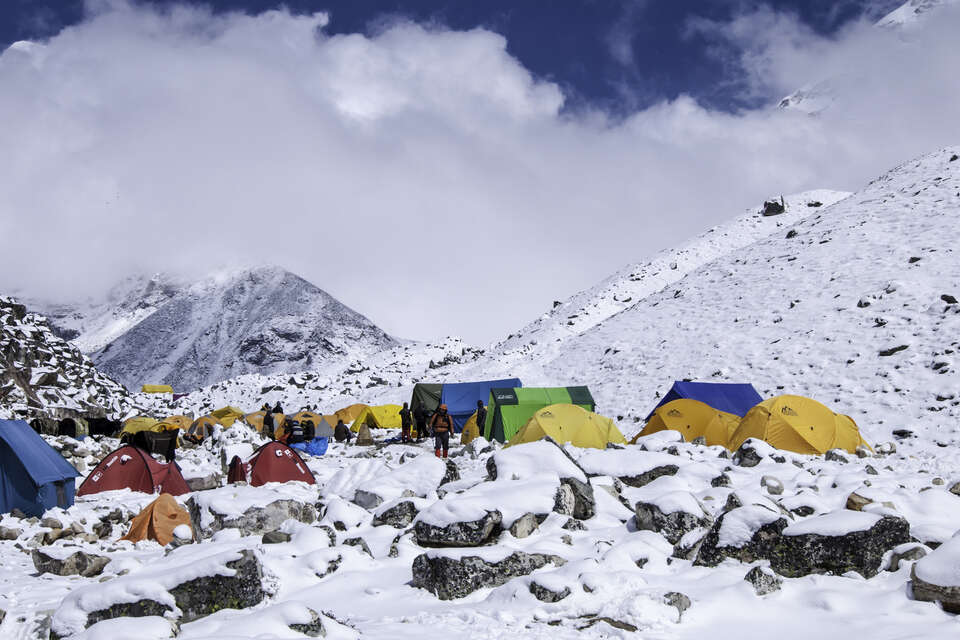
Island Peak base camp, where climbing training takes place before the summit attempt.
What does the climb involve?
This is a general description, not technical instruction. Your guides teach the actual skills on the mountain.
- Approach. You walk the Everest Base Camp trail to Dingboche, Lobuche and Gorakshep, then reach Chhukung in the Imja valley.
- Base camp. Our itinerary puts Island Peak base camp at 5,200 m, three to four hours above Chhukung. You spend a day on climbing training: harness, ascenders, crampons and rope handling.
- The lower mountain. From base camp the climb starts as a steep scramble and a gully. Some operators use a high camp to shorten summit day. Our plan starts from base camp around midnight and summits in one long push.
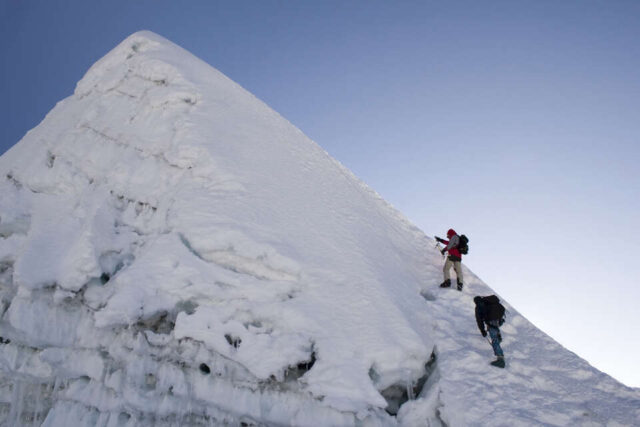
- The glacier and headwall. Higher up you cross glacier ground and reach the steep snow and ice headwall, roughly 100 m long, where fixed ropes are normally used. A crevasse at its foot has at times forced teams to turn back. Fixed ladders over it have been reported in recent seasons, but conditions change, so ask us what is in place on your dates.
- The summit ridge. A narrow, exposed ridge leads to the top. You move slowly, clipped in, and in step with your guide.
- Descent. Climbers descend the same line, often abseiling the steep sections, then walk back to base camp and on to Chhukung the same day on our schedule.
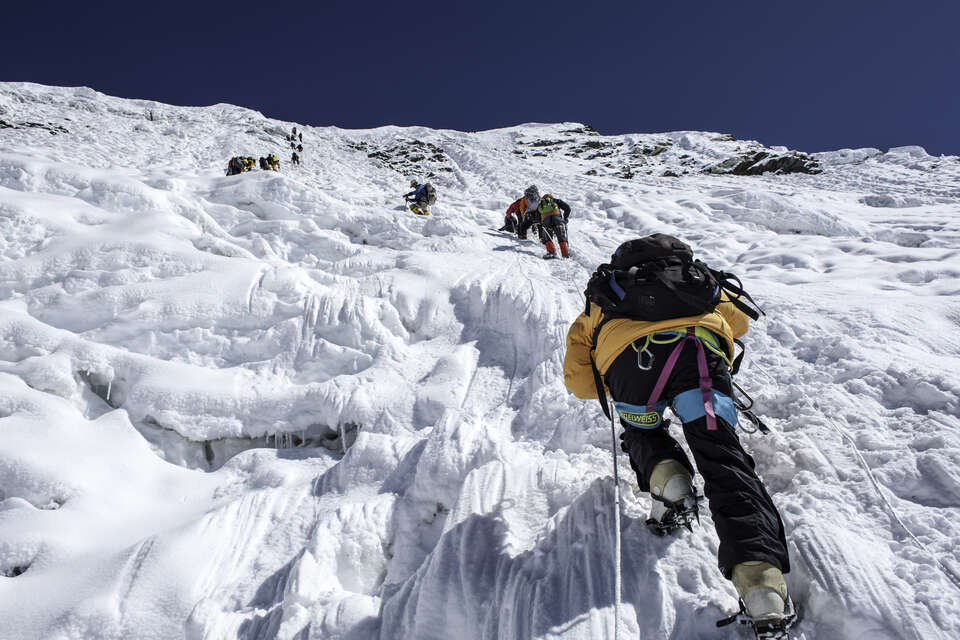
Moving up the lower mountain in roped teams.
How hard is Island Peak?
Island Peak is physically demanding rather than technically extreme, but it is still a mountain. Our page does not give a formal grade, and the final headwall is steep. The things that decide the outcome are:
- 💪 Fitness. You should be comfortable walking 6 to 8 hours on consecutive days with a pack. Summit day is 12 to 14 hours on our page, so stamina matters more than speed.
- ⛰️ Altitude. This is the biggest variable. The itinerary builds in two rest days (Namche Bazaar and Dingboche) and goes up to Everest Base Camp and Kala Patthar first. If you have never been above 4,000 m, consider an altitude trek before booking.
- 🧗 Skills. No prior climbing is required. The training day covers the basics, and you climb with government-licensed guides.
- 🌧️ Weather. Wind and cold can end an attempt. No operator can promise a summit, and we do not publish success rates.
| 👤 You are likely ready if you | Think again if you |
|---|---|
| Hike regularly and have done a high-altitude trek | Have never trekked above 3,500 m |
| Can train 8 to 12 weeks beforehand | Are booking within a few weeks of departure with no preparation |
| Accept that a turnaround is possible | Need a guaranteed summit |
| Are 17 or older (the permit minimum on our page) | Are under 17 |
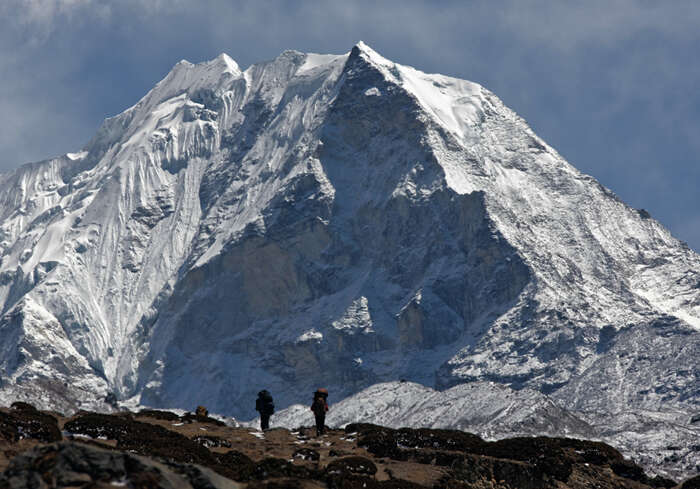
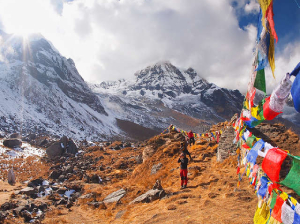
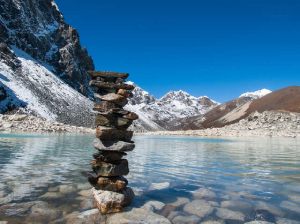
The view from the valley: Island Peak stands apart from the surrounding ridge.
What is the 18-day itinerary?
Our plan puts Everest Base Camp and Kala Patthar before the climb. That has two benefits: you get a classic Everest trek, and you gain altitude exposure before Island Peak.

| 📅 Day | Where | Notes |
|---|---|---|
| 1-2 | Kathmandu (1,350 m) | Arrival, gear check and briefing |
| 3 | Lukla to Phakding (2,652 m) | 8 km, 3-4 hours; flight about 15 minutes |
| 4-5 | Namche Bazaar (3,440 m) | Rest and acclimatisation day on Day 5 |
| 6 | Phortse area (3,700 m) | About 6 hours; the page names Debouche/Melingo, we will confirm the stop |
| 7-8 | Dingboche (4,400 m) | Second rest day on Day 8 |
| 9 | Lobuche (4,900 m) | 6-7 hours |
| 10 | Gorakshep (5,180 m) and Everest Base Camp (5,364 m) | 6-8 hours round trip |
| 11 | Kala Patthar (5,545 m) then Chhukung (4,730 m) | 7-8 hours on our page; confirm how it is split |
| 12 | Island Peak base camp (5,200 m) | 3-4 hours, then climbing training |
| 13 | Island Peak summit, back to Chhukung | 12-14 hours, early start |
| 14 | Tengboche | Return down the valley |
| 15-16 | Namche Bazaar, then Phakding and Lukla | Long final walking day |
| 17-18 | Flight to Kathmandu, departure | Keep 1-2 spare days for Lukla weather |
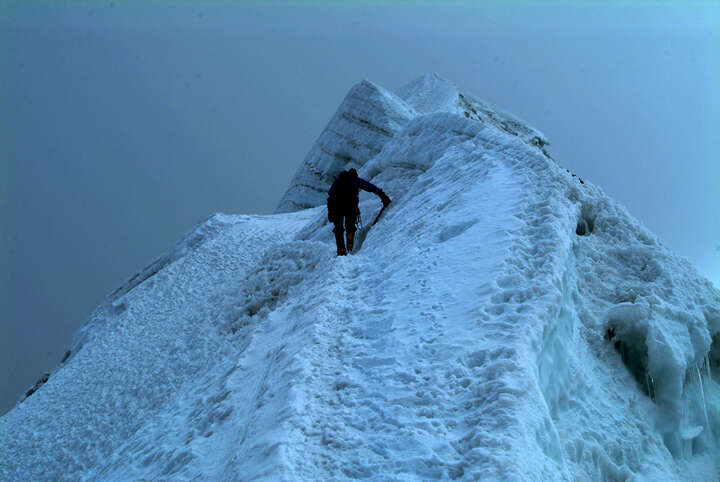
On the upper mountain, where rope and crampons do the work.
What does Island Peak climbing cost?
The package price is Rs 180,000, based on two people sharing (confirm with us whether your booking is quoted per person). It includes airport transfers, flights between Kathmandu or Ramechhap and Lukla, English-speaking government-licensed guides, porters, three nights of bed and breakfast in Kathmandu, climbing gear (boots, harness and helmet), applicable trekking and climbing permits and fees, a first aid kit, a farewell dinner and a trip certificate. Meals are included on 14 of the 18 days.
| 💰 Item | Cost |
|---|---|
| Package price (based on two sharing) | Rs 180,000 |
| Personal costs: visa, rentals, showers, Wi-Fi, charging, snacks and tips | About INR 20,000-25,000 |
| Extra day on the mountain | INR 6,000 per day, with lodging and three meals |
| Solo traveller on a departure | INR 1,500 per day porter fee, waived if others join |
| Extra Kathmandu nights | Paid at the hotel (see our hotel nights guide) |
| Helicopter, Lukla to Kathmandu, if flights are delayed | US$600 or more (INR 65,000 or more) per person, optional |
| Nepal visa, bottled water, credit-card fee (13%) | Not included |
| Travel insurance with rescue cover | Required, you arrange it |
Budget for the extras early. The ones that surprise climbers most are tips, drinking water and an extra night or two if weather closes Lukla.
Permits and rules
The Nepal Tourism Board states that trekking peaks fall under the Nepal Mountaineering Association (NMA), and that mountaineering royalties are paid at the Tourism Industry Division in Kathmandu or at the NMA office in Naxal. The government pages we checked do not list a current fee for Island Peak, so we do not quote one here. Our package price already covers the climbing permit and all applicable fees, and we confirm the current fee with the NMA when you book.
You also need the Everest region entry permits, which our price includes. Indian citizens may pay different rates, so contact us for the documents and fees that apply. Our package page sets the minimum age for a trekking-peak permit at 17.
Insurance is not optional. Your policy must cover climbing to 6,000 m or more and helicopter evacuation, and you send us proof before you arrive.
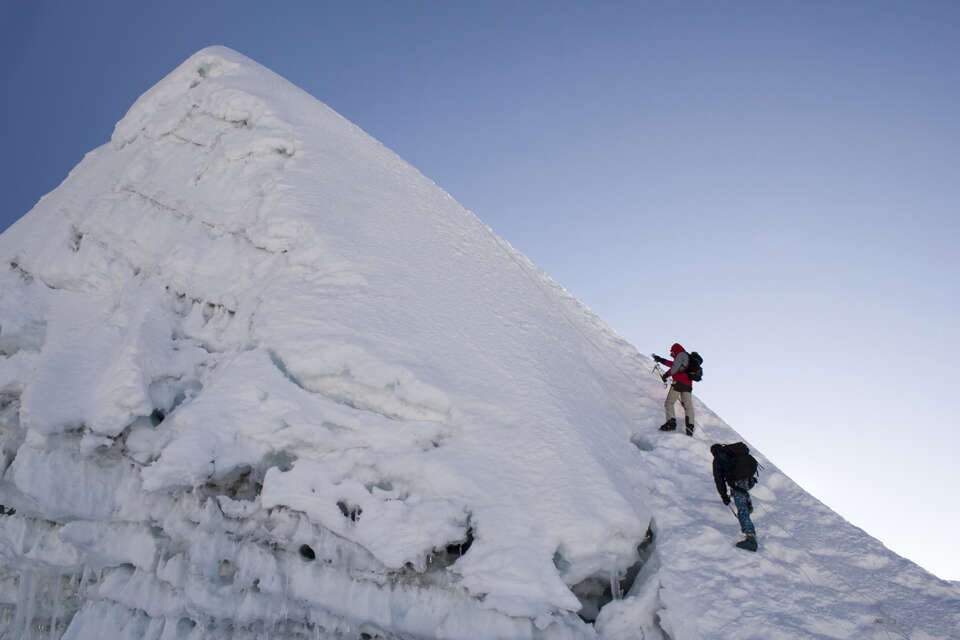
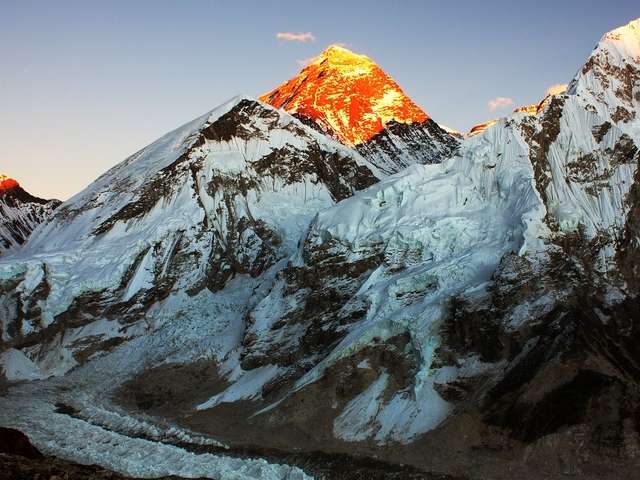
Summit day is long, but the payoff is a view straight across to Lhotse and Everest.
When is the best time to climb Island Peak?
Spring (March to May) and autumn (October and November) are the main seasons, with the clearest skies and most stable conditions. Later autumn dates are colder, so pack accordingly. Our next fixed departures, each 18 days, are:
- 23 October to 9 November 2026
- 30 October to 16 November 2026
- 6 to 23 November 2026
- 13 to 30 November 2026
- 20 November to 7 December 2026
Spring and autumn dates through 2030 are listed on the package page.
What gear do you need?
The package includes boots, harness and helmet. Our page lists this kit:
| 🎒 Group | Items |
|---|---|
| Technical | Ice axe, crampons, harness, screw-gate carabiner, descender, prusik loops, plastic mountaineering boots (the package includes boots, harness and helmet) |
| Warmth | Down jacket, fleece, thermals, waterproof jacket and trousers, gloves, light balaclava or fleece hat |
| Head and eyes | Sunglasses, sun hat or scarf, headlamp |
| Feet | Thin inner socks, thick wool socks, comfortable hiking boots for the approach |
| Sleeping and carry | Sleeping bag rated to 0°C, duffel bag, large plastic bags, water bottle or hydration bladder, optional trekking poles |
Island Peak or Lobuche East?
Both are Khumbu trekking peaks of about 6,100 m, and many climbers ask which to pick. Island Peak is generally considered the gentler of the two, while Lobuche East is usually described as steeper near the top. If this is your first 6,000 m peak, Island Peak is the common choice. If you want a harder test, read our Lobuche East climbing guide.
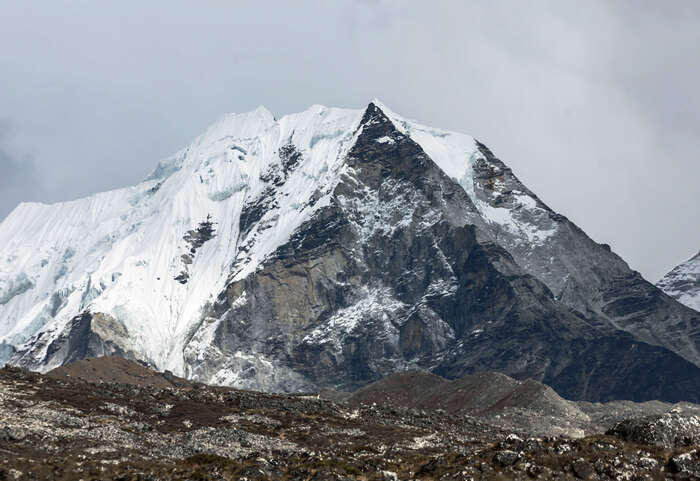
Weather can change fast. Turning around is part of the plan.
Safety, weather and flight delays
- 🪨 Acclimatise properly. Two rest days and the Everest Base Camp stretch are built in. Do not skip them, and tell your guide about headaches, nausea or poor sleep early.
- ✈️ Lukla flights. Delays are common. Keep one or two spare days at the end, because the package has none beyond the schedule.
- 🚁 Helicopter. If flights are cancelled, a helicopter from Lukla to Kathmandu costs US$600 or more (INR 65,000 or more) per person and rises with demand. It is optional and not included.
- 🛡️ Insurance. Rescue cover for climbing is required, and proof must be emailed before arrival.
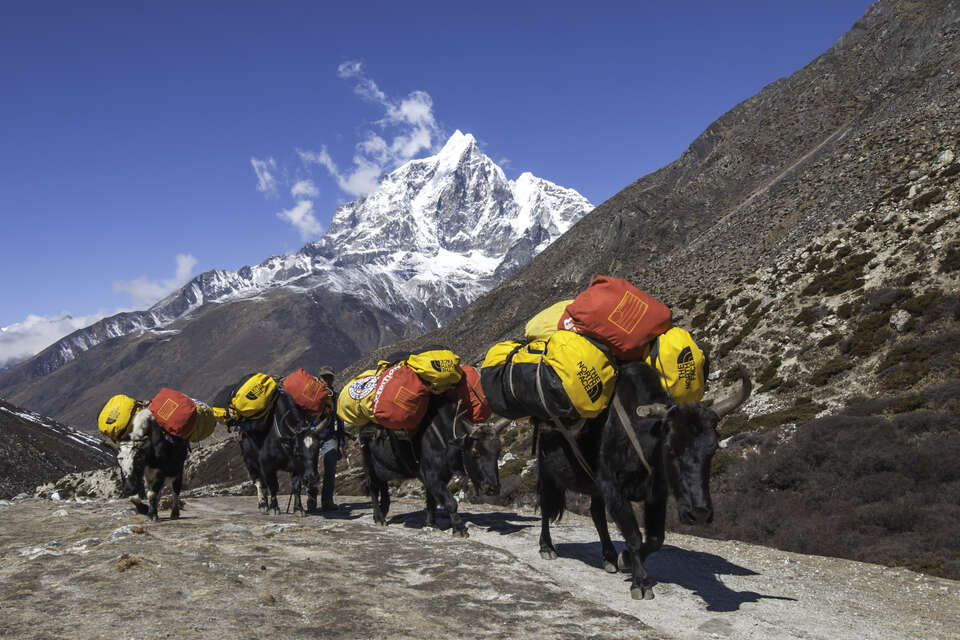
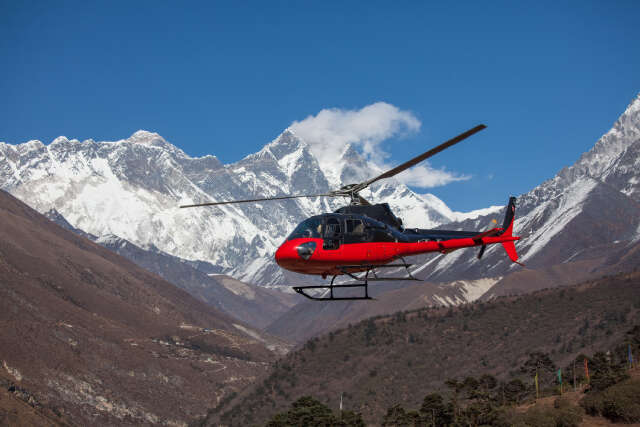
Yaks and porters carry the supplies up the valley.
FAQ
Is Island Peak suitable for beginners? It suits fit first-time climbers who have trekked at altitude. No prior climbing is required, and a training day at base camp covers the basics.
How high is Island Peak? Our itinerary lists 6,189 m (20,305 ft), though the same page shows 6,160 m elsewhere and published figures run from about 6,165 m to 6,189 m.
Who made the first ascent of Island Peak? Hans-Rudolf von Gunten of Switzerland and two Sherpas reached the main summit in 1956, according to published climbing records. A British team climbed the southwest summit in 1953.
Is Island Peak the same as Imja Tse? Yes. Imja Tse is the Nepali name, adopted in 1983. Island Peak was the name given by the 1953 British team.
How long is the Island Peak climb? Our package takes 18 days, including Everest Base Camp and Kala Patthar. The summit day itself takes 12 to 14 hours.
How much does Island Peak cost? Our package is Rs 180,000, based on two people sharing. Budget a further INR 20,000-25,000 for personal costs.
Do I need a permit? Yes. Trekking peaks fall under the Nepal Mountaineering Association. Our price includes the applicable permits and fees. Indian citizens should contact us for the documents and fees that apply.
What is the best time to climb Island Peak? Spring (March to May) and autumn (October and November). Our next departures start on 23 October 2026.
Is Island Peak harder than Lobuche East? It is generally seen as the easier of the two, though both are serious climbs at about 6,100 m.
What if the summit attempt fails? Weather or health can force a turnaround. No operator can guarantee a summit, and we do not publish success rates.
Can I add extra days? Yes. An extra day on the mountain costs INR 6,000 with lodging and three meals.
Conclusion
Island Peak combines a classic Everest trek, a well-documented history and a first real taste of mountaineering. Prepare your fitness, give yourself buffer days and choose a team that treats acclimatisation seriously.
Plan your Island Peak climb with Base Camp Hikes
Ready to book, or want to check your fitness and dates first? See the 18-day Island Peak climbing package, then send an enquiry, WhatsApp us or call +91 932 595 1234 (9am-7pm IST). Free advice, reply within 24 hours.
Sources
- Base Camp Hikes: Island Peak Climbing package
- Nepal Tourism Board (ntb.gov.np): mountaineering and trekking peak information
Information correct as of 17 October 2026.