

 By
“How much does the Everest Base Camp trek cost?” is the first question most Indian trekkers ask, and the honest answer has two parts. There is a package price, and there is the money that sits outside it. A trek listed at one number can end up costing noticeably more once flights to Kathmandu, insurance, gear rental, extras and tips are added. This guide separates the two, using the prices listed on the Base Camp Hikes site, government fees from the Nepal Tourism Board (NTB), and a clear budget for each kind of trekker.
The short answer
- Package price: the 14-day Everest Base Camp trek is listed at Rs 85,000, all-inclusive. It covers the Lukla flights, permits, guide, porter and teahouse stays.
- Realistic total: about Rs 1.1 to 1.4 lakh once cash for extras, gear rental and a few spare days are added. This excludes travel to Kathmandu and travel insurance.
- Not in the package: travel insurance (mandatory), your travel to Kathmandu, gear rental, extra nights, trail extras and tips.
- Payment: the deposit is paid in India by bank transfer or UPI and the balance is paid in Kathmandu. Card payments in Nepal carry a 13% fee, so pay the balance in cash.
- Visa: Indian nationals do not need a visa for Nepal.
Last checked: 24 October 2026. Prices change with season and group size, so confirm the current figure with the team before booking.

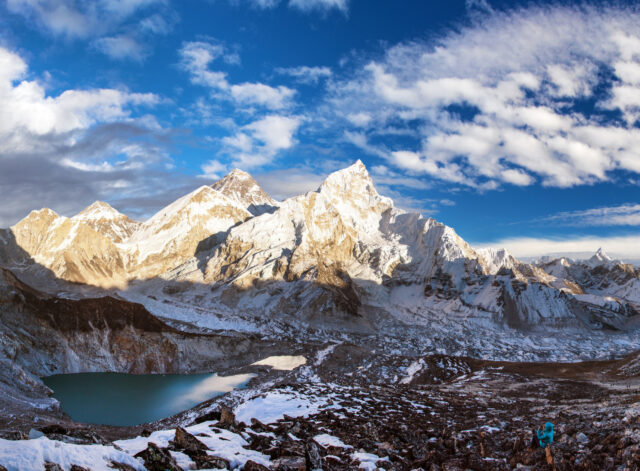
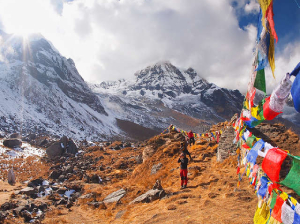
The trail to Everest Base Camp, winding through Nepal’s breathtaking Khumbu Valley beneath towering snow-capped Himalayan peaks.
Where the money goes
Share of the typical budget (about Rs 119,900), excluding travel to Kathmandu and insurance.
| Part | Amount | Share |
|---|---|---|
| Package price | Rs 85,000 | 71% |
| Cash for extras and tips | Rs 32,500 | 27% |
| Gear rental | Rs 2,400 | 2% |
| Typical total | Rs 119,900 | 100% |
Spread over the 14 trip days, the package works out to about Rs 6,070 a day, and the typical budget to about Rs 8,560 a day. The package is roughly seven-tenths of what you spend, so the other three-tenths is worth planning for.
In this guide: What the price covers | Total budget | Costs outside the package | From your city | By land | Permit fees | How to pay | Solo or group | Delay and emergency costs | Tipping | Cash on the trail | Comparing quotes | Ways to spend less | FAQ
What the Rs 85,000 package covers
Based on the 14-day Everest Base Camp trek page on the Base Camp Hikes site.
| Included in the price | Not included |
|---|---|
| 2 nights in a Kathmandu hotel with breakfast | Travel insurance (mandatory) |
| Return flights between Kathmandu or Ramechhap and Lukla (weather permitting) | Your travel to and from Kathmandu |
| Teahouse stays on the trek | Sleeping bag and down jacket rental |
| 3 meals a day on 11 of the 14 days | The meals outside those days, snacks, drinks |
| Airport pick-up and drop-off | Extra Kathmandu nights |
| Everest region permit and TIMS card | Showers, charging, Wi-Fi, bottled water |
| Licensed English-speaking guide and a porter | Tips and personal spending |
| Local and government taxes, first aid kit, farewell dinner, certificate | Costs from flight delays or extra days |
The price is listed as all-inclusive for a group of 1 to 10 people. Solo travellers should read the solo section. For the full day-by-day route, see the 14-day Everest Base Camp trek.
What the whole trip really costs
Three realistic budgets, built only from figures the Base Camp Hikes site lists. They exclude travel to Kathmandu and travel insurance, because both depend on where you start and which policy you buy.
Budget scenarios in Indian rupees. The site suggests Rs 25,000 to 40,000 in cash for extras, tips and emergencies.
| Scenario | Total (excluding travel to Kathmandu and insurance) | What it assumes | Size |
|---|---|---|---|
| Lean | Rs 110,000 | Package + Rs 25,000 cash for extras and tips; own sleeping bag and jacket |
|
| Typical | Rs 119,900 | Package + gear rental + mid-range cash (Rs 32,500) |
|
| Cautious | Rs 139,400 | Package + gear rental + Rs 40,000 cash + 2 extra Kathmandu nights + 1 extra mountain day |
|
The cash range already includes tips. A tip of about 10% of the trek price would be Rs 8,500 on this package, and it sits inside that range. The cautious scenario adds the cost of two extra Kathmandu nights (Rs 3,000 each, single room) and one extra day on the mountain (Rs 6,000).
Which budget fits you?
| Scenario | Best for | Watch out for |
|---|---|---|
| Lean | Travellers who own a sleeping bag and down jacket, avoid paid showers and Wi-Fi, and have buffer days | Little room for a delay or a rest day |
| Typical | Most first-timers | Spending creeps up at altitude |
| Cautious | Anyone with a fixed return flight, or who wants room for a delay and an illness day | It is the safest plan, but costs the most |
To complete the budget, add the flight or train to Kathmandu and a travel insurance policy. Both are explained below.
Costs outside the package
What to budget on top of the listed price. Figures are from the Base Camp Hikes site, checked 24 October 2026.
| Item | Amount | When you pay |
|---|---|---|
| Sleeping bag rental | Rs 1,200 | In Kathmandu |
| Down jacket rental | Rs 1,200 | In Kathmandu |
| Extra Kathmandu hotel night | Rs 3,000 single, Rs 3,500 double, Rs 4,500 triple | Directly to the hotel |
| Extra day on the mountain (illness rest day) | Rs 6,000 a day, including stay and three meals | In Kathmandu or on the trail |
| Bottled water | Rs 100 to 300 a bottle | On the trail |
| Hot shower | Rs 200 to 300 | On the trail |
| Power bank charging | Rs 200 to 400 | On the trail |
| Phone charging | About Rs 100 | On the trail |
| Wi-Fi | Rs 300 to 500 an hour, in some teahouses | On the trail |
| Cash for extras, tips and emergencies | Rs 25,000 to 40,000 for the trek | Carried in rupees |
Prices rise with altitude because everything is carried up on foot. The extra costs guide gives a day-by-day pocket-money view, and the money quick answers cover short questions.
Travel insurance
Insurance is mandatory and not included. The policy must cover high-altitude trekking and helicopter evacuation. NTB also advises comprehensive travel insurance that covers helicopter rescue and medical treatment. Premiums vary by insurer, age and trip length, so get a written quote that confirms the altitude cover. The insurance and evacuation guide lists what to check.
Getting to Kathmandu
The package starts in Kathmandu. Flights from Indian cities, or an overland route, are your own cost, and fares move with season and booking date. The city table below shows the usual route from 20 cities. Indian nationals need no visa, which removes one cost that other nationalities pay on arrival. Check the documents guide for Indian travellers before you travel.
Getting to Kathmandu from 20 Indian cities
The package starts in Kathmandu, so the cost of reaching it is yours. The table shows the usual way to reach Kathmandu from each city. It does not quote fares, because airfares change daily. Flight routes also change by season, so check the airline schedule before you book.
Usual routes to Kathmandu from 20 Indian cities. Routes and airlines change, so confirm before booking.
| City | Usual way to Kathmandu | Note |
|---|---|---|
| Delhi | Direct flights | The main gateway. Several airlines fly the route. |
| Mumbai | Direct flights | Reported direct service. Check the airline schedule. |
| Bengaluru | Direct or one stop | Sources differ on direct service. Check before booking. |
| Kolkata | Direct flights | Reported direct service. Siliguri is the alternative for road travel. |
| Hyderabad | One stop via Delhi or Kolkata | Direct flights, if any, are seasonal. |
| Chennai | One stop via Delhi or Kolkata | Direct flights, if any, are seasonal. |
| Pune | One stop via Delhi or Mumbai | Mumbai gives the shorter connection. |
| Ahmedabad | One stop via Delhi or Mumbai | Direct flights, if any, are seasonal. |
| Jaipur | One stop via Delhi | Delhi is the usual connection. |
| Chandigarh | One stop via Delhi | Delhi is the usual connection. |
| Lucknow | One stop via Delhi, or train to Gorakhpur then road | Overland via the Sonauli border is a common budget route. |
| Kanpur | One stop via Delhi, or train to Gorakhpur then road | Same options as Lucknow. |
| Varanasi | Direct flights (seasonal, limited) or overland | Check the schedule. Train to Gorakhpur is the fallback. |
| Patna | One stop via Delhi or Kolkata, or overland via Raxaul | Overland uses the Raxaul-Birgunj crossing. |
| Gorakhpur | Overland via Sonauli | The nearest large Indian city to the Sonauli border. |
| Siliguri | Overland via Kakarbhitta, or fly via Delhi or Kolkata | Kakarbhitta is the eastern crossing. |
| Nagpur | One stop via Delhi or Mumbai | No direct flight on the usual listings. |
| Indore | One stop via Delhi or Mumbai | Either gives a workable connection. |
| Bhopal | One stop via Delhi | Delhi is the usual connection. |
| Surat | One stop via Mumbai or Delhi | Mumbai is the shorter hop. |
To fit your city into the budget: take the scenario total above, then add your own fare to Kathmandu and back, plus travel insurance. A road journey through a border crossing is cheaper but takes much longer, so allow the extra time and keep the spare days at the end of the trek.
Documents: the Embassy of India in Kathmandu says only two documents are valid for Indian nationals travelling by air between India and Nepal: a valid Indian passport, or an original Indian Voter ID card with photograph. A downloaded or printed Voter ID is not accepted, and Aadhaar, PAN card and driving licence are not accepted for air travel. The embassy page does not cover land crossings, so check the rules for the border you plan to use. See the documents guide for Indian travellers.
Save money: enter Nepal by land at Sunauli or Raxaul
For travellers in northern and eastern India, the cheapest way to reach Kathmandu is often a train to a border town and a road journey across. Nepal allows entry by land only at designated border points, and the Nepal Tourism Board (NTB) says travellers may not enter from any other point. Four of them suit trekkers heading for Kathmandu.
Land entry points from India, as listed by NTB. Distances are to Kathmandu.
| Border crossing | Nepal side | Nearest Indian railway station | Distance to Kathmandu | Suits travellers from |
|---|---|---|---|---|
| Sunauli | Bhairahawa (Belhiya) | Gorakhpur | 280 km | Gorakhpur, Lucknow, Kanpur, Varanasi |
| Raxaul | Birgunj | Raxaul | 280 km | Patna and Bihar |
| Siliguri | Kakkarvitta | New Jalpaiguri | 620 km | Siliguri, Kolkata and the northeast |
| Rupaidiya | Nepalgunj | Rupaidiya or Nanpara | 520 km | Western Uttar Pradesh |
The other designated points, Dhangadi and Mahendranagar, are far from Kathmandu and rarely suit a trekking trip.
Where the saving comes from
The saving is the difference between a flight to Kathmandu and a train plus a bus or taxi across the border. It is real for cities close to the border, such as Gorakhpur and Patna, and smaller or absent for Delhi, Mumbai and Bengaluru, where a direct flight is quick. Work it out with this sum:
Saving = flight fare to Kathmandu, minus (train fare + road fare from the border to Kathmandu + extra hotel night).
An extra Kathmandu night costs Rs 3,000 single, Rs 3,500 double or Rs 4,500 triple on the Base Camp Hikes site, so include it. Always compare real fares for your dates, because they change.
What you give up
The trade-offs of crossing by land.
| Point | Flying in | Crossing by land |
|---|---|---|
| Cost | Higher fare, usually | Lower, for cities near the border |
| Time | Short and predictable | Much longer: a train, then a road journey of about 280 km from Sunauli or Raxaul |
| Buffer before the trek | Can arrive on the morning of Day 1 | Should arrive the day before, because the package starts in Kathmandu |
| Delay risk | Flight delays | Train delays, road and border delays |
| Comfort before a strenuous trek | Arrive rested | A long overland day or night can leave you tired |
| Paperwork | Passport or Voter ID checks at the airport | ID checked at the border post |
Documents at the land border
NTB says Indian nationals do not need a visa for Nepal. It lists several documents that Nepal accepts at entry, including a passport, an Election Commission card with photo, a photo driving licence, a government photo ID and a photo ration card. NTB also says the Aadhaar card is not an acceptable travel document. That NTB list is dated 2012 on one page, and the Embassy of India in Kathmandu names only a passport or an original Voter ID card for air travel. The safe choice is to carry a valid passport, or an original Voter ID card with photograph. Confirm the current rule for your crossing with the Department of Immigration of Nepal or an Indian immigration source.
Plan the land route safely
- Arrive a day early. A late bus should not make you miss the briefing or the Lukla flight.
- Keep the spare days at the end of the trek. The saving on the way in should not use up the buffer on the way out.
- Carry the ID you intend to use, in the original. A printout or photo of the card may not be accepted.
- Tell the team your arrival plan. Airport pick-up is in the package. A land arrival needs a separate pick-up arrangement, so confirm it in writing.
- Keep your trek gear in your hand luggage or daypack. A lost bag on a long road trip is hard to replace in time.

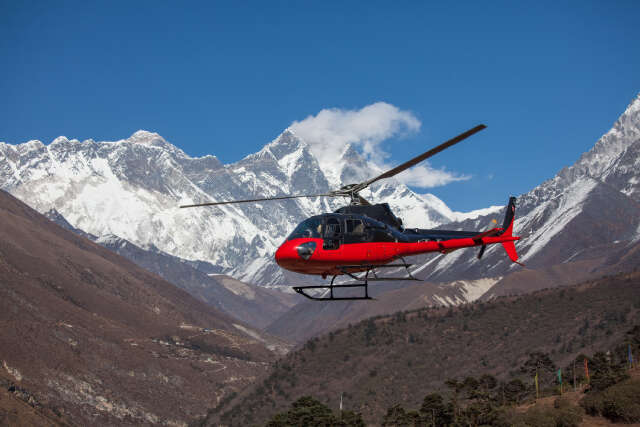
The Lukla flights, in both directions, are one of the largest single items in the package price.
Permit fees: what the government charges
The package includes the permits, so you do not pay these separately. They are shown here so the cost makes sense, and for anyone comparing a quote that leaves them out.
Fees as listed by the Nepal Tourism Board. Neither page carries an update date, so confirm current fees.
| Permit | Fee | Source |
|---|---|---|
| Sagarmatha National Park entry, foreigners | NPR 3,000 per entry | NTB park entry fees |
| Sagarmatha National Park entry, SAARC nationals (including Indian citizens) | NPR 1,500 per entry | NTB park entry fees |
| Khumbu Pasang Lhamu local permit | US$20 per person per week for the first four weeks | NTB trekking permit page |
| TIMS card, group trekker | US$10 equivalent | NTB FAQ |
| TIMS card, free individual trekker | US$20 equivalent | NTB FAQ |
Children under 10 enter Sagarmatha National Park free. The permits guide explains where each permit is checked on the trail.
How and when to pay
- Deposit: a small deposit confirms the booking. Indian guests pay by bank transfer or UPI. Of the deposit, 50% is refundable within 30 days of booking. After that it is non-refundable but stays valid for 365 days.
- Balance: paid on arrival at the Kathmandu office, in Indian rupees or another major currency.
- Cards: a card payment in Nepal carries a 13% fee. On Rs 85,000 that is a large amount, so carry cash or arrange the balance in a way that avoids the fee.
- Date changes: free with at least six weeks’ notice. A price increase between the old and new date is paid by the guest.
Payment timeline
| When | What happens | How |
|---|---|---|
| At booking | The deposit is paid | Bank transfer or UPI |
| Within 30 days of booking | 50% of the deposit can still be refunded | Contact the team |
| Six weeks before the trek | Last date for a free date change | Contact the team |
| On arrival in Kathmandu | The balance and any gear rental are paid | Cash in rupees avoids the 13% card fee |
| On the trail | Extras are paid | Small rupee notes |
| Last night of the trek | Tips for the guide and porters | Cash in rupees |
Keep receipts, use traceable payment methods and read the cancellation terms before paying. The terms page has the full policy.
Solo traveller or group: how the price changes
The package is priced for travellers joining a group of one to ten. A Solo Support Fee of Rs 1,500 per day applies if you are the only person on a fixed departure, because a dedicated porter is needed. Over 14 days that would be Rs 21,000 if charged every day. Confirm how many days are charged for your dates. There is no single supplement for joining an existing group, so choosing a departure with other travellers is the simplest way to avoid it.
Check the departure dates to see which dates have other travellers booked.
Delay and emergency costs
Lukla flights depend on weather, and the cost of a delay is the part most budgets miss.
What a delay or a medical problem can add.
| Situation | What it costs |
|---|---|
| Lukla flight cancelled, rebooked next available day | No fee to change the reservation. Extra hotel nights and meals are the guest’s cost (Rs 3,000 or more a night in Kathmandu). |
| Helicopter instead of a delayed scheduled flight | Around US$600 or more per person (Rs 65,000 or more). US$150 (Rs 10,000 for Indian nationals) is refunded from the unused flight fare. |
| Extra day on the mountain for illness | Rs 6,000 a day |
| Helicopter rescue | US$5,000 or more, normally paid through the insurer |
The site recommends spare days at the end of the trip: two in the main season, and three or four in the monsoon shoulder months. Read the Lukla delay costs guide and the Lukla vs Ramechhap guide before choosing dates. For a planned flight down instead of walking, see the helicopter return guide.
Tipping the guide and porters
Tipping is expected. The guideline is about 10% of the trek price for the whole team, which would be about Rs 8,500 on a Rs 85,000 package. A common split is about 40% for the head guide and 60% shared among porters and any assistant guides. Tips are usually given on the last night, often in Lukla, in rupees. The tipping guide has a worked example.
Cash on the trail
- Withdraw rupees in Kathmandu. Machines on the trail are unreliable, and the one near Namche is often out of order.
- Almost no one accepts cards above Lukla.
- Carry small notes. Change is hard to find in remote teahouses.
- Keep most cash in a waterproof pouch close to the body, with a smaller amount in the daypack.

Prices rise with altitude. A bottle of water or a charge at Gorak Shep costs far more than in Lukla.
Why quotes differ, and what to check
Two quotes for the “same” trek can differ by a large margin. The usual reasons are the number of porters, lodge grade, flights, the number of spare days and whether insurance, permits, hotels and transfers are in or out. A very low quote can signal an unlicensed guide, underpaid porters or weak emergency support, and those savings only show up when something goes wrong.
Questions to put to every operator before comparing prices.
| Ask | Why it matters |
|---|---|
| Which meals are included, and what is extra? | Meals, drinks and showers are the largest trail extras |
| Are the permits, TIMS and park fee included? | Some quotes leave them out |
| Is the Kathmandu hotel included, and for how many nights? | Hotel nights add up if a flight is delayed |
| What is the price based on: group size, shared room, porter ratio? | The same number can mean different services |
| What is the refund policy if the trek is shortened or cancelled? | Unused days are generally not refunded |
| Is the operator the licensed Nepal company with legal responsibility for the trek? | It decides who is accountable on the mountain |
| How is the guide paid and what is the descent plan? | It shows how safety is funded |
For the full list of factors, read what affects the cost of the trek. Trekkers wondering whether a do-it-yourself plan is cheaper should read Everest Base Camp without a guide first.
Ways to spend less without cutting safety
- Enter by land if you live near the border. A train and road journey via Sunauli or Raxaul can cost less than a flight. See the trade-offs.
- Join a group departure. It avoids the Solo Support Fee and shares guide and transport costs.
- Bring your own sleeping bag and down jacket. Rental is Rs 2,400 for both.
- Pay the balance in cash. It avoids the 13% card fee.
- Book the dates with the best chance of a clear flight. Fewer delays mean fewer extra nights. See the best time guide.
- Carry water treatment tablets. At Rs 100 to 300 a bottle, bottled water adds up fast.
- Skip Wi-Fi cards. Wi-Fi is Rs 300 to 500 an hour in some teahouses.
Do not save money on insurance, the number of rest days or the guide’s pay. Those are the three places where a cheap choice costs the most later.
Common budgeting mistakes
- Counting only the package price. The trek costs Rs 1.1 to 1.4 lakh once extras, gear and a spare day are included, before insurance and travel.
- Paying the balance by card in Nepal. The 13% fee is avoidable.
- Booking a return flight for the first possible day. A delayed Lukla flight can cost nights and meals.
- Carrying too little cash. Trail prices rise with altitude and cards are rarely accepted.
- Skipping insurance to save money. It is mandatory, and a rescue costs more than the trek.
FAQ
How much does the Everest Base Camp trek cost from India? The 14-day trek is listed on the Base Camp Hikes site at Rs 85,000, all-inclusive. With cash for extras, gear rental and a spare day, a realistic total is about Rs 1.1 to 1.4 lakh, excluding travel to Kathmandu and insurance. Checked on 24 October 2026.
What is included in the Everest Base Camp package price? Two Kathmandu hotel nights with breakfast, the Lukla flights in both directions, teahouse stays, meals on 11 of the 14 days, airport transfers, the Everest region permit and TIMS card, a licensed guide and porter, taxes, a first aid kit and a farewell dinner.
What is not included? Travel insurance, your travel to Kathmandu, gear rental, extra Kathmandu nights, snacks and drinks, showers, charging, Wi-Fi, tips, and the cost of delays or extra days.
Do Indian citizens need a visa for Nepal? No. Indian nationals do not need a visa, so the visa fee that other nationalities pay on arrival does not apply.
How much cash should I carry on the trek? The site suggests Rs 25,000 to 40,000 for extras, tips and emergencies. Carry it in rupees, in small notes, because cards and machines are unreliable above Lukla.
How much should I tip the guide and porters? About 10% of the trek price for the whole team, which is about Rs 8,500 on a Rs 85,000 package. A common split is 40% for the head guide and 60% for porters and assistants. Tip in rupees on the last night.
What are the permit fees? NTB lists Sagarmatha National Park entry at NPR 3,000 for foreigners and NPR 1,500 for SAARC nationals, the Khumbu local permit at US$20 per person per week, and a TIMS card at US$10 for group trekkers. The package includes the permits.
Is travel insurance included? No. It is mandatory and bought separately. It must cover high-altitude trekking and helicopter evacuation. NTB also advises comprehensive insurance that covers helicopter rescue and medical treatment.
How do I pay for the trek? A small deposit is paid in India by bank transfer or UPI. The balance is paid on arrival in Kathmandu in rupees or another major currency. Card payments in Nepal carry a 13% fee.
What is the Solo Support Fee? A fee of Rs 1,500 per day that applies if you are the only person on a fixed departure, because a dedicated porter is needed. There is no single supplement for joining an existing group.
What if my Lukla flight is delayed? The reservation is rebooked on the next available day with no change fee. Extra hotel nights and meals are the guest’s cost, so keep spare days and a cash reserve.
How much does a helicopter instead of the Lukla flight cost? Around US$600 or more per person (Rs 65,000 or more), with US$150 refunded from the unused flight fare. A helicopter rescue costs US$5,000 or more and is normally paid through the insurer.
Is the trek cheaper without a guide? It may look cheaper, but permits, flights, insurance gaps and safety are harder to manage. NTB advises against trekking alone and says trekking with a guide from a registered agency is the best security.
Can I change my date after paying? Yes, free with at least six weeks’ notice. If the price has risen for the new date, the guest pays the difference.
How do I get to Kathmandu from my city in India? Delhi, Mumbai and Kolkata have direct flights, and Varanasi has limited seasonal service. Most other cities connect through Delhi, Mumbai or Kolkata, and cities such as Gorakhpur, Patna and Siliguri can also use an overland crossing. Check the airline schedule for your dates.
Which ID do Indian citizens need to fly to Nepal? The Embassy of India in Kathmandu says a valid Indian passport or an original Voter ID card with photograph. Aadhaar, PAN and driving licence are not accepted for air travel.
Can I enter Nepal by land at Sunauli or Raxaul to save money? Yes. Sunauli (Bhairahawa) and Raxaul (Birgunj) are designated land entry points, each about 280 km from Kathmandu according to NTB. The saving is the difference between a flight and a train plus road journey, and it is largest for cities close to the border. Allow extra time and arrive in Kathmandu a day before the trek starts.
Do Indian citizens need a visa to enter Nepal by land? No. NTB says Indian nationals do not need a visa. Carry a valid passport or an original Voter ID card with photograph, because the Aadhaar card is not accepted as a travel document.
Which border crossing is closest to Kathmandu? Raxaul-Birgunj and Sunauli-Bhairahawa are both listed by NTB at 280 km. Siliguri-Kakkarvitta is 620 km and Rupaidiya-Nepalgunj is 520 km.
Does the price change by season? Prices change with season and group size, so confirm the figure for your dates. October and May are the busiest months, with higher demand for flights and rooms.
Get a quote for your dates
For a written quote or help picking dates, message the Base Camp Hikes team on WhatsApp or phone at +91 932 595 1234 (9 am to 7 pm IST), write to info@basecamphikes.com, or use the enquiry form. First-timers can also read the first-time trekker’s guide.
Sources
- Nepal Tourism Board: park entry fees
- Nepal Tourism Board: trekking permit
- Nepal Tourism Board: FAQ
- Nepal Tourism Board: health guide
- Embassy of India, Kathmandu: valid travel documents
- Nepal Tourism Board: visa information
- Nepal Tourism Board: traveling by road, entry points