 By
Everest Base Camp is the most famous trek in Nepal and, for many people, their first Himalayan walk. It needs no climbing skill, only fitness, time and respect for altitude. First-timers are rarely stopped by the walking. They are stopped by rushing the climb, skipping rest days, ignoring early symptoms or arranging no spare days for the flight home. This guide covers the decisions that matter most for a first trek: whether you are ready, how the altitude works, what a safe schedule looks like, how to train, what to pack, which permits apply and which mistakes to avoid.
The short answer
- Yes, a fit first-timer can do it. The trek is strenuous but not technical. There is no rope work, and you walk on trails to 5,364 m.
- Altitude, not distance, is the real test. Fitness does not tell you how your body will react above 4,000 m, so the schedule and its rest days matter more than speed.
- Plan about two weeks, plus spare days. The standard schedule is 14 days, and a delayed Lukla flight can use extra days at the end.
- A licensed guide and a TIMS card are required on the Everest route under the Nepal Tourism Board (NTB) rules.
Last checked: 22 October 2026. Permit fees and rules change, so confirm them for your travel dates.

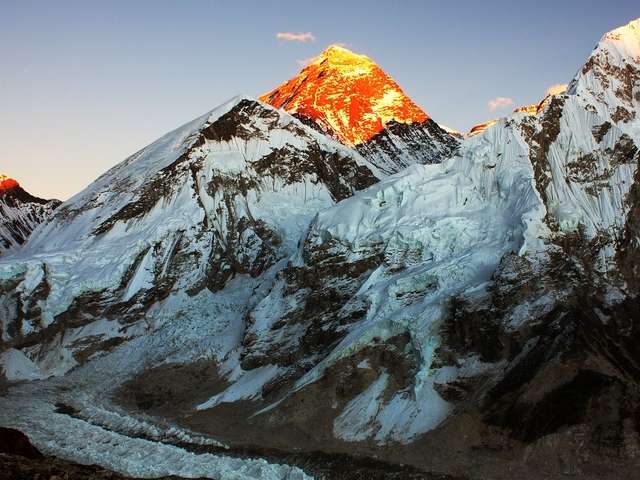
Sunrise from Kala Patthar at 5,545 m, the standard viewpoint for Everest and the high point of the trek.
In this guide: Are you ready? | At a glance | How the altitude works | Altitude sickness | Training | Common mistakes | Packing | Lodges and daily life | Which route | Best time | How much time | Permits | FAQ
Are you ready for Everest Base Camp?
A quick self-check. If two or more rows describe you, add training time or choose a lower trek first.
| If this describes you | What it means for a first trek |
|---|---|
| You walk or exercise regularly and can manage a full day on your feet | You can start a training plan now and be ready in about three months |
| You have never walked more than two or three hours at a time | Build up to 6 to 8 hours on consecutive days before you book |
| You have never been above 3,000 m | The route’s rest days matter even more. Do not shorten the schedule. |
| You have a heart, lung or blood-pressure condition, or take regular medication | See a doctor, ideally one with altitude experience, before you pay for the trek |
| Your return flight is within two or three days of the trek ending | Add spare days or expect to miss it if the Lukla flight is delayed |
| You want a high, snowy, summit-style experience | This is a trek, not a climb. For a summit see the technical vs non-technical peaks guide. |
Everest Base Camp at a glance
The numbers a first-timer should know before choosing dates.
| Item | Detail |
|---|---|
| Region | Khumbu, inside Sagarmatha National Park (a World Heritage Site since 1979, according to NTB) |
| Base Camp altitude | 5,364 m |
| Highest viewpoint | Kala Patthar, 5,545 m |
| Highest sleeping altitude | 5,180 m (Gorak Shep) |
| Standard length | About two weeks from Kathmandu, plus spare days |
| Walking | 9 walking days, about 106 to 112 km, about 50 to 58 hours on the standard 14-day schedule |
| Nights above 3,000 m / above 4,000 m | 9 / 5 |
| Rest days built in | 2 (Namche Bazaar and Dingboche) |
| Difficulty | Strenuous, with no technical climbing |
| Start | Fly to Lukla (2,846 m), then walk |
How the altitude works, day by day
NTB gives two simple rules, and the standard schedule is built around them.
NTB’s safety page asks trekkers to ascend slowly and gradually. Above 2,500 m, the altitude where you sleep should rise by no more than 300 to 500 m a day from the previous night, and you should take a rest day after every 1,000 m of gain. The table applies those rules to the standard schedule. Green means within the guidance, amber means above it, and blue marks a rest day.
| Night | Sleeping altitude | Gain on the day | NTB rule check | Profile |
|---|---|---|---|---|
| Day 2, Phakding | 2,652 m | +1,302 m (after the Lukla flight) | Within (152 m above 2,500 m) |
|
| Day 3, Namche Bazaar | 3,440 m | +788 m | Above (288 m over the top of the range) |
|
| Day 4, Namche Bazaar | 3,440 m | 0 m | Rest day acclimatisation day |
|
| Day 5, Deboche | 3,700 m | +260 m | Within |
|
| Day 6, Dingboche | 4,400 m | +700 m | Above (200 m over the top of the range) |
|
| Day 7, Dingboche | 4,400 m | 0 m | Rest day acclimatisation day |
|
| Day 8, Lobuche | 4,900 m | +500 m | Within (at the limit) |
|
| Day 9, Gorak Shep | 5,180 m | +280 m | Within |
|
| Day 10, Pheriche | 4,320 m | -860 m | Descent |
|
| Day 11, Namche Bazaar | 3,440 m | -880 m | Descent |
|
The schedule breaks the daily limit twice, at Namche Bazaar (+788 m) and Dingboche (+700 m), and places a rest day straight after both. After Dingboche the climbs are small: +500 m, then +280 m. Base Camp (5,364 m) and Kala Patthar (5,545 m) are reached as day walks from Gorak Shep, so you do not sleep above 5,180 m. This is the reason to avoid shortened itineraries: the rest days are where acclimatisation happens.

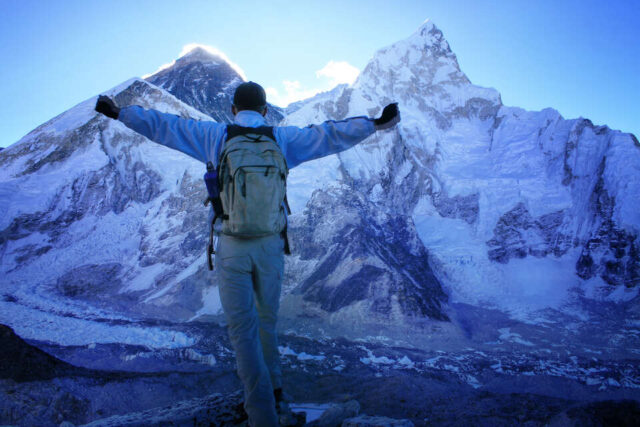
Trekkers head to Everest Base Camp from Gorak Shep, the last sleeping stop at 5,180 m.
Three habits that protect a first-timer
- Walk slowly. A pace that lets you talk is the right pace. Passing others in the first week does not help later.
- Keep the rest days. On a rest day, a short walk up and a return to sleep at the same height suits most people better than lying in bed.
- Drink plenty of clean water. NTB lists this as a basic precaution. It also says not to drink alcohol if you have symptoms of altitude sickness.

The rest day at Namche Bazaar is a short walk up to a viewpoint above the town, then back down to sleep at the same height.
Altitude sickness: what to watch for
Fitness does not prevent altitude sickness. Early recognition does.
| Stage | Signs (NTB) | What NTB advises |
|---|---|---|
| Early symptoms | Headache, loss of appetite, nausea, fatigue on minimal exertion, dizziness | Do not go higher. Rest, drink fluids and avoid alcohol. |
| Getting worse | Severe headache, vomiting, unsteady walking, confusion, severe fatigue, breathlessness at rest | Descend with a companion |
| Recovered | Symptoms fully gone | You may go up again |
NTB’s wording on the worsening case is “Descend! Descend! Descend!”. It also notes that altitude illness can be life-threatening and mentions acetazolamide (Diamox, 250 mg twice a day) as an option. Ask your doctor about it before you travel, and do not take medicine you have not discussed with a professional. The Himalayan Rescue Association (HRA) holds an altitude talk daily at 3 pm in spring and autumn at its Pheriche aid post and runs an Everest ER clinic at Everest Base Camp. Tell your guide at once if something feels wrong, and do not hide symptoms to keep to the schedule.
Training: a 12-week plan for a first-timer
Practical guidance, not a government rule. Adjust it to your starting point and check with a doctor first.
| Weeks | Focus | What to do |
|---|---|---|
| 1 to 4 | Base | Three or four sessions a week of brisk walking, cycling or running, plus one longer walk at the weekend |
| 5 to 8 | Build | Add hills or stairs, leg strength work, and a weekend walk of 3 to 5 hours with a light pack |
| 9 to 11 | Specific | Walk 6 to 8 hours on two consecutive days with your trek pack and boots |
| 12 | Taper | Cut the volume, rest your legs and finish packing |
- Break in your boots during the specific weeks. New boots are the most common cause of blisters on the trail.
- Train your knees, not just your lungs. The long descents to Namche and Lukla are hard on them, and trekking poles help.
- Altitude cannot be trained at home. What training buys you is comfort at a slow pace, which leaves more energy for the days above 4,000 m. See the post on training for Everest Base Camp for more detail.
Mistakes first-time trekkers make
Most of these cost days, comfort or health, and all of them are avoidable.
| Mistake | Why it hurts | Better plan |
|---|---|---|
| Choosing a short schedule to save days | Fewer rest days means a higher chance of altitude sickness | Keep the two rest days |
| Booking the flight home the day after the trek | A delayed Lukla flight can make you miss it | Keep at least two spare days after the trek |
| Walking fast in week one | You arrive tired at the high camps | Walk at a talking pace |
| Wearing new boots | Blisters can end a trek early | Break them in for weeks |
| Hiding symptoms | A mild headache can become dangerous if you keep climbing | Tell your guide early |
| Drinking alcohol at altitude | NTB says to avoid it when you have symptoms | Skip it until you are back down |
| Skipping insurance or buying the wrong cover | Helicopter evacuation can exceed US$5,000 according to package terms | Buy cover that includes trekking at 5,500 m and helicopter evacuation |
| Packing too much | Baggage allowances on the Lukla flights and with porters are limited | Pack light and ask your operator for the exact limit |

The trail follows the Dudh Kosi valley from Lukla, with suspension bridges and Sherpa villages on the way to Namche Bazaar.
What to pack for a first Everest trek
Layers, a warm sleeping bag and well-fitted boots matter more than any single piece of gear.
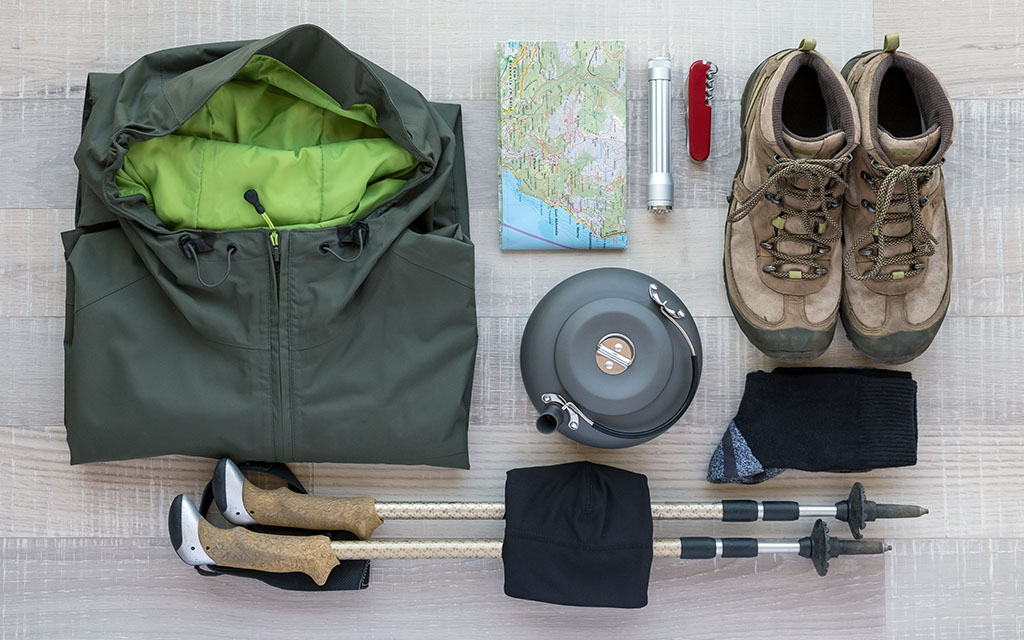
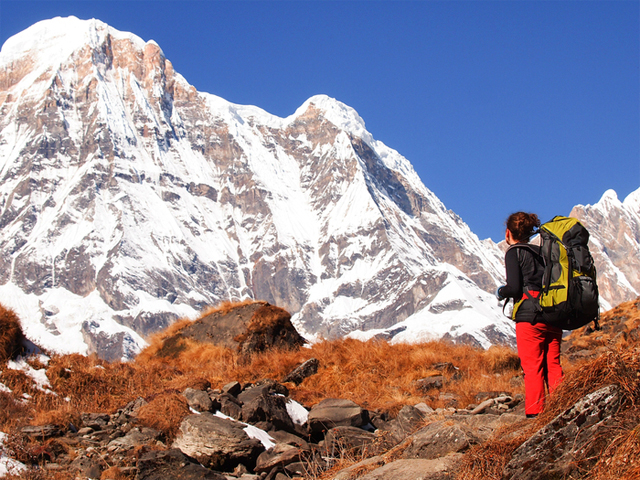
Outdoor and hiking equipment for the Himalayas: layers, boots and a warm sleeping bag come first.
| Category | Essentials |
|---|---|
| Footwear | Broken-in hiking boots, thin inner socks, thick wool socks, a spare pair for every day |
| Layers | Thermal base layers, a fleece, a down jacket, a waterproof jacket and waterproof trousers, lightweight long trekking trousers |
| Sleep | A sleeping bag rated to about 0 degrees Celsius |
| Head and hands | Sun hat, warm hat, gloves, sunglasses, a head torch |
| Carrying | A duffel bag, large plastic bags to keep clothes dry, a day pack, a water bottle |
| Extras | Trekking poles (recommended), toiletries, your own medicines, sun protection, insurance papers and passport copies |
Base Camp Hikes’ own pages note that trekking gear can be rented or bought in Kathmandu, and a sleeping bag and down jacket can be rented. That is usually the cheaper and easier route than buying kit at home for one trip, but always bring your own boots. The full list is in the Everest Base Camp packing checklist.
Lodges, food and daily life on the trail
Expect simple lodges, shared meals and small extra charges that add up.
- Where you sleep: NTB lists lodges, tea houses and camping sites in the Everest region, with home-stay accommodation at Thame and Thamo.
- A normal day: an early start, six to eight hours of walking with a lunch stop, then a tea-house evening. Expect simple rooms, so a warm sleeping bag matters.
- Paid extras: Base Camp Hikes’ package pages list bottled water at about INR 100 to 300, charging, hot showers and Wi-Fi as extras, and Wi-Fi at INR 300 to 500 an hour in some places. Prices rise with altitude.
- Cash: carry enough Nepali rupees for the extras.
- Cold nights: NTB notes that nights and rainy periods are cold even when summer days are mild.
Which Everest route should a first-timer choose?
The standard Base Camp route is the usual first choice. Longer routes add passes and altitude.
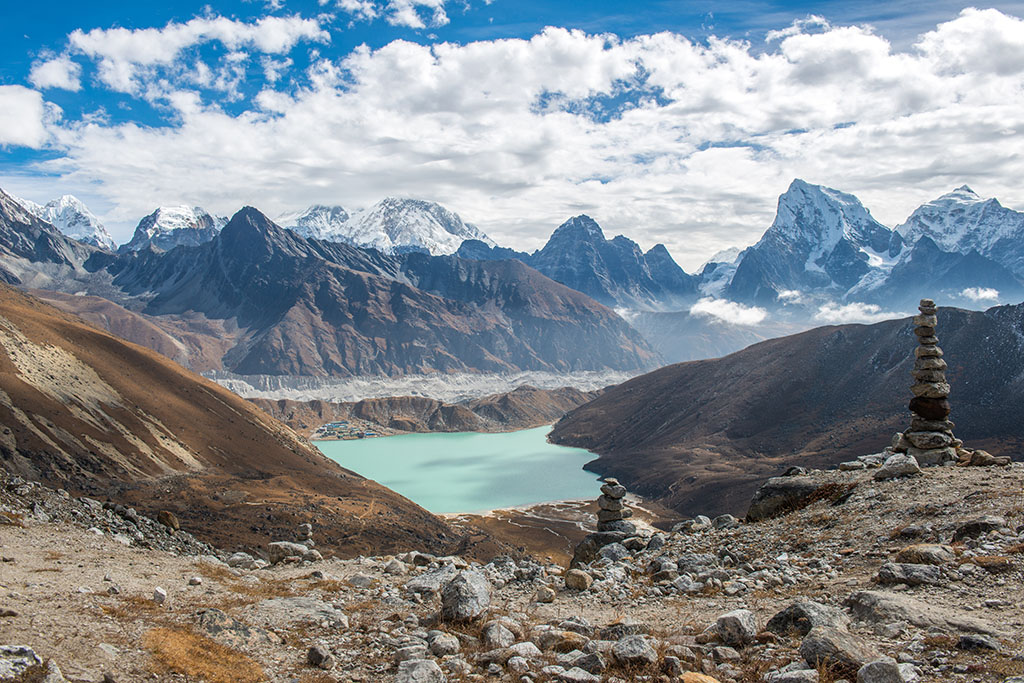
The Gokyo Lakes route adds turquoise lakes to the Everest region, but it is better as a second trek.
| Route | Typical length | Good first trek? |
|---|---|---|
| Everest Base Camp (standard) | 14 days | Yes, for a fit beginner |
| EBC with Gokyo Lakes | 17 days | Better for a second trek, with more days at altitude |
| Three Passes and EBC | 20 days | No. It crosses high passes and suits experienced trekkers. |
| Gokyo and Renjo La | 14 days | Possible, but more remote than the standard route |
| Jiri to Everest Base Camp | 22 days | Only if you have the time. NTB describes Jiri to Lukla as a two-day walk, and the road from Kathmandu to Jiri as about 10 hours. |
Lengths are typical Base Camp Hikes schedules. For the alternatives in detail, see the post on alternate routes to Everest Base Camp.
Best time of year for a first trek
Spring and autumn are the safest windows. Monsoon and midwinter are the hardest.
| Months | What NTB says | For a first-timer |
|---|---|---|
| March to May | Listed as a best season | Good: a best season, and warmer than winter |
| June to September | Rainy for Sagarmatha | Avoid: rain and the cold, wet conditions NTB describes |
| October to November | Listed as a best season. The Mani Rimdu festival is held at Tengboche every October. | Good: a best season, with a festival at Tengboche |
| December to February | Snowy, about 5 degrees Celsius by day. Winters at altitude are extreme, with heavy snow. | Possible with proper gear, but colder and harder |
For the monthly detail, read the post on Everest treks month by month and on Everest Base Camp weather.
How much time to plan, and why spare days matter
The trek takes about two weeks. The spare days protect your flight home.
Plan about 14 days for the standard schedule and add at least two spare days after the trek. Put the spare days at the end, not the start, so a delayed flight does not make you miss an international connection. This matters most near the monsoon.
Lukla is a short, high airstrip. The Civil Aviation Authority of Nepal (CAAN) gives its elevation as 2,846 m, with a 527 m runway, and the airport operates under visual flight rules only. That is why morning departures and clear weather matter, and why cancellations happen. NTB describes the flight from Kathmandu as about 30 minutes. For airports, buffer days and what a cancellation costs, read Lukla vs Ramechhap flights for Everest Base Camp and what to know about flying to Lukla.

Tenzing-Hillary Airport at Lukla (2,846 m), the usual start of the trek.
Permits and fees
Government pages only. A reputable operator arranges and includes these permits.
| Permit | What the official pages say | Source |
|---|---|---|
| Licensed guide and TIMS card | Required for the Everest Basecamp Trek, with the card issued through an agency (rule effective 31 March 2023) | NTB TIMS page |
| TIMS card fee | NPR 2,000 (SAARC: NPR 1,000), payable through the agency | NTB TIMS page |
| Sagarmatha National Park entry | NPR 3,000 (SAARC: NPR 1,500) per entry | NTB park entry fees page |
| Where to get them | Park entry permit and TIMS card from the Tourist Service Centre, Bhrikutimandap, Kathmandu | NTB Everest region page |
NTB pages do not always agree on fees, so confirm the current amount on your travel date. Indian citizens should ask their operator which documents and fees apply, and other local fees may apply on the trail. A reputable operator includes the permits in the package.
What drives the cost
- Length: each extra day adds lodging, meals and guide time.
- Flights: the Lukla flights are a large share of the cost, and a cancellation can add hotel nights or a helicopter charter.
- Group size and service: a private guide and porter costs more than a shared departure.
- Extras: international flights, visa, insurance, drinks, charging, showers, tips and any extra days.
Ask for a written quote that lists what is and is not included before you compare operators.
A readiness checklist before you book
- You have seen a doctor, especially if you have a health condition or take medication.
- You can walk 6 to 8 hours on two days in a row with a pack.
- Your schedule keeps both rest days and at least two spare days at the end.
- Your insurance covers trekking above 5,000 m and helicopter evacuation.
- You know which gear is included and which you must bring.
- You have chosen the spring or autumn season.
- You know the names of the symptoms to report to your guide.
The verdict
Everest Base Camp is realistic for a fit first-timer who respects the schedule. Choose the standard route in spring or autumn, keep the rest days and spare days, train for several weeks and tell your guide early if something feels wrong. If you are unsure about altitude or time, a lower trek such as Annapurna Base Camp is a good first step.
Plan your first Everest trek with Base Camp Hikes
Base Camp Hikes runs the Everest Base Camp trek with licensed guides and porters, and the package includes the permits and TIMS card. View the Everest Base Camp trek for the itinerary and current price. Send your dates, fitness and questions and the team will advise: call or WhatsApp +91 932 595 1234 (9 am to 7 pm IST), email info@basecamphikes.com or use the enquiry form.
Related reading: altitude sickness and Everest Base Camp, trekking Everest Base Camp without a guide and the complete Everest Base Camp guide for 2027.
Weighing Everest Base Camp against a bigger-name climb in Africa? Read our Everest or Kilimanjaro trekking comparison before you decide.
FAQ
Is Everest Base Camp suitable for a first-time trekker? Yes, for a fit beginner who takes the full schedule with its rest days. It is strenuous but not technical, and no climbing skill is needed.
How hard is the Everest Base Camp trek for a beginner? The trek is graded strenuous. You walk 6 to 8 hours a day for about nine walking days, and the challenge is altitude and endurance rather than steep terrain.
How fit do I need to be for Everest Base Camp? You should manage 6 to 8 hours of walking on consecutive days with a pack. Train for about 12 weeks with hills, stairs and long walks, and see a doctor first if you have a health condition.
How many days do I need for Everest Base Camp? About 14 days for the standard schedule from Kathmandu, plus at least two spare days after the trek for flight delays.
How high is Everest Base Camp? Everest Base Camp is at 5,364 m. Kala Patthar, the viewpoint above Gorak Shep, is at 5,545 m, and the highest sleeping altitude is 5,180 m at Gorak Shep.
Can a beginner get altitude sickness? Anyone can, regardless of fitness. NTB advises treating headache, nausea, loss of appetite, dizziness or unusual fatigue as altitude sickness, not going higher, and descending if symptoms worsen.
What is the best time of year for a first Everest trek? NTB lists October to November and March to May as best seasons. Autumn brings the Mani Rimdu festival at Tengboche, and the monsoon months of June to September are rainy.
Do I need a guide for Everest Base Camp? The NTB TIMS page requires a licensed guide and an agency-issued TIMS card on its listed routes, which include the Everest Basecamp Trek.
What permits do I need for Everest Base Camp? A TIMS card (NPR 2,000, or NPR 1,000 for SAARC nationals) and Sagarmatha National Park entry (NPR 3,000, or NPR 1,500 for SAARC nationals), according to NTB. Your operator should arrange them.
What should I pack for Everest Base Camp? Broken-in boots, warm layers, a down jacket, a waterproof shell, a sleeping bag rated to about 0 degrees Celsius, a head torch, gloves and sun protection. Gear can be rented or bought in Kathmandu.
What happens if the Lukla flight is cancelled? You wait in Kathmandu, Lukla or Ramechhap until flights run, and extra hotel nights are normally your cost. A helicopter charter is an option, but it costs extra. Spare days make this far less stressful.
Where do you sleep on the Everest Base Camp trek? In lodges and tea houses, according to NTB, with camping sites and some home-stays also available in the region.
Should I take Diamox? NTB mentions acetazolamide (Diamox) as an option for altitude illness, but it is a medicine, so ask your doctor before you go.
Is Annapurna Base Camp easier for a first trek? It is lower at 4,130 m and graded moderate, but its last day gains about 1,260 m in one day. Read the Everest Base Camp vs Annapurna Base Camp comparison before choosing.
Sources
- Nepal Tourism Board, safety in the mountains (ascent rules, altitude sickness, HRA posts)
- Nepal Tourism Board, TIMS card (guide and TIMS rule, fees)
- Nepal Tourism Board, park entry fees
- Nepal Tourism Board, Everest region and Sagarmatha National Park (seasons, lodging, access, highlights, permits)
- Civil Aviation Authority of Nepal, Tenzing-Hillary Airport profile (Lukla elevation, runway, visual flight rules)
- Night-by-night altitudes, distances and walking hours come from the standard 14-day Base Camp Hikes itinerary for Everest Base Camp. Gear, extra-cost and evacuation figures come from Base Camp Hikes’ package pages.
- Not government-sourced: the 12-week training plan and the beginner advice on pace and boots are practical guidance, and the Pheriche sleeping altitude in the table (4,320 m) comes from the itinerary, while NTB gives 4,250 m for the aid post.
Information correct as of 22 October 2026.