By
The best months to trek to Everest Base Camp are October and November in autumn, and March to May in spring. The Nepal Tourism Board names these two windows as the main trekking seasons. October has the clearest skies and the biggest crowds, April has the warmest weather and the rhododendron bloom, and November is often the quietest of the good months. Winter is cold but quiet and clear, and the monsoon months from June to early September are the hardest. This guide goes through all twelve months, with weather, crowds, flights and who each month suits.
Pick your month in 10 seconds
- Best mountain views: late October and November.
- Warmest weather and flowers: April.
- Fewer people, still good weather: early March and late November.
- Quietest trails, if you can handle the cold: January and February.
- Avoid unless you have flexible days: mid June to early September.
Last checked: 28 October 2026. Weather in the mountains varies from year to year, so treat each month as a pattern and not a promise. Always keep one or two spare days in your plan.

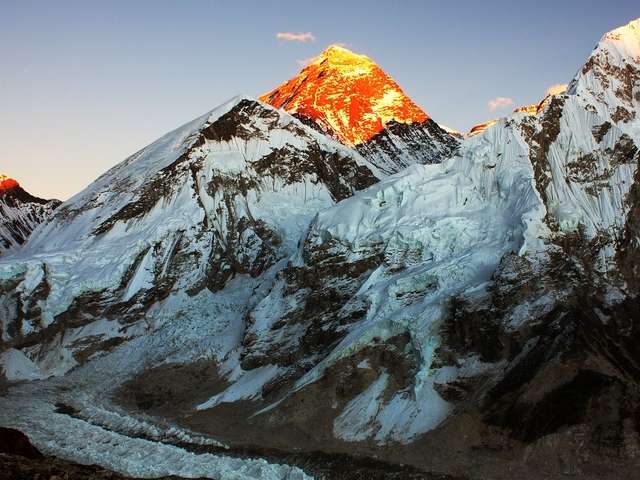
Walking down toward Everest Base Camp from Kala Patthar. Clear days like this are most common in autumn.
In this guide: Choose by priority | Month table | Month by month | Flights | Booking | Cold and gear | Other treks | Decide | FAQ
Which month is best for your priority?
There is no single best month, only the best month for what you want from the trek. Start with your priority.
| Your priority | Best months | Why |
|---|---|---|
| The clearest mountain views | Late October, November | Skies are dry after the monsoon and the air is clean |
| Warmer days and flowers | April | Lower forests are in bloom and days are milder |
| Quiet trails | January, February, early March, late November | Fewer trekkers and easier lodge rooms |
| The Base Camp tent city | April, May | Expedition teams are camped near Base Camp |
| Photography | October, November, February | Crisp light and sharp air |
| The best chance of flights on time | October to February | Drier months with fewer cloud delays |
| A lower budget or fewer bookings to chase | Early March, late November, February | Lodges and flights are less crowded |
| Rain shadow trekking in summer | June to August, on the Annapurna side | Choose a different region instead of Everest |
Everest Base Camp month by month at a glance
| Month | Weather pattern | Crowds | Flights | Best for |
|---|---|---|---|---|
| January | Cold and clear, freezing nights, snow possible | Very low | Mostly good | Solitude, clear views |
| February | Still cold, a little brighter and clearer | Low | Mostly good | Photography, quiet trails |
| March | Warming slowly, cold at height | Low early, busier later | Mostly good | Early spring, fewer people |
| April | Warmest spring weather, afternoon haze possible | High | Good, with some afternoon cloud | Rhododendrons, mild weather |
| May | Warm, more haze and cloud, monsoon can arrive late | High then falling | Delays rise late in the month | Base Camp activity, early May |
| June | Monsoon begins, rain and cloud | Very low | Frequent delays | Not recommended for Everest |
| July | Monsoon | Very low | Frequent delays | Not recommended for Everest |
| August | Monsoon | Very low | Frequent delays | Not recommended for Everest |
| September | Rain tapering, greener valleys | Low early, rising late | Delays more likely early | Late September departures |
| October | Clear and settled, cold nights | Highest | Busy flight schedule | Views, classic season |
| November | Clear and cold, quieter second half | Medium, then low | Good | Views, fewer crowds |
| December | Cold and bright, freezing nights, wind | Low | Mostly good | Quiet trails, cold tolerance |
Risk scorecard: what can go wrong in each month
A simple rating of the main trade-offs. Low is better for every column. This is a general pattern, not a forecast.
| Month | Cold at altitude | Rain or snow | Haze or cloud | Flight delays | Crowds and full lodges |
|---|---|---|---|---|---|
| January | Very high | Low to medium | Low | Low | Low |
| February | High | Low to medium | Low | Low | Low |
| March | High | Low | Low to medium | Low | Medium |
| April | Medium | Low | Medium | Low to medium | High |
| May | Low to medium | Medium | Medium to high | Medium | High, then falling |
| June to August | Low | Very high | Very high | Very high | Very low |
| September | Low to medium | Medium to high | Medium | Medium to high | Low to medium |
| October | Medium | Low | Low | Medium | Very high |
| November | High | Low | Low | Low | Medium, then low |
| December | Very high | Low to medium | Low | Low | Low |
Early, mid or late in the month: the two main seasons in detail
Weather does not change on the first of a month, so the part of the month matters. Use this as a guide for your departure date.
| Window | What to expect | Good for |
|---|---|---|
| Early March | Quietest part of spring, cold at height, first flowers low down | Space and fewer bookings |
| Mid to late March | More trekkers, longer days, milder valleys | A balance of weather and quiet |
| Early to mid April | Best flowers and warm weather, busy lodges | Colour and mild days |
| Late April | Warm days, more haze, Base Camp active | Base Camp atmosphere |
| Early May | Warm and busy, expedition activity high | Warmth, if you book early |
| Late May | More cloud and flight delays, thinner crowds | Flexible schedules only |
| Late September | Green valleys, rain easing, few people | Quiet trails with spare days |
| Early October | Settling weather, very busy lodges | Reliable views, book early |
| Mid to late October | The clearest skies and heaviest traffic | Best views |
| Early November | Clear and still busy | Views with slightly more room |
| Late November | Clear, quiet and cold at night | Space and sharp views |
This table matches the longer Everest Base Camp weather guide, which explains how temperature falls with altitude.
What is each month like on the Everest Base Camp trek?
January: the cold, clear and almost empty month
January is deep winter. Days are bright at the lower altitudes, but nights above Dingboche are well below freezing, and the wind can make mornings feel colder than the thermometer says. Trails are very quiet and lodge rooms are easy to find, though some small teahouses at the highest points may have limited services. The sky is often cloudless, and that helps both flights and mountain views. Snow is possible, and it can delay a flight or cover the upper trail for a day. Expect to carry a warm sleeping bag and several warm layers.
February: the photographer’s quiet month
February is slightly milder and brighter than January. The air stays sharp and clear, which many photographers prefer, and trails are still quiet. Mornings above 4,000 m are very cold, so start walking after the sun reaches the trail. It is a good month for trekkers who dislike crowds and are comfortable in the cold.
March: spring begins, with room to breathe
March is the start of the spring season. Early in the month trails are still quiet, and the first rhododendrons begin to appear in the lower forests. By the second half the number of trekkers grows. Higher up it is still cold, especially at night, so pack winter layers even though the lower valleys feel mild. It is a strong choice if you want spring weather with fewer people than April.

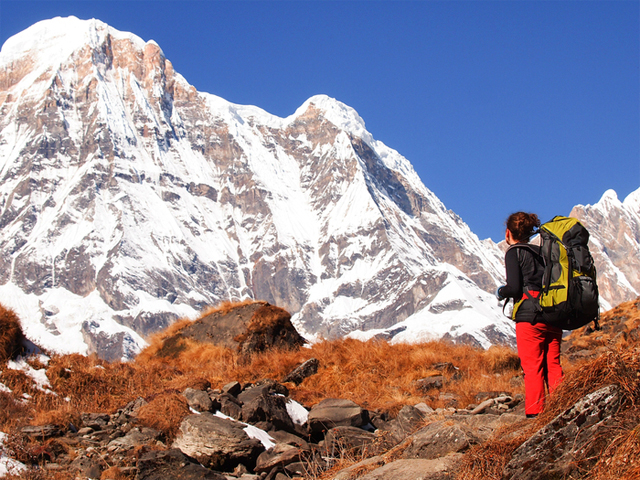
A trekker on the Everest Base Camp route, where trail traffic changes strongly from month to month.
April: warm days and flowering forests
April is the busiest part of the spring window. The lower trail is colourful with blooming rhododendrons, days are the warmest of the main seasons, and Base Camp itself has expedition teams in residence. Afternoon haze can soften the far peaks, so mornings give the best views. Book flights and the busiest lodges early, because rooms in Namche Bazaar, Tengboche and Dingboche fill quickly.
May: the warmest month, with the first clouds
Early May is warm and busy, with porters, animals and expedition support teams on the trail. As the month goes on, cloud builds, views are less reliable, and in years when the monsoon arrives early, flight delays increase near the end of May. Early May is the better half. Trekkers who go late in the month should keep extra days for delays.
June, July and August: monsoon months
Rain and cloud hide the peaks for much of the day, trails are slippery, leeches can appear on the lower sections, and flights to Lukla are often delayed. Most Everest region treks are not run in these months for these reasons. If you want to trek in Nepal in summer, look at areas in the rain shadow of the Himalaya, such as the Annapurna Circuit in the Manang region. Read the Annapurna Circuit guide.
September: the transition month
Early September can still be wet on the lower trail, while late September is much better. Valleys are green and fresh after the rain, trails are not yet busy, and the mountains appear more often than in July. Late September departures are a smart option for trekkers who want fewer people and are happy to keep spare days for early-season cloud.
October: the classic month
October brings the most settled weather and the clearest air, and it is the busiest month on the trail. Lodges in the main villages fill by mid-afternoon, flights are tightly booked and the mountain views are at their best. Nights are cold above 4,000 m, but days are comfortable. Book flights and lodges as early as you can, and keep a day spare. See the October 2026 conditions report for live details.
November: clear, cold and quieter
November often has some of the cleanest skies of the year. The first half is still busy, but the second half becomes much quieter. Nights are colder than in October, especially above 4,500 m, so a warm sleeping bag and a down jacket are essential. For many trekkers it is the best balance of views, space and settled weather.
December: cold, bright and quiet
December starts the winter. Days are bright and often sunny, and nights are well below freezing at altitude. Trails are quiet, and flights are usually reliable. Snow is possible but not the norm. Wind is a bigger concern as the month goes on, so pack for strong wind chill and plan shorter morning starts.
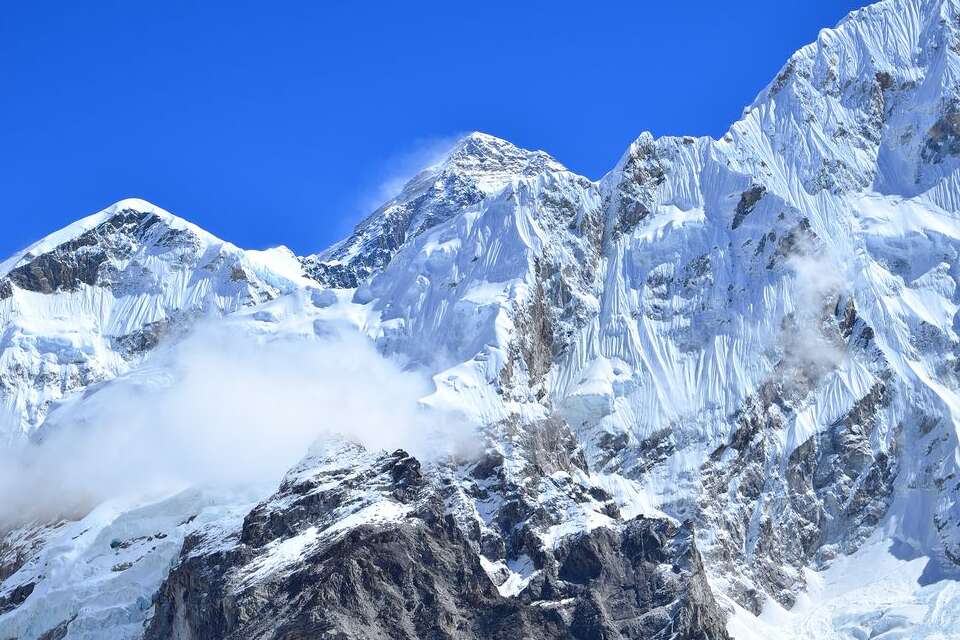
The view from Kala Patthar, about 5,545 m, is at its sharpest in the dry, clear months.
How do the seasons affect Lukla flights?
Flights to and from Lukla depend on weather in every month. Mornings are usually better than afternoons. In the monsoon and the early or late shoulder weeks, cloud causes more delays. In the busy autumn weeks, many flights operate from Ramechhap instead of Kathmandu, which changes your start time and your transfer. Whatever month you choose, keep one or two spare days before any international flight home. The Lukla vs Ramechhap guide explains the flight options, and the helicopter return guide covers the backup.
How cold is it, and what should you pack each season?
Temperature falls with altitude. Nepal Tourism Board guidance puts the drop at about 6°C for every 1,000 m, which means Base Camp feels around 24°C colder than Kathmandu at the same time of year. Wind and cloud change what you feel.
| Season | Gear that matters most |
|---|---|
| Winter (Dec to Feb) | A warm sleeping bag, a down jacket, insulated gloves, thermal layers, a warm hat and a face cover |
| Spring (Mar to May) | Layers for warm days and cold nights, a light rain shell, sun protection and a sleeping bag for cold nights |
| Monsoon (Jun to early Sep) | A strong rain shell, waterproof pack cover, spare dry clothes and leech socks for lower trails |
| Autumn (late Sep to Nov) | Layers, a down jacket for evenings, sunglasses, microspikes for icy sections, and a sleeping bag rated for November nights |
See the Everest Base Camp packing checklist.
Which months work for other Everest region treks?
The pattern is similar for other treks in the Everest region, but high passes and trekking peaks need drier, snow-free conditions. Gokyo can often be done in winter, with the pass crossing skipped or rerouted, while the Three Passes and Cho La crossing are best in the main autumn and spring windows. For Gokyo, read the Gokyo Lakes guide.

Trekking seasons for treks in the Everest region.
How early should you book for each month?
Demand is uneven, so the lead time depends on the month. These are practical guides, not fixed rules.
| Month | Booking guidance | Why |
|---|---|---|
| October | Book as early as you can, ideally several months ahead | Flights and Namche, Tengboche, Dingboche and Lobuche lodges fill first |
| April | Book early, since rooms and seats fill fast | Peak spring demand |
| March and November | Book a few weeks to a couple of months ahead | Busy, but with more room |
| May | Book early for the first half | Expedition activity fills rooms |
| January, February and December | Flexible, but confirm lodge availability at the highest points | Quiet, with fewer services open |
| Late September and the monsoon | Keep dates flexible and add spare days | Weather risk matters more than demand |
What if your dates are fixed?
Many trekkers have a leave window they cannot change. Here is how to handle the most common cases.
- You can only travel in June, July or August: choose a rain shadow trek such as the Annapurna Circuit instead of Everest, or plan a different region. See the Annapurna Circuit cost and itinerary.
- You can only travel in early September: accept some rain on the lower trail, start with a buffer of two spare days, and carry a good rain shell.
- You can only travel in peak October: book flights and lodges first, and travel in the middle of the month if possible.
- You can only travel in winter: choose a warm sleeping bag, add a rest day for cold mornings, and confirm that lodges at the highest points are open.
- Your dates are tight at the end of the trip: add one or two spare days in Kathmandu before an international flight, whatever the month.
Which month suits which kind of trekker?
| Trekker | Good months | Notes |
|---|---|---|
| First-time trekkers | April, October, November | Milder weather and more people on the trail. Train early |
| Families and teenagers | April, October | Avoid the coldest nights. Check lodge availability |
| Older trekkers | April, October | Warmer days, more rest. Read the seniors guide and see a doctor first |
| Photographers | October, November, February | Sharp air, crisp light, early starts |
| Solo trekkers | Late March, late November | Quieter, with easier room availability |
| Cold-tolerant trekkers wanting solitude | January, February, December | Pack for severe nights and high wind chill |
| Trekkers on a tight schedule | October to February | Fewer weather-related flight delays |
Common mistakes when choosing a month
- Booking only for the weather. The clearest month is also the busiest, so flights and lodges decide your real experience.
- Underestimating November nights. Days feel mild, but nights above 4,500 m are cold.
- Forgetting haze in spring. Views can soften in the afternoon, so mornings matter.
- Leaving no spare days. Flight delays happen in every month.
- Choosing late May or early September for a fixed return flight. These are the weeks with the least certain weather.
- Skipping training. The season changes the weather, but the altitude and the walking are the same in every month.
How do you decide?
- Cold tolerance: if you dislike cold nights, choose April or October.
- Crowds: if you want space, choose early March, late November or February.
- Views: if the views matter most, choose late October or November.
- Flexibility: if your return flight is fixed, avoid the weeks with the most cloud and add spare days.
- Fitness and altitude: start training early. See the 12-week training plan and the altitude sickness guide.
- Budget: read the Everest Base Camp trek cost from India.
FAQ
What is the best month to trek to Everest Base Camp? October and November for clear views, or April for warmer weather and flowers. The right month depends on whether you value views, warmth or space.
Which is better, spring or autumn? Autumn has clearer views and drier weather. Spring has warmer days and flowers but more haze and cloud. Both are in the main trekking seasons.
Can I trek to Everest Base Camp in winter? Yes. December to February is cold, quiet and often clear. You need a warm sleeping bag and good layers, and some services at the highest points may be limited.
Can I trek in the monsoon? It is not recommended. Rain, cloud, slippery trails and flight delays are common. Choose a rain shadow region instead.
Which month is the least crowded? January and February are the quietest. Early March and late November are quiet too, with milder weather.
Which month is the busiest? October is the busiest, followed by April.
Is November too cold? Days are comfortable, but nights above 4,500 m are cold. A warm sleeping bag and down jacket are needed.
When do the rhododendrons bloom? Usually in April on the lower trail, though the timing varies a little each year.
When is the Base Camp tent city active? In April and May, when expedition teams are camped there.
Are flights more reliable in some months? Yes. October to February usually have fewer weather delays than the monsoon and the shoulder weeks.
How early should I book? For October and April, book flights and lodging as early as you can. For quieter months you have more flexibility.
How many spare days should I keep? One or two before any international flight, in every season.
Which month is best for photography? October, November and February, for sharp air and clear light.
Which month is best for beginners? April, or October, as the weather is milder, but book early. Train well in any month.
Does altitude sickness change with the season? The altitude is the same in every month. Pace, rest days and early reporting of symptoms matter most.
Is early March or late November better for quiet? Both are quiet. March is milder with spring flowers starting, while late November has clearer skies but colder nights.
What if I can only trek in July? Everest region treks are not recommended in the monsoon. Choose a rain shadow region such as the Annapurna Circuit instead.
Which month is best for older trekkers? Milder months such as April and October. Read the guide for parents and seniors.
Plan your Everest Base Camp trek with Base Camp Hikes
For dates and a quote, see the 14-day Everest Base Camp trek, or message the team on WhatsApp or phone at +91 932 595 1234 (9 am to 7 pm IST), write to info@basecamphikes.com, or use the enquiry form.
Sources
- Nepal Tourism Board: safety in the mountains