
 By
The Everest region is open for the 2026 autumn season. Floods on 26 August 2026 damaged roads and bridges in the Trishuli and Bhotekoshi corridor north of Kathmandu, but the Khumbu valley lies outside the affected area. As of 13 October 2026, the Trekking Agencies’ Association of Nepal (TAAN) lists Everest among the destinations not affected by the floods. The operational risks on the Everest Base Camp (EBC) trail are the usual ones: Lukla flight delays, full lodges in peak season and altitude.
This update covers route status, Lukla flights, permits and fees, weather, crowds, the Mani Rimdu festival and preparation. Flight and road conditions can change at short notice, so please confirm them with us 48 hours before departure.
Everest region at a glance: October 2026
| Item | Status as of 13 October 2026 |
|---|---|
| Region status | Open. Khumbu is outside the August 2026 flood zone |
| Treks operating | Everest Base Camp, Gokyo Lakes, Chola Pass, Three Passes |
| Flights | Lukla flights operating, mostly from Manthali (Ramechhap) airport in the autumn peak |
| Permits | Sagarmatha National Park permit and Khumbu Pasang Lhamu local permit, reported at NPR 3,000 each. TIMS reported as no longer used |
| Weather | Dry and stable, with clear mornings and sub-zero nights above 4,000 m |
| Crowds | Peak season. Book lodges in Namche, Tengboche and Dingboche in advance |
| Festival | Mani Rimdu, Tengboche. Public days reported as 26 to 28 October 2026 |
Impact of the 2026 floods
The 26 August floods on the Bhotekoshi river reached the Trishuli and caused the most damage in Rasuwa district, on the Langtang side of Nepal. Solukhumbu and the Khumbu valley are in a different part of the country. The Nepal Tourism Board has confirmed that Nepal remains open to trekkers.
- Everest (EBC, Gokyo, Three Passes): outside the flood zone and operating.
- Langtang and Gosaikunda: access disrupted. The Syabrubesi road was reported closed after the flood.
- Manaslu Circuit: damage near Namrung repaired. The restriction was reported lifted on 11 September 2026.
- Annapurna: not affected by the flood. Some access roads towards Manang and Mustang were under repair in early October.
One section of the Kathmandu–Pokhara highway was also damaged. If you combine Everest with Pokhara, we recommend flying between the two.
Flights to Lukla
Most Everest treks begin with a flight to Lukla (2,860 m). In the busy seasons (September to November and March to May), many Lukla flights are moved from Kathmandu to Manthali airport in Ramechhap to reduce congestion at Tribhuvan airport.
- Departure time. Manthali flights leave between about 6 and 9 am. The drive from Kathmandu takes 4 to 5 hours, so the transfer starts at about 1 to 2 am.
- Delays. Cloud at Lukla can delay or cancel flights for a day or more. Allow one to two buffer days at the end of the trek, particularly before an international departure.
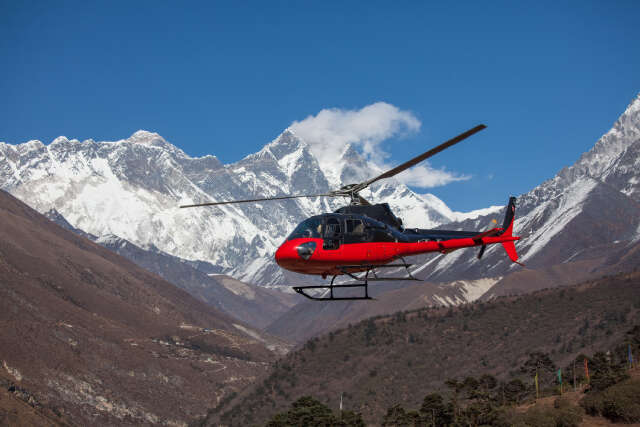
- Helicopter backup. Shared helicopter flights operate when fixed-wing flights are cancelled, at several hundred US dollars per person.
- Fares. One-way fares are commonly quoted at US$180 to $200 from Manthali and US$220 to $260 from Kathmandu. These vary by airline and date.
Our operations team checks flight status each morning and rearranges transfers when schedules change.
Permits and fees
The Everest Base Camp route is an open trekking area and does not require a restricted-area permit. The permits reported for 2026 are:
- Sagarmatha National Park permit: NPR 3,000 for foreign nationals and NPR 1,500 for SAARC nationals, issued near Monjo.
- Khumbu Pasang Lhamu Rural Municipality permit: reported at NPR 3,000 (previously NPR 2,000), issued in Lukla.
- TIMS card: reported as no longer used on this route.
Indian citizens pay the SAARC rate for the national park permit. Fees and rules change, so please confirm current rates with us before booking. A guide is not legally required on this route, but we recommend a licensed guide for acclimatisation decisions, emergencies and flight disruptions.
Weather and trail conditions
October is normally the most settled month in the Khumbu. Monsoon mud has dried, mornings are clear and mountain views are at their best. Typical conditions are:
- Lukla and Phakding: about 15 to 20 °C by day.
- Namche to Tengboche: cooler days and nights near freezing.
- Everest Base Camp and Kala Patthar: 0 to 5 °C by day and below freezing at night. By late November, night temperatures can reach -15 °C or lower.
- Afternoons: cloud and wind increase near passes and ridges, so start walking early.
Light snowfall at altitude is possible late in the month and usually clears within a day. We are not aware of any trail closures in the Khumbu this autumn. Sections near Gorak Shep, Dzongla and Cho La can be icy, so carry microspikes.
Crowds and lodges
October is the busiest month. Lodges in Namche Bazaar, Tengboche, Dingboche and Lobuche can fill by mid-afternoon. To avoid problems, book accommodation through an operator, start early and keep a spare day in the plan.
November is quieter, with colder nights and very clear skies. The Gokyo Lakes route carries fewer trekkers than the main EBC trail.
Mani Rimdu festival at Tengboche
Mani Rimdu is a Sherpa Buddhist festival of masked dances held at Tengboche Monastery each autumn. For 2026, the monastery rituals are reported to run from 10 to 28 October, with public days on 26, 27 and 28 October. The dates follow the Tibetan lunar calendar, so please confirm them with us. Lodges in Tengboche and nearby villages are in high demand during the festival, so book early.
Difficulty and preparation
Altitude is the main challenge on the EBC trek. The route reaches 5,364 m at Base Camp and 5,545 m at Kala Patthar, with 5 to 7 hours of walking on most days.
- Training: 8 to 12 weeks of hill walking with a daypack, plus stair and cardio work.
- Acclimatisation: use the rest days at Namche and Dingboche. Above 3,000 m, limit the increase in sleeping altitude to about 500 m per night.
- Altitude sickness: report headache, nausea, poor sleep or breathlessness to your guide immediately. Descent is the primary treatment.
- Insurance: choose a policy that covers trekking to 5,500 m and helicopter evacuation.
- Medical advice: consult your doctor before the trek, particularly about altitude medication.
Packing for October and November
- Base layers, fleece, down jacket and windproof shell
- Broken-in waterproof trekking boots, warm socks and microspikes
- Sleeping bag rated to -15 °C (rentals available in Kathmandu)
- Warm hat, sun hat, gloves, sunglasses and sunscreen
- Water bottles, purification tablets, headlamp and trekking poles
- Nepali rupees in cash, as ATMs above Namche are unreliable
- Warm clothing for the night transfer to Manthali
For equipment shopping, see our guide to buying cheap trekking gear in Kathmandu.
Frequently asked questions
Is the Everest Base Camp trek safe in October 2026? Yes. The Khumbu is reported as open and unaffected by the August 2026 floods. The usual risks apply, mainly flight delays and altitude sickness.
Are Lukla flights running? Yes. In the autumn peak, most flights depart from Manthali (Ramechhap) airport, and weather delays of a day are normal. Keep one or two buffer days.
Do I need a guide for Everest Base Camp? The route is an open area, so a guide is not legally required, but we recommend one. Rules can change, so please check with us before you travel.
Do I need a TIMS card? Reports for 2026 say the TIMS card is no longer used on the Everest route and that the Khumbu Pasang Lhamu local permit replaces it. We will confirm this when we arrange your permits.
Can Indian citizens trek to Everest Base Camp? Yes. Indian citizens pay the SAARC rate for the national park permit. Contact us for the documents and fees that apply to Indian citizens.
Is it too late to book for October? Flights and lodges are tight in October. November departures usually have more availability. Contact us for current dates.
Plan your Everest trek with Base Camp Hikes
Base Camp Hikes arranges permits, licensed guides, porters, teahouse accommodation, Lukla flights and helicopter backup for Everest Base Camp, Gokyo and Three Passes treks, in small groups with spare days for weather. Contact our team for current departure dates and a tailored quote.