Day 1 - Kathmandu: Arrival Day
Altitude: 1,350m/4,428ft
Welcome to Kathmandu, the capital and cultural hub of Nepal! We’ll be waiting with a warm greeting and easy transfer to your hotel. Plan on an evening briefing on last-minute specifics about your trek and an early lights-out: you have a big day ahead.
Day 2 - Kathmandu to Lukla Flight and Phakding
Altitude: 2,800m/9184ft (Lukla) & 2,652m/8,698ft (Phakding)
Walking Distance: 8km (3-4 hours)
*
Flight time: 15 min from Ramecchap
Drive time: 4 hours & 30mins (Kathmandu to Ramecchap)
After a short morning flight to Lukla, you'll be introduced to your guide and porter. Kick off your trek with an easy walk through Chaurikharka village and descent towards Dudhkoshi Ghat (2,530m/8,300ft). The trail follows the bank of the Dudhkoshi River until Phakding (2,652m/8,700ft), where we will be staying for the night to acclimatize. Enjoy your free time in Phakding, a popular stopping point.
Please Read: Lukla Flights are departing and returning to Ramechhap instead of Kathmandu due to ongoing upgrades at Kathmandu Airport. Its about a 4 hour drive to Ramechhap from Kathmandu so we will get started for the airport around 2 am. The return drive at the end of the trek is between 4 and 6 hours depending on traffic.
Day 3 - Phakding to Namche Bazaar
Altitude: 3,440m/11,283ft
Walking Distance: 10-12km (5-6 hours)
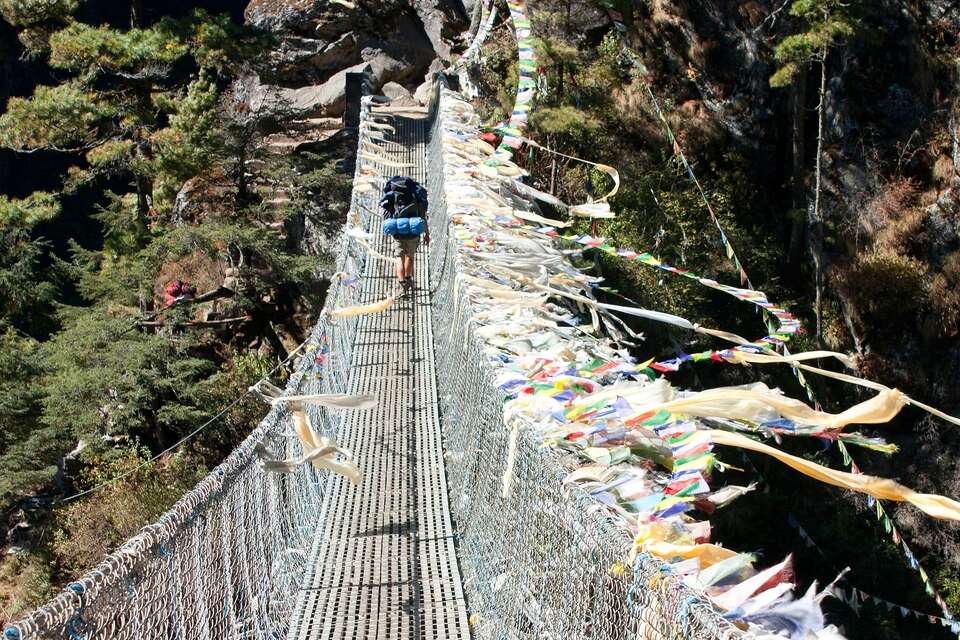
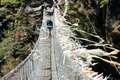
We'll have breakfast in Phakding before gearing up for the trek to Namche Bazaar, the biggest sherpa village in Nepal. Our trail takes us first over the Dudhkoshi River via a long suspension bridge, and then through a beautiful pine forest to Monjo, about two hours away. Soon thereafter, we will approach the entrance to Sagarmatha National Park for a brief permit check and then descend to Dudh Kosi River (spotting Mani stones along the way!) en route to Jorsale. Lunch will be served here, and then it's uphill to Namche. Our path along the riverbank is flanked by two crossings, one of which is the Hillary Suspension Bridge. It's a tough climb up the hill to our resting place, but you'll be rewarded in Namche Bazaar with your first glimpse of Everest in its majesty.
Day 4 - Namche Bazaar: Rest and Acclimatization Day
Altitude: 3,440m/11,283ft
At this point, we take a well-deserved break! Today will be spent resting and allowing our bodies to become acclimatized to the lofty altitude. There's an optional 2 hour hike to Everest View Point, an uphill walk that will help speed acclimatization. Otherwise, spend the day exploring Namche Bazaar. Check out the Sherpa museum for an overview of the Sherpa culture and history of mountaineering. On Saturdays, the Hatt Bazaar is open for trading and an intimate look at the locals' marketplace. It is part of the larger Namche Bazaar, a shopping hub filled with all manner of trekking and mountaineering clothing and equipment.
Day 5 - Namche Bazaar to Debouche/Melingo
Altitude: 3,700m/12,139ft
Walking Distance: 10km (6 hours)
Breakfast in Namche Bazaar fuels us for another day of trekking towards Everest Base Camp today! Breathtaking views of the Himalayas - Everest, Nuptse, Lhotse, Ama Dablam, Thamserku and Kwangde - are some of the highlights not to be missed. Our destination, Phortse, is known as one of the most beautiful places in the Everest region. Its views, which include Ama Dablam, are legendary.
Day 6 - Debouche/Melingo to Dingboche
Altitude: 4,400m/14,435ft
Walking Distance: 11km (6 hours)
The trail today parallels the canyon of the raging Imja Khol River with its glacial blue waters. It's a gradual climb up to the village of Pangboche, the biggest settlement of Sherpas in the region. Enjoy a great opportunity to observe a typical Sherpa village and have lunch with the locals! The intrepid can brave a brief hike to the Pangboche monastery, one of the oldest in the area. Our afternoon trek will be a difficult one, as the landscape gives way to dry, deserted mountains and we hike towards Dingboche.
Note: Depending on trail conditions and tea house availability we may take the route on the other side of the river through Phortse. This trail diverges after Namche on Day 5 and basically parallels the trail to Debouche but on the opposite side of the river. The two trails merge back together in Pangboche.
Day 7 - Dingboche: Rest and Aclimitazation Day
Altitude: 4,400m/14,435ft
This is your chance to rest up before the last leg of our adventure! Savor a full day of exploring Dingboche and the surrounding valleys of Chhukung and Imja, the latter of which links with Island Peak, the high passes of Amphu Laptsa, and Makalu Barun National Park. Taking an optional trek to the valleys will pay off in rewarding views, but taking it easy is the most important thing today. You'll need your rest for the penultimate day of ascent tomorrow.
Day 8 - Dingboche to Chhukung
Altitude: Chhukung 4730m/15518ft
Walking Distance: 7km (3-4 hours)
Today is a short days trek up the valley to the small village of Chukhung which lies near the base of Island Peak which is a popular trekking peak for first time climbers. You can do a short day hike from your tea house after lunch up the beautiful valley.
Day 9 - Chhukung to Kongma La - Lobuche
Altitude: Kongma La 5535m/18159ft
Walking Distance: 12km (8-9 hours)
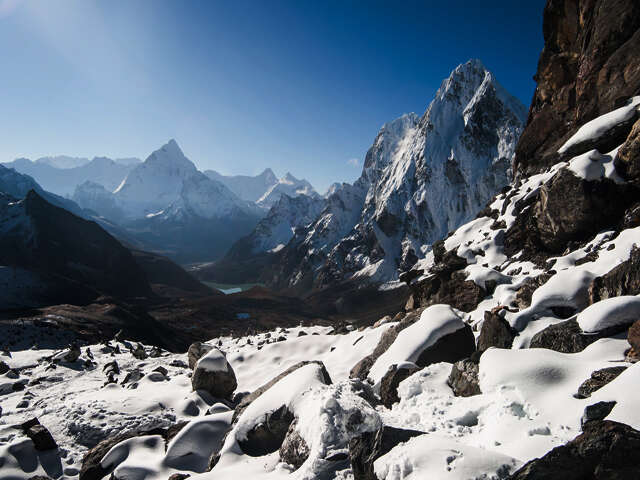
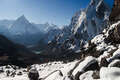
The Kongma La pass is the first real challenge of the Three Passes and it's a steep climb up to the top from Chukhung. Once on top you will have fantastic views of Cholatse, Pokalde, Nuptse, Lhotse, Makalu and Ama Dablam. On the decent you will cross the Khumbu Glacier before you reach Lobuche where you will spend the night.
Day 10 - Lobuche to EBC - Gorakshep
Altitude: Gorakshep 5160m/16994ft, EBC 5364m/17598ft
Walking Distance: 8km (4-5 hours)
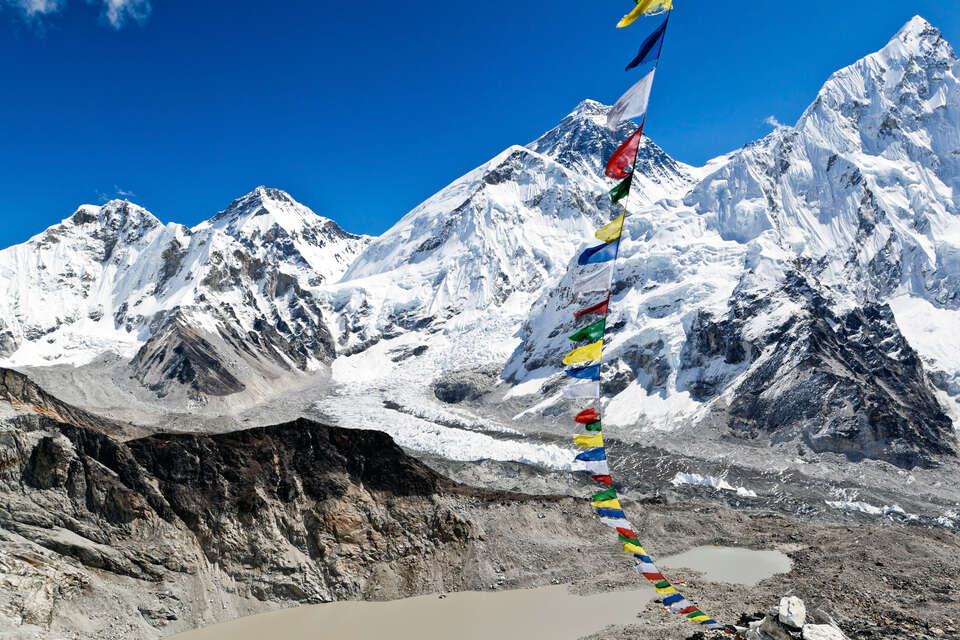
This is it! Our big day kicks off with an initial, relatively easy trek from Lobuche to Gorekshep. The subsequent, straight trail to Everest Base Camp is harder, involving rocky dunes and moraine, formed accumulation of unconsolidated glacial debris. On the way to our destination, we'll approach the famed Khumbu Glacier and icefall, located on the slopes of Everest. At the Base Camp, our goal, you'll have the chance (during the spring climbing season) to meet climbers attempting to scale the mountain’s summit. Break out your cameras for unbelievable views of breathtaking beauty. As the afternoon sun starts to wane, we'll head back to Gorekshep for some much-needed rest and relaxation after a grueling and busy day.
Day 11 - Gorakshep to Kalapathar - Dzongla
Altitude: Kalapathar 5545m/18192ft, Dzonga 4840m/15879ft
Walking Distance: 11km (6-7 hours)
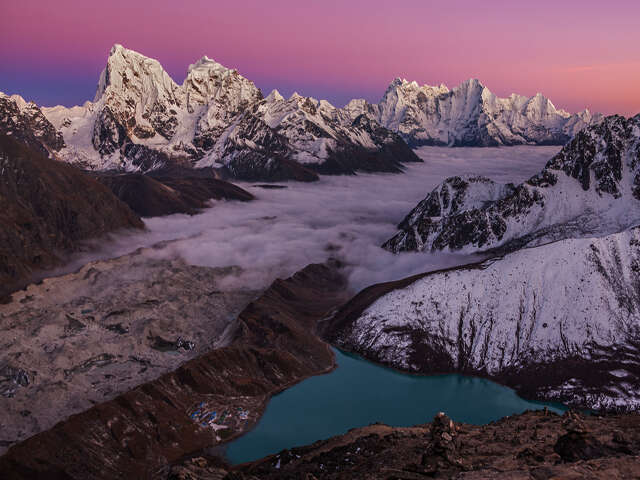
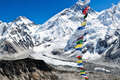
We'll wake before dawn today to trek towards Kalapathar (which means "black rock") for a fiery, glorious sunrise over Mt. Everest. The day's first light will illuminate your spectacular view of Nuptse Nup, Changtse and Lhotse.This may be, of the whole journey, your most opportune moment to snap amazing pictures of Everest and its neighboring peaks. Afterwards, it's back to Gorekshep for breakfast and onwards to Dzongla.
Day 12 - Dzongla to Cho La - Thaknak
Altitude: Cho La 5400m/17598ft, Thaknak 4358m/14298ft
Walking Distance: 15-16km (8-9 hours)
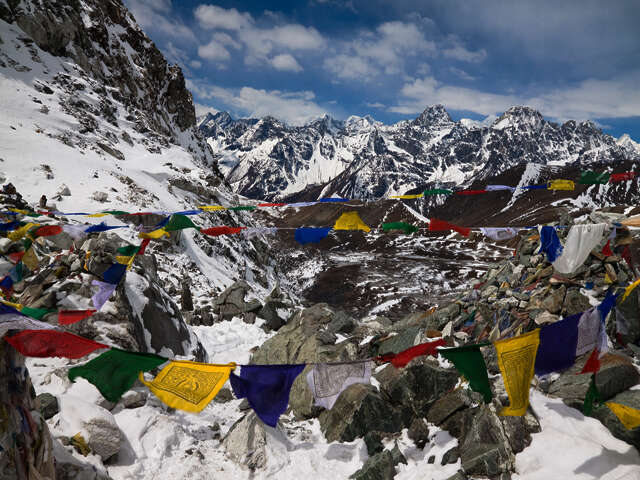
This could be the most challenging day of the trek as you go over the pass. Fortunately, having already visited Everest Base Camp you should be getting used to trekking at the high altitude and feeling stronger. If the weather is bad crossing the pass can be difficult. Crampons are not normally used but microspikes can be helpful if the weather is at all bad. It's a tough climb to the top but the amazing views more than make up for it.
Day 13 - Thaknak to Gokyo
Altitude: Gokyo 4750m/15584ft
Walking Distance: 7km (3-4 hours)
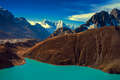
We continue down into the Gokyo Valley and cross the Ngozumpa glacier the longer glacier in this part of the Himalayas and an impressive sight. We should reach Gokyo by lunch. After lunch you should have time to walk up to one of the lakes in the valley and get some great views of the surrounding peaks.
Day 14 - Gokyo to Gokyo Ri
Altitude: Gokyo Ri is 5357 m/17,570 ft
Walking Distance: 7km (5-6 hours)
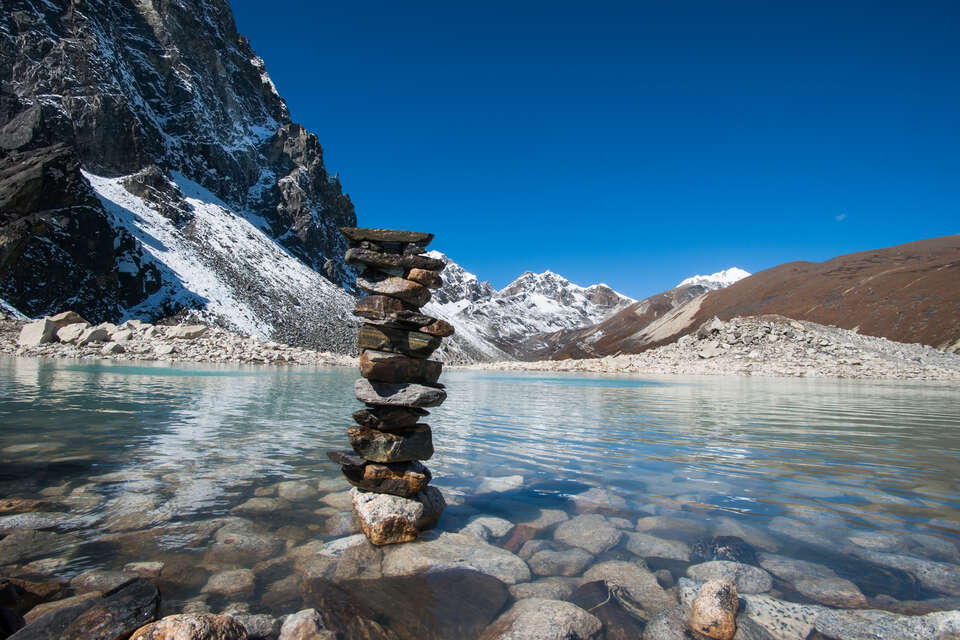
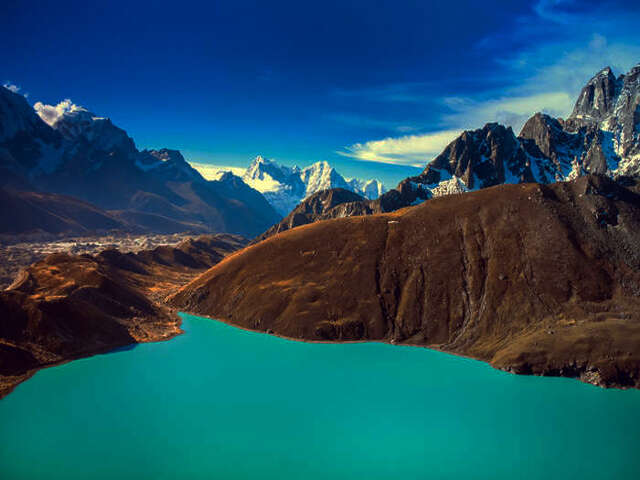
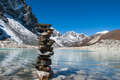
Today is a rest day in Gokyo and a chance to further acclimatize. Its also an opportunity to take a day hike and climb Gokyo Ri which offers one of the best views of Mount Everest in the entire region. The small village of Gokyo lies on the shores of Dudh Pokhari (the third lake) and views of the lake with a backdrop of mount Pharilapche (6017 m / 19741 ft) rising above it have almost become iconic. Gokyo is famous for its six lakes and the day affords the chance to visit these as well.
Day 15 - Gokyo to Renjo La - Lungden
Altitude: Reanjo La 5360m/17580ft, Lungden 4375m/14354ft
Walking Distance: 16km (7-8 hours)
This is another challenging day as you go over Renjo La the last of the Three Passes and descend to Lungden in the Thame Valley. Renjo La is the pass connecting the Thame and Gokyo Valleys. It's a tough days hiking but the views of Cho Oyu (8,201m), Makalu (8,463m), Lhotse (8,516 m) and Everest (8,850m) are well worth it.
Day 16: Lungden to Thame
Altitude: Thame 3800m/12467ft
Walking Distance: 6km (3-4 hours)
The Thame Valley does not see a lot of trekkers so it's a good escape and the small villages are more traditional. A lot of Climbing Sherpas have made their home in the traditional village of Thame. It's a fairly easy walk that is mostly downhill today.
Day 17 - Thame to Namche Bazaar
Altitude: Namche Bazaar 3440m/11286ft
Walking Distance: 10km (4-5 hours)
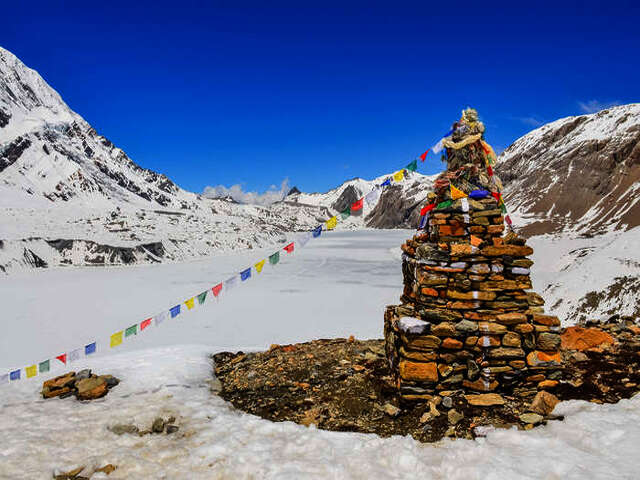
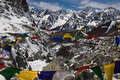
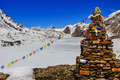
We'll pass through a check post today before arriving at the world's loftiest hydroelectric power station, which provides electricity for most of the upper Khumbu region. We'll pass gompas, prayer flags, mani walls, and chortens en route to Namche Bazaar, where we'll again stop for an overnight rest.
Day 18 - Namche to Phakding and Lukla
Altitude: 2,800m/9,184ft
Walking Distance: 16km (6-7 hours)
After breakfast, we trek toward the Hillary Suspension Bridge and then pass through several local villages. Our arrival in Lukla brings an evening in our last Tea House and, traditionally, a party with your trekking crew: you made it! Thanks to great teamwork and perseverance, you've accomplished a physical feat of which others only dream. This is your last night on the mountain, which can be bittersweet.
Day 19 - Lukla to Kathmandu
Altitude: 1350m/4428ft
Flight time: 35 min
In the morning, you'll hop a brief flight from Lukla to Kathmandu (See Note), where your journey both began and ends. You'll transfer to your hotel upon landing for some much-needed solo rest and reflection after your trek conquering the Himalayas. We'll reunite in the evening for a farewell dinner at one of the best Nepalese restaurants in town, where we'll be eager to hear your feedback on the trip.
Please Read: Lukla Flights are departing and returning to Ramechhap instead of Kathmandu due to ongoing upgrades at Kathmandu Airport. Its about a 4 to 6 hour drive from Ramechhap back to Kathmandu depending on traffic.
Day 20 - Kathmandu: Departure Day
Altitude: 1,350m/4,428ft
It's your last day in Nepal! Grab some breakfast, and then take in some last-minute shopping in Kathmandu. We'll make sure you arrive at Kathmandu International Airport with plenty time before your flight home. At this time, we'll say our goodbyes and bid you farewell, armed with warm memories and gorgeous photos to show your loved ones. END OF OUR SERVICES.
* All distances and time estimates are approximate.
 Most popularEverest Base CampThe classic trek to the foot of Everest

 Not sure which trek suits you?Free, no-obligation advice from Nishes and Anand.+91 932 595 1234 WhatsApp Send an enquiry →
 Most popularIsland PeakA classic first 6,000 m climb
 Short on time?Everest View Heli Trek7 days, trek up and fly back