
 By
Nepal is home to eight of the fourteen highest mountains on Earth, and all eight are above 8,000 m. They range from Everest at 8,848 m, the highest point on the planet, to Annapurna I at 8,091 m, the first of the world’s 8,000 m peaks ever to be climbed. This guide profiles each of the eight in turn: how high it is, where it stands, who first reached the summit, what makes it unusual and which trail or viewpoint lets an ordinary trekker see it. Every height and first-ascent fact comes from Nepal Tourism Board (NTB) pages.
The short answer
- The eight highest mountains in Nepal, in order: Everest (8,848 m), Kanchenjunga (8,586 m), Lhotse (8,516 m), Makalu (8,463 m), Cho Oyu (8,201 m), Dhaulagiri I (8,167 m), Manaslu (8,163 m) and Annapurna I (8,091 m).
- Everest is the highest in the world, and Kanchenjunga is third highest, according to NTB.
- You can see most of them without climbing. The Everest, Annapurna and Manaslu treks all lead to views of 8,000 m peaks.
- Climbing them is a different matter. They are expedition peaks run through the Ministry of Tourism, with a Liaison Officer required.
Last checked: 23 October 2026. Heights follow NTB pages. Other publications round some heights differently.
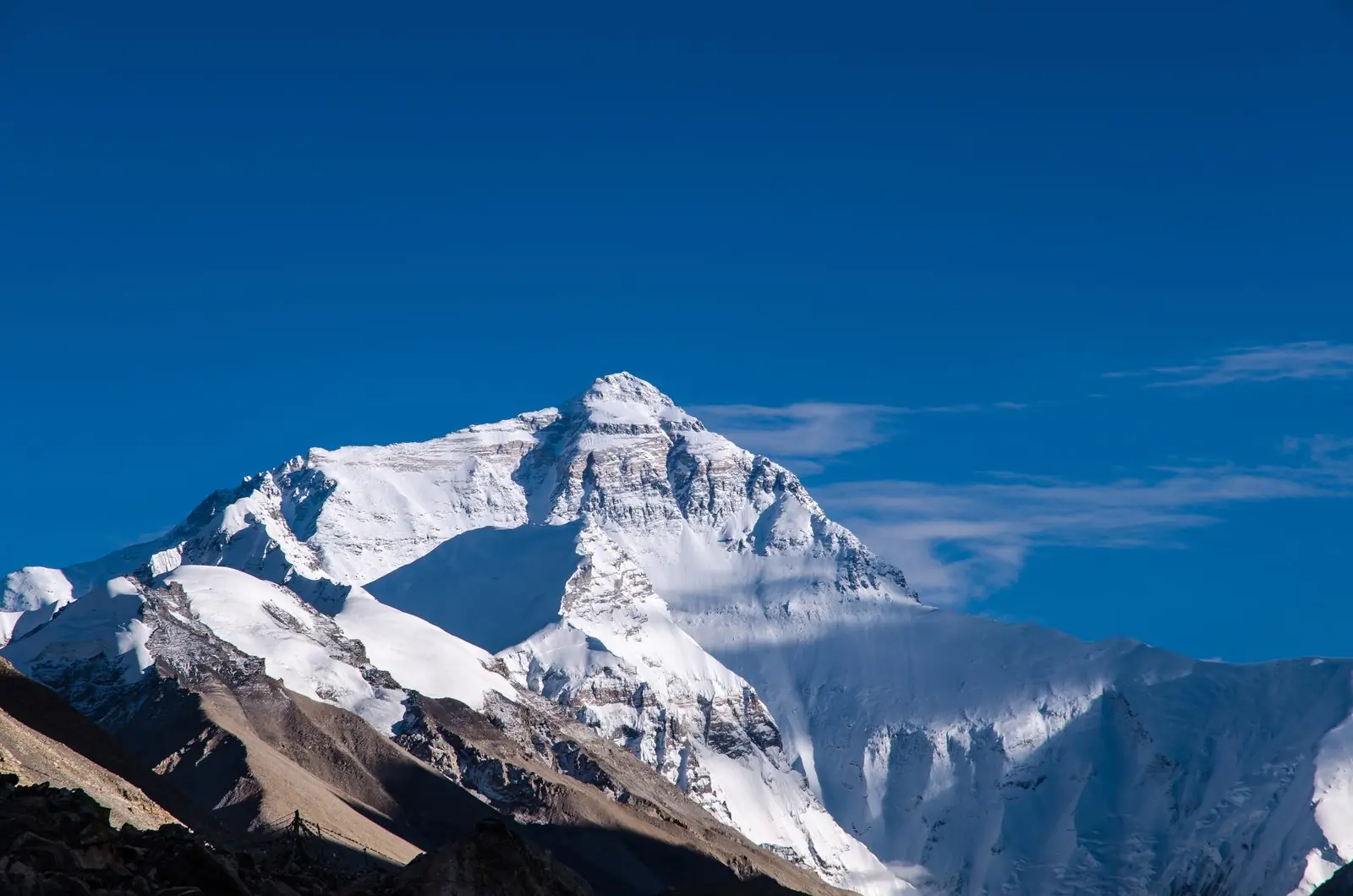
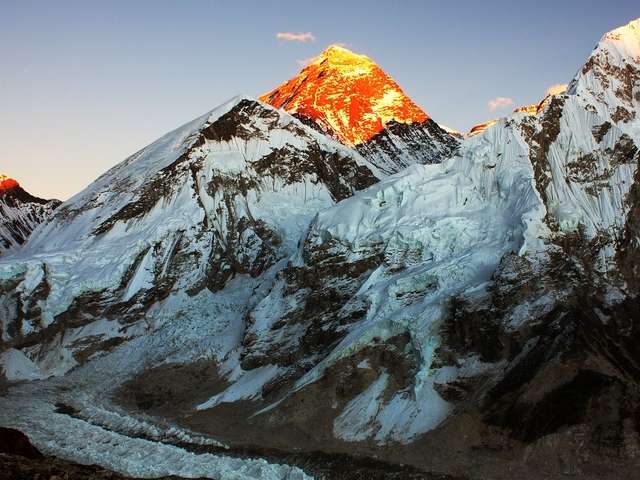
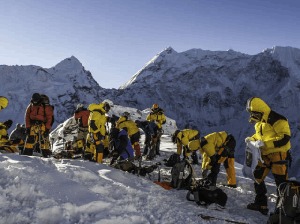
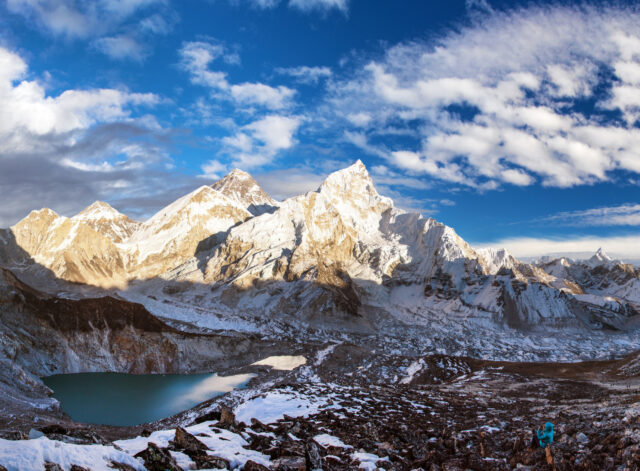
Everest (Sagarmatha), 8,848 m, the highest mountain on Earth.
In this guide: The eight ranked | Records | Geography | Everest | Kanchenjunga | Lhotse | Makalu | Cho Oyu | Dhaulagiri | Manaslu | Annapurna I | Where to see them | Best time | First ascents | Climbing them | FAQ
The top 8 mountains of Nepal, ranked
Answer: Everest (8,848 m), Kanchenjunga (8,586 m), Lhotse (8,516 m), Makalu (8,463 m), Cho Oyu (8,201 m), Dhaulagiri I (8,167 m), Manaslu (8,163 m) and Annapurna I (8,091 m).
| Rank in Nepal | Mountain | Height (m) | Height (ft) | Profile | Below Everest by | World rank (NTB) |
|---|---|---|---|---|---|---|
| 1 | Everest (Sagarmatha) | 8,848 m | 29,029 ft |
|
– | 1st |
| 2 | Kanchenjunga | 8,586 m | 28,169 ft |
|
262 m | 3rd |
| 3 | Lhotse | 8,516 m | 27,940 ft |
|
332 m | 4th |
| 4 | Makalu | 8,463 m | 27,766 ft |
|
385 m | 5th |
| 5 | Cho Oyu | 8,201 m | 26,906 ft |
|
647 m | 6th |
| 6 | Dhaulagiri I | 8,167 m | 26,795 ft |
|
681 m | 7th |
| 7 | Manaslu | 8,163 m | 26,781 ft |
|
685 m | 8th |
| 8 | Annapurna I | 8,091 m | 26,545 ft |
|
757 m | 10th |
Annapurna I is eighth in Nepal but tenth in the world, because the world ranking also counts mountains outside Nepal such as K2, which NTB places second. Three heights on this list, Makalu, Cho Oyu and Dhaulagiri, differ slightly from figures in other publications. This guide uses NTB’s numbers throughout. Feet are converted from metres, so Everest shows as 29,029 ft here, while the government’s 2012 publication prints 29,028 ft.
Mountain records at a glance
Answer: Everest is highest, Cho Oyu is called the easiest 8,000 m peak, Makalu one of the hardest, Annapurna I was climbed first and Kanchenjunga has the most summits.
| Record | Mountain | Detail (NTB) |
|---|---|---|
| Highest | Everest | 8,848 m |
| Climbed first | Annapurna I | 3 June 1950, the first 8,000 m peak ever climbed |
| Climbed last of the eight | Dhaulagiri I | 13 May 1960 |
| Called the easiest 8,000 m peak | Cho Oyu | One of the most popular, though no 8,000 m peak is easy |
| Called one of the hardest | Makalu | One of the most difficult mountains in the world to climb |
| Most summits above 8,400 m | Kanchenjunga | Main summit 8,586 m, plus 8,505 m, 8,476 m and 8,420 m |
| Highest inside one country | Dhaulagiri I | The highest mountain lying entirely within a single country |
| First Asian first-ascent of an 8,000 m peak | Manaslu | 9 May 1956, Japanese expedition |
| Named Turquoise Goddess | Cho Oyu | The Tibetan meaning of its name |
| Linked to Everest by the South Col | Lhotse | Many Everest climbers use it to acclimatise |
Where the eight stand, east to west
Answer: Kanchenjunga is the easternmost, then Makalu, Everest and Lhotse in Khumbu, Cho Oyu to their west, then Manaslu, Annapurna I and Dhaulagiri I in central and western Nepal.
| Order (east to west) | Mountain | Location clue from NTB |
|---|---|---|
| 1 | Kanchenjunga | On the Sikkim border, about 128 km east of Everest |
| 2 | Makalu | About 20 km east of Everest, in Makalu Barun National Park |
| 3 | Lhotse and Everest | Khumbu, in Sagarmatha National Park, joined by the South Col |
| 4 | Cho Oyu | About 20 km west of Everest, on the China-Nepal border |
| 5 | Manaslu | Gorkha-Manang border, about 64 km east of Annapurna |
| 6 | Annapurna I | Annapurna region |
| 7 | Dhaulagiri I | Northwest of Pokhara, across the Kali Gandaki gorge from Annapurna I |
1. Everest (Sagarmatha): 8,848 m
8,848 m
Highest
Khumbu, Sagarmatha National Park
1953, Tenzing Norgay and Edmund Hillary
Everest needs little introduction, but its setting deserves a mention. It stands inside Sagarmatha National Park, which UNESCO listed as a World Heritage Site in 1979, and the park also holds Lhotse and Cho Oyu, two more of the eight. The mountain’s Nepali name, Sagarmatha, is the one used in official Nepali publications.
Everest is also the 8,000 m peak that ordinary trekkers can reach most easily on foot. The standard approach is a flight from Kathmandu to Lukla followed by a trek to Everest Base Camp. NTB says Kala Patthar, at 5,545 m, gives a clear view of much of the mountain, and that Tengboche Monastery looks out on Everest, Lhotse and Ama Dablam together. For the full trek, read the complete Everest Base Camp guide.
2. Kanchenjunga: 8,586 m
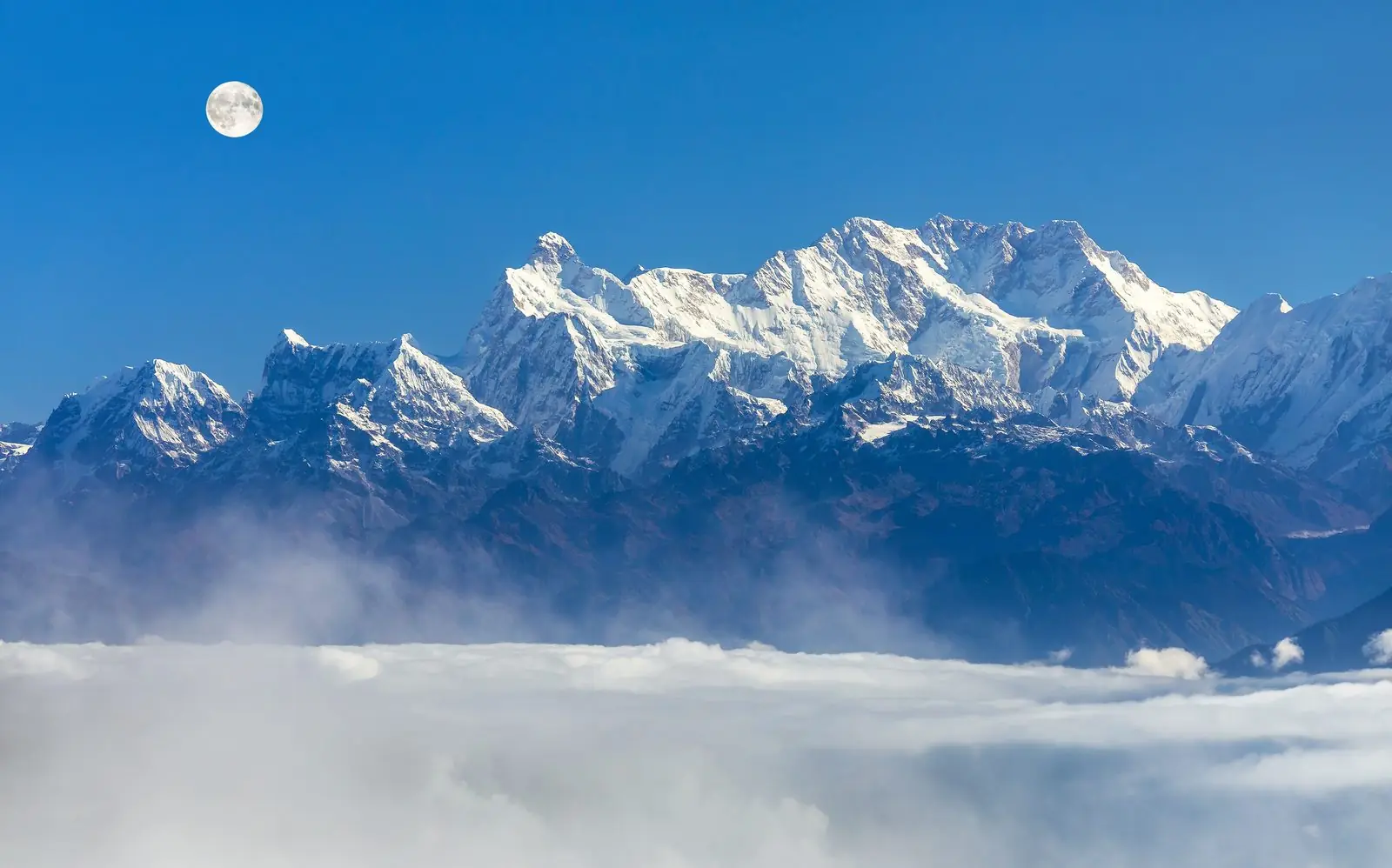
Kanchenjunga, 8,586 m, the third highest mountain in the world.
8,586 m
Third
Nepal-Sikkim border
25 May 1955, British expedition
Ang Phurba Sherpa, 1980
Kanchenjunga sits on the border between Nepal and the Indian state of Sikkim, about 128 km east of Everest. It is a massif more than a single peak: NTB lists a main summit of 8,586 m and further summits at 8,505 m (Yalungkang), 8,476 m (Twin Peaks) and 8,420 m (Kanchenjunga West). Unlike most Himalayan mountains, its main ridge runs north to south. The name is usually translated as the Five Treasures of the Great Snow, a reference to its five peaks.
For a time Kanchenjunga was believed to be the highest mountain in the world, until later surveys settled the question in Everest’s favour. Its early history was costly. A 1905 attempt via the Yalung Glacier cost four lives, and nobody tried again for fifteen years. When a British team led by Charles Evans reached the summit in 1955, George Band and Joe Brown stopped five vertical feet short of the top out of respect for the mountain’s sacred status in Sikkim. Ang Phurba Sherpa became the first Nepali to climb it in 1980.
3. Lhotse: 8,516 m
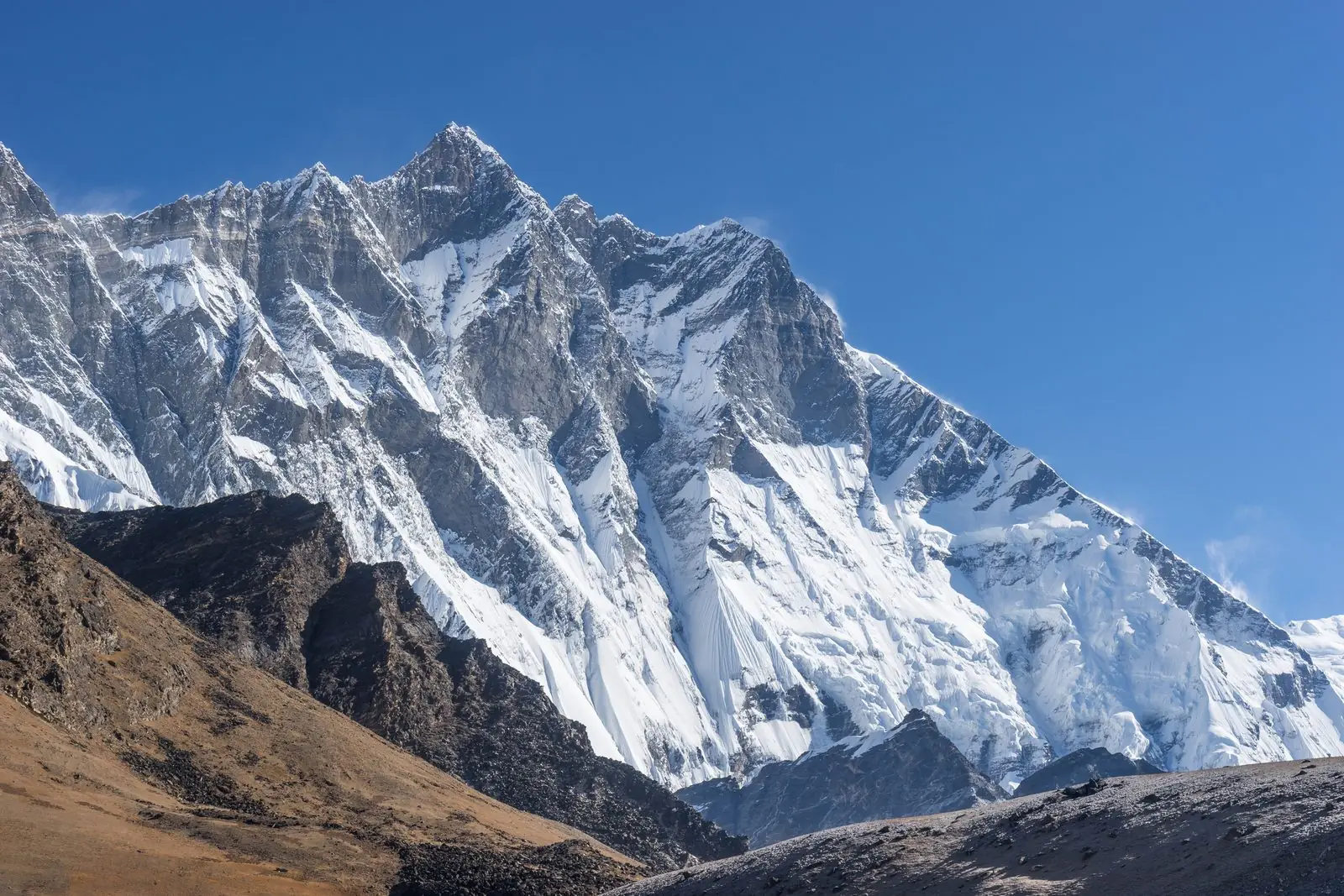
Lhotse, 8,516 m, the fourth highest mountain in the world.
8,516 m
Fourth
Khumbu, joined to Everest by the South Col
18 May 1956, Swiss team
Urkien Tshering Sherpa, 1977
Lhotse is Everest’s closest neighbour, linked to it by the South Col. Its name means little to the casual visitor, yet Lhotse shapes how Everest is climbed. NTB notes that the usual route to Everest starts up Lhotse’s northwest face before crossing over, and that many Everest climbers first climb Lhotse to acclimatise.
Lhotse has three summits: the main peak at 8,516 m, Lhotse Middle at 8,414 m and Lhotse Shar at 8,383 m. Lhotse Middle was not climbed until 23 May 2001, when a Russian team reached it, and it was for many years the highest unclimbed named point on Earth. The Swiss climbers Ernst Reiss and Fritz Luchsinger made the first ascent of the main summit on 18 May 1956. The first winter ascent came on 31 December 1988, by the Polish climber Krzysztof Wielicki, and Urkien Tshering Sherpa was the first Nepali to summit, on 8 May 1977.
4. Makalu: 8,463 m
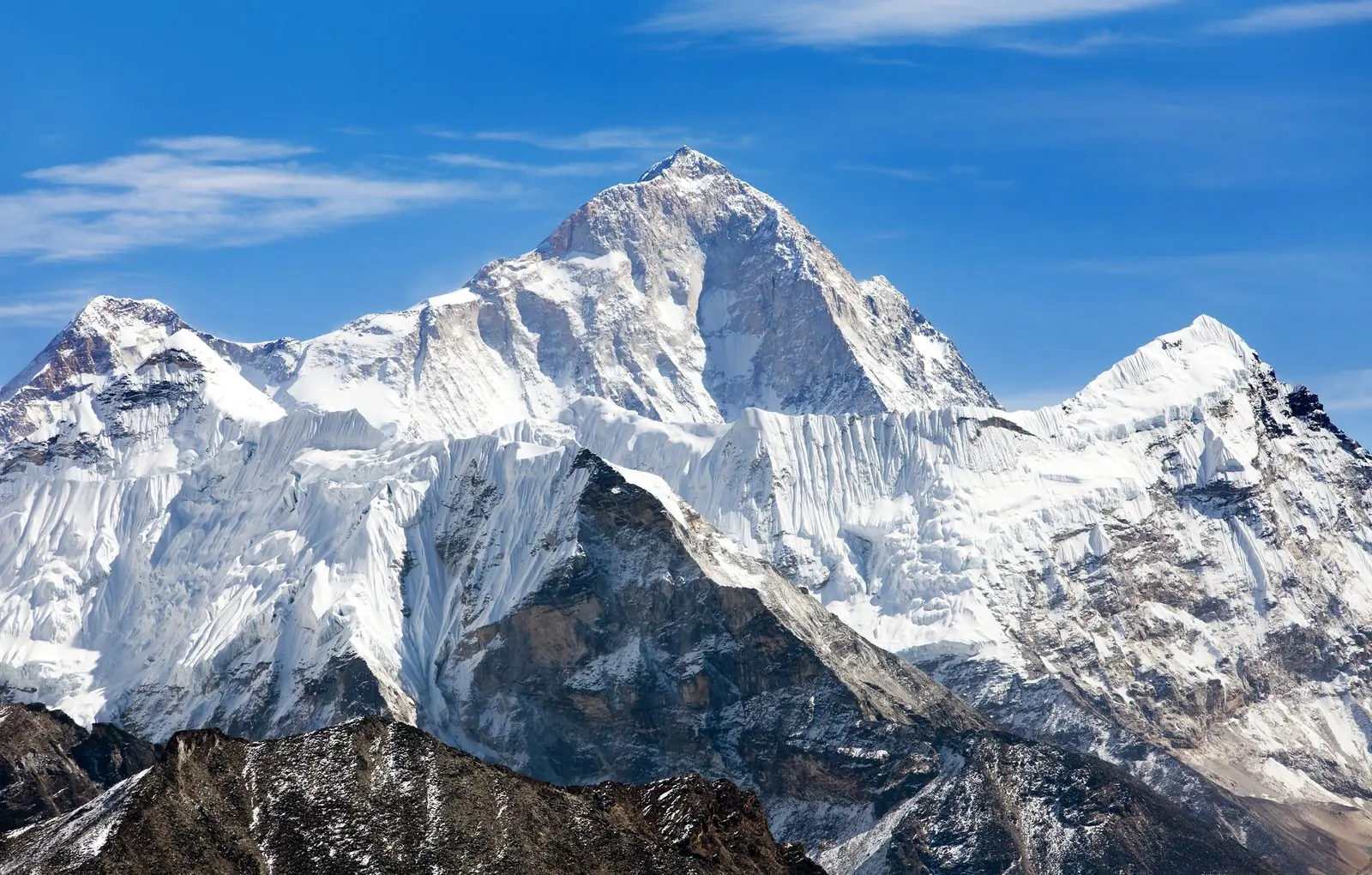
Makalu, 8,463 m, the fifth highest mountain in the world.
8,463 m
Fifth
Khumbu region, Makalu Barun National Park
15 May 1955, French expedition
Ang Chepal Sherpa, 1978
Makalu stands about 20 km east of Everest inside Makalu Barun National Park. Its shape is its signature: a near-perfect pyramid with four sharp ridges. It is also one of the harder 8,000 m peaks. NTB describes it as one of the most difficult mountains in the world to climb.
The first serious attempt came in the spring of 1954, when an American team led by William Siri was turned back by storms at 7,100 m. A French expedition led by Jean Franco succeeded a year later, on 15 May 1955, when Lionel Terray and Jean Couzy climbed the north face and northeast ridge by way of the saddle between Makalu and its neighbour Kangchungtse (Makalu II, 7,678 m). That route is still the standard one. A Japanese team first climbed the southeast ridge on 23 May 1970, and Ang Chepal Sherpa was the first Nepali to reach the summit, on 1 May 1978.
5. Cho Oyu: 8,201 m
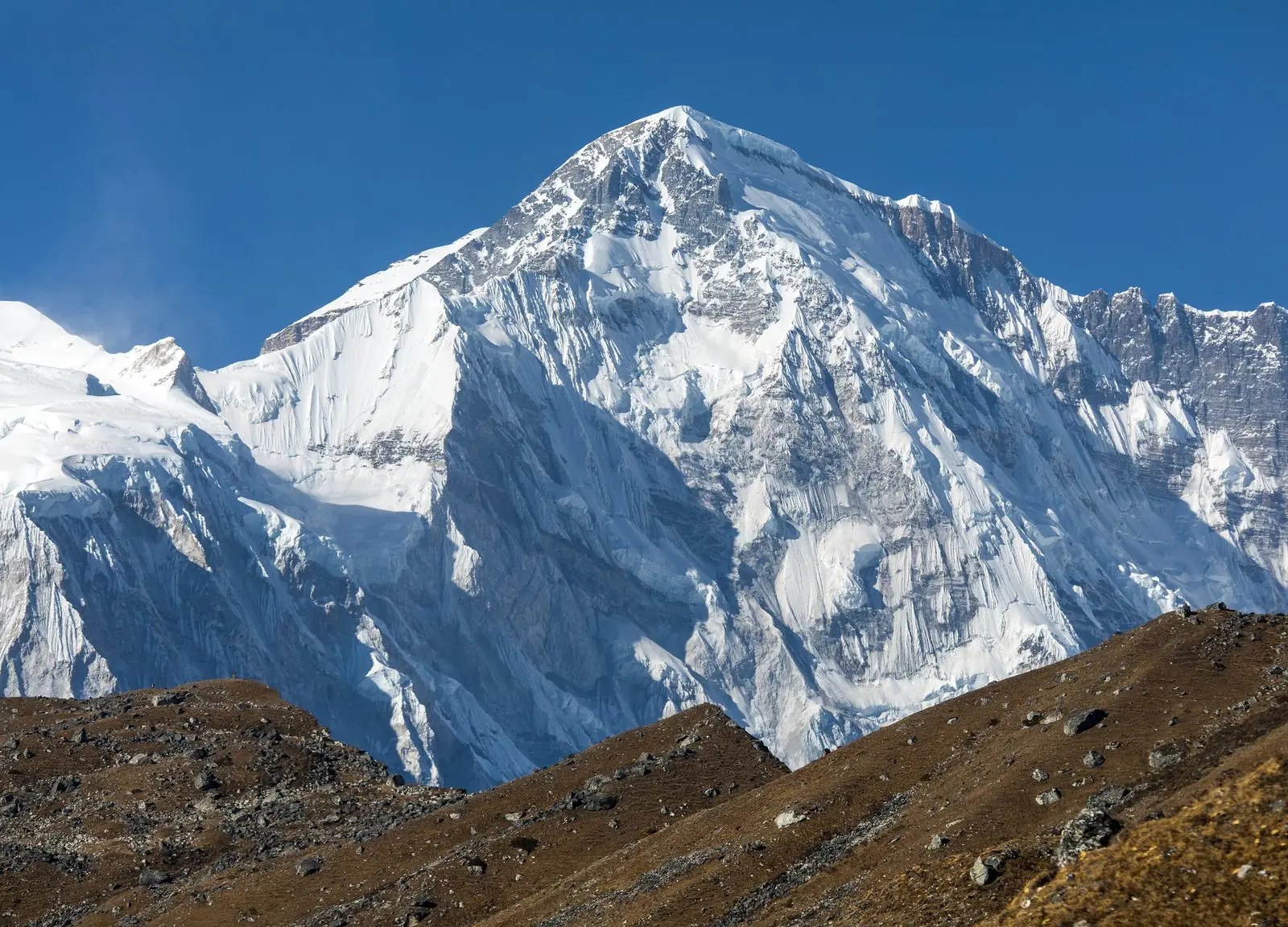
Cho Oyu, 8,201 m, the sixth highest mountain in the world.
8,201 m
Sixth
China-Nepal border, west of Everest
19 October 1954, Austrian expedition
Ang Phuri Sherpa, 1987
Cho Oyu lies about 20 km west of Everest, on the border between China and Nepal. Its Tibetan name means Turquoise Goddess. NTB calls it the easiest of the 8,000 m peaks to climb and one of the most popular, though that is a relative judgement: no mountain this high is easy.
The first attempt, led by Eric Shipton in 1953, was stopped by an ice cliff above 6,650 m. The following year an Austrian expedition led by Herbert Tichy reached the top by the northwest ridge on 19 October 1954. Tichy, Joseph Jochler and Pasang Dawa Lama made the summit, supported by eleven Sherpas. It was the fifth 8,000 m peak to be climbed, and Ang Phuri Sherpa became the first Nepali to summit, on 29 April 1987.
6. Dhaulagiri I: 8,167 m
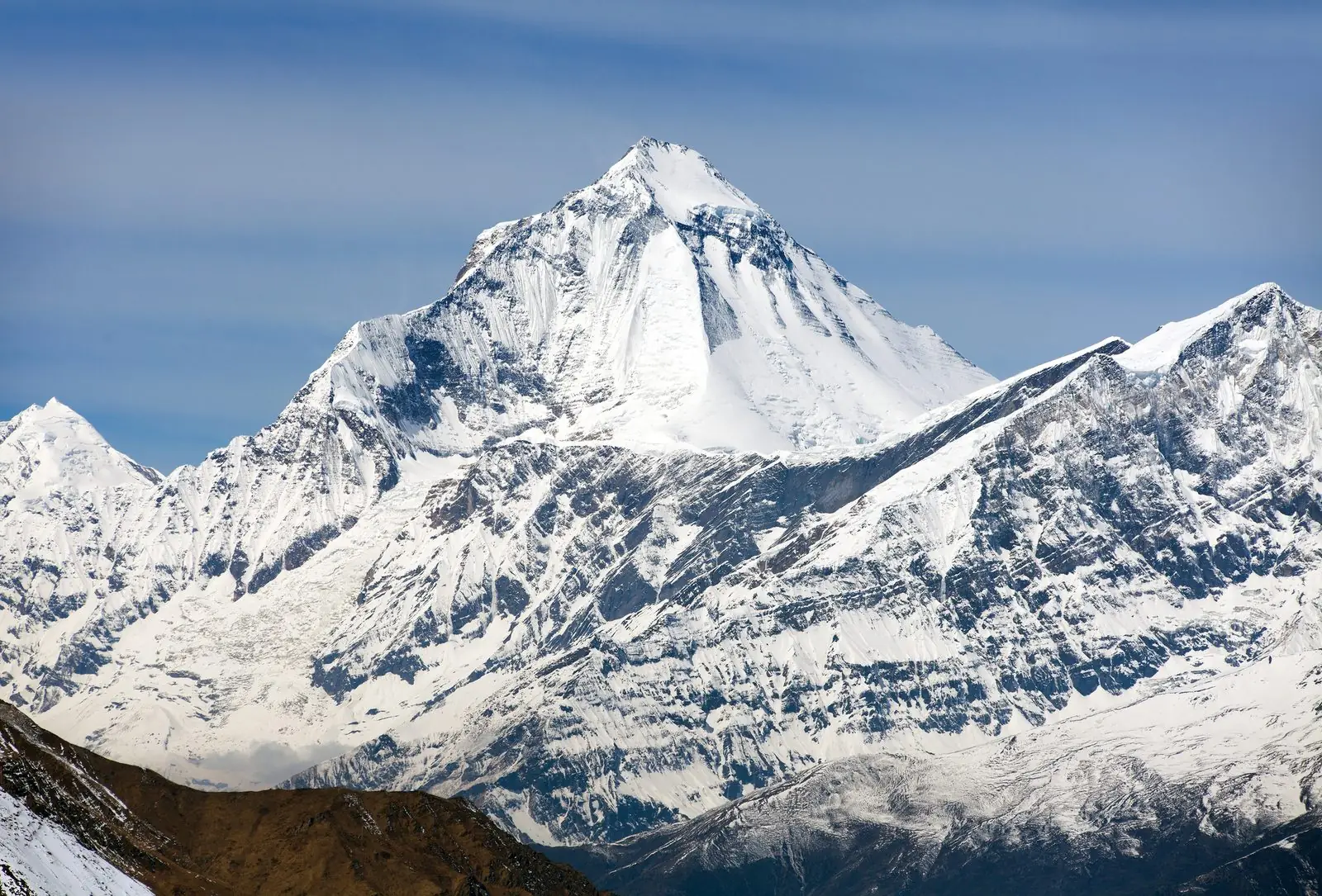
Dhaulagiri I, 8,167 m, the seventh highest mountain in the world.
8,167 m
Seventh
Northwest of Pokhara
13 May 1960, Swiss expedition
Nawang Dorjee Sherpa, 1960
Dhaulagiri rises northwest of Pokhara and is, according to NTB, the highest mountain lying entirely within the borders of one country. Its name means White Mountain. In 1809 Captain William Webb, the first European to see it, calibrated its height and was astonished, and for years afterwards it was believed to be the highest in the world.
The first ascent was made on 13 May 1960 by a Swiss expedition led by Max Eiselin. Six climbers reached the summit that day: Kurt Diemberger, Nawang Dorjee Sherpa, Ernst Forrer, Albin Schelbert, Peter Diener and Nima Dorjee Sherpa. Two more followed ten days later. Nawang Dorjee was the first Nepali to climb the peak. The expedition is also remembered for its aircraft, a Pilatus Porter nicknamed Yeti, which crashed during the effort. The pilot and mechanic survived and walked back to Pokhara.
7. Manaslu: 8,163 m
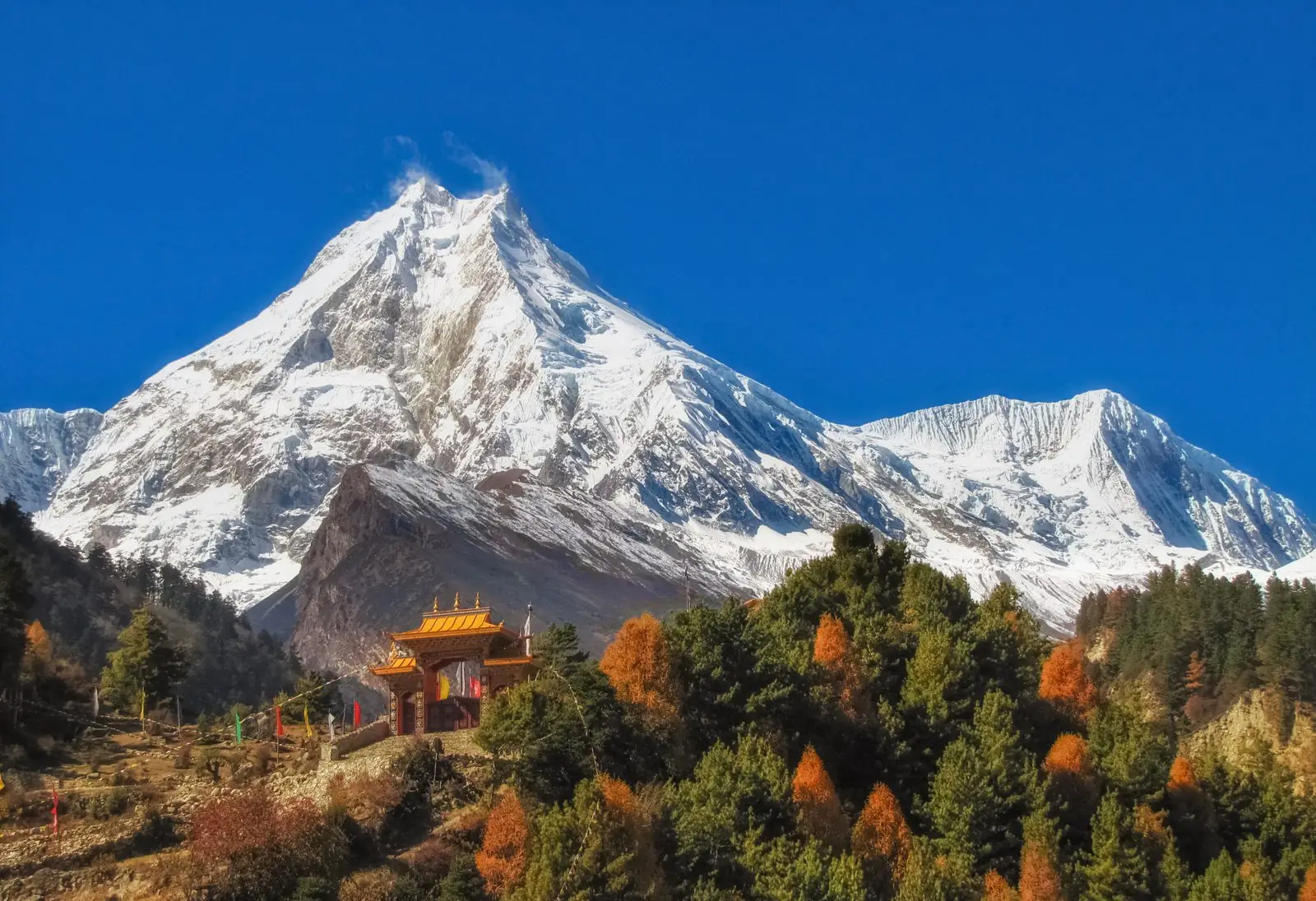
Manaslu, 8,163 m, the eighth highest mountain in the world.
8,163 m
Eighth
Gorkha-Manang border
9 May 1956, Japanese expedition
Urkien Tshering Sherpa, 1973
Manaslu stands on the border between Gorkha and Manang districts, about 64 km east of Annapurna. Its name comes from the Sanskrit word Manasa, meaning Mountain of the Spirit, and local feeling about its sacredness shaped its history. In 1954 villagers from Samu refused a climbing party access, believing the mountain to be sacred, and the government later negotiated passage.
The third Japanese expedition, led by Yuko Maki, made the first ascent on 9 May 1956, when Imanishi and Gyaltsen reached the summit. Two more climbers, Kato and Higeta, followed two days later. NTB records it as the first first-ascent of an 8,000 m peak by an Asian expedition. Urkien Tshering Sherpa was the first Nepali to climb it, on 22 April 1973. To see Manaslu from the trail, read the guide to the Manaslu Circuit trek.
8. Annapurna I: 8,091 m
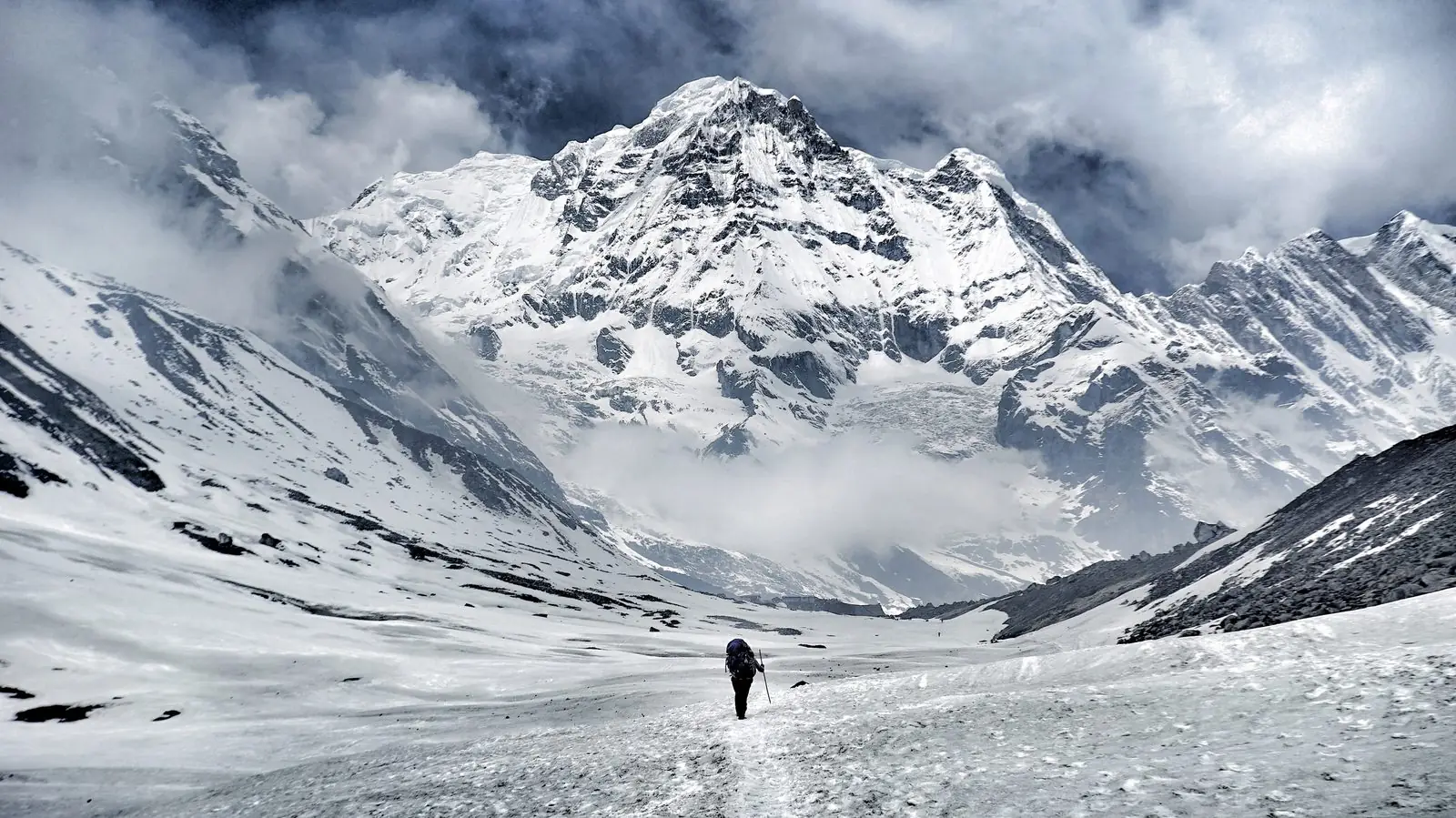
Annapurna I, 8,091 m, the tenth highest mountain in the world and the first 8,000 m peak ever climbed.
8,091 m
Tenth
Annapurna region
3 June 1950, French expedition
Sonam Wolang Sherpa, 1977
Annapurna I is the lowest of Nepal’s eight, yet it holds a place at the top of mountaineering history. On 3 June 1950 Maurice Herzog and Louis Lachenal reached its summit, making it the first 8,000 m peak ever climbed. NTB’s account of the expedition records snowstorms, avalanches and freezing cold, and says the hardest part came on the descent. Sonam Wolang Sherpa became the first Nepali to summit, on 13 October 1977.
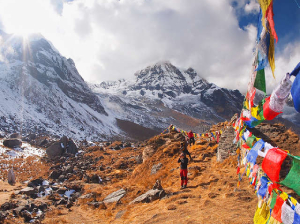
For trekkers, Annapurna I is the centrepiece of the Annapurna Base Camp trek, where the camp sits inside a ring of high peaks. Dhaulagiri is also in view in the same region, and NTB describes the Kali Gandaki gorge as running between the two 8,000 m peaks. The comparison of Everest and Annapurna Base Camp sets out the two treks side by side.
Which of the eight can you see on a trek?
Answer: Everest, Lhotse and Cho Oyu from the Everest region, Annapurna I and Dhaulagiri from the Annapurna trails, and Manaslu from the Manaslu Circuit.
| Mountain | Where trekkers see it | Source |
|---|---|---|
| Everest | Kala Patthar (5,545 m) and Tengboche Monastery, on the Everest Base Camp trek | NTB |
| Lhotse | Everest region trails, with Everest and Ama Dablam from Tengboche | NTB |
| Cho Oyu | Inside Sagarmatha National Park, in the Everest region | NTB |
| Makalu | Makalu Barun National Park, about 20 km east of Everest | NTB |
| Annapurna I | Annapurna Base Camp, inside a ring of peaks | NTB |
| Dhaulagiri I | The Annapurna region, where the Kali Gandaki gorge runs between Dhaulagiri and Annapurna I | NTB |
| Manaslu | The Manaslu Circuit trek | Base Camp Hikes guide |
| Kanchenjunga | The far east of Nepal, on the Sikkim border (about 128 km east of Everest) | NTB |
The order of first ascents
Answer: Annapurna I was first (1950), then Everest (1953), Cho Oyu (1954), Makalu and Kanchenjunga (1955), Lhotse and Manaslu (1956) and Dhaulagiri I (1960).
| Year | Mountain | Date | Team |
|---|---|---|---|
| 1950 | Annapurna I | 3 June | French expedition |
| 1953 | Everest | 1953 | Tenzing Norgay and Edmund Hillary |
| 1954 | Cho Oyu | 19 October | Austrian expedition |
| 1955 | Makalu | 15 May | French expedition |
| 1955 | Kanchenjunga | 25 May | British expedition |
| 1956 | Lhotse | 18 May | Swiss team |
| 1956 | Manaslu | 9 May | Japanese expedition |
| 1960 | Dhaulagiri I | 13 May | Swiss expedition |
All eight were first climbed within a ten-year span, between 1950 and 1960. The first Nepali summits came later, from Dhaulagiri in 1960 to Cho Oyu in 1987.
Best time to see the mountains
Answer: NTB lists October to November and March to May as the best months in the Everest region, and says pre-monsoon is best for expeditions.
| Months | What NTB says |
|---|---|
| March to May | Listed as a recommended season. Pre-monsoon is also the best season for expeditions. |
| June to September | Rainy in the Everest region |
| October to November | Listed as a recommended season, with autumn suiting the lower peaks |
| December to February | Recommended on the Everest region page, but winters are extreme with heavy snow at altitude |
Plan a trek in spring or autumn for the clearest chance of seeing the mountains. Dates and weather change each year, so check conditions before you book.
Can you climb them? What it takes
Answer: These are expedition peaks managed by the Ministry of Tourism, so they are not trekking-peak climbs.
- Permits: peaks above 6,500 m fall under the Ministry of Tourism, and expeditions must employ a Liaison Officer and pay a refundable garbage deposit, according to NTB.
- Season: NTB says pre-monsoon is the best time for expeditions, when the weather is better.
- Experience: an 8,000 m expedition is a step far beyond a trekking peak. Mera Peak, Island Peak and Lobuche East build base skills but do not replace expedition experience.
- Cost: no government royalty table for these peaks was found. NTB’s August 2025 trade notice mentions US$15,000 for Everest, so confirm current figures with the Department of Tourism.
For the 27 official trekking peaks, which can be climbed with a licensed guide, see the list of peaks in Nepal and the technical vs non-technical peaks guide.
Questions about a trek to see them?
Send your dates, fitness and the mountains you most want to see, and the Base Camp Hikes team will suggest a route: call or WhatsApp +91 932 595 1234 (9 am to 7 pm IST), email info@basecamphikes.com or use the enquiry form.
FAQ
How high is Mount Everest in feet? About 29,029 ft (8,848 m). The government’s 2012 publication prints 29,028 ft.
What are the highest mountains in Nepal in metres and feet? Everest 8,848 m (29,029 ft), Kanchenjunga 8,586 m (28,169 ft), Lhotse 8,516 m (27,940 ft), Makalu 8,463 m (27,766 ft), Cho Oyu 8,201 m (26,906 ft), Dhaulagiri I 8,167 m (26,795 ft), Manaslu 8,163 m (26,781 ft) and Annapurna I 8,091 m (26,545 ft).
Is K2 in Nepal? No. NTB mentions K2 as the second highest mountain in the world, but it is not one of Nepal’s eight 8,000 m peaks.
What is the highest mountain in Nepal after Everest? Kanchenjunga, at 8,586 m, followed by Lhotse at 8,516 m.
Which is the lowest of Nepal’s eight 8,000 m peaks? Annapurna I, at 8,091 m.
When is the best time to see the mountains of Nepal? NTB lists October to November and March to May as recommended seasons in the Everest region.
What are the top 8 mountains of Nepal? Everest (8,848 m), Kanchenjunga (8,586 m), Lhotse (8,516 m), Makalu (8,463 m), Cho Oyu (8,201 m), Dhaulagiri I (8,167 m), Manaslu (8,163 m) and Annapurna I (8,091 m), according to NTB.
What is the highest mountain in Nepal? Everest (Sagarmatha), at 8,848 m, which is also the highest mountain in the world.
What is the second highest mountain in Nepal? Kanchenjunga, at 8,586 m. NTB calls it the third highest in the world, after Everest and K2.
How many 8,000 m peaks are in Nepal? Eight, out of fourteen in the world.
Which of the eight is the easiest to climb? NTB calls Cho Oyu the easiest 8,000 m peak and one of the most popular, though no peak above 8,000 m is easy.
Which is the hardest? NTB describes Makalu as one of the most difficult mountains in the world to climb.
Which 8,000 m peak was climbed first? Annapurna I, on 3 June 1950. Everest followed in 1953.
Which of the eight are on a border? NTB describes Kanchenjunga as a border peak with Sikkim and Cho Oyu as a border peak with China. It says Dhaulagiri is the highest mountain within the borders of a single country.
Why is Annapurna I tenth in the world but eighth in Nepal? The world ranking also counts peaks outside Nepal, such as K2, so Nepal’s eight do not sit consecutively in it.
Which of the eight can I see on a trek? Everest, Lhotse and Cho Oyu in the Everest region, Annapurna I and Dhaulagiri on the Annapurna trails, and Manaslu on the Manaslu Circuit.
What is the Nepali name of Everest? Sagarmatha, the name used in official Nepali publications and for the national park around it.
Can an ordinary trekker climb an 8,000 m peak? Not as a trek. They are expedition peaks with permits through the Ministry of Tourism and a Liaison Officer required. Many people build up through the trekking peaks first.
Sources
- Nepal Tourism Board peak pages: Everest, Kanchenjunga, Lhotse, Makalu, Cho Oyu, Dhaulagiri, Manaslu, Annapurna and the climb of Annapurna (heights, ranks, first ascents, first Nepali summiteers)
- Nepal Tourism Board, mountaineering (the eight peaks, Liaison Officer, garbage deposit, season)
- Nepal Tourism Board, Everest region (Sagarmatha National Park, Kala Patthar and Tengboche views)
- Government of Nepal, Mountaineering in Nepal: Facts and Figures (2013; eight of the world’s fourteen highest peaks)
- Nepal Tourism Board trade notice (Everest fee mention, August 2025)
- Not found: no government royalty table for 8,000 m peaks, and no first-Nepali entry for Everest on the NTB Everest page. Photos are original images supplied by Base Camp Hikes.
Information correct as of 23 October 2026.