By
On the Everest Base Camp trek you can expect long walking days of about 3 to 8 hours, simple family-run lodges with shared bathrooms, freezing nights above 4,000 m, plain but filling food, flight schedules that change with the weather, and a steady climb to 5,364 m that tests your body and patience as much as your fitness. You can also expect friendly hosts, huge mountain views and a sense of achievement that most trekkers say outweighs the discomfort. This guide describes what the trek is really like, day by day and thing by thing, so nothing on the trail comes as a surprise.
What to expect in short
- Walking: 3 to 8 hours a day on rocky trails, with long stone steps and suspension bridges.
- Lodges: twin rooms with thin walls, a heated dining room and shared toilets. No heating in the bedrooms.
- Cold: freezing nights above Namche, colder the higher you go.
- Food: dal bhat, noodles, soups, eggs and potatoes. Simple, hot and filling.
- Flights: Lukla flights depend on weather and can be delayed or moved.
- Altitude: headaches, poor sleep and low appetite are common. Serious altitude illness is possible, and your guide watches for it.
Last checked: 28 October 2026. Conditions change by season and from year to year. Treat this as a realistic picture, and confirm current details with your operator.
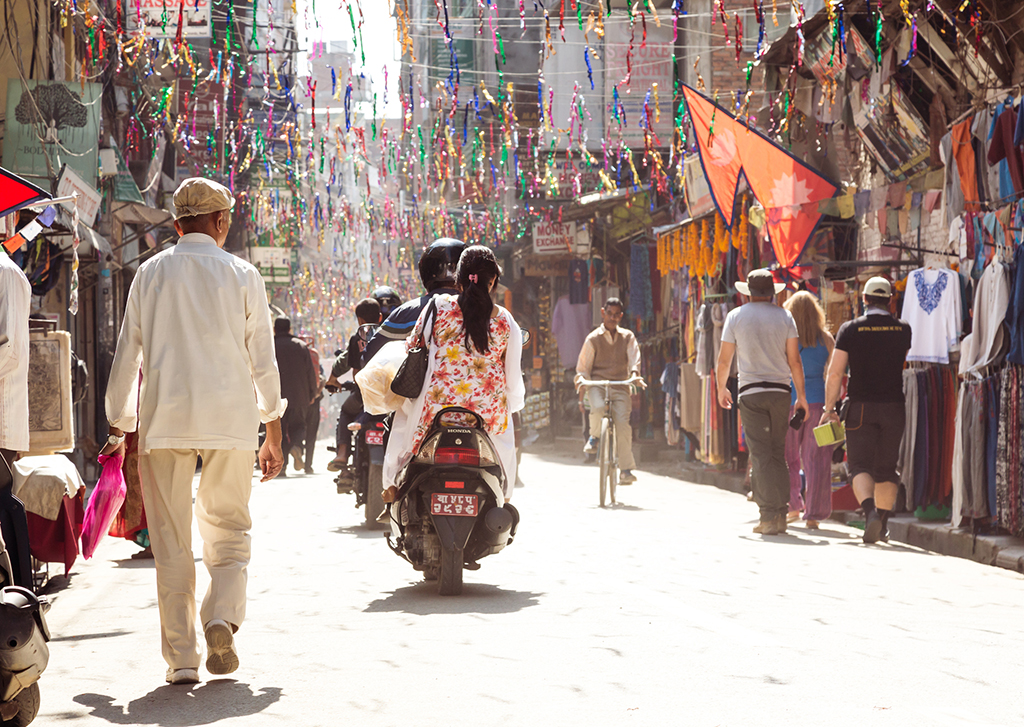
A Kathmandu street before the trek: busy, noisy and full of life.
In this guide: A typical day | How the 14 days feel | Lodges | Food | Cold | Health | Altitude | Flights | Mind | Culture | FAQ
What does a typical trekking day look like?
Days follow a steady rhythm. Understanding it makes the first few mornings easier.
| Time | What happens |
|---|---|
| 6:00 to 7:00 | Wake up in a cold room, pack your bag and have breakfast in the dining room |
| 7:30 to 8:00 | Start walking with your guide. Porters carry the main bags ahead |
| 10:30 to 11:30 | Tea or snack stop. Many trekkers refill water and add or remove layers |
| 12:30 to 13:30 | Lunch at a lodge on the trail, usually one hot meal and a hot drink |
| 14:00 to 16:00 | Walk to the night’s lodge and arrive before the afternoon cloud and wind |
| 16:00 to 18:00 | Rest, wash up, charge devices if possible, and gather in the heated dining room |
| 18:30 to 19:30 | Dinner, a health check from your guide and the plan for the next day |
| 20:00 to 21:00 | Bed. Sleeping is often light at altitude |
Trekkers who go slowly and rest well find the pace manageable. Those who rush, skip meals or ignore a headache usually find it much harder.
How do the 14 days feel?
Each part of the trek has a different mood. The table gives the feel of the standard 14-day itinerary.
| Stage | Altitude | What to expect |
|---|---|---|
| Kathmandu | 1,350 m | Noise, traffic, dust and a final gear check. Plan a quiet evening before the early start |
| Flight to Lukla and walk to Phakding | 2,652 m | Excitement and a short, easy walk. The runway is short and the flight is brief and bumpy |
| Phakding to Namche Bazaar | 3,440 m | The first big climb, including long suspension bridges. The most tiring early day |
| Rest day at Namche | 3,440 m | A shopping town with cafes. Short walks above town help acclimatisation |
| Namche to Deboche | 3,700 m | First close mountain views, forests and the Tengboche monastery area |
| Deboche to Dingboche | 4,400 m | Open valleys, wind, and colder nights. Many people feel the altitude for the first time here |
| Rest day at Dingboche | 4,400 m | A chance to recover. The best sleep of the upper trek is rare, so rest well |
| Dingboche to Lobuche | 4,900 m | Stony trail, thin air and slow steps. Headaches and poor appetite are common |
| Lobuche to Gorakshep and Base Camp | 5,364 m | The long, emotional day. Cold wind, rubble and a wide, quiet camp area |
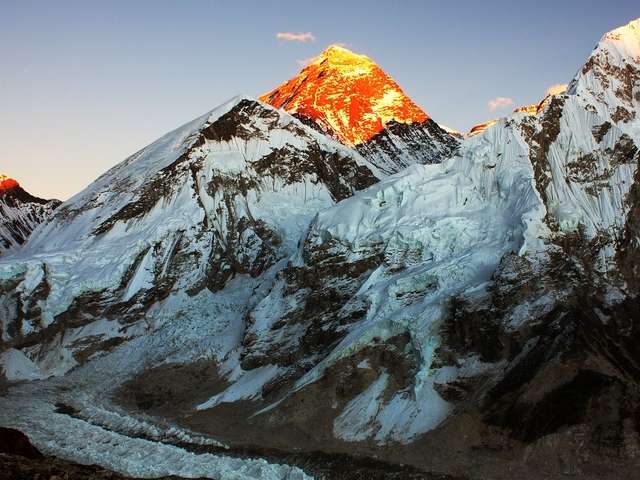
| Kala Patthar sunrise, then down to Pheriche | 5,545 m | A freezing early start and the best view of the trek, followed by a long descent |
| Pheriche to Namche, then Lukla | 2,800 m | Warmer air and easier breathing, but long days on tired legs |
| Flight to Kathmandu | 1,350 m | Back to noise and warm showers. Weather can delay the flight |
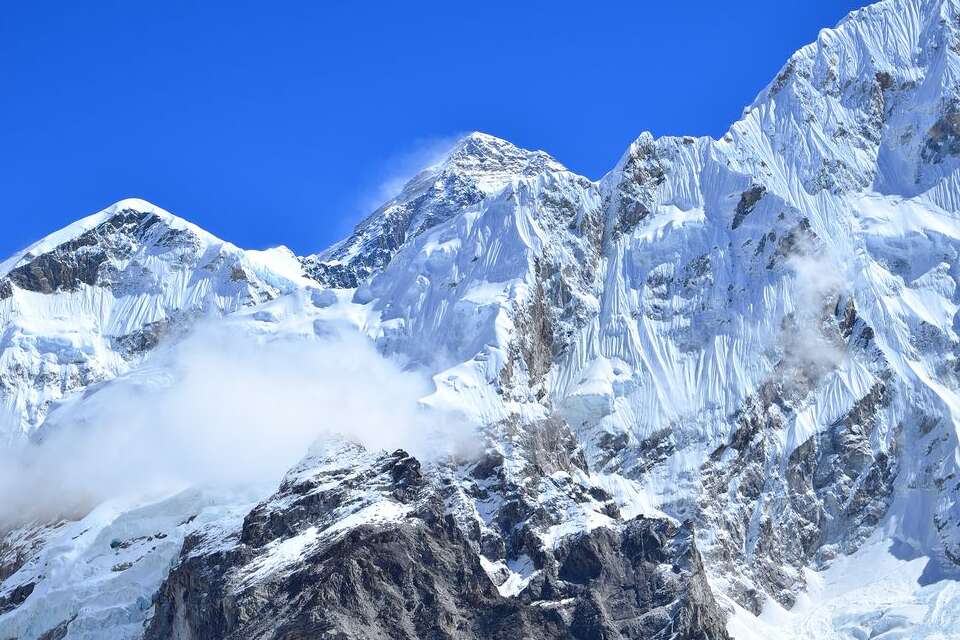
The view from Kala Patthar, about 5,545 m, at the end of the climb.
What are the lodges really like?
Lodges are family-run teahouses. Rooms are small, usually with two beds, a mattress and a blanket, and the walls are thin enough that you will hear your neighbours. Bedrooms are not heated. The dining room has a stove, often burning yak dung or wood, and it is the place where everyone gathers in the evening. Rooms are shared with whoever your group is, and the dining room is shared with everyone else on the trail.
- Warmth: bring a sleeping bag rated for the season, and go to bed warm.
- Noise: earplugs help, since walls are thin and trekkers start early.
- Extras: charging, Wi-Fi, hot showers and bottled water usually cost extra, and prices rise with altitude.
- Space: lodges can fill by mid-afternoon in peak season, so arrive in good time.
Read more in 4 things that might surprise you about teahouse trekking.
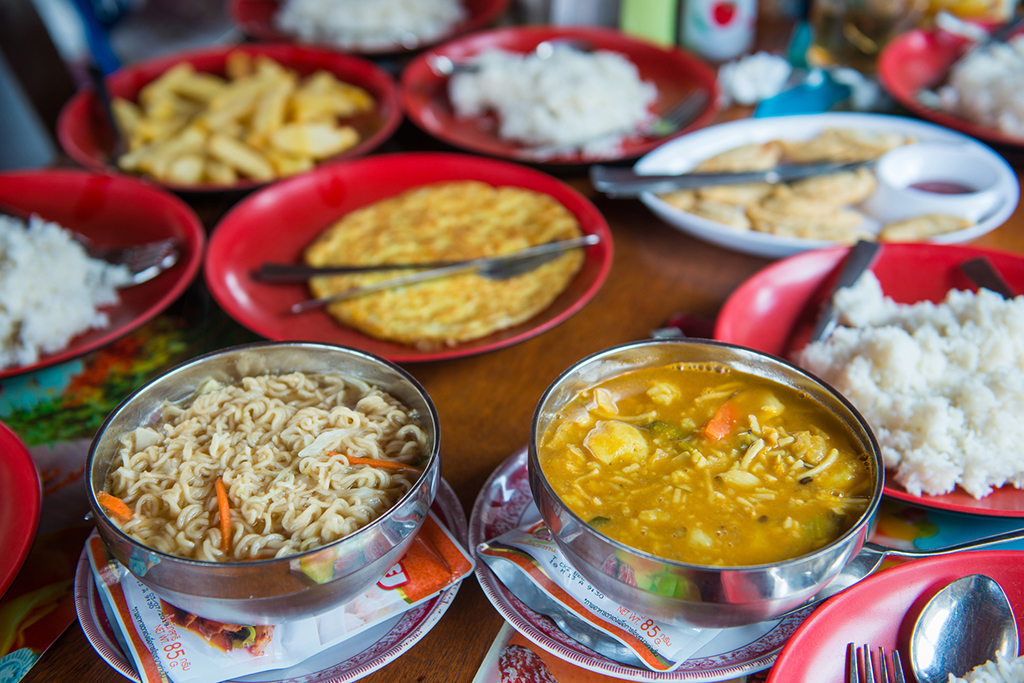
Hot, simple food is the safest and most filling choice on the trail.
What is the food like?
Menus are similar from lodge to lodge: dal bhat (rice, lentils and vegetables, with refills), noodle soups, fried rice, momos, potatoes, eggs, pasta and porridge. The food is plain, hot and filling, and it is the right fuel for the days. Appetite often drops above 4,000 m, so eat even when you are not hungry. Vegetarian dishes are usually the safest choice higher up, because supplies are carried in on foot. Order food that is freshly cooked and served hot, wash your hands before meals and carry sanitiser.
How cold does it really get?
Nights at the higher lodges are below freezing in every season. By late autumn, nights can reach about -15°C. The bedrooms are not heated, and the dining room is only warm while the stove is running. The usual advice works: dress in layers, wear a hat to bed, keep a bottle of hot water in your sleeping bag, and keep tomorrow’s clothes inside the bag so they are not frozen in the morning. Days can be pleasantly warm at lower altitude, and cold and windy higher up. See the weather guide and the month-by-month guide.
What are the bathrooms like?
Toilets have improved a lot over the years, and many lodges now have seated toilets, but expect basic conditions: manual flushing, cold floors, and shared facilities. In peak season and at freezing temperatures, the cleanliness can vary from lodge to lodge. Keep tissues, wet wipes and sanitiser in your daypack and your headlamp close at night. Hot showers are available in some lodges for a fee, and many trekkers choose wipes on the coldest days.
Which health problems are common?
- Stomach upsets: the most common trail illness. Wash hands, drink treated water, eat hot food and carry your own medicines.
- Dry throat and cough: dry mountain air and dust irritate the throat. Drink warm fluids, carry lozenges and breathe through a buff in cold wind.
- Sun and wind burn: use sunscreen, lip balm and a hat.
- Blisters and sore knees: break in boots, carry blister tape and use poles on descents.
- Poor sleep: common above 4,000 m and not always a sign of illness.
Kathmandu dust and pollution can also cause a sore throat before the trek, so pack a mask or buff. Carry personal medicines, and discuss any condition with your doctor before you go.
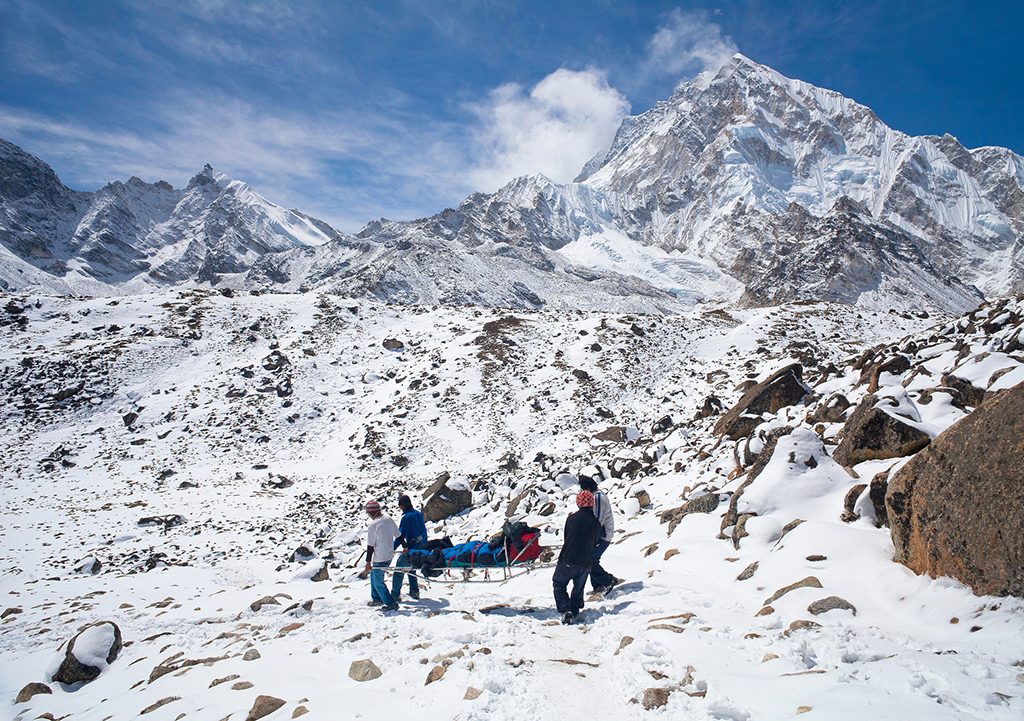
A trekker being moved to a lower elevation. Descent is the main treatment for altitude illness.
What will altitude feel like?
Many trekkers notice a mild headache, a faster heartbeat when climbing, lighter sleep and a smaller appetite above 3,500 m to 4,000 m. These are common and often ease with rest and water. The danger signs are different: a headache that gets worse, vomiting, loss of balance, confusion, a cough with breathlessness at rest, or extreme tiredness. These need an immediate stop and a descent. Be honest with your guide, report every symptom early, and never climb higher with symptoms. Descent is the treatment, and a helicopter is used only when it is medically needed.
Read the altitude sickness guide and the acclimatisation days guide. You are responsible for travel insurance that covers trekking to the highest point and helicopter evacuation. See the insurance guide.
What about the flights and schedule?
The Kathmandu to Lukla flight depends on weather at both ends, and the schedule can change quickly. Delays of a few hours are common, a day or two is possible, and in peak weeks many flights depart from Ramechhap instead of Kathmandu, which means an early road transfer. Plans for hotels, flights and rooms may be rearranged, and your operator will normally help. The best protection is time: keep one or two spare days at the end, so a delay does not make you miss your international flight. See the Lukla vs Ramechhap guide.
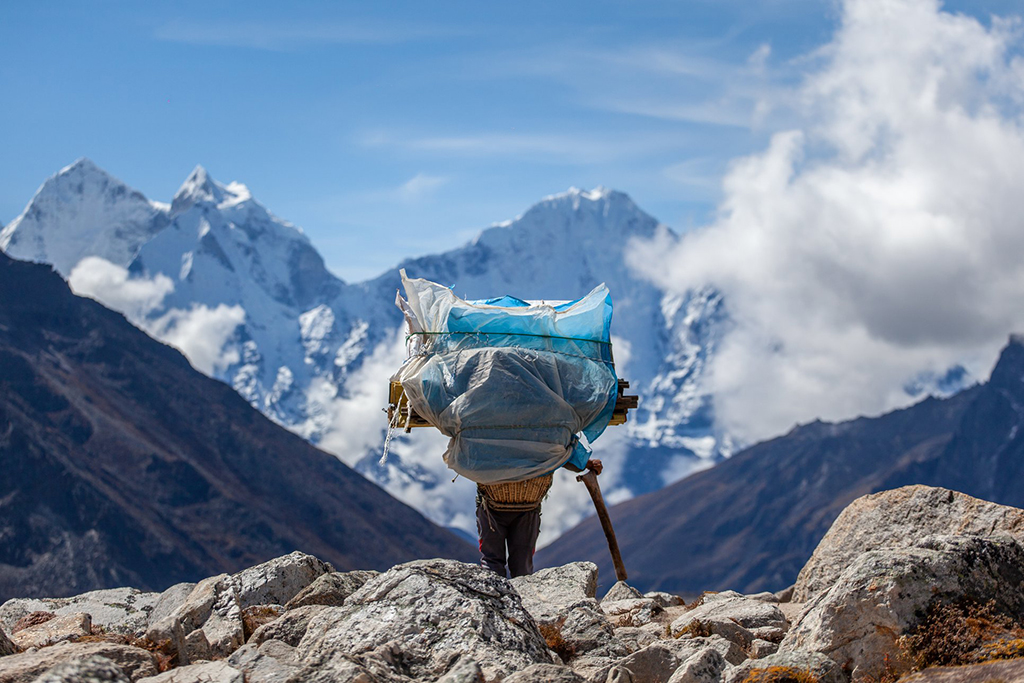
A porter carrying a load through the Khumbu. Porters work hard, so be mindful of their load and their safety.
How hard is it on the body and the mind?
The trek is not technical, but it is long, and the combination of altitude, cold and repetition wears on people differently. Fitness helps a great deal, which is why the 12-week training plan matters. Even fit trekkers have low days, and the upper section, from Dingboche to Gorakshep, is where the mental effort is highest. Practical ways to cope:
- Break each day into small goals, such as the next tea stop.
- Walk slowly and keep a steady rhythm.
- Eat and drink even when you do not feel like it.
- Talk to your guide and group when you feel low.
- Expect one or two difficult days, and expect them to pass.
What should you know about culture and etiquette?
You will walk through Sherpa villages, past prayer flags, mani stones and monasteries. Hosts are welcoming, and a polite greeting goes a long way. Dress modestly in villages, pass mani walls and stupas on the left, ask before photographing people, and avoid touching religious objects. English is a second language for most of your team, so speak clearly and be patient with misunderstandings. Treat porters and guides as professionals and as partners in the trip. Tipping is customary at the end, and your operator can suggest amounts. Carry your litter out, and use as little single-use plastic as you can.
How crowded is the trail?
In peak weeks the trail is busy, with trekkers, porters, mule and yak trains, and expedition supplies. On narrow sections, always step to the mountain side when yaks or mules approach, and never stand on the drop side. Quiet days still exist, especially early in the morning and in the shoulder seasons. If you want more space, go in the quieter months, or take a less crowded route such as the Gokyo Lakes extension.
What about phone signal, Wi-Fi and money?
- Connectivity: Wi-Fi and mobile data are available in many lodges, for a fee, and are slower and less reliable higher up.
- Charging: usually paid, and more expensive at altitude. Carry a power bank and keep batteries warm.
- Cash: carry enough Nepali rupees for the whole trek, since cards are not widely accepted and cash machines on the trail are limited.
Reality check: what surprises people most
| People expect | What they find |
|---|---|
| A hard climb up a steep mountain | A long walk with a slow, steady climb and several rest days |
| A comfortable lodge | A basic room, a warm dining room and a cold bedroom |
| Quiet, empty trails | Busy trails in the main seasons, and quiet mornings |
| A fixed schedule | A flexible schedule that depends on weather |
| Altitude affecting only the unfit | Altitude affecting anyone, so pace and honesty matter |
| Bad food | Simple, hot food that works well on the trail |
| A small effort | A big physical and mental challenge with a big reward |
Is the trek right for you?
It is a good fit if you enjoy walking for hours, can tolerate cold and simple conditions, accept changing schedules and are willing to go slowly. It may be a poor fit if you need strict comfort, dislike cold nights or cannot give spare days. Read how hard the trek is and the first-time trekker’s guide, and see the trek tips if you plan to go.
Before you go, watch some of the best Everest films, but remember the trek to Base Camp is far gentler than the summit climbs they show.
FAQ
What is the Everest Base Camp trek really like? Long walking days at a steady pace, simple lodges, cold nights, plain food and big views. It is more about endurance and patience than technical climbing.
How many hours do you walk each day? About 3 to 8 hours, depending on the day. The hardest days are the long push to Base Camp and the descents.
Are the lodges comfortable? They are basic. Rooms are small with thin walls, and only the dining room is heated.
How cold are the nights? Below freezing at the higher lodges in every season, and around -15°C by late autumn. A warm sleeping bag is essential.
Is the food safe? Hot, freshly cooked food is the safest. Wash your hands, drink treated water and carry your own medicines.
What if I get altitude sickness? Tell your guide at once, stop ascending and descend if symptoms worsen. Serious cases may need evacuation, so carry insurance.
Will my flight be delayed? It might be. Keep spare days at the end of the trip.
Are the bathrooms clean? They vary. Expect basic facilities, and carry wipes, tissues and sanitiser.
Can I charge my phone? Usually yes, for a fee. Carry a power bank.
Is there Wi-Fi? In many lodges for a fee, with slower service higher up.
Do I need cash? Yes. Carry enough Nepali rupees for the whole trek.
Is the trail crowded? In peak season, yes. Early mornings and quieter months are calmer.
Will I need to tip? Tipping is customary at the end of the trek. Ask your operator for suggested amounts.
How do I prepare mentally? Break the trek into small goals, walk slowly, eat and drink well and expect a few hard days.
Trek Everest Base Camp with Base Camp Hikes
For dates and a quote, see the 14-day Everest Base Camp trek, or message the team on WhatsApp or phone at +91 932 595 1234 (9 am to 7 pm IST), write to info@basecamphikes.com, or use the enquiry form.
Sources
- Nepal Tourism Board: safety in the mountains