The climbing seasons for Island Peak are the same as for most Khumbu routes: spring and autumn. Each has strengths, and neither is perfect.
Autumn: late September to November
Autumn is the most popular season. After the monsoon, the air is clear, and the weather is generally stable. October brings the best chance of dry conditions, but it is also the busiest, and base camp can feel crowded. By November, nights are colder and the wind can strengthen.
Spring: March to May
Spring is warmer, with longer days. Snow conditions on the upper slopes are often good in April and May, and the lower trails have blooming rhododendrons. Clouds and afternoon storms become more frequent as May advances, and the monsoon approach can shorten the window.
Monsoon and winter
Summer brings heavy cloud, snow and unstable conditions. Winter is bitterly cold, windy and short on daylight. Neither is recommended for a first climb.
Choosing
- Stable weather, more people: October.
- Warmer, mixed weather: April to mid-May.
- Quieter but colder: late November or March.
Weather forecast and flexibility
Summit day is chosen from the forecast and conditions on the mountain. Having spare days is essential. Flights to Lukla also depend on weather, so keep a buffer at both ends.
Tell us your preferred dates, and we will check conditions.
Light, cold and crowds
Autumn usually offers the clearest skies and the most settled weather, but it is also the busiest season, with lodges and base camp well used. Spring is warmer at lower altitude and quieter on the trail, though afternoon cloud and occasional snow can build. Neither window is perfect, and your preference for crowds versus warmth often decides the choice.
Snow conditions on the headwall
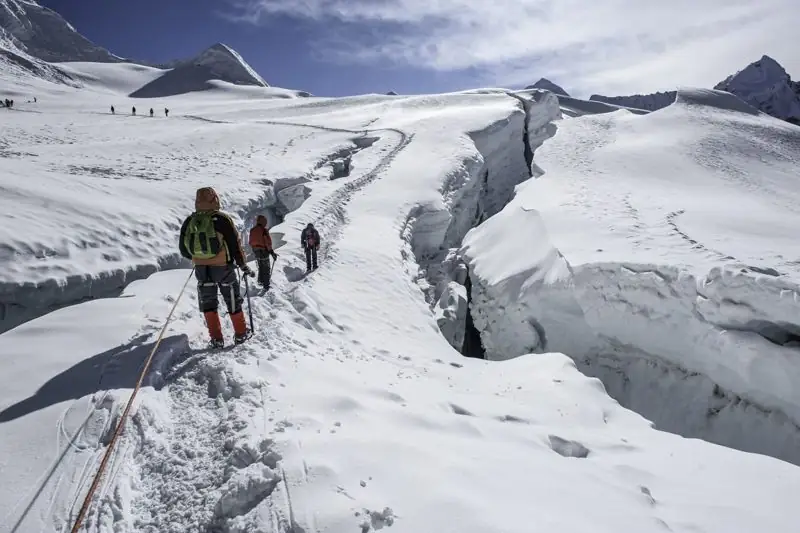
The state of the glacier and headwall changes between seasons. After the monsoon the glacier can be bare and icy in places, while spring may hold more snow cover. Your guide will assess crevasses, the fixed lines and the snow quality, and the route may be adjusted from year to year. This is one reason to climb with a team that knows the mountain well and keeps a flexible schedule.
Booking and flights
Peak season flights and lodges fill early, so book several months ahead if you can. Always build in extra days for flights and a possible summit window, because a delay of one or two days can decide whether the climb is possible. Early and late season trips tend to be quieter, but nights are colder.
- Pick your dates with at least one spare day.
- Check your insurance covers trekking and climbing to the height you plan.
- Be ready to wait a day if the forecast looks poor.
Typical conditions on summit day
In October and November summit mornings are very cold, often well below freezing at high camp, with dry snow and clear skies. In April and May temperatures are slightly less severe, but the snow can be softer and wind may pick up in the afternoon. In either case you start before dawn and aim to be on the summit mid-morning.
Trail and lodge conditions
In autumn the trail and lodges are busy, so reserve rooms early. In spring lodges are less crowded, but some may open late in the season. Check with your operator that lodges along your route are open on your dates, especially at the start and end of the seasons.
How the seasons affect the glacier
After the monsoon the glacier can show more bare ice and wider crevasses, while in spring snow bridges are often thicker. Guides adjust the route and fixed lines to the conditions each year. Experienced guides know how the glacier has changed in recent seasons and choose accordingly.