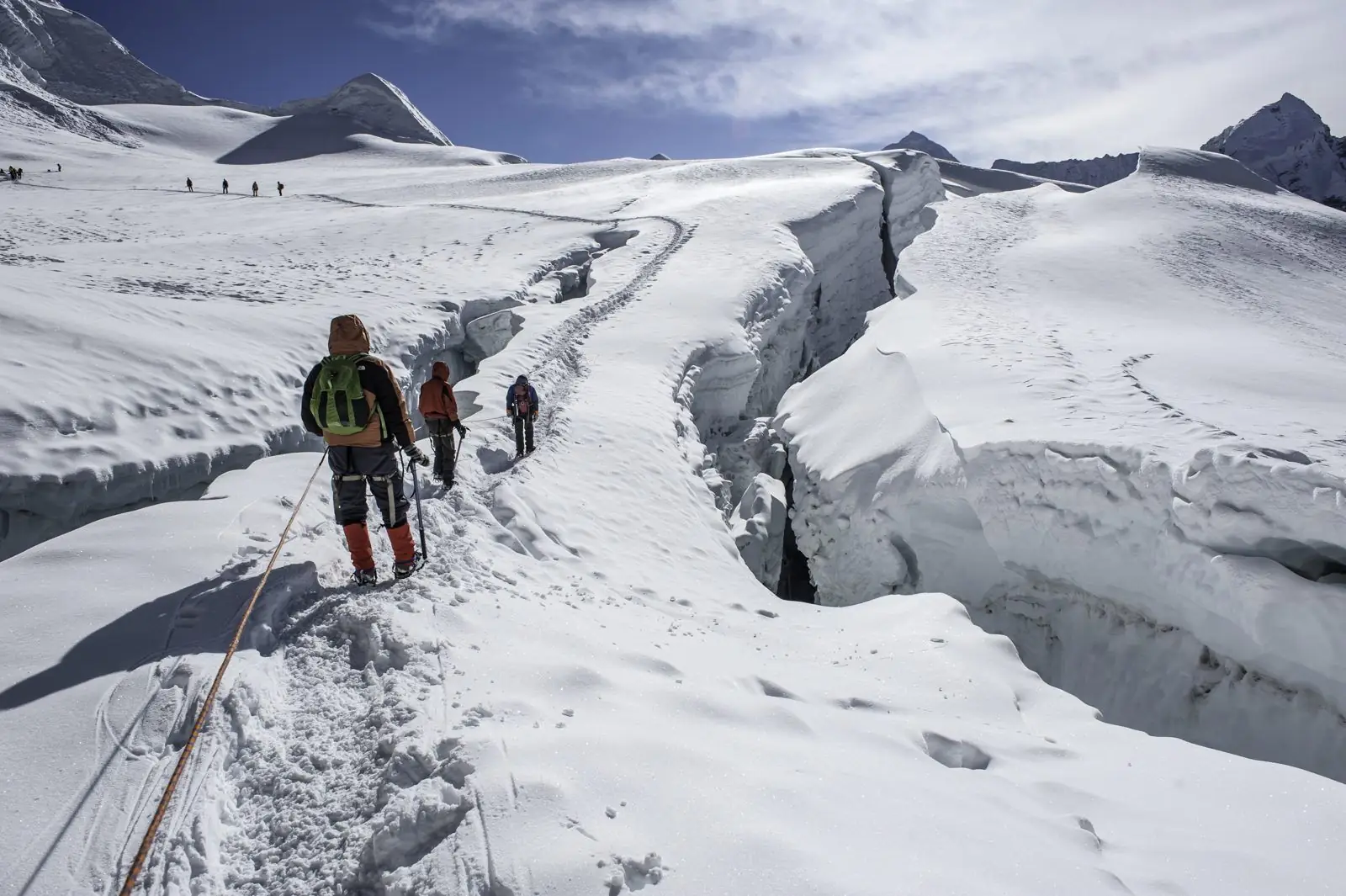
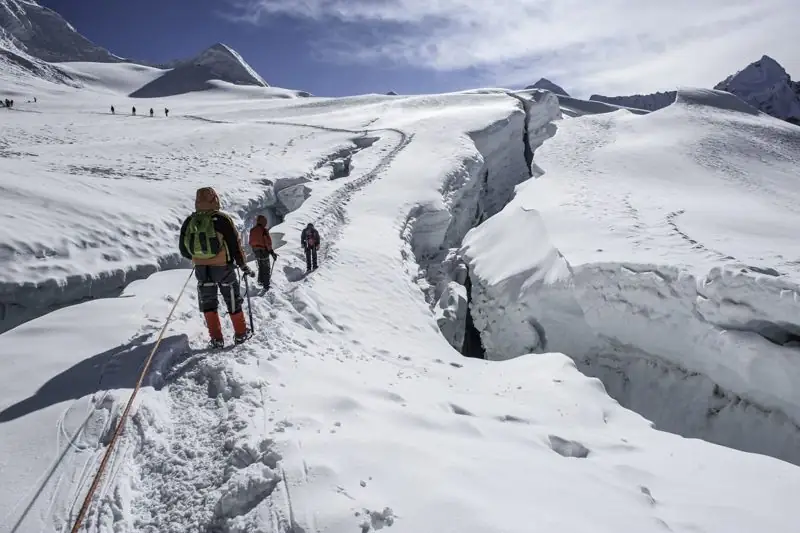
Indian climbers can attempt Island Peak (Imja Tse, 6,189 m) without a visa, but the climb needs a Nepal Mountaineering Association permit, a registered guide and prior high-altitude experience or serious training.
Entry and documents
Indian citizens do not need a visa to enter Nepal and may arrive by air or by land. Carry a valid passport or voter ID card, which are the documents normally accepted, and check the current rules shortly before you travel because requirements can change. Keep photocopies and a digital copy in a separate bag. The climb needs an NMA trekking-peak permit and the Sagarmatha National Park permit, both arranged through a registered agency. Share passport details and insurance papers early, since permits take time.
Experience and fitness
Island Peak is a trekking peak, but summit day involves a glacier, a steep headwall of roughly 100 m and a long day of eight to twelve hours. Climbers from the plains should do a high-altitude trek first, such as Everest Base Camp or a lower peak. Build endurance with long hikes, stairs and cardio for at least three months.
Gear and hire
Boots, crampons, harness, helmet and ice axe can be hired in Kathmandu or Chhukung. Bring your own warm layers, gloves and sleeping bag if you want the best fit. Check hired gear carefully before you leave the city. See the gear list.
Food and diet
Vegetarian meals are available at lodges and at base camp. Tell your guide about Jain or other dietary needs before you leave Kathmandu, because the kitchen team plans supplies in advance. Carry snacks you enjoy, because appetite drops at altitude.
Timing and flights
Autumn and spring are the usual windows. Lukla flights fill around Dussehra and Diwali, so book early and allow reserve days for weather. See the best time guide and the itinerary.
Choosing your preparation trek
Many climbers take a trek such as Everest Base Camp or the Three High Passes route before Island Peak. That gives you altitude exposure and tests your gear, which can make the summit attempt more comfortable.
Seasons that suit Indian holidays
Many Indian climbers travel in late April to May and in October, both when the weather is stable. Book flights to Kathmandu and Lukla early, and keep two spare days for weather at the end. Insurance should cover climbing to 6,200 m.