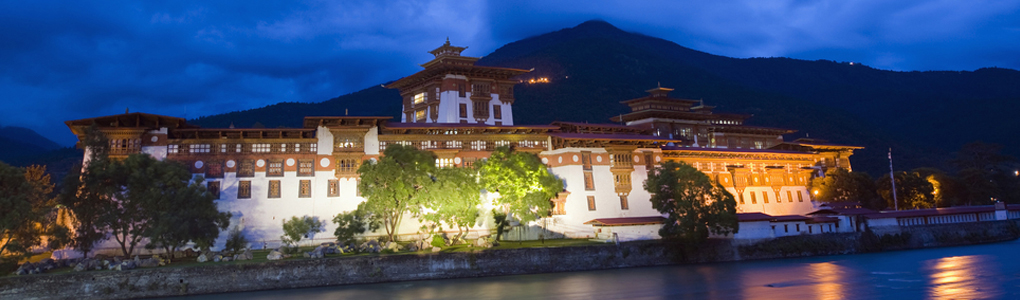
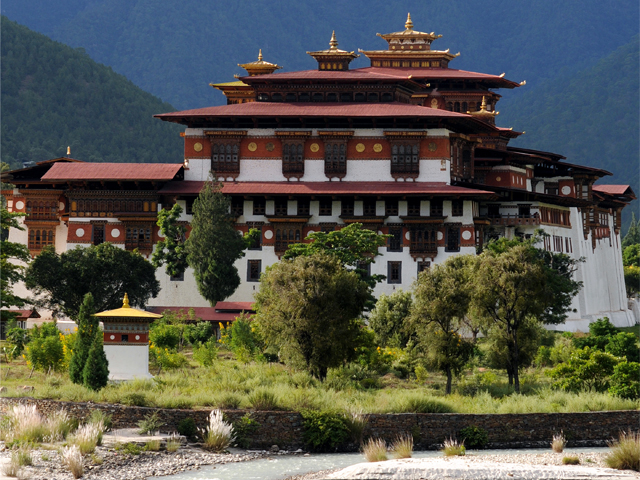
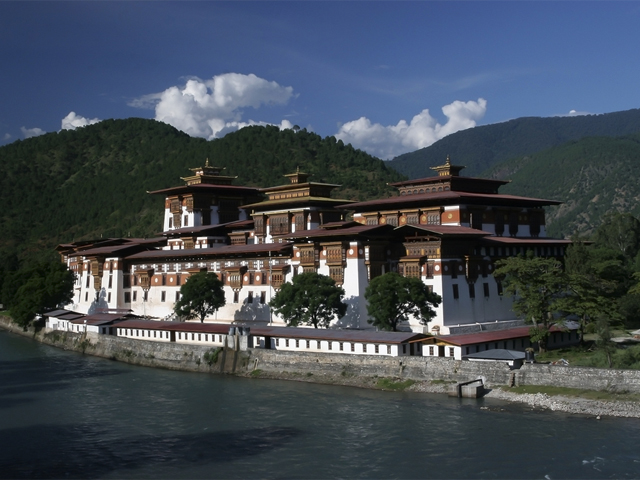
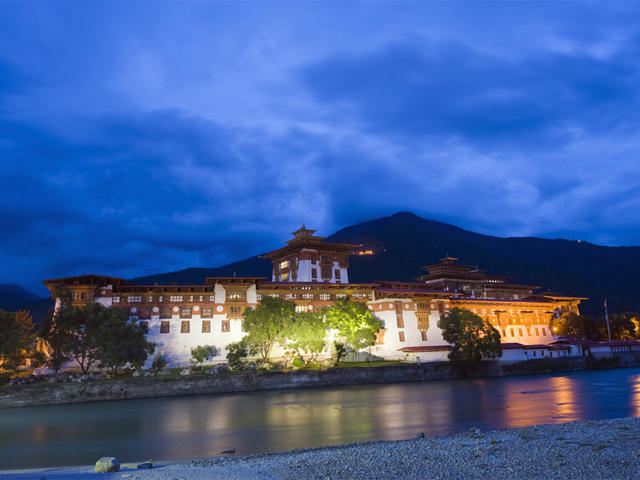
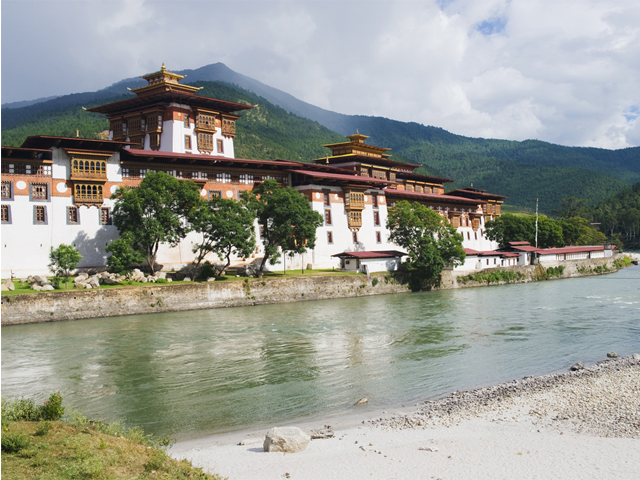
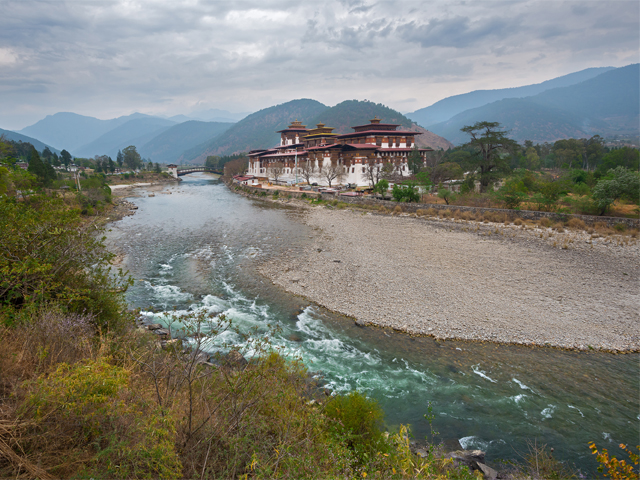
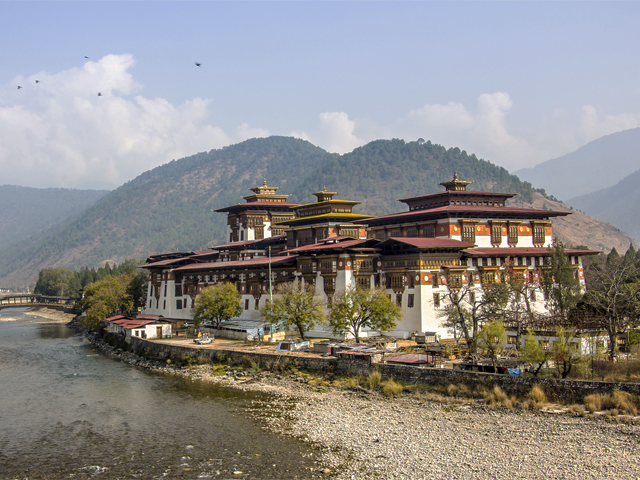
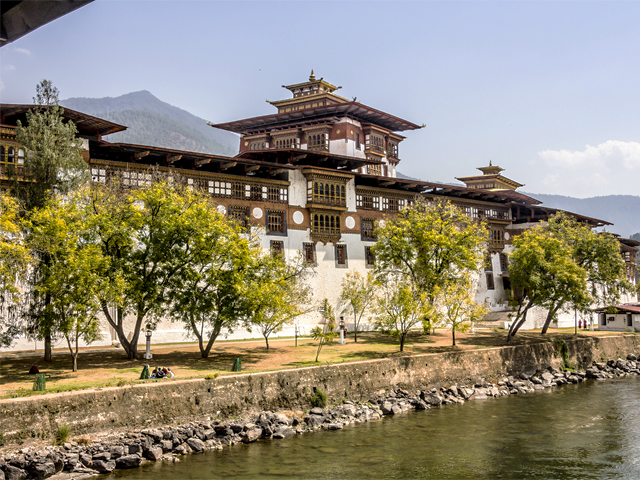
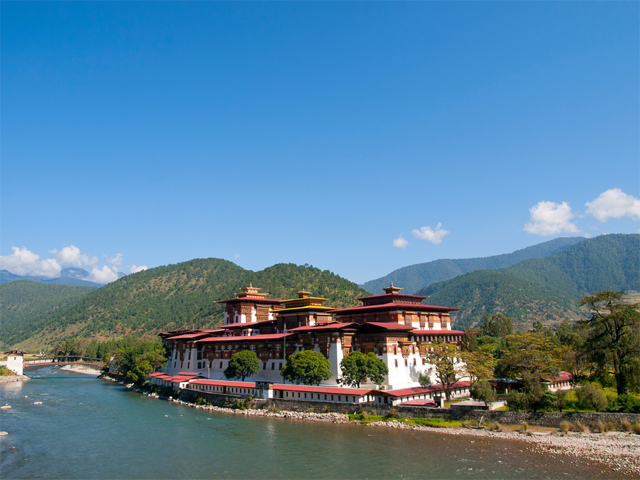
Punakha Dzong, whose formal name is Pungtang Dechen Photrang Dzong, "the palace of great happiness", is often called the most beautiful fortress in Bhutan. It stands at the point where two rivers meet in the Punakha-Wangdue valley: the Pho Chhu, the "father" river, and the Mo Chhu, the "mother" river. Seen from the long covered bridge across the Pho Chhu, its white walls, red timber galleries and gilded roofs rise straight from the water, and in spring the jacaranda trees along its banks bloom purple.
The first Zhabdrung Rinpoche, Ngawang Namgyal, built the dzong in 1637-38, making it the second oldest and second largest in Bhutan. It served as the capital of Bhutan until 1955, and it remains the winter residence of the central monk body. The fortress houses the sacred relics of the southern Drukpa Kagyu lineage, including the Rangjung Kasarpani and the preserved remains of the Zhabdrung himself and of the treasure-revealer Pema Lingpa. Inside, a great central tower, the utse, rises above a succession of courtyards with finely painted woodwork.
The Mo Chhu rises in the northern hills near Laya and in Tibet, while the Pho Chhu is fed by glaciers in the Lunana region. Below the confluence the river is called the Puna Tsang Chhu, or Sankosh, which flows through Wangdue Phodrang, leaves Bhutan at Kalikhola and eventually joins the Brahmaputra. The dzong is open to visitors, but dress rules apply, and it is closed to tourists during parts of the major festivals; check dates when planning your trip.
Featured Adventure

Quick Answers about Punakha Dzong
What is the elevation of Punakha Dzong?
Punakha Dzong is at an elevation of 1,200 m.
Where is Punakha Dzong located?
Punakha Dzong is in Punakha, Bhutan, at latitude 27.616700, longitude 89.866700.
What is Punakha Dzong also known as?
Punakha Dzong is also known as Pungtang Dechen.
When was Punakha Dzong built?
Punakha Dzong dates from 1638.