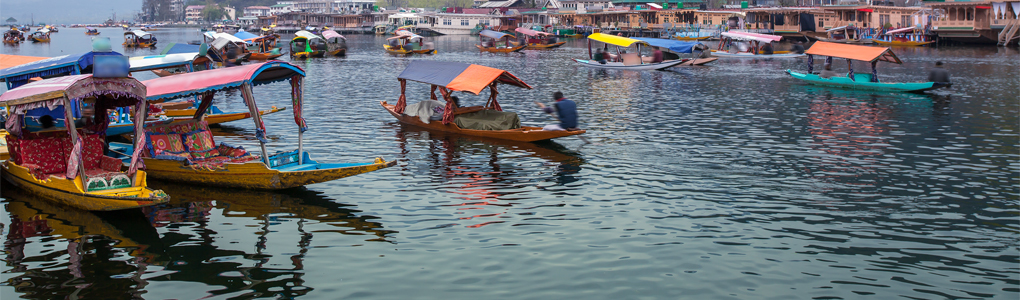
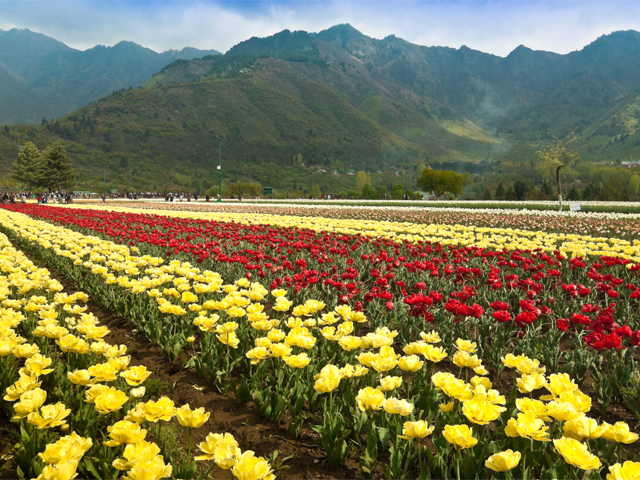
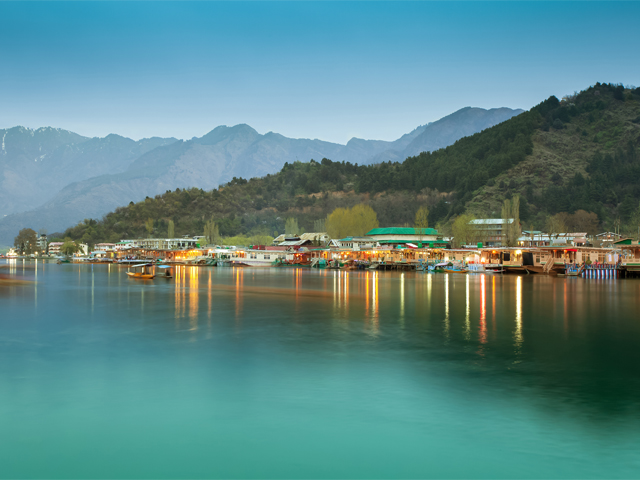
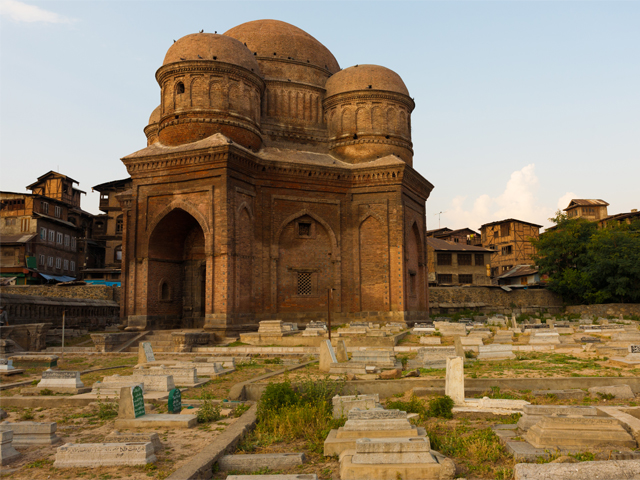
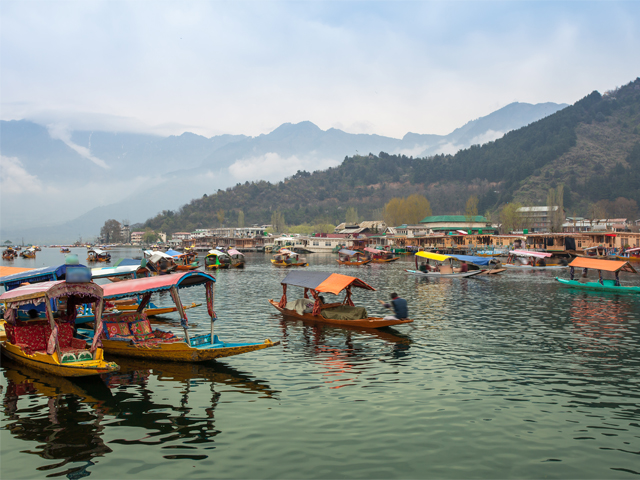
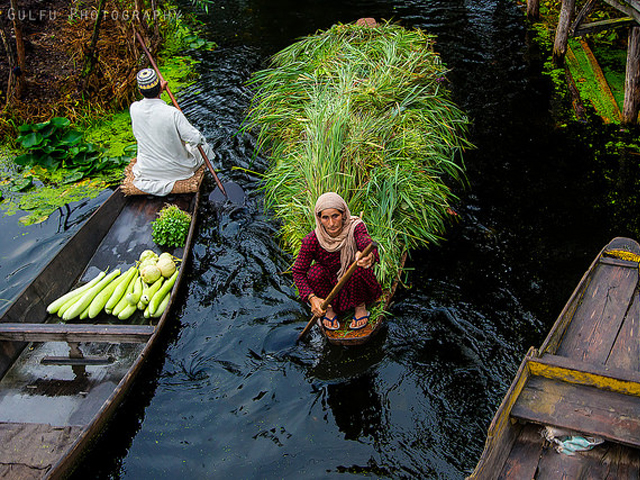
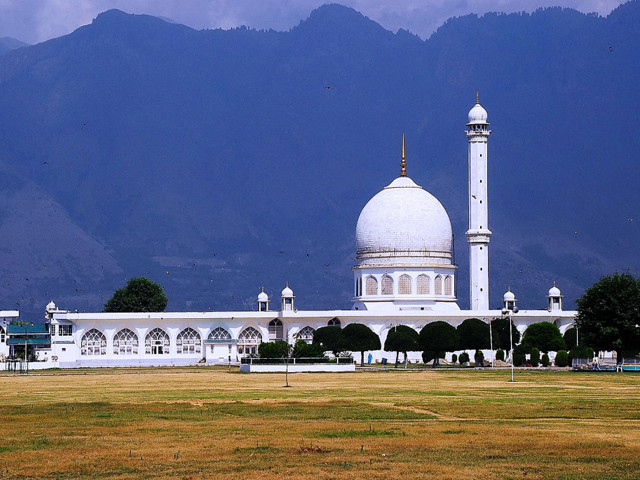
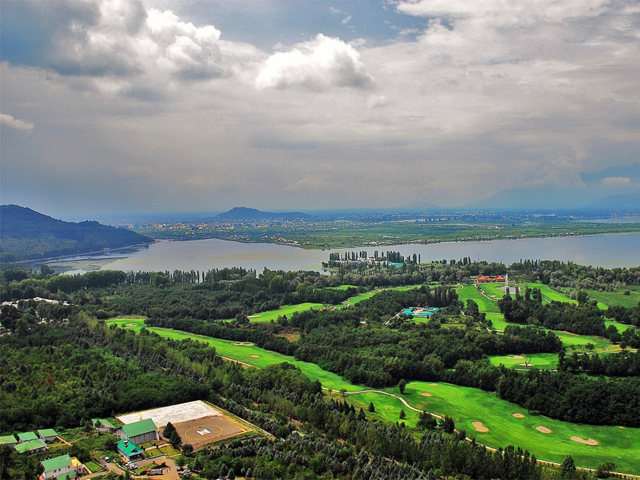
Srinagar is the summer capital of Jammu and Kashmir, lying in the Kashmir Valley on both banks of the Jhelum, a tributary of the Indus. The city is famous for its gardens, lakes and houseboats, and for traditional Kashmiri handicrafts such as papier-mache, carpets, shawls and dried fruit. Old wooden houses with carved balconies line the river in the downtown area, and the call to prayer and the smell of baking bread mix with the sound of paddles on Dal Lake.
Its name is generally traced to the Sanskrit Surya-nagar, "City of the Sun", which became Siri-nagar in local speech. Tradition says that King Pravarasena II named it Parvasenpur more than two thousand years ago. Another account, from Kalhana's Rajatarangini, says that the Mauryan emperor Ashoka built the city of Srinagari in the 3rd century BC and raised many stupas; he introduced Buddhism to the valley, and the area around the city became an important Buddhist centre.
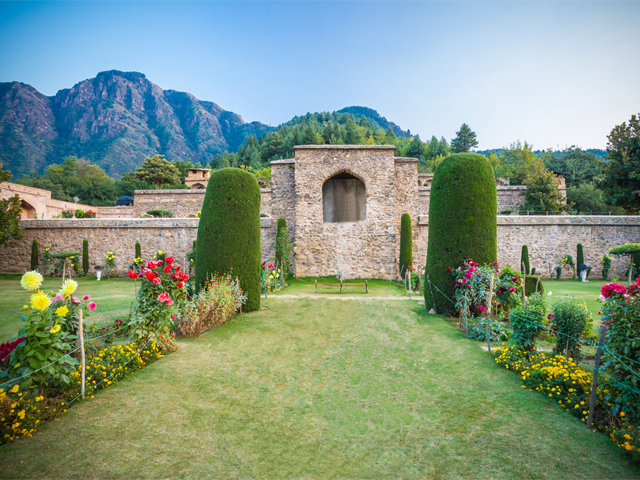
Visitors spend time on the water in a shikara, visiting the Mughal gardens of Shalimar Bagh and Nishat Bagh, the old city mosques such as Jamia Masjid, and the Hazratbal shrine. Srinagar is also the usual starting point for trips to Gulmarg, Pahalgam and Sonamarg, and for the Srinagar-Leh highway. Conditions in the region can change quickly, so check advisories and local news before you go, and consider booking through a reliable local operator.
Images From Flickr : Basharat Alam Shah , Prasanth Chandran , Basharat Alam Shah
Featured Adventure

Quick Answers about Srinagar
What is the elevation of Srinagar?
Srinagar is at an elevation of 1,585 m.
Where is Srinagar located?
Srinagar is in India, at latitude 34.083424, longitude 74.796455.