




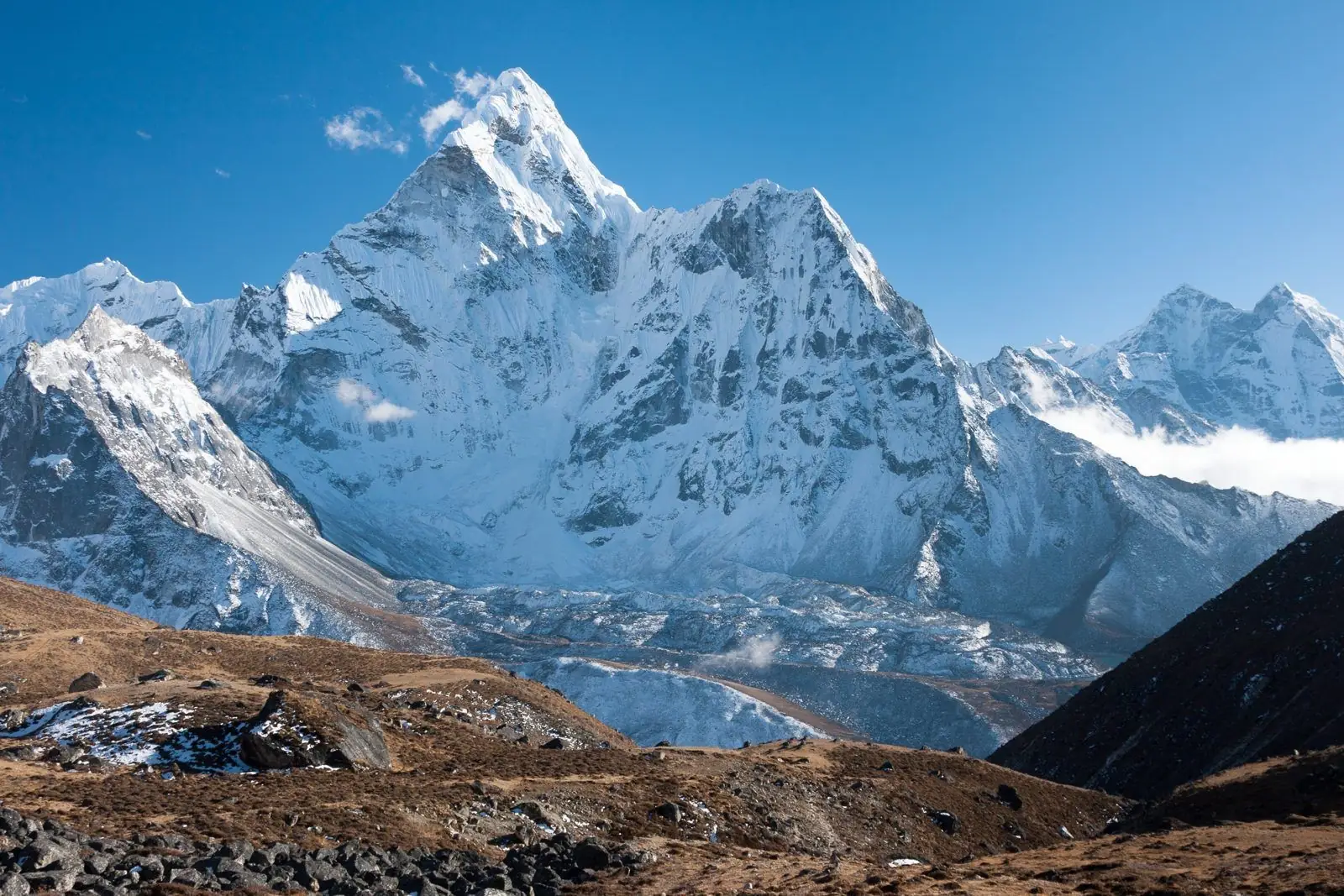
Ama Dablam is a 6,812 m peak in the Khumbu region, close to the Everest trail. Its steep ridges and hanging glacier make it one of the most recognisable mountains in the Himalaya.
The most beautiful mountain in the Khumbu
Ama Dablam is a sharp pyramid of 6,812 m that rises directly above the trail to Everest Base Camp. Its graceful south-west ridge, hanging glacier and steep faces make it one of the most photographed peaks in the Himalaya. It is so dramatic that many people call it the Matterhorn of the Himalaya, though local people prefer their own name.
Name and meaning
Ama Dablam means mother's necklace. The long ridges on each side are the arms of a mother protecting her child, and the hanging glacier is the dablam, a traditional double pendant worn by Sherpa women. The mountain is sacred and holds an important place in Sherpa culture.
Who first climbed it
A small expedition from Britain and New Zealand made the first ascent in March 1961, climbing the south-west ridge. The route is still the most popular and has several famous features including the Yellow Tower and the Grey Tower.
Climbing today
Ama Dablam is popular with commercial expeditions, mostly in autumn. The climb is technical but rewarding, with a mix of rock, ice and mixed climbing, and the summit view is spectacular.
Geography and setting
The mountain stands on a spur between the Imja and Dudh Kosi valleys, close to the villages of Pangboche and Dingboche. Its three ridges meet at a sharp summit, the south-west ridge is the classic climbing line, and the north-east face looks over the Mingbo valley. Because it is so close to the trail, it can be seen from almost every day of the Everest trek after Namche.
Local belief
Sherpas regard Ama Dablam as a protective mountain and avoid climbing it during certain holy periods. Expedition teams hold a puja ceremony at base camp before the first climb, with prayers, juniper smoke and prayer flags. Visitors should respect this tradition.
For trekkers
You do not need to climb to enjoy it. The mountain is visible from many points on the Everest trail. See the viewpoint guide and the base camp guide.


