




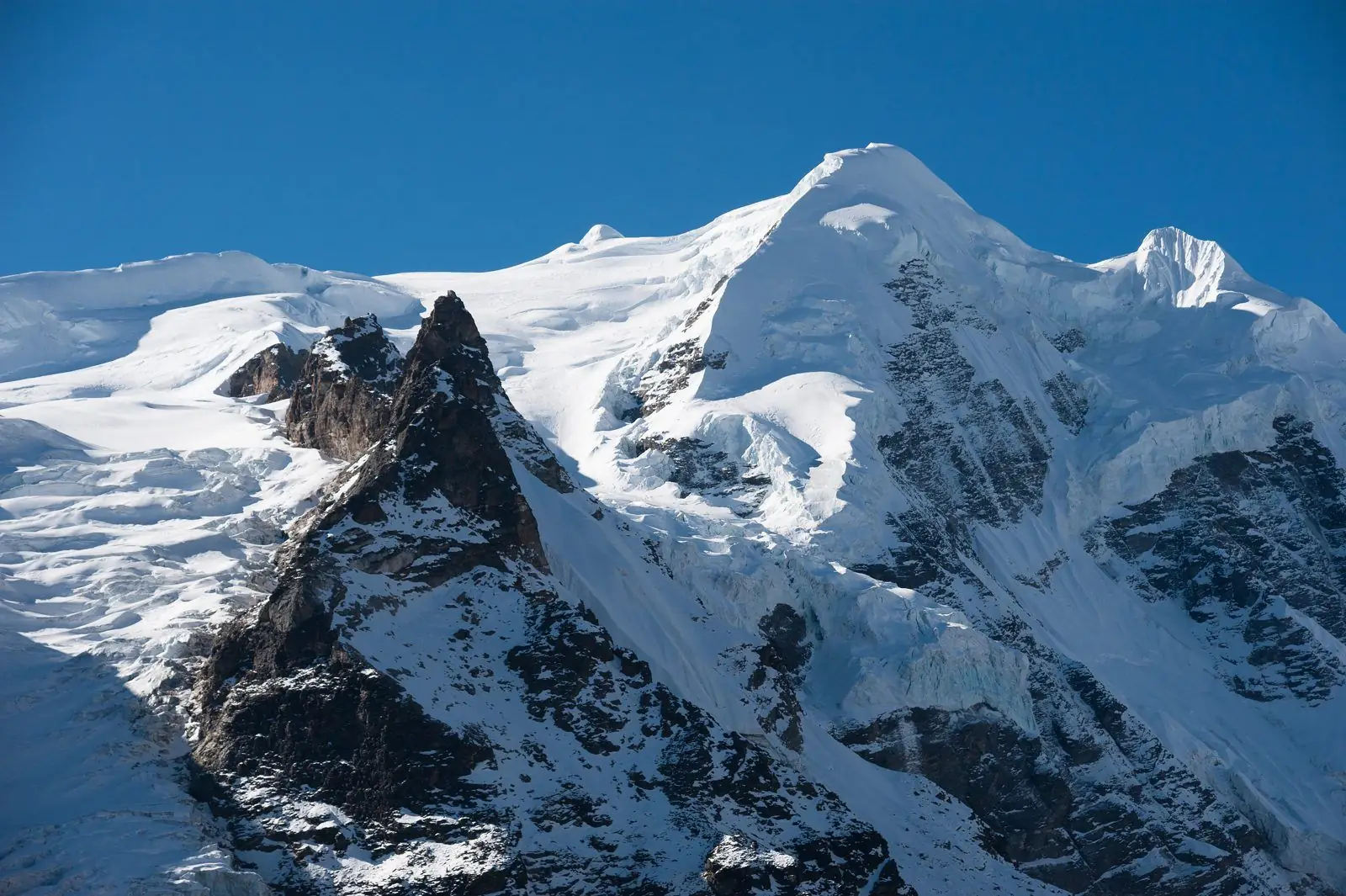
Dhampus Peak, also known as Thapa Peak, is a trekking peak of about 6,012 m in the Dhaulagiri region. It rises above Dhampus Pass and is climbed from the Hidden Valley or from the Kali Gandaki side.
A trekking peak above the Kali Gandaki
Dhampus Peak, also called Thapa Peak, rises to about 6,012 m in the Dhaulagiri range above Jomsom and Marpha. It is one of the trekking peaks managed by the Nepal Mountaineering Association, which means it can be climbed by trekkers with some mountaineering skills and a guide, rather than by full expeditions. The standard approach goes from Jomsom through Marpha and the Dhampus Pass area.
Setting
The peak rises above the dry, windy valley of the Kali Gandaki, with the vast Dhaulagiri and Tukuche walls to the south and the Mustang plateau to the north. The scenery combines glaciers, moraine and barren hills. Marpha is a pleasant apple-growing village with a monastery and good lodges, and it is a pleasant place to rest before the climb.
The climb
The route follows a valley to the base camp, then climbs on moraine and snow to a high camp. The summit day is a glacier climb with snow slopes and may include rope work. It is considered a moderate technical climb.
Why climb it
Dhampus offers a fine summit view of Dhaulagiri, Annapurna and the Mustang valley, and sees far fewer climbers than Island Peak or Mera Peak.
Names and permits
The peak is known as both Dhampus and Thapa Peak. Trekking peak permits are issued through the Nepal Mountaineering Association, and fees vary by season. Your operator handles the permit and the liaison process.
Who it suits
Climbers with prior experience on easier peaks such as Island Peak or Mera Peak, or beginners with proper training and a strong guide team.
Planning
Read the itinerary and the difficulty guide.
Why climbers choose Dhampus
The peak offers a quieter alternative in the Dhaulagiri region, with views over the Kali Gandaki gorge. It is a trekking-peak style ascent that suits climbers with some prior experience.
Height and region
Dhampus Peak, about 6,012 m, lies near the Dhaulagiri range and is climbed from the Kali Gandaki side. Access involves crossing French Pass in many itineraries.


