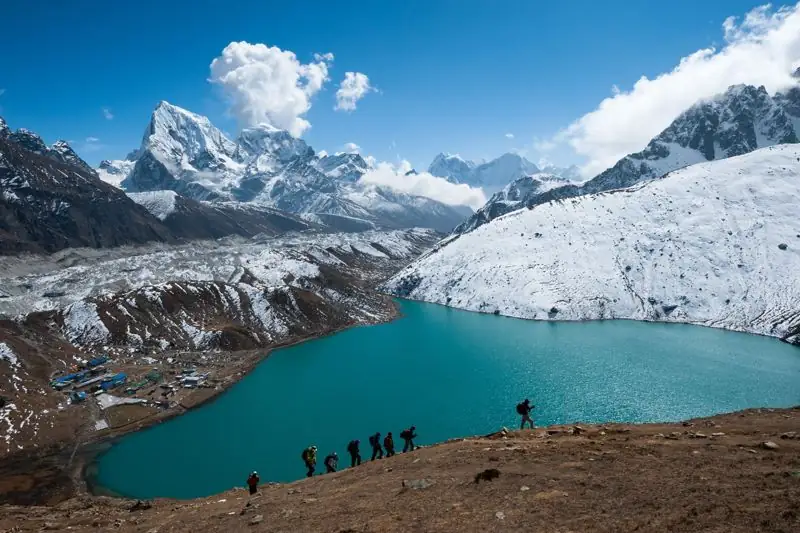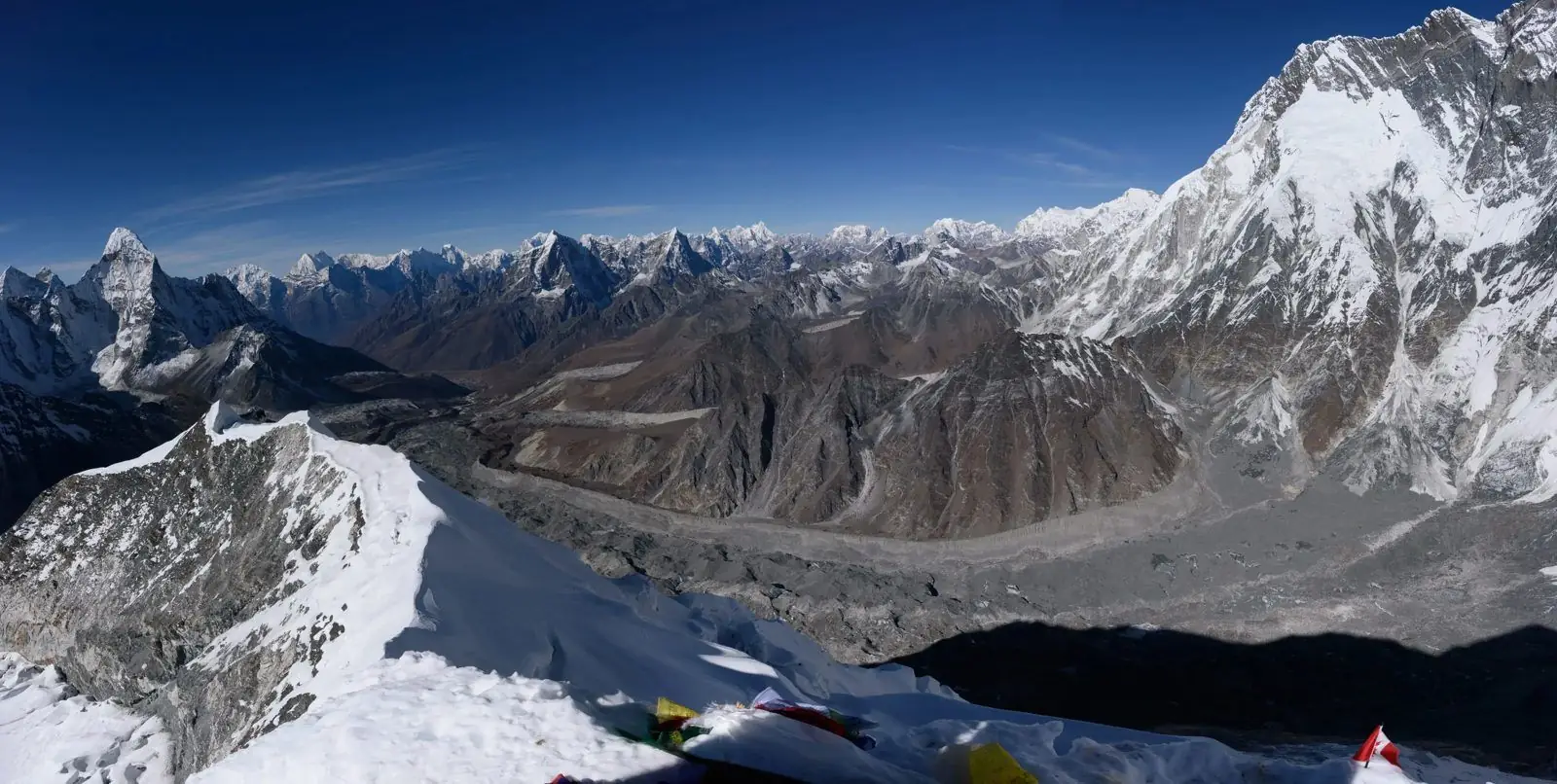
The classic route follows the Dudh Koshi and Imja valleys from Lukla to base camp and back on the same trail. Altitudes below are approximate, and walking times vary with pace and conditions.
- Kathmandu to Lukla, then Phakding: a short flight, then an easy walk down to about 2,610 m. Two to four hours of walking.
- Phakding to Namche Bazaar (about 3,440 m): several suspension bridges and a long final climb. Five to six hours.
- Namche rest day: an acclimatisation hike toward the Everest View area or Khumjung, then back to sleep in Namche.
- Namche to Tengboche (about 3,860 m): a traverse, a drop to the river and a steady climb to the monastery. Five to six hours.
- Tengboche to Dingboche (about 4,410 m): the valley opens up and the trees give way to alpine scrub. Five to six hours.
- Dingboche rest day: a climb to about 4,800 m on the ridge above the village, then a return to sleep lower.
- Dingboche to Lobuche (about 4,910 m): past the memorial cairns near Dughla. Four to five hours.
- Lobuche to Gorak Shep (about 5,160 m), then base camp (about 5,364 m): a long, slow day on moraine. Seven to eight hours with the return to Gorak Shep.
- Kala Patthar (about 5,545 m), then down to Pheriche or Pangboche: an early start for the best light, then a long descent.
- Down to Namche, then to Lukla over two days: long but easier days as the air thickens.
- Lukla to Kathmandu: the flight out, weather permitting.
How to read the plan
The two rest days are not optional extras. They are where your body builds the extra red cell capacity and fluid balance it needs. Many groups also add a spare day near the end so that a delayed flight does not push you past your international departure.
Common variations
Some itineraries split the base camp day by staying a night in Lobuche and walking to Gorak Shep early, which helps if you sleep badly at higher altitude. Others combine Kala Patthar and base camp on separate mornings, which is slower but gives better photographs and more recovery time. If you walk back instead of flying, build in an extra day or two for the descent.
What a normal trekking day feels like
Days on the trail follow a simple rhythm. You wake early, often around six, pack your duffel and eat breakfast in the dining room. Walking starts by seven or eight, with a tea stop mid-morning and a longer lunch break around midday at a lodge on the route. Afternoons are shorter, and you usually reach the night's village by three or four o'clock, which leaves time to wash, rest, drink fluids and talk with other trekkers around the stove. Dinner is early and bed is earlier. Clouds often roll up the valley in the afternoon, so the clearest mountain views are in the morning.
Why the rest days are not wasted
The two acclimatisation days are the part of the programme most likely to be questioned by people in a hurry, but they are the part that makes the trek work. On both days you walk up to a higher point and come back down to sleep, which teaches your body to cope with thinner air without raising your sleeping altitude. Use the time to explore the villages, visit a monastery or museum, rest your legs and keep drinking water. Treat them as part of the experience rather than as spare time.
Adjusting the plan on the trail
An itinerary is a plan, not a promise. If a member of the group feels unwell, the guide may insert an extra night at a village or shorten a day. Snow, a landslide or a delayed flight can reorder things as well. Good operators explain the changes calmly and put safety first, so ask beforehand who decides, and how the extra costs of a changed plan are handled. A flexible mindset is as valuable as fitness.
Making the most of the route
- Start early on the long days, especially the push to Gorak Shep, so you are not walking in the afternoon wind.
- Keep a small diary or use your phone to note altitude, sleep and appetite each night. It helps your guide spot trends.
- Do not skip lunch, even if you are not hungry. Fuel is part of acclimatising.
- Carry a small snack for the long stretches between villages.
What our guests say
Excerpts from guest reviews of Himalayan Wonders, our parent company, on Tripadvisor.
“I had an incredible experience with Himalayan Wonders on my Everest Base Camp trek.”