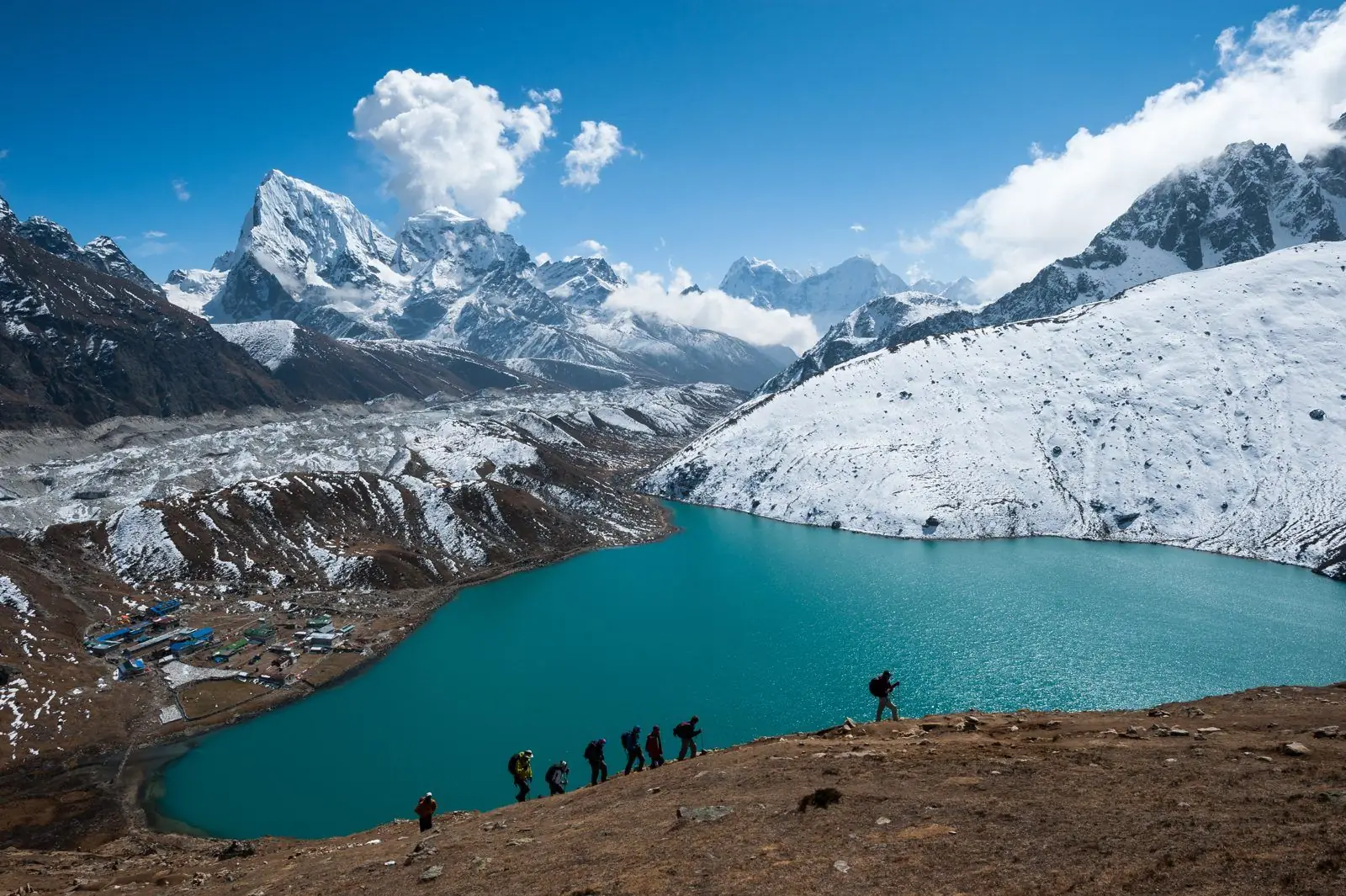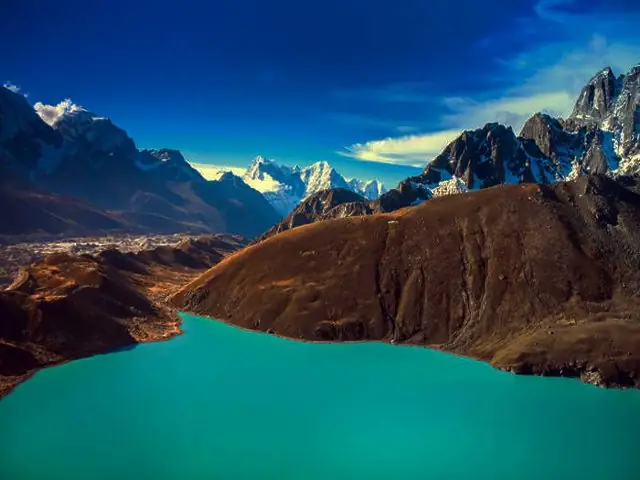
Most Gokyo Lakes itineraries run for 11 to 14 days from Kathmandu to Kathmandu, with 12 or 13 days being a comfortable balance. Gokyo is higher than many first-time trekkers expect, with the village at about 4,790 m and Gokyo Ri at about 5,357 m, so the schedule has to leave time to adapt.
The 11-day version
An 11-day itinerary flies to Lukla, trekks to Gokyo and returns along the same valley, often with a single acclimatisation day. It is possible for fit trekkers with previous altitude experience, but it leaves little spare time. A day of cloud or a mild headache can change plans.
The 12 to 14 day sweet spot
Twelve to fourteen days adds a second acclimatisation night, a quieter pace between Dole and Gokyo and one spare day. This is the best structure for most people, because it reduces risk and leaves energy for the lakes and Gokyo Ri. It also leaves room to cross Renjo La, which requires an extra day or two.
Adding Renjo La
The Renjo La crossing makes the trek a loop, avoiding backtracking. It takes about two days from Gokyo through Lungden to Thame and Namche, and it adds a high pass that is steep but not technical in good conditions. Allow at least one extra day for weather on the pass.
Longer options
- Combine Gokyo with Everest Base Camp for 15 to 17 days.
- Cross Cho La from Gokyo to Dzongla for a classic loop of 16 to 18 days.
- Join the full Three Passes loop for 18 to 20 days.
What not to compress
Do not skip rest days at Namche or Gokyo. Do not shorten the leg from Namche to Dole. Do not plan a same-day connection after the Lukla flight. Fast itineraries that save one or two days often make the trek harder and less enjoyable.
Booking your flights
Leave at least one full day between your planned return and your flight home. Lukla flights depend on weather and, in busy seasons, many flights operate from Ramechhap (Manthali) rather than Kathmandu, which adds an early start and a long road transfer. Ask your operator how they handle it.
Comparing popular schedules
Many operators sell a 12-day schedule that includes two nights at Namche, one at Dole, one at Machhermo and two at Gokyo. A 14-day schedule often adds Renjo La and a day for weather. A 17-day schedule adds Everest Base Camp via Cho La. Compare them by counting how many nights are at 4,000 m and above and whether there are acclimatisation days, not just by total length.
Weather buffer
Extra days also protect against weather delays at Lukla, snow on the pass and illness. Many trekkers underestimate how often delays occur. A buffer of two days is not excessive in the Himalaya, and it often saves a missed international flight.
What trekkers say afterwards
People who rushed the schedule often wish they had stayed longer at Gokyo. People who took a slower plan rarely regret it. If in doubt, add a day at Gokyo for the second sunrise and a more relaxed look at the lakes.