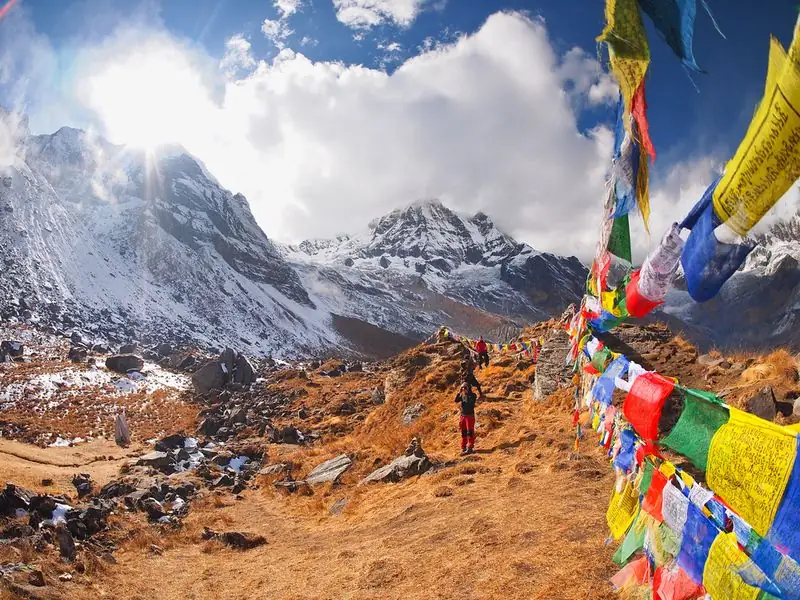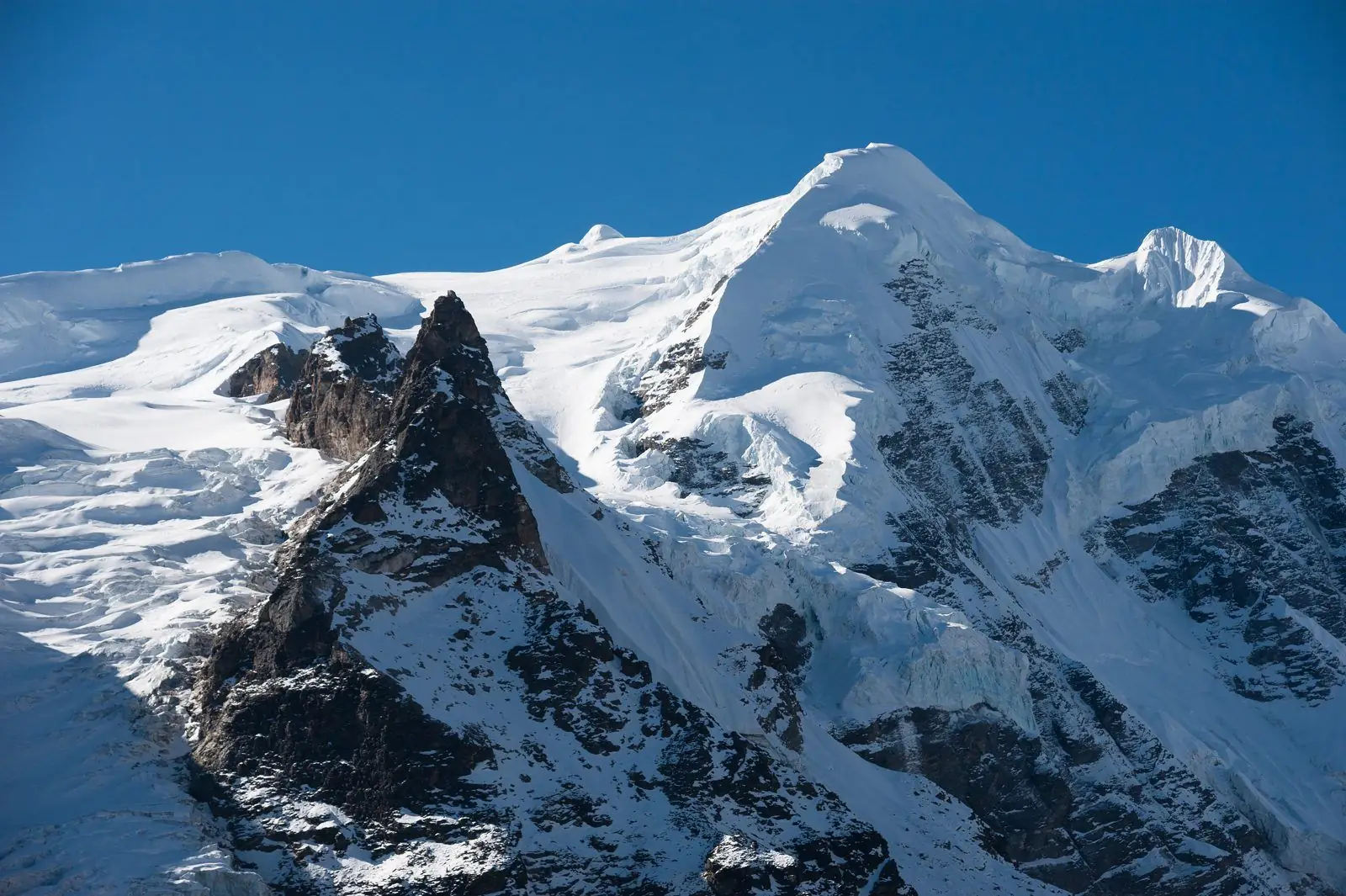
The Tilicho Lake route is not technical, but it crosses steep slopes where rock and scree move. The risk is real and varies from year to year. This page explains what guides look for and how you can contribute to safety.
Why the trail is exposed
Between the high pastures and the base lodge, the trail follows a steep hillside of loose scree. After monsoon and snowfall, parts slide away and are rebuilt, sometimes at a different alignment each season. Rockfall can come from above, especially in afternoon warmth, when ice and stones loosen.
What guides check
- Fresh signs of slides, such as raw earth, new boulders or damaged trail.
- Whether the route has been repaired or realigned since last season.
- Weather: recent rain or snow raises risk.
- Time of day: crossing early, when the slope is frozen, is safer.
- Group size and spacing: cross one at a time where advised.
How to cross safely
- Cross exposed sections quickly, but do not run.
- Do not stop in the middle of a slope to rest or take photos.
- Keep distance between walkers so one slip does not affect others.
- Use poles and place feet carefully; loose stones roll.
- Stay alert for sounds above you and for guide instructions.
Weather, wind and temperature
Wind at the lake day can be fierce, especially after about 10 a.m. Temperatures at dawn can be well below freezing. Dress in layers, carry a windproof shell, and eat and drink before the climb. A hat, gloves and a buff are essential.
Health and fatigue
Fatigue and altitude combine to increase risk on exposed ground. If a trekker is exhausted or unwell, turning back is safer than pressing on. Read our altitude guide for Tilicho.
Communication and rescue
Phone signal is limited. Your guide should carry a charged phone, a first-aid kit and an emergency contact plan. Helicopter evacuation is possible in some conditions but not guaranteed; weather and landing space matter. Your insurance should cover helicopter evacuation.
When to postpone
Heavy rain or snow in the previous 24 hours, fresh slide activity or a poor forecast are all reasons to wait. A flexible schedule makes this easy; a fixed flight home makes it hard. Build the buffer first, then choose the dates.
The rules
The Tilicho and Mesokanto route is on the list of trekking routes that require a licensed guide and an agency-issued TIMS card, in addition to the Annapurna Conservation Area entry permit. See Tilicho Lake: how it fits into the Circuit for the short summary.
A sample safety briefing from a guide
Before the crossing, a good guide will tell you three things: where the exposed sections begin and end, what to do if you hear a rockfall (move away from the fall line, never run uphill), and who walks where. They will stop the group for water before the section, not on it. Listen, ask questions and follow instructions. It takes five minutes and it can prevent an accident.
Footwear and poles
Boots with a firm sole and good ankle support are much safer than trail shoes on loose scree. Poles help balance, but keep straps loose so you can drop them if you fall. Carry a spare pair of laces and tape, in case of equipment failure.
After a heavy snowfall
If snow has fallen in the last day or two, the route may be hidden, and avalanche risk can rise on slopes above the trail. Waiting a day is almost always the right decision, which is why a spare day matters. The lake will still be there tomorrow.
Common questions
Is the Tilicho Lake trek dangerous?
It is not technical, but it has exposed, landslide-prone sections. With a good guide, early starts and sensible decisions, many trekkers complete it safely.
Can the trail close?
Yes. Landslides, snow or heavy rain can block or damage the route. Your guide will check conditions and may recommend waiting or turning back.
Do I need a guide for Tilicho Lake?
Yes. The route requires a licensed guide and an agency-issued TIMS card.
What our guests say
Excerpts from trekker reviews on our reviews page.
“Everything was handled professionally and with great attention to detail, from permits to on-ground support.”