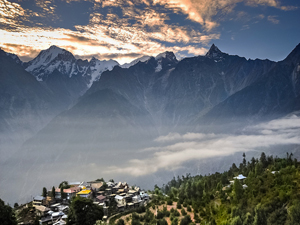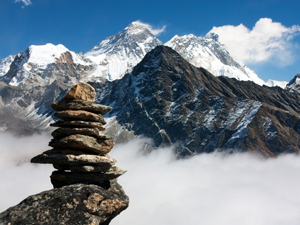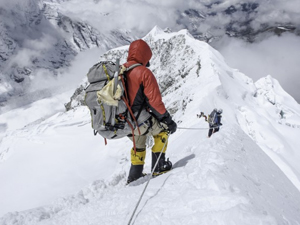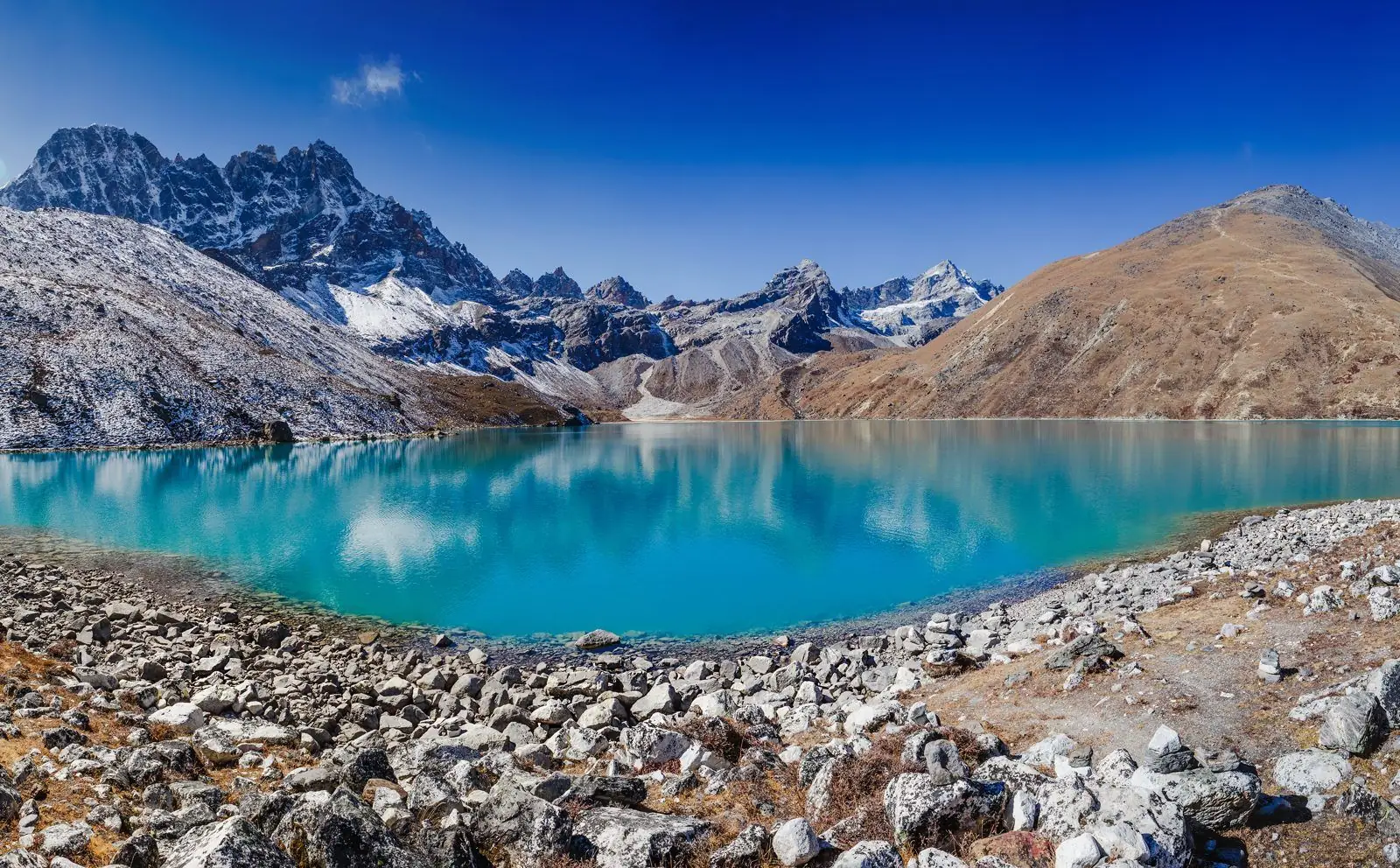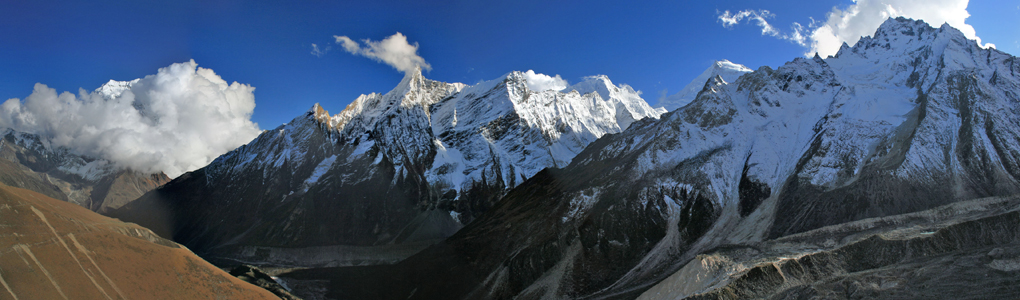
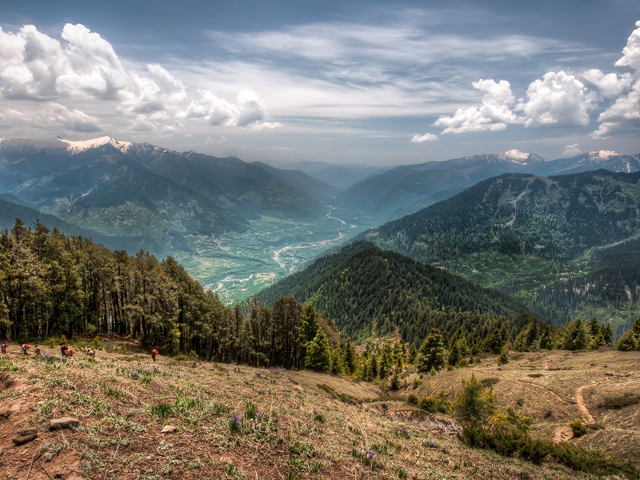
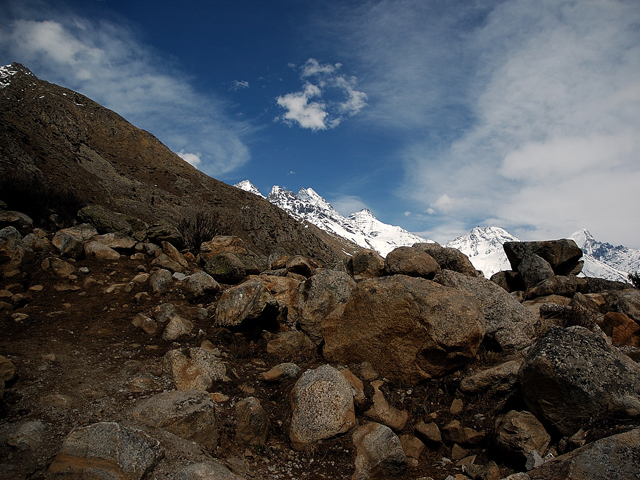
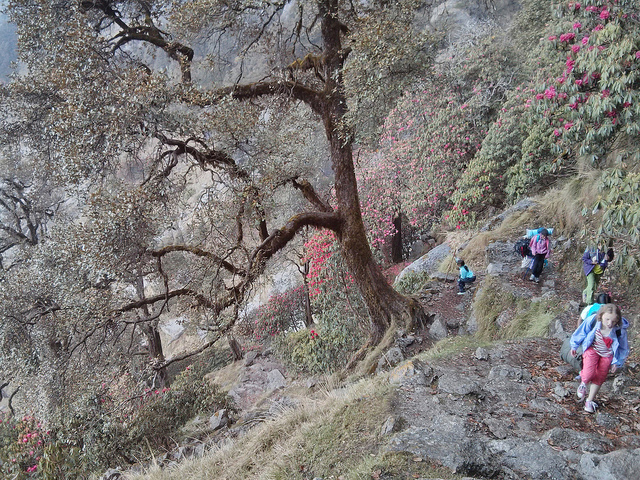
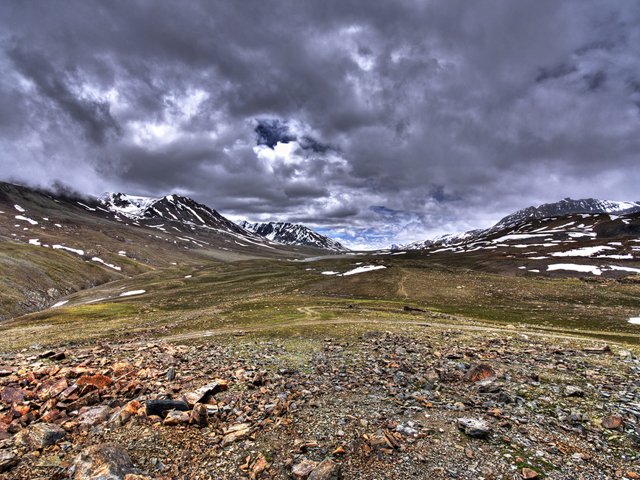
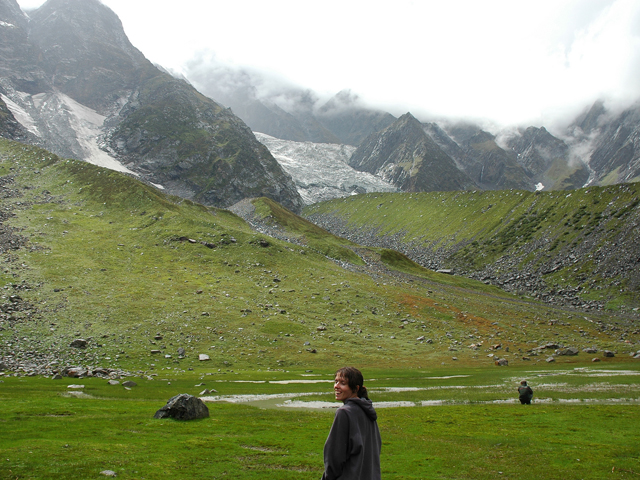
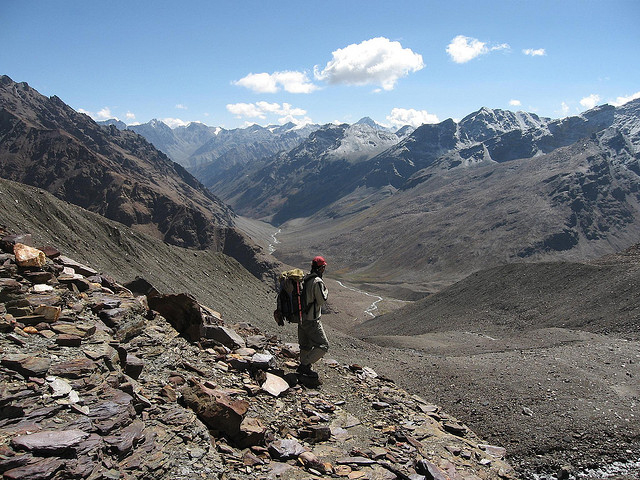
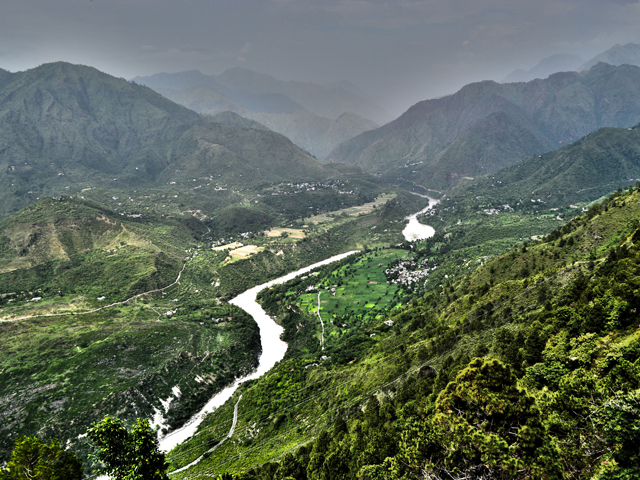
Himachal Pradesh fills the north-western corner of the Indian Himalaya, and few Indian states pack so much variety into so little space. Tibet lies along its eastern border, Jammu and Kashmir to the north and Punjab to the west, and within those limits the landscape changes dramatically from one valley to the next. Cold, high Trans-Himalayan desert gives way to dark deodar forest, then to apple orchards and farmed terraces, and above them all stand snowy ranges with glacier-fed lakes and loud rivers at their feet. A trekker can start the morning among pine and rhododendron and finish the afternoon on a bare pass with a view of Tibetan-style plateau.
The state is easiest to understand as a set of valleys, each with a different character. The Kullu Valley, around Manali, is green and orchard-covered, the classic base for treks such as Hampta Pass, Beas Kund and the Chandratal trail. Over the Rohtang or through the Atal Tunnel lie Lahaul and Spiti, a cold desert of monasteries and whitewashed villages that is closer in spirit to Ladakh. In the east, Kinnaur is famous for apples, the Kinner Kailash massif and the Sangla and Baspa valleys. In the west, Dharamsala and the Dhauladhar range offer shorter, accessible treks such as Triund and passes to Chamba and Kullu.
Season matters more here than in many Himalayan regions. The main trekking window runs from May or June to October, though the exact dates depend on the valley: Lahaul and Spiti are open only after the roads clear, usually in June, while the lower Kullu and Kangra treks can be walked in spring and autumn. The monsoon brings heavy rain to the southern slopes from July to early September, while Spiti, in the rain shadow, stays dry. Winter treks, such as the snow trails around Dharamsala, are possible for experienced groups.
Practicalities are straightforward. Most trekkers fly to Chandigarh, Kullu-Manali (Bhuntar) or Dharamsala (Gaggal), or take an overnight bus from Delhi. Permits are needed for some inner-line areas near the Tibet border, such as parts of Kinnaur and Spiti, so ask your operator to confirm what applies. Altitude is a real consideration on passes of 4,000 m to 5,000 m, so build in rest days. Local guides, homestays and camping gear are easy to arrange in Manali, Kasol, Kalpa and Dharamsala.
Image From Flickr: Meghdut Gorai, Mani Babbar Photography, Kiran Jonnalagadda, Prabhu B Doss, Prashant Ram, Ajay Bhandari, Darshan Simha
Top Treks
Hamta Pass Trek (Kullu)
A five-day crossing that starts in Manali and begins with a drive to Pirni village. The route climbs to the confluence of the Patpori and Hamta streams and reaches a high point of 4,286 m, passing temples, caves and the ruined forts of Piti Raja. The return to Manali includes the Arjun Gufa and the Shabbri temple. It suits first-time Himalayan trekkers with reasonable fitness.
Manali Heritage Trek (Kullu)
A seven-day route that starts with a day in Manali for acclimatisation. A drive to Naggar leads to the walk to Rumsu village, with a striking view of Deo Tibba and the Malana glen. The highest point is 3,960 m, and the trip includes a visit to Manikaran and its hot springs. A good choice if you want culture and forest as well as mountain views.
Chandratal Trail
Six days from Manali: first a drive to Jagatsukh, then a climb through unspoiled green forest and moderate alpine meadows to camp. The high point is 4,480 m. The trek leads to the Chandratal area and its snow-streaked slopes, with views toward the Indrasan massif. Suitable for trekkers comfortable with several days at altitude.
Dharamsala to Chhota Bhangal over Sari Pass
An eight-day route that needs previous trekking experience. It begins in Dharamsala, with its Buddhist monasteries, Tibetan settlements and tea gardens, and crosses the Sari Pass into the Kullu valley. Rated moderate, it is used by local people and trekkers alike and is quieter than the better-known passes.
Kinner Kailash Parikrama
A seven-day circuit from Kalpa that climbs gradually to the Charang Ghati at 5,242 m, then descends easily on the other side. The trek follows the Baspa River in the Sangla Valley, with breathtaking views of the surrounding ranges and the sacred Kinner Kailash rock formation. Both Hindus and Buddhists regard the circuit as a pilgrimage.
Quick Answers about Himachal Pradesh
What is the best time to visit Himachal Pradesh?
March to April, December to January.
Which cities and towns should I know in Himachal Pradesh?
Manali, Shimla, Dharamsala.
What are the must-see places in Himachal Pradesh?
Rohtang Pass, Spiti.
Which peaks are found in Himachal Pradesh?
Kinnaur Kailash, Indrasan, Deo Tibba.