




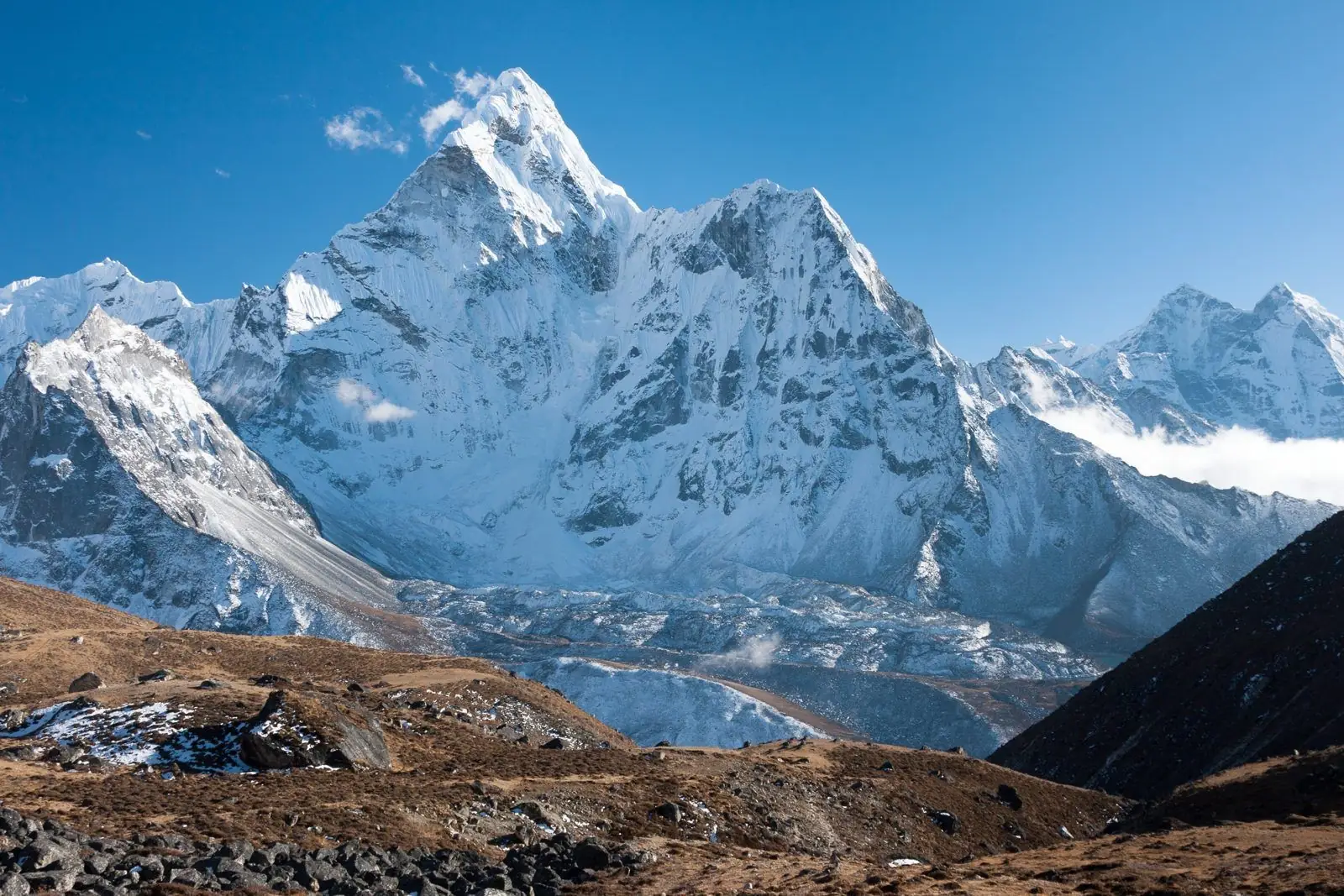
Ama Dablam Base Camp is a half-day walk from Pangboche to a grassy meadow at about 4,570 m. Island Peak Base Camp is a longer walk beyond Chhukung to a stony camp at about 5,100 m in the Imja valley. Ama Dablam is the easier and prettier side trip; Island Peak Base Camp is higher, wilder and mostly visited by climbers.
Ama Dablam Base Camp and Island Peak Base Camp at a glance
- Height. Ama Dablam Base Camp: about 4,570 m. Island Peak Base Camp: about 5,100 m.
- Reached from. Ama Dablam Base Camp: Pangboche, 2 to 3 hours up. Island Peak Base Camp: Chhukung, 3 to 4 hours up.
- Setting. Ama Dablam Base Camp: wide meadow under the west face. Island Peak Base Camp: rocky moraine beside the Imja glacier lake.
- Extra days on an Everest trek. Ama Dablam Base Camp: none to one. Island Peak Base Camp: one to two.
- Lodges. Ama Dablam Base Camp: none at camp; lodges at Pangboche. Island Peak Base Camp: none at camp; lodges at Chhukung.
- Who goes. Ama Dablam Base Camp: trekkers and Ama Dablam expeditions. Island Peak Base Camp: mostly Island Peak climbers.
Ama Dablam Base Camp
The trail leaves the main Everest route at Pangboche, drops to a bridge over the Imja Khola and climbs a steady hillside to a broad, sunny shelf. Ama Dablam rises straight above, close enough to pick out the hanging glacier that gives the mountain its name. It is one of the most pleasant spots in Khumbu for a picnic, and in climbing season you can see the tents and, with binoculars, climbers on the south-west ridge.
Island Peak Base Camp
From Dingboche you walk east up the Imja valley to Chhukung, the last lodges, and on across moraine and sandy flats below the huge south wall of Lhotse. Base camp is a cluster of tent platforms in a hollow near Imja Tsho, a large glacial lake. The setting is stark and impressive. Island Peak itself, 6,189 m, is hidden at first and then appears as a rock and snow ridge above the camp. Most visitors are climbers preparing for the summit. See Island Peak base camp and high camp.
Which is the better side trip?
For most trekkers, Ama Dablam Base Camp. It is lower, shorter and more beautiful, and it works as an acclimatisation hike. Island Peak Base Camp makes sense if you have a spare day at Chhukung, want to climb Chhukung Ri as well, or are thinking of returning to climb the peak and want to see it first.
Best season and conditions
Both are best in October, November, April and May. The Ama Dablam meadow is usually snow-free in season and pleasant in the sun. The Imja valley is colder and windier, and the trail beyond Chhukung crosses loose moraine that can be confusing in mist or fresh snow, so go with a guide and start early.
Combining with Chhukung Ri
If you go up the Imja valley, Chhukung Ri, at about 5,550 m, is the natural partner to Island Peak Base Camp. It is a steep walk of three to four hours from Chhukung and gives a tremendous view of the Lhotse wall, Ama Dablam, Makalu and Island Peak below. Many Everest trekkers use it as an acclimatisation climb from Dingboche.
A note on the names
Island Peak is the English name given in the 1950s; its Nepali name is Imja Tse. Ama Dablam means "mother's necklace", after the hanging glacier on its face. The mountain is 6,812 m high and is a serious technical climb, while Island Peak, at 6,189 m, is classed as a trekking peak and is climbed by fit trekkers with a guide and basic training.
Choose Ama Dablam Base Camp if
- You want an easy, scenic half-day.
- You are still acclimatising.
- You want a close look at a famous mountain.
- You have no spare days.
Choose Island Peak Base Camp if
- You have a day or two to spare around Dingboche.
- You are interested in climbing Island Peak.
- You like remote, glacial scenery.
- You are already well acclimatised.
Can you do both?
Yes. Both fit into an Everest Base Camp trek: Ama Dablam from Pangboche on the way up or down, and the Imja valley as an extra day or two from Dingboche.
Plan it
See the Ama Dablam guides and the Island Peak guides, or ask us to add either to your trek.
Common questions
Which base camp is higher?
Island Peak Base Camp, at about 5,100 m, is around 500 m higher than Ama Dablam Base Camp.
Can trekkers stay overnight at either camp?
Not in lodges. Trekkers sleep at Pangboche or Chhukung and visit by day, unless camping is arranged.
Do you need a climbing permit to visit?
No. A permit is needed only to climb above base camp.
Is the Imja Tsho lake dangerous?
It is a monitored glacial lake, and its level has been lowered by drainage works. Visiting the base camp area is normal.
Heights, days, fees and rules are approximate and can change, so confirm the current details with us before you book.


