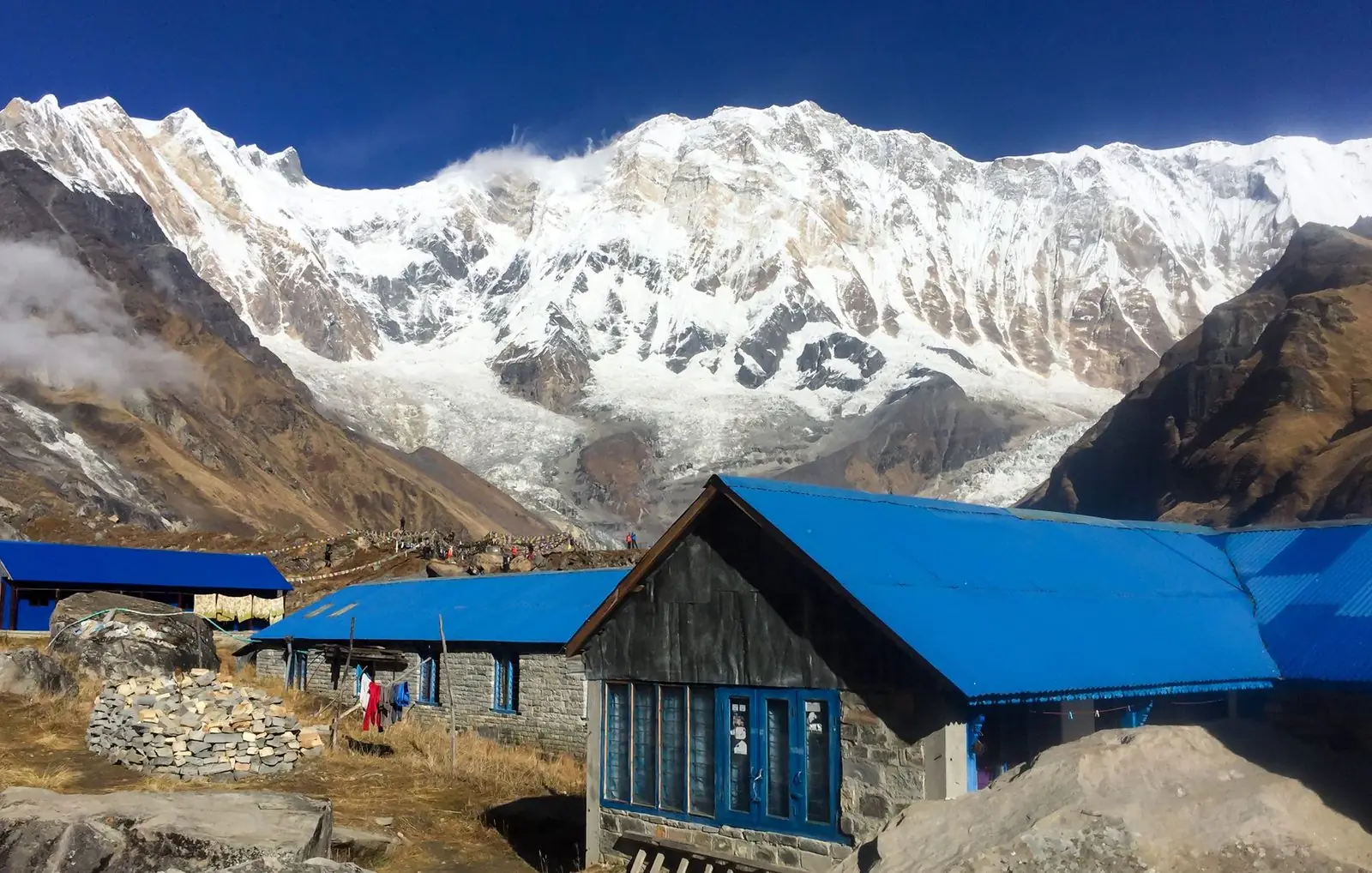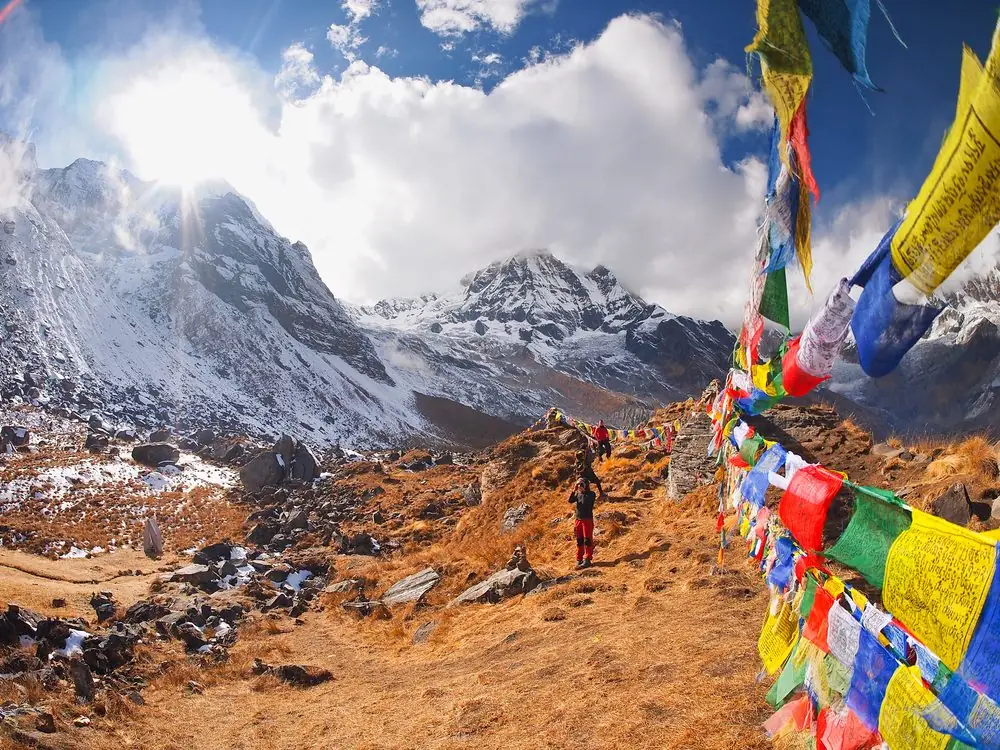
The Annapurna Base Camp trek is moderate to demanding. It needs no climbing skills or special equipment, but it asks for good walking fitness, strong knees and respect for altitude. The surprise for many first-time trekkers is not the highest point, which at about 4,130 m is lower than Everest Base Camp, but the repeated steep staircases and the steady daily hours of six to seven hours on foot.
What makes it hard
The valley climbs and drops several times before reaching the sanctuary. Staircases at Ulleri, Chhomrong and Jhinu include thousands of stone steps in a row. Descending those steps on the way out is often harder on the knees than climbing them on the way in. Add humid forest in the lower valley, cold nights at the top and the occasional landslide section, and you have a trek that is well within reach but not a casual stroll.
What makes it manageable
Teahouses every few hours mean you carry only a daypack. The trail is clear, popular and rarely exposed. The altitude gain between nights is gentle if the itinerary is sensible, and the route offers an easy retreat downhill if someone feels unwell. These features are why thousands of people with no prior trekking history complete the trek each season.
Fitness that actually helps
- Walking uphill with a light pack three or four times a week for two months.
- Stair climbing or step training, since stairs are the defining feature of this route.
- One long day hike of six to eight hours every two weeks as the trip approaches.
- Leg strengthening, particularly quadriceps, calves and glutes, for descent control.
Altitude and the sanctuary
You sleep at about 3,700 m at MBC and 4,130 m at ABC. Many people feel a mild headache or poor sleep at these heights. The key is a slow pace, plenty of water and a willingness to stay a night lower if symptoms appear. Read the altitude guide on this site before you travel.
Who should think twice
People with unmanaged heart or lung conditions, recent knee or ankle injuries or a history of serious altitude illness should speak to a doctor before booking. If you are mainly attracted to views and are less sure about long walking days, consider the shorter Poon Hill trek first to test yourself.
Honest expectation
Expect to be tired but happy at the end of most days, to feel the cold at base camp and to be sore in the legs for a couple of days after you return. With sensible preparation, most reasonably active adults find it achievable and deeply rewarding.
A realistic training plan
In the first four weeks build a base of 30 to 45 minutes of brisk walking or cycling four days a week. In the next four weeks add hills or stairs and increase one weekend walk to three hours with a light pack. In the final two or three weeks hold the volume, practise with your trekking boots and poles and taper in the last few days so you arrive rested. The goal is not to be an athlete but to be comfortable on your feet for six hours.
Mental preparation
Many trekkers find the second and third days the hardest, because the novelty has gone and the stairs seem endless. Knowing this in advance helps. Break each day into short targets, such as the next village or bridge, and use breaks to enjoy the view rather than rushing. Travelling with a friend or guide who keeps morale up makes a big difference.
Common mistakes
- Setting off too fast on the first day and tiring early.
- Wearing new boots that have not been broken in.
- Drinking too little water because it is cool.
- Ignoring small blisters until they become serious.
When it is wise to adjust
If a knee, hip or ankle hurts on the first days, tell your guide and consider a porter for your pack. If the weather is bad, wait a day rather than push. A trek that you finish in good shape is better than one you push through in pain.