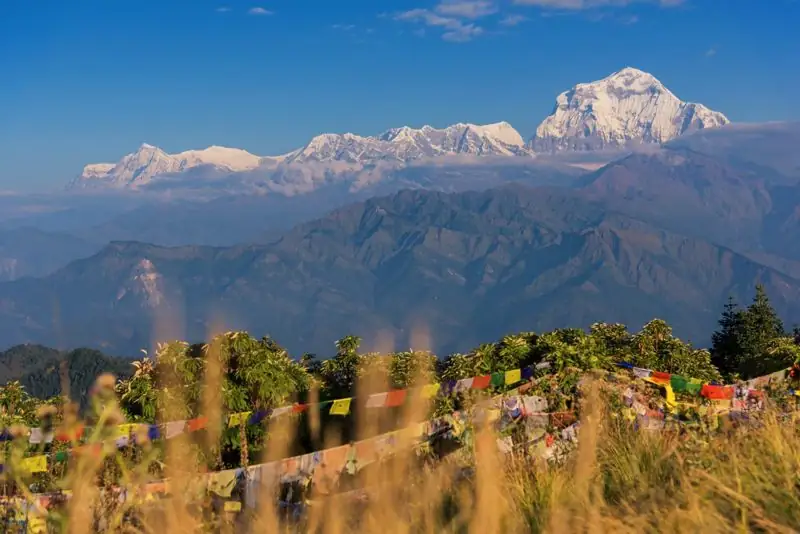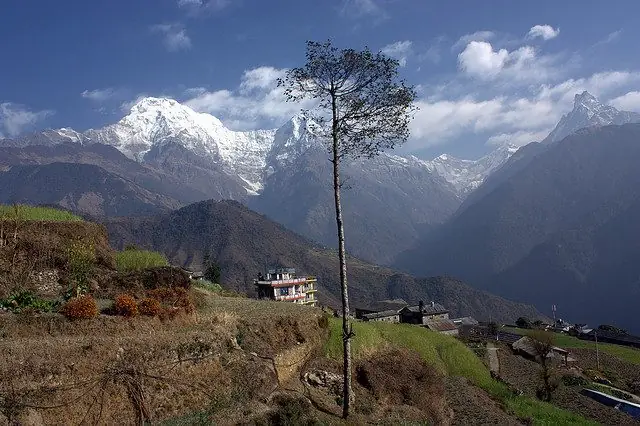
The Annapurna Circuit lies inside the Annapurna Conservation Area, Nepal's largest protected area at roughly 7,600 square kilometres, established in 1986 and managed by the National Trust for Nature Conservation. Your entry fee supports local conservation, trail repair and community projects. Understanding how it works makes the walk richer.
A protected area run with local communities
Unlike many national parks, the Annapurna Conservation Area was designed so that local communities share in management. Conservation committees, lodge management and community forestry are part of daily life. The entry fee for the area is paid at the start of the trek and funds local development and conservation work.
Ecological zones along the route
- Subtropical (below about 1,500 m): rice terraces, bananas, bamboo and warm, humid air.
- Temperate (about 1,500 to 3,000 m): oak, rhododendron, maple and mixed forest, plus apple orchards in places.
- Subalpine (about 3,000 to 4,000 m): pine, fir, juniper and birch near the tree line.
- Alpine (above about 4,000 m): grass, shrubs and bare rock.
- Rain-shadow desert (Mustang side): dry, windswept slopes with sparse vegetation.
Plants worth knowing
Rhododendron, Nepal's national flower, blooms in spring in the lower and middle valleys. Juniper is used as incense in monasteries. Sea buckthorn grows in dry riverbeds in the upper valleys and is turned into juice and jam in several high villages. In Marpha and the Thak Khola valley, apple trees and walnut trees are widespread. These plants are part of local livelihoods as well as scenery.
Animals you might see
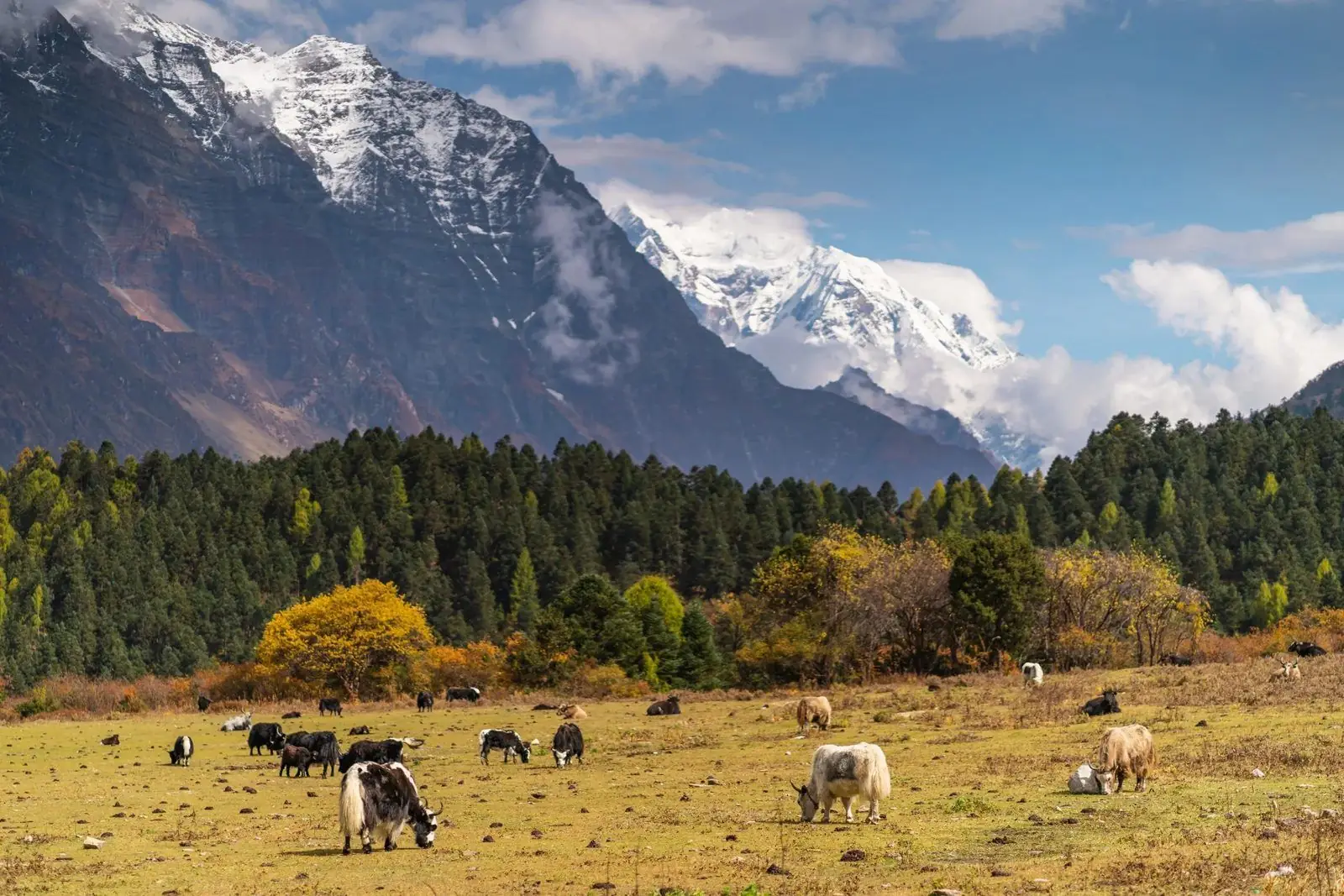
Common sightings include langur monkeys in the lower forest, Himalayan griffon vultures above the Kali Gandaki gorge, and many bird species such as the Himalayan monal and various pheasants. Blue sheep, also called bharal, are often seen on high slopes. Snow leopards live in the conservation area but are very rarely seen. Yak and mules are domestic animals, so give way to them on the trail, standing on the uphill side.
Reducing your impact
- Carry out your non-biodegradable rubbish, including batteries.
- Avoid single-use plastic bottles; use purification instead.
- Do not use firewood-heated showers where possible; fuel is scarce at altitude.
- Stay on marked trails to limit erosion.
- Support local lodges and buy local products.
Water and plastic rules
Some lodges and villages limit plastic bottle sales to reduce waste. Read our guide to Annapurna water, plastic rules and temperatures for the practical side.
Seasonal effects
Rain, landslides and snow shape the environment and the trail. Monsoon rains feed the forests and rivers, and winter snow shuts high passes. Climate change is shrinking glaciers in the region, and the Thorong La and Tilicho areas are watched closely by scientists. Responsible trekkers can help by travelling lightly and respecting local advice about conditions.
Climate change and the high valleys
Glaciers above Manang and Tilicho have retreated in recent decades, as in much of the Himalaya, and glacial lakes can grow or change. Local people report changes in snowfall patterns and in the timing of the farming season. Trekkers can help by limiting flights, travelling in small groups and supporting local conservation work.
A leave-no-trace checklist
- Pack out all non-organic waste.
- Use designated toilets; where none exist, bury waste away from water sources.
- Do not pick flowers or collect plants.
- Do not feed wildlife.
- Keep to the trail on switchbacks to prevent erosion.
Common questions
How large is the Annapurna Conservation Area?
About 7,600 square kilometres, established in 1986 and managed by the National Trust for Nature Conservation.
Will I see snow leopards?
Very unlikely. They live in the area but are rarely seen. Blue sheep and many birds are far more common sightings.
What does the entry fee pay for?
It supports conservation, trail maintenance, community projects and the management of the protected area. Check the current fee when you plan.
What our guests say
Excerpts from trekker reviews on our reviews page.
“One of the greatest experiences of my life was made so much enjoyable by this team!”