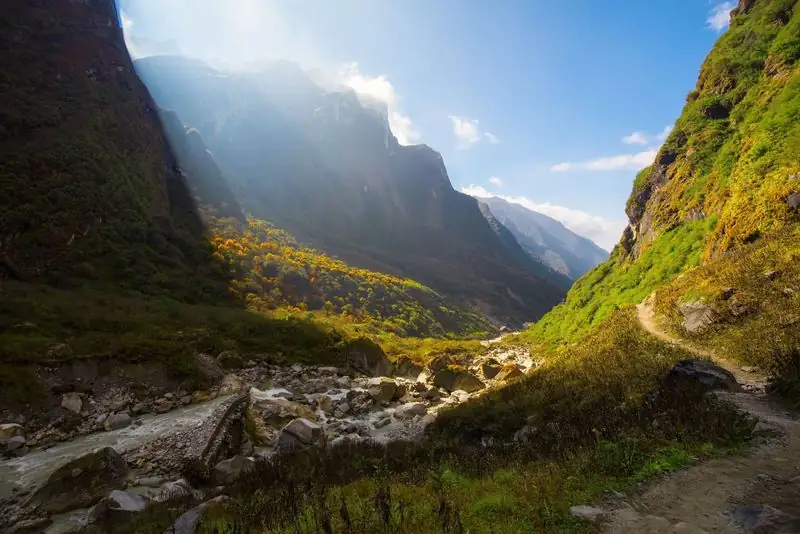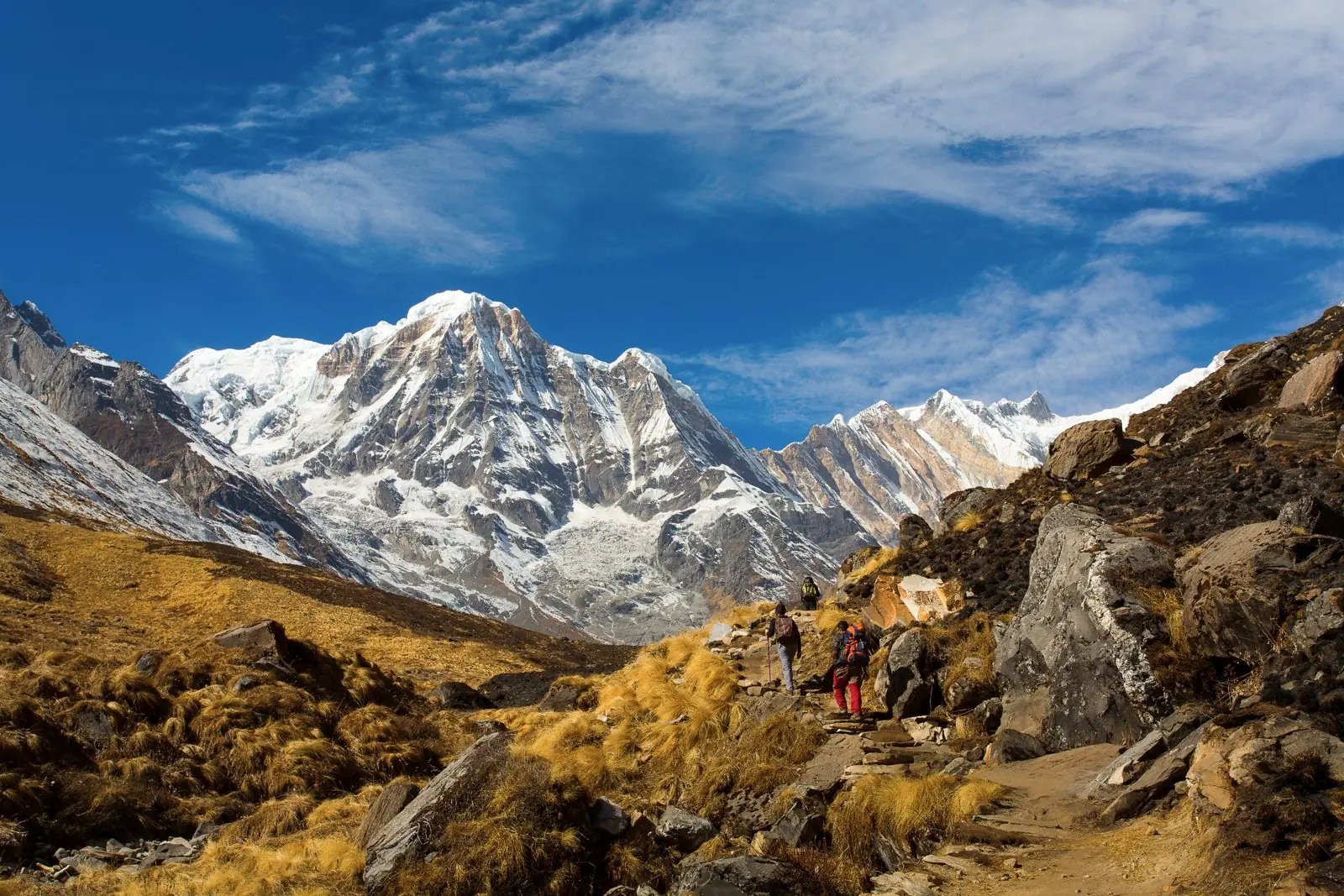
Annapurna trekkers share two practical worries: where the drinking water will come from and how cold the nights will be. Both have simple answers if you plan ahead.
Water above Chomrong
On the Annapurna Base Camp route, the sale of bottled water has been prohibited above Chomrong to reduce plastic on the mountain. Instead, lodges and villages have safe drinking water stations where you can refill your bottle for a small fee. Rules and fees can change, so ask your guide at the start of the trek, and always carry a bottle that you can refill.
Treating water elsewhere
On other routes, such as the Circuit, bottled water is still sold, although it is expensive and creates waste. Lodges will give you water that you must treat yourself. Purification tablets need time to work, usually at least twenty minutes and sometimes up to thirty, so add them well before you need to drink. A filter or UV pen is a good alternative.
How much to drink
Aim for at least three litres a day, with tea and soup included, and a little more at altitude or on hot days. Keep a full bottle as a reserve at all times.
Temperatures
The sanctuary at Annapurna Base Camp is a little milder than Everest Base Camp, roughly five degrees Celsius warmer, but nights are still below freezing at the top. Thorong La on the Annapurna Circuit is about as cold as Everest Base Camp, with wind adding to the chill. The lower valleys are warm and humid in spring and autumn.
What this means for packing
- A refillable bottle and a treatment method.
- A sleeping bag suited to near-freezing nights above the middle section.
- A warm jacket, hat and gloves for the upper stages and the pass.
- Light clothing for the first days.
Good habits
Treat water even if the source looks clean, avoid buying plastic bottles where you can, and carry your rubbish down.
Why the plastic rule exists
The restrictions on single-use plastic bottles in the Sanctuary were introduced to reduce waste in a fragile mountain environment where rubbish is difficult to remove. By using refillable bottles and treating water, trekkers help keep the area clean. It is a simple habit that makes a real difference, and many lodges now offer refill stations for a small fee.
Choosing a purification method
Boiling is reliable but slow, while filters and chemical tablets are light and convenient. Combine methods if you want extra safety, and carry a small stock of tablets as a back-up. Check that your filter works in cold conditions, because freezing can damage some types. Use an insulated cover or keep the bottle inside your jacket to prevent freezing.
Dressing for changing temperatures
Temperatures vary widely between valleys and high camps, and between day and night. A layering system lets you adapt quickly. Carry a warm hat and gloves even in the lower sections, because mornings can be chilly. At night, a sleeping bag suited to the season makes a large difference to comfort and sleep quality.
Small habits that help
- Fill your bottle each morning and again at lunch.
- Carry a small towel or cloth to wipe condensation.
- Use a thermos or a hot-water bottle for warmth in the evening.
What our guests say
Excerpts from guest reviews of Himalayan Wonders, our parent company, on Tripadvisor.
“They took utmost care of our group of 5 friends from Kathmandu airport upto the completion of the trek”