Most Annapurna Base Camp itineraries run for seven to eleven days from Pokhara. The route climbs from subtropical farmland into forest and then into the high Annapurna Sanctuary, a bowl of peaks reached after a long day on a narrow valley trail. Altitudes below are approximate.
- Pokhara to Nayapul and Tikhedhunga or Ulleri: a drive to the trailhead and the first stretch of steep stone stairs.
- Ulleri to Ghorepani (about 2,860 m): forest and rhododendron, with a long climb.
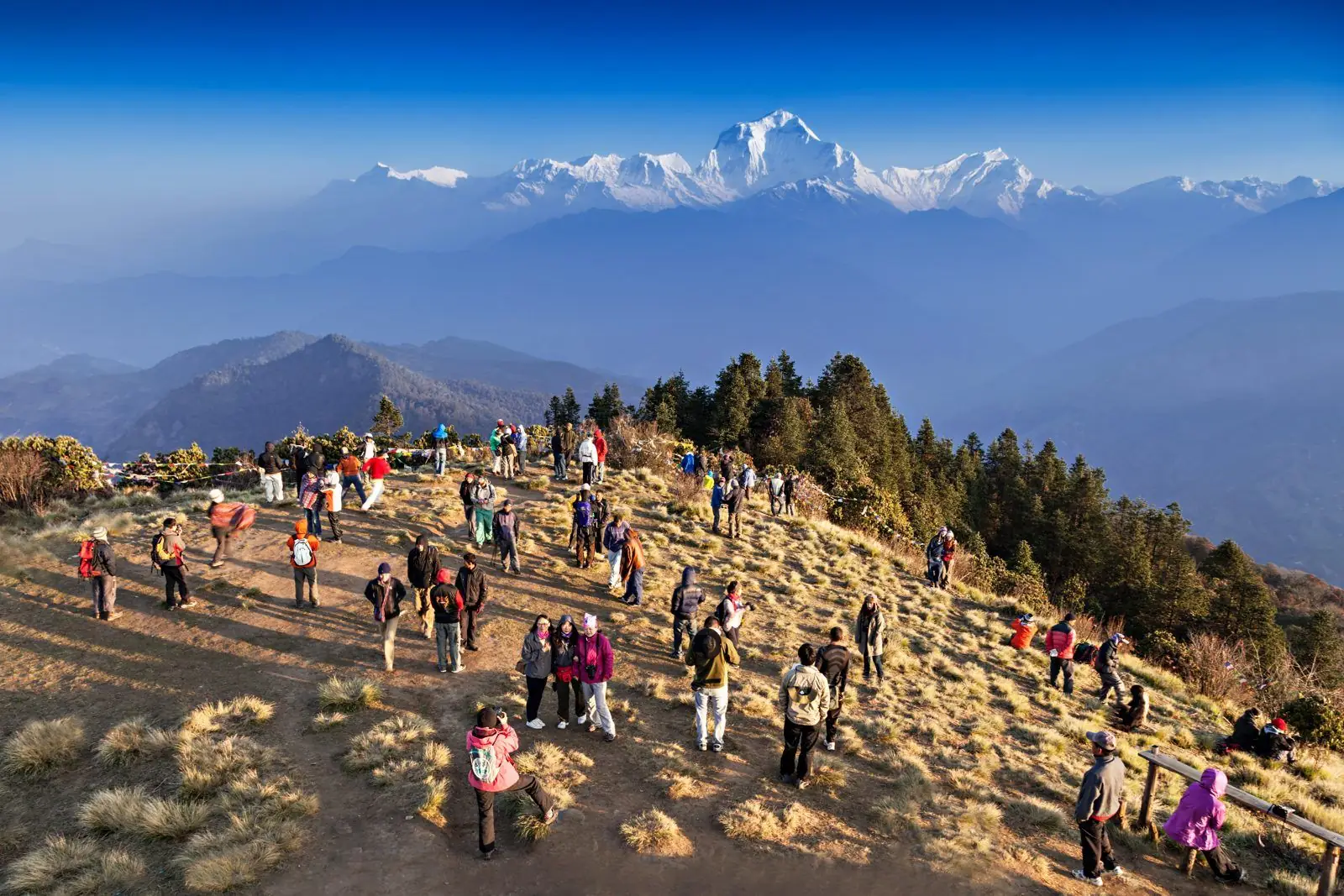
- Poon Hill (about 3,210 m) at sunrise, then on to Tadapani: an early viewpoint walk, then a day crossing ridges.
- Tadapani to Chhomrong (about 2,170 m): down to a river and up to a village with a wide view of the peaks.
- Chhomrong to Himalaya or Dovan (about 2,900 m): bamboo forest and many steps.
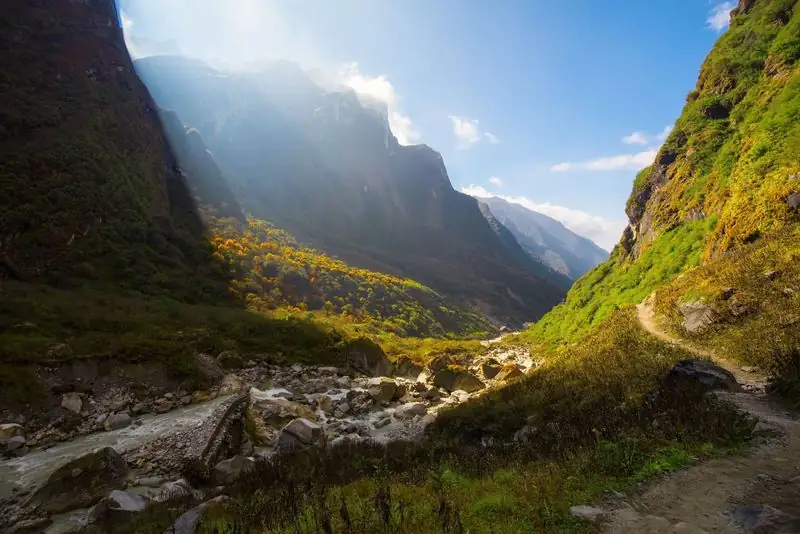
- Dovan to Deurali (about 3,230 m), then Machapuchare Base Camp (about 3,700 m): the valley narrows, and the peaks close in.
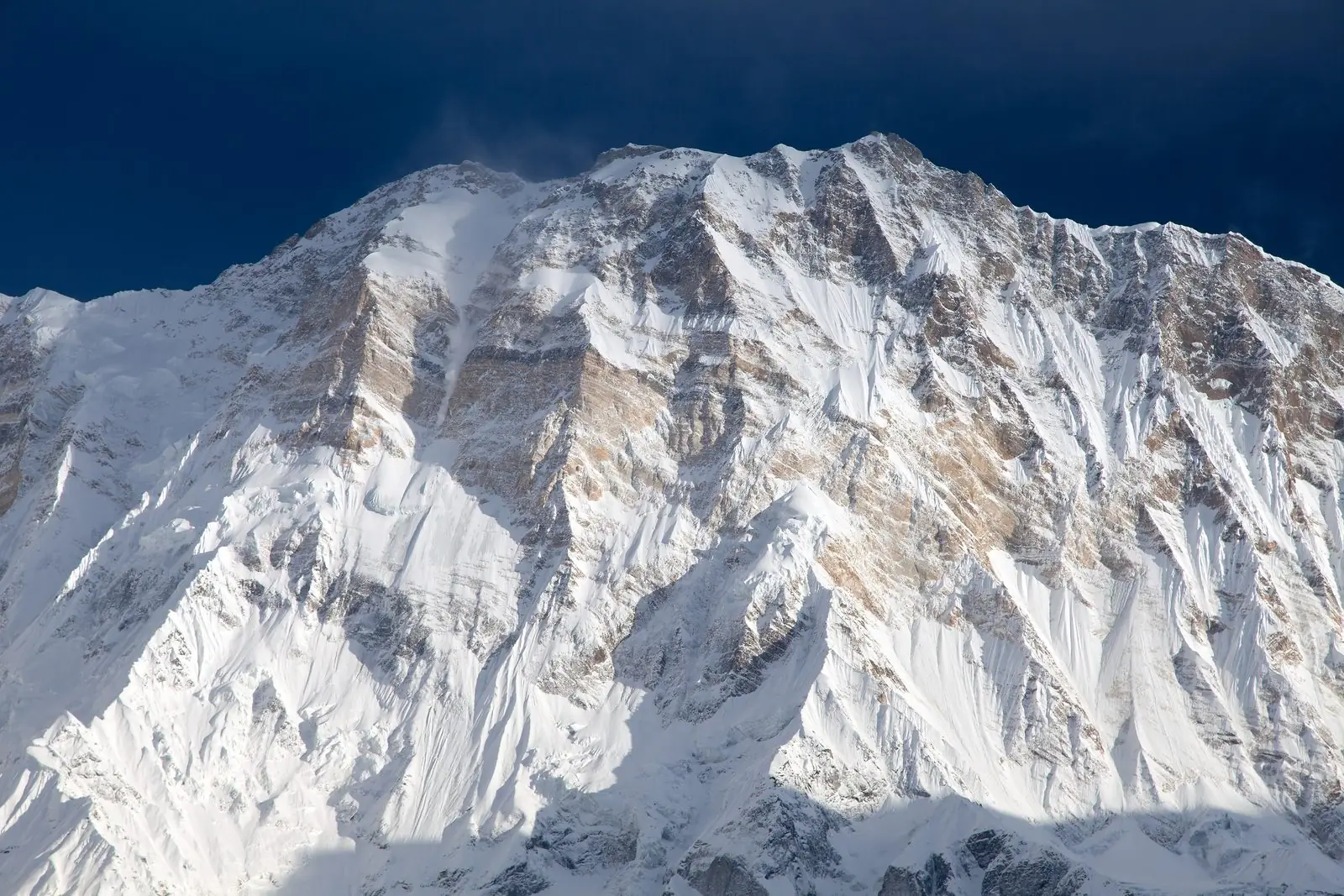
- Annapurna Base Camp (about 4,130 m): a short climb from the lower camp, with views of Annapurna I and its neighbours.
- Return days: down to Bamboo, then Jhinu Danda, then Nayapul and Pokhara.
Shorter and longer versions
A shorter version skips Poon Hill and goes straight up from the Chhomrong side, which can be done in around seven days, but it reduces your acclimatisation time. A longer version adds Poon Hill, a rest day at Chhomrong and a soak at the Jhinu Danda hot springs on the way down. Adding days improves comfort more than it adds distance.
What affects the plan
- Landslides or trail damage after heavy rain can change the route.
- Snow near the sanctuary in winter and early spring may slow progress.
- Your own fitness and the speed of your group set the daily pace.
Altitude sense
The route reaches a lower altitude than the Everest or Manaslu treks, but the climb from Machapuchare Base Camp to the sanctuary still takes you above 4,000 m. Take it slowly, drink fluids and report headaches early.
A typical eight-day outline
A common plan starts with a drive from Pokhara to a trailhead such as Nayapul or Kimche, followed by a first night in a village like Ghandruk or Chhomrong. The next days climb through forests of rhododendron and bamboo to Dovan and Deurali, then through the narrow gorge into the Annapurna Sanctuary. You reach Machapuchare Base Camp and then Annapurna Base Camp, usually spending a night at the sanctuary to see the sunrise. The return is faster and follows the same valley, with a night or two on the way and a drive back to Pokhara.
Where the days feel hardest
The stretch of stone steps leading up from the river to Chhomrong and the long climb beyond it test legs and patience, and the section between Himalaya and Deurali can be cold and windy. In wet or snowy conditions, avalanches are a risk on the upper section, so guides monitor the weather and may delay or alter the plan. Do not push on against your guide's advice if conditions are uncertain.
Making the plan your own
If you have more time, you can add Poon Hill at the start, extending the trek by a few days and giving a great sunrise view. A route via Ghorepani and Tadapani to Chhomrong is a popular combination. If you have less time, a shorter version is possible, but a rapid ascent increases the risk of altitude symptoms. Share your timeframe with your operator and ask for an honest recommendation instead of squeezing too much into a short break.
What to book in advance
- Transport from Pokhara to the trailhead, and the return transfer.
- Lodges in the Sanctuary, which can fill quickly in peak months.
- An extra buffer day before your onward flight or train.
What our guests say
Excerpts from guest reviews of Himalayan Wonders, our parent company, on Tripadvisor.
“They took utmost care of our group of 5 friends from Kathmandu airport upto the completion of the trek”