




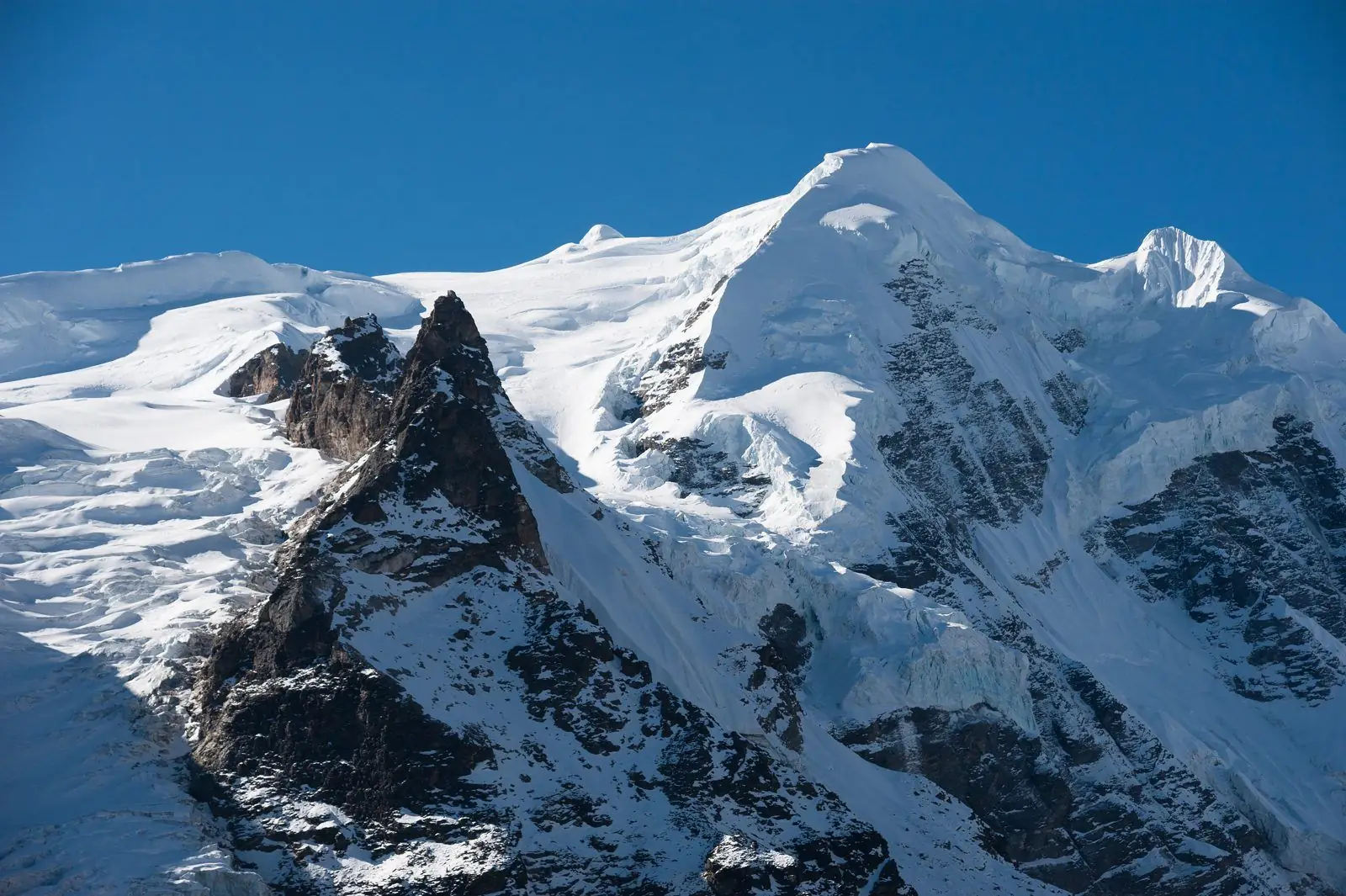
The best times for Cholatse are October to November and April to May. Autumn has the clearest air and the steadiest weather. Spring is warmer and the days are longer. The monsoon brings cloud and snow, and winter is very cold at the Cho La.
Autumn
October and November are dry and clear. The Cho La is cold in the mornings but usually passable. This is the busiest period, so book lodges early.
Spring
April and May are warmer. Snow on the Cho La can remain in April, so check conditions. Afternoon cloud is common, so plan viewpoints for the morning.
Winter
From December to February it is very cold. The pass may be icy and some lodges close. Only well-prepared trekkers should go.
Monsoon
From June to September the mountain is mostly hidden by cloud. Landslides and delayed flights are possible.
Weather and your plan
Leave at least one spare day around the pass. If the weather turns, a rest day costs less than a rushed crossing. See the best time for the Everest region.
Temperatures
At Dzongla in autumn, nights are around minus 5 to minus 10 degrees Celsius. At higher camps, colder. Days in the sun are comfortable. Wind makes the pass feel cold.
Crowds
Autumn is the busiest season, but the Cho La and Gokyo routes are quieter than the main Everest Base Camp trail.
Common questions
Can I cross the Cho La in winter? Only with experience and good conditions. Is spring better than autumn for views? Autumn is clearer, spring is warmer. Is the monsoon season useful for anything? Mostly for quiet trails and green valleys lower down.
Plan it
Read seeing Cholatse and what it is.


