




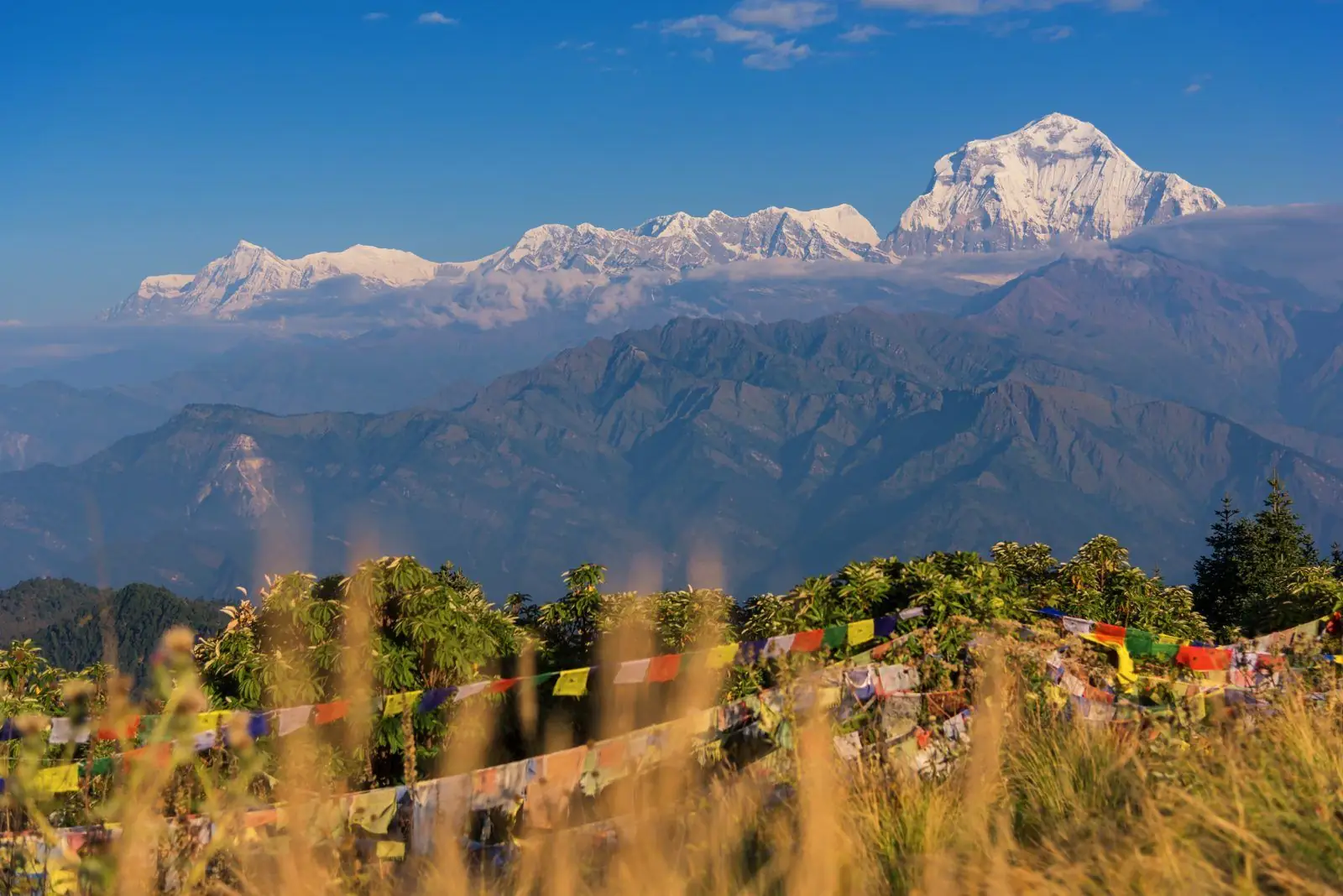
Pack for a cold, high camping trek with snow on the passes. The essentials are a warm layering system, sturdy waterproof boots, a sleeping bag rated well below freezing, strong sun and snow protection, and a headtorch. Poles and gaiters help on French Pass and Dhampus Pass. Bulky items such as a down jacket and sleeping bag can be rented in Kathmandu.
Layers for cold nights and snow
Camps above 3,500 m get freezing nights, and the passes can bring wind and snow even in good seasons. Layering is the answer.
- Two or three quick-drying base layers, plus one thermal set for sleeping
- A fleece and a light insulated jacket
- A thick down jacket for camp and pass mornings
- Waterproof shell jacket and trousers
- Warm hat, liner gloves and thick insulated gloves or mittens
- Neck gaiter and a brimmed sun hat
Pack a spare set of socks and base layers in a sealed bag, so you always have something dry for the tent at night.
Boots, socks and gaiters
Use waterproof trekking boots that are well broken in, with a stiff sole and room for thick socks. Snow and rough moraine are hard on feet, and cold wet boots ruin a day. Bring four pairs of socks, including a warm pair kept for sleeping only. Gaiters stop snow and grit from entering the boots, which matters on both passes. Take camp shoes or insulated slippers, plus blister plasters and tape. Ask us whether microspikes or any pass equipment will be provided for your dates, because snow cover changes through the season.
Sleeping bag, mat and sun protection
Choose a sleeping bag comfortable at well below freezing, and add a liner for extra warmth. Ask us whether a sleeping mat comes with the crew, and bring a spare thin pad if you are a cold sleeper. At this height the sun is intense, and snow reflects it, so pack glacier-style sunglasses with side protection, a spare pair, strong sunscreen and lip balm. A headtorch with spare batteries is essential for early starts, and a water bottle that will not freeze on a night in the tent is wise.
Poles, daypack and small essentials
Trekking poles are strongly useful on steep moraine and long descents, so bring a pair you have tested. A daypack of about 30 litres carries your water, layers and snacks while porters carry your main bag. Add a first aid kit, rehydration salts, personal medicines, hand sanitiser, water purification tablets and a power bank. This is general information, not medical advice, so check your own needs with a doctor. Pack electronics in dry bags and keep batteries warm inside your jacket, because cold drains them quickly. Keep a small stuff sack for rubbish so you can carry out everything you use.
What to rent in Kathmandu and what to carry
Down jackets, sleeping bags, poles and duffels are widely rented in Kathmandu, which saves money for gear you may use once. Check zips, seams and cleanliness, and choose a bag with a warmth rating suited to your season. Buy or bring your own boots, socks, base layers and sunglasses. Indian travellers should carry valid photo ID such as a passport or voter ID, and should check current rules on Indian currency in Nepal. Keep small Nepali notes for the road to the trailhead and for Jomsom at the end. Ask the shop to show you the bag's rating, and air it before use if it smells damp.
Common questions
Do I need crampons or an ice axe?
It depends on the season and snow cover on the passes. Ask us for the current advice for your dates; we will tell you what is provided and what to bring.
How warm should my sleeping bag be?
Choose one comfortable well below freezing, since camps are high and nights are cold. A liner adds warmth. You can rent a suitable bag in Kathmandu if you do not own one.
How heavy can my bag be for the porters?
Porters carry a set weight, and your duffel must stay within it. Pack lean, keep a daypack for daily needs, and ask us for the current limit before you pack.
Can I buy missing items on the trail?
No. There are no shops on the high sections, so finish your shopping in Kathmandu or Pokhara. Check your list the evening before you drive to the start.


