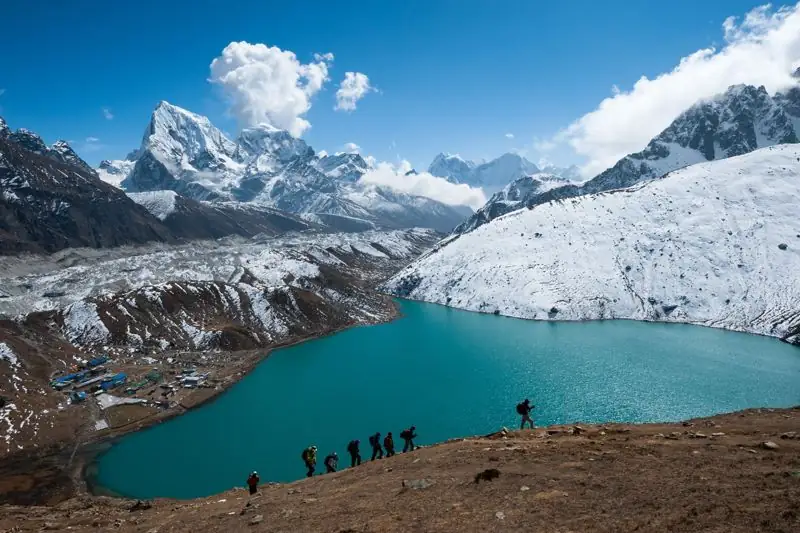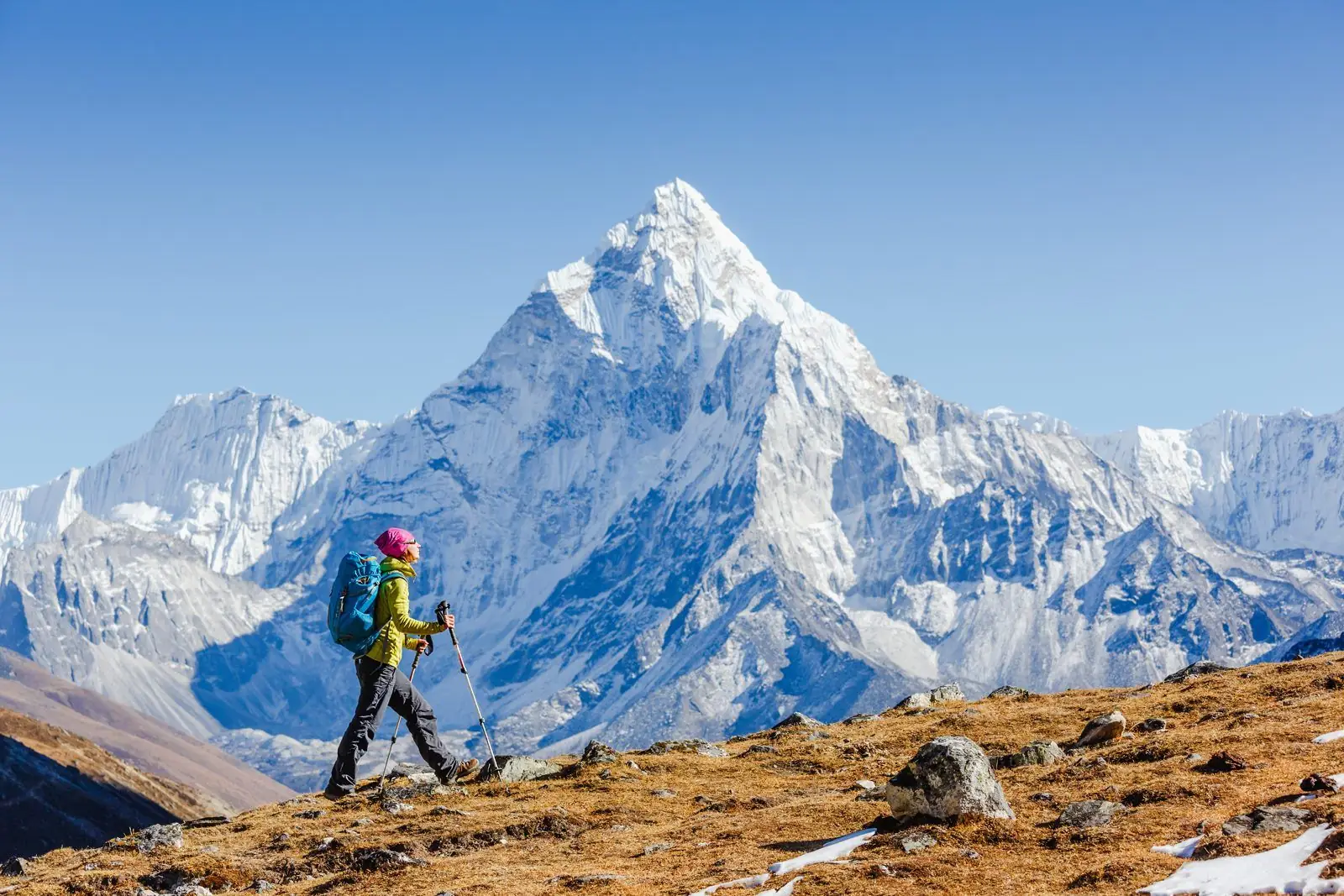
Both treks end at a base camp surrounded by giants, but they are very different journeys. Everest is higher, longer and more remote, with Sherpa culture and big glacial scenery. Annapurna is shorter, lower and greener, with a famous amphitheatre of peaks at the end.
Altitude and effort
Everest Base Camp is at about 5,364 m, with a high viewpoint at Kala Patthar of about 5,545 m. Annapurna Base Camp is at about 4,130 m, which is much lower. That makes the Annapurna trek easier on the body for altitude, although it has long, steep staircases that tire the legs. Everest requires more careful acclimatisation and carries a higher risk of altitude sickness.
Duration
Everest typically takes twelve to fourteen days from Kathmandu, plus flights to and from Lukla. Annapurna Base Camp can often be done in seven to eleven days, depending on the route, and it starts with a drive and a short walk rather than a mountain flight.
Scenery
- Everest: a wide, open valley with glaciers, high moraine, prayer flags, monasteries and views of Everest, Lhotse and Ama Dablam.
- Annapurna: rhododendron forest, terraced farmland, rivers and a sudden arrival into a ring of snow peaks.
Culture
The Everest region is the homeland of the Sherpa people, with Buddhist monasteries and a strong mountaineering heritage. Annapurna villages are home to Gurung and Magar communities, with their own food, festivals and customs.
Crowds and comfort
Both are popular in the main seasons. Annapurna lodges are plentiful and generally a little more comfortable and cheaper because the logistics are simpler. Higher parts of the Everest route have colder, more basic lodging.
Which to pick
Choose Annapurna Base Camp if you have limited time, less experience at altitude or prefer greener scenery. Choose Everest Base Camp if you want the iconic destination, can allow more days and are prepared for cold nights and higher altitude. Neither is wrong, and many people do one and return for the other.
The logistics gap
Getting to the start of each trek is a very different experience. Everest involves a flight to a mountain airstrip that is subject to weather delays, so you need spare days in the plan. Annapurna Base Camp usually begins with a road journey from Pokhara, which is generally more predictable. This difference affects both your budget and your stress levels, and it is one reason why shorter holidays often favour Annapurna.
Cost and time
Because Everest is longer, requires flights and lodges are further from the road, it is usually more expensive than Annapurna Base Camp. The extra days also mean more time away from work. If you are working with a fixed budget, start by deciding how many days you can spare, then see which trek fits. A well-run Annapurna trek is much better than a rushed Everest trek.
Which suits first-time trekkers
Both can be done by beginners with training. Annapurna Base Camp is more forgiving because it is lower, shorter and has an easier return if you need to descend. Everest rewards patience and needs more attention to acclimatisation. If you are uncertain, many people begin with Annapurna and return to Everest later, using the first experience to learn how their body responds to altitude.
A quick decision guide
- Choose Everest if you want the symbolic goal, Sherpa culture and big glaciated scenery, and you can spare 12 to 14 days.
- Choose Annapurna Base Camp if you have about a week to ten days, prefer green forests and terraced villages, and want an easier logistics.
- Choose either, and plan extra rest days, if you are travelling with family or friends of mixed fitness.
What our guests say
Excerpts from guest reviews of Himalayan Wonders, our parent company, on Tripadvisor.
“Garba Rai was the best I could have hoped for.”