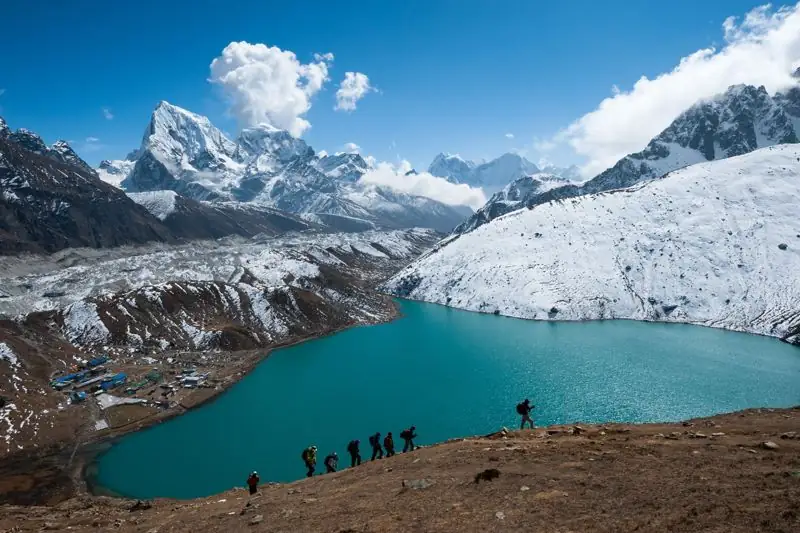
The path to Base Camp is not just a hiking route. It is the supply line for the villages above, used daily by porters, mule trains and yaks. A few habits keep everyone safe and make your own walk smoother.
Let porters go first
Porters carry very heavy loads, often supported by a strap across the forehead, and they cannot stop or step aside easily. Move to the side of the trail and let them pass. They are working to a tight schedule.
Yaks and animal trains
When animals approach, step off the path on the uphill side, not the drop side. A yak that brushes past a trekker standing on the edge can push them off balance. Stay calm, keep still and wait until the whole train has passed. Do not try to get a photo by crowding the animals.
Uphill and downhill
As a general courtesy, people walking downhill give way to those coming up, because climbing is harder and it is difficult to restart on a steep slope.
Poles and bridges
Hold your poles close to your body in crowds so that the tips do not catch other walkers. On suspension bridges, wait for animals and loaded porters to finish crossing, and do not stop in the middle to take photos.
Respect for religious structures
- Pass mani walls, stupas and chortens on the left side so that you walk clockwise around them.
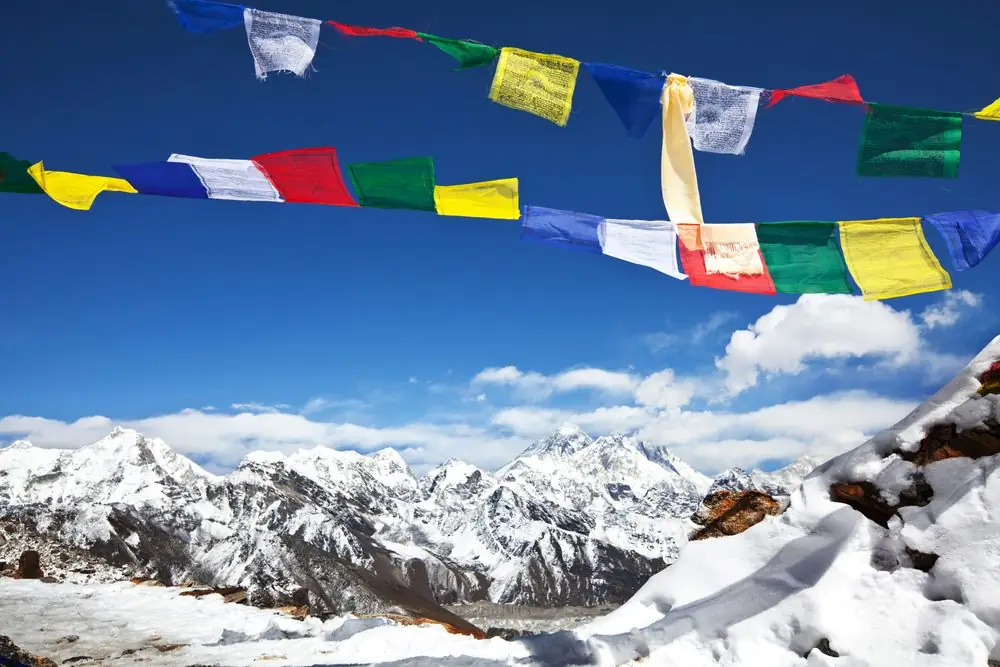
- Do not touch prayer flags or sit on sacred structures.
Keep the trail clean
Carry out your litter, treat water instead of buying bottles, and use toilets at lodges whenever you can. In popular seasons, small acts add up.
Crowded months
October and April are the busiest. Start earlier, be patient at bridges and give yourself time rather than rushing.
Why the rules are simple but important
The trail is narrow in many places, with steep drops on one side and rock on the other, and animals can weigh hundreds of kilograms. A moment of carelessness can cause an accident, so the customs developed by local people are about safety first. By following them, you show respect and reduce risk for yourself and others, and the local community will appreciate your care.
Behaviour at suspension bridges
The route crosses many suspension bridges, some of them long and high. Wait for animals to cross before you step on, and do not try to overtake on the bridge. Walk calmly, hold on if you wish and do not stop in the middle to take photographs. If a yak train is approaching, step to the inside of the trail, away from the drop, and let them pass.
Showing consideration to local people
Ask before taking photographs of people and be careful around sacred places. Greet people with a smile and a namaste, and avoid raising your voice. Support local businesses by buying tea, snacks and souvenirs from small shops where possible. If you give gifts to children, do so through a school or the lodge owner rather than handing out sweets or money, which can encourage begging.
Leaving no trace
- Carry your rubbish to a proper disposal point and avoid single-use plastic.
- Use toilets provided and do not leave tissue along the trail.
- Stay on the path to avoid damaging fragile vegetation.
- Do not remove stones or objects from monuments or shrines.
What our guests say
Excerpts from guest reviews of Himalayan Wonders, our parent company, on Tripadvisor.
“I had an incredible experience with Himalayan Wonders on my Everest Base Camp trek.”