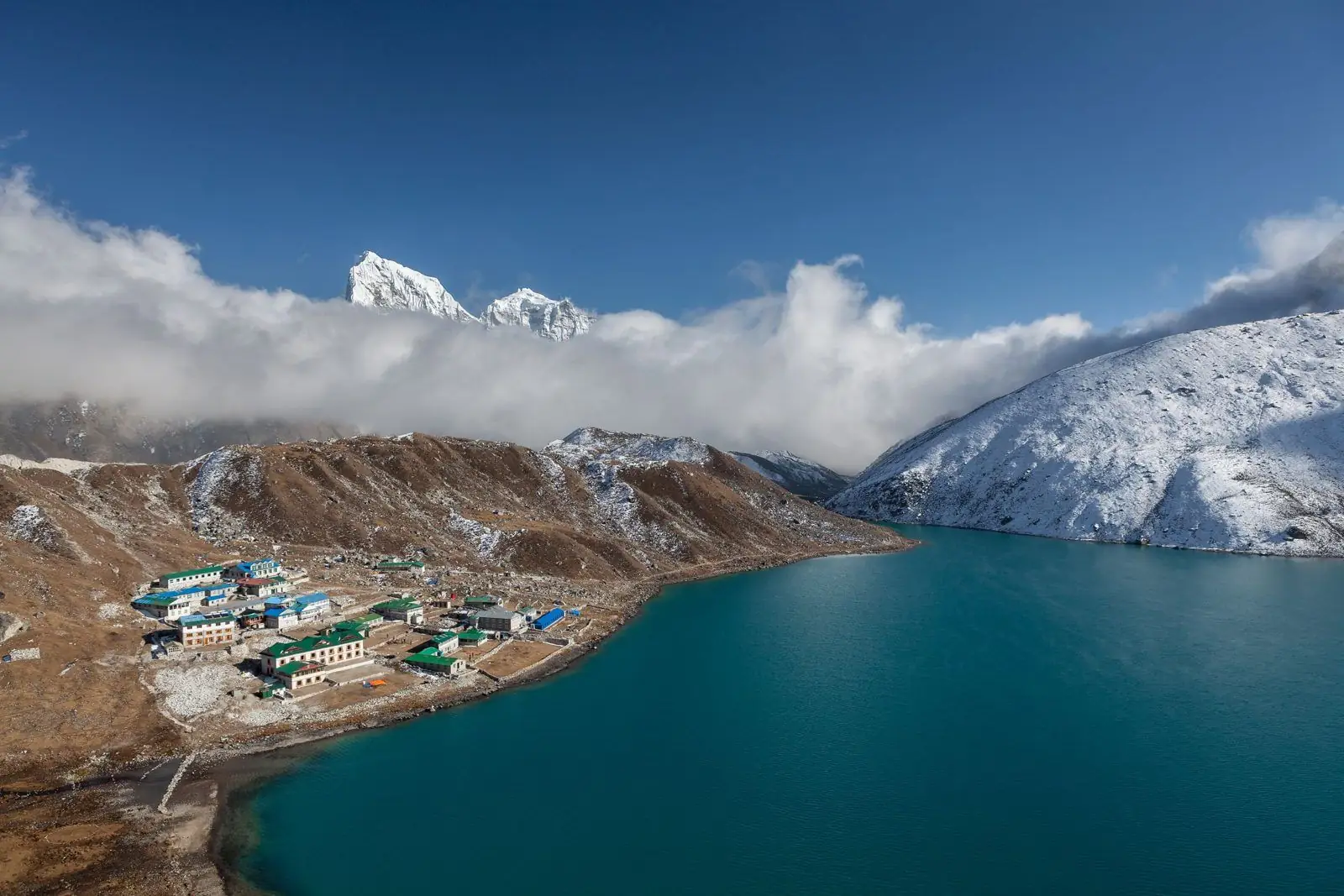
The Gokyo Lakes trek uses the same teahouse system as other Khumbu treks. Lodges are run by local families, offer simple rooms and serve long menus. Facilities become more basic as you climb, and by Gokyo you should expect cold rooms, shared bathrooms and prices that reflect the cost of carrying supplies.
Rooms and heating
Rooms are twin-bedded with thin mattresses, pillows and blankets. Walls are thin and rooms are not heated. The dining room has a central stove, usually burning yak dung or wood, and it is the warmest place in the evening. A warm sleeping bag is essential. Hot water bottles can be bought and are a great comfort at night.
Food
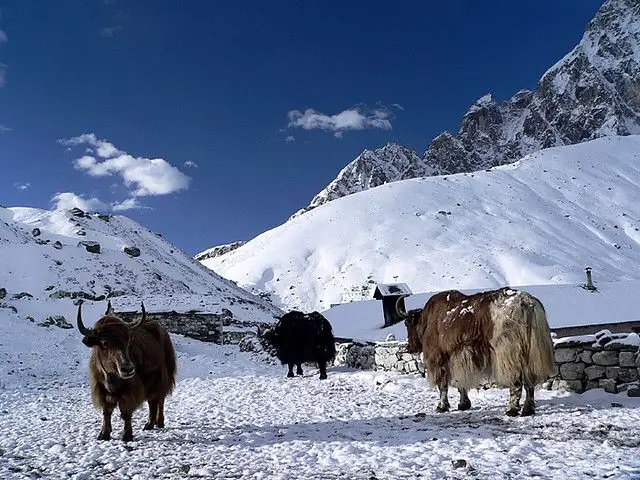
Menus are similar to other Nepali trails: dal bhat, noodles, fried rice, momos, pasta, pizza, pancakes, porridge and eggs. Meat is carried up for days and is best avoided at high altitude. Garlic soup is a local favourite believed to help at altitude. Water is boiled or filtered and sold by the litre.
Showers, charging and wifi
- Hot showers are available in some lodges, mostly lower down, and cost extra.
- Charging costs per device and may be limited to the dining room.
- Wifi is sold by card and is slow, especially at Gokyo.
- Mobile data may work in places but is unreliable.
Toilets
Lower villages have attached or shared toilets with flush systems. At higher lodges, expect squat toilets with a bucket flush and cold temperatures. Carry toilet paper, hand sanitiser and a small torch. Water in pipes may freeze in winter.
Etiquette
Eat where you stay, keep noise low in the evenings, switch off lights when not needed and tip staff at the end of your stay. Be patient when service is slow, because lodges are running on limited fuel and staff.
Peak season tips
Gokyo lodges can fill in October, so guides book ahead. Independent trekkers should arrive early or have a back-up plan, such as staying at Machhermo and walking up in the morning.
Staying warm in the lodge
The dining room stove is only lit in the evening and is the social heart of the lodge. Arrive early to secure a seat near the stove. Many trekkers wear their down jacket in the dining room. Fill a bottle with hot water to take to bed, and use your sleeping bag liner for extra warmth.
Water and sanitation
Water pipes freeze in winter, so toilets may use buckets. Hand sanitiser and wet wipes are valuable. Do not drink untreated water, and avoid raw foods. If you have a sensitive stomach, choose cooked foods and hot drinks.
Local products
Many lodges sell Sherpa tea, local snacks and handicrafts. Buying small items supports the family business. Try the potatoes, which are a local staple, and the fresh yak cheese in the shoulder seasons.