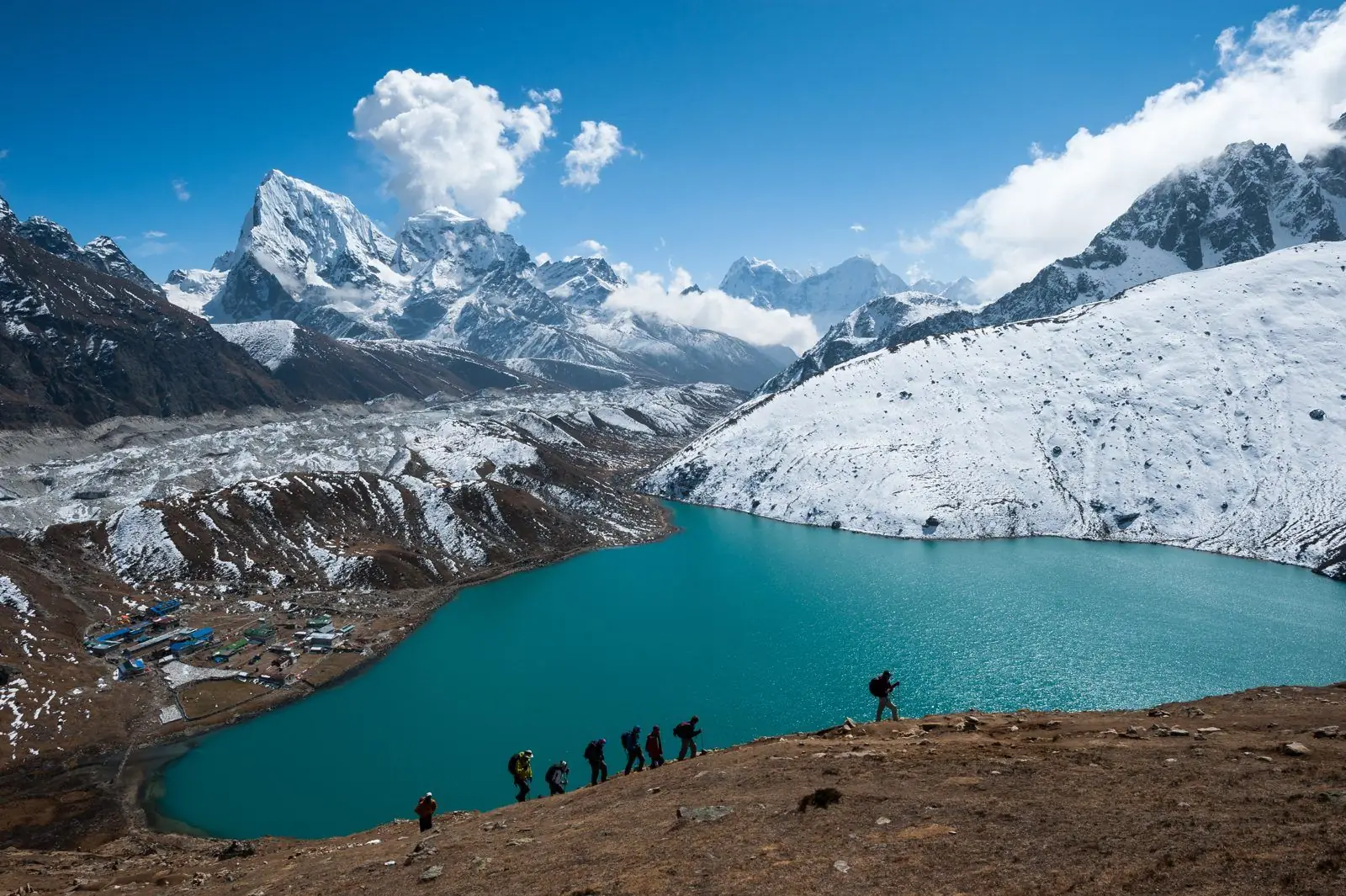
The Gokyo Lakes are a system of high-altitude glacial lakes in the Khumbu region, fed by the meltwater of the Ngozumpa glacier. Locals and guidebooks usually talk about six main lakes, though dozens of smaller ones exist in the wider area. They lie at about 4,700 to 5,000 m and change in colour from deep blue to bright turquoise depending on light and season.
The main lakes
Starting from the south you meet Longponga and Taujun, then the third lake, Gokyo Cho or Dudh Pokhari, beside Gokyo village, followed by Thonak, Ngozumpa and Gyazumpa farther north. The third lake is the largest and most photographed, and the village lies on its shore. The first lakes are small and easy to reach on the way in. The fourth and fifth lie farther north and need a half-day walk.
Viewpoints worth the effort
- The shore of the third lake, for reflections of peaks on calm mornings.
- The ridge above Gokyo, for a bird's-eye view of the lakes and glacier.
- The fourth and fifth lakes, for quiet and sweeping views toward Cho Oyu.
- Gokyo Ri, for the iconic panorama described elsewhere in this guide.
Why the colour changes
The lakes appear turquoise because fine glacial silt reflects blue and green light. Colour depends on sun angle, cloud and season. In autumn the water tends to be clear and deep blue, while in spring it can look milky green. In winter edges freeze and snow covers the shore.
Sacred significance
Hindus and Buddhists regard the lakes as holy. Pilgrims visit during the Janai Purnima festival in August, when many local people come to bathe and make offerings. Visitors should be respectful, avoid swimming and keep noise to a minimum.
Staying near the lakes
Gokyo village has a number of lodges with views of the water. Rooms are simple and cold at night, but the dining halls are warm in the evening. The village is small, and the quiet at dawn is one of the most memorable parts of the trip.
Respecting the environment
The lakes are part of a fragile alpine system. Carry out rubbish, do not wash in the water and stay on marked trails around the shore. Moraine edges can be unstable, so keep to the path rather than walking near cliff edges.
A short walk list
- Easy: a stroll around the third lake, about one hour.
- Moderate: walk to the fourth lake and back, about three hours.
- Longer: continue to the fifth lake, about five hours return, with rocky paths.
Wildlife and birds
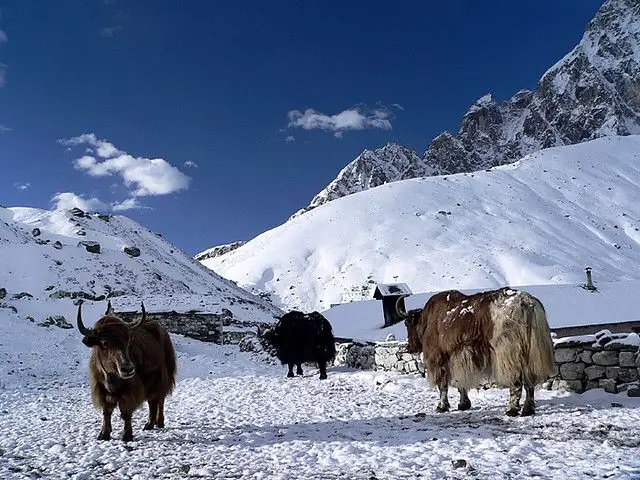
You may spot Himalayan monal pheasants, snow pigeons, ravens and, with luck, Himalayan tahr on the slopes. Yaks graze on the lower pastures in warmer months. Keep a respectful distance and do not feed animals.
Why these lakes matter
The Gokyo Lakes system is a Ramsar-listed wetland and an important water source for villages downstream. Climate change is affecting the glacier and lakes, which is another reason to treat the area with care and leave no trace.