




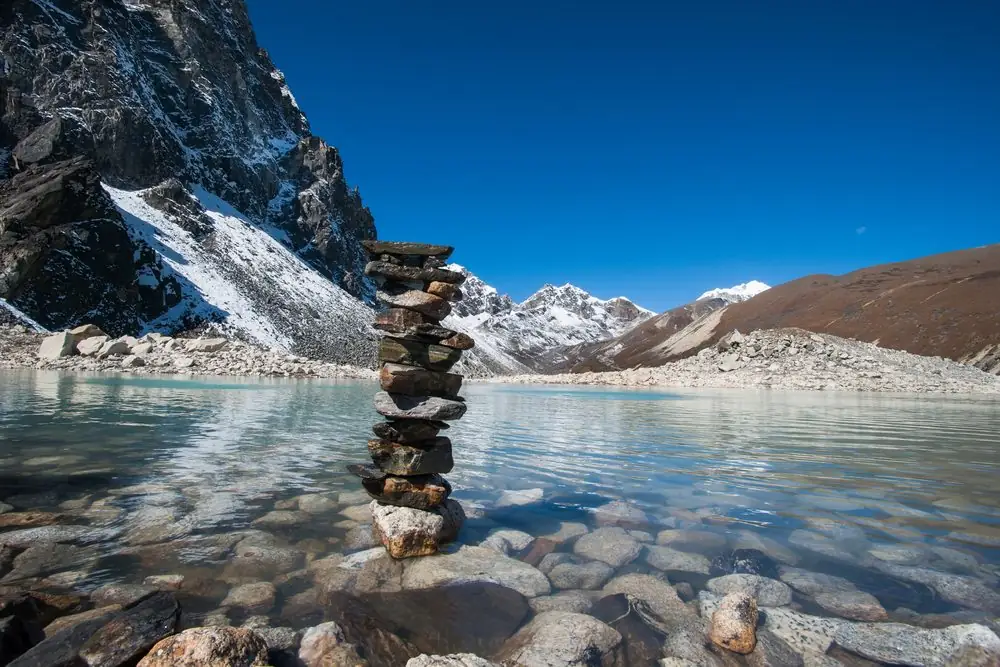
A common plan takes five to eight days: drive to Dhunche or Syabrubesi, climb to Sing Gompa and Gosaikunda, then return the same way or continue over Laurebina La to Helambu. Heights and timings below are approximate.
How the trek is usually built
Almost every Gosaikunda plan is a variation on one pattern: a road day from Kathmandu to Dhunche, three days of climbing to the lake, and a return that either retraces the route or crosses the Laurebina La toward Helambu. The shorter version takes six or seven days in total. The crossing version takes eight to ten. The numbers below are typical, and your guide may adjust them for weather, group pace and where lodges are open.
Day 1: Kathmandu to Dhunche
The drive heads north-west and takes six to eight hours, depending on road works and traffic on the Trishuli road. Dhunche sits at roughly 1,960 m and is the headquarters of the park. You will register your permits here, have a late lunch and spend the night. Some groups continue to Syabrubesi instead, for a different start.
Day 2: Dhunche to Sing Gompa (about 3,330 m)
This is the first real climb: about five to six hours through oak, rhododendron and pine, with a steep final section above Deurali. Sing Gompa, also called Chandanbari, is a small monastery with a government cheese factory next door and a couple of lodges. Sleeping here at over 3,300 m is the key step of the whole trek, because it is high for a second night. Walk slowly, drink often, and stop earlier if you are tired.
Day 3: Sing Gompa to Gosaikunda (about 4,380 m)
A shorter day by distance, around four to five hours, but a stiff one by altitude. The trail leaves the tree line, passes Laurebina and then contours along a rocky ridge before dropping to the lake. Wind and cold can arrive suddenly in the afternoon, so keep a windproof shell and warm hat within reach. Arrive early enough to rest before dark.
Day 4: a day at the lakes
Treat this as a real acclimatisation day rather than a lazy one. Walk to the other lakes, climb a little for the view, then come back to sleep at the same height. If you have headaches or poor sleep, this is also the day to decide on the route ahead, not the morning of the pass.
Day 5 and after: return or continue
The simple option is to descend by the same route, reaching Dhunche in one long day or two easier ones. The longer option crosses the Laurebina La, a pass of about 4,610 m, to Ghopte (roughly 3,430 m), followed by Tharepati, Kutumsang and a descent through Helambu to Sundarijal or Melamchi. The pass day is long and exposed, with snow and ice common outside the warm months.
Spare time and fitness
Keep a buffer day if your flight home is tight. Roads in the hills can be blocked by landslides, and weather can shut a pass. For the difficulty and altitude detail, see the difficulty guide; for registration and travel, see permits and access.


