




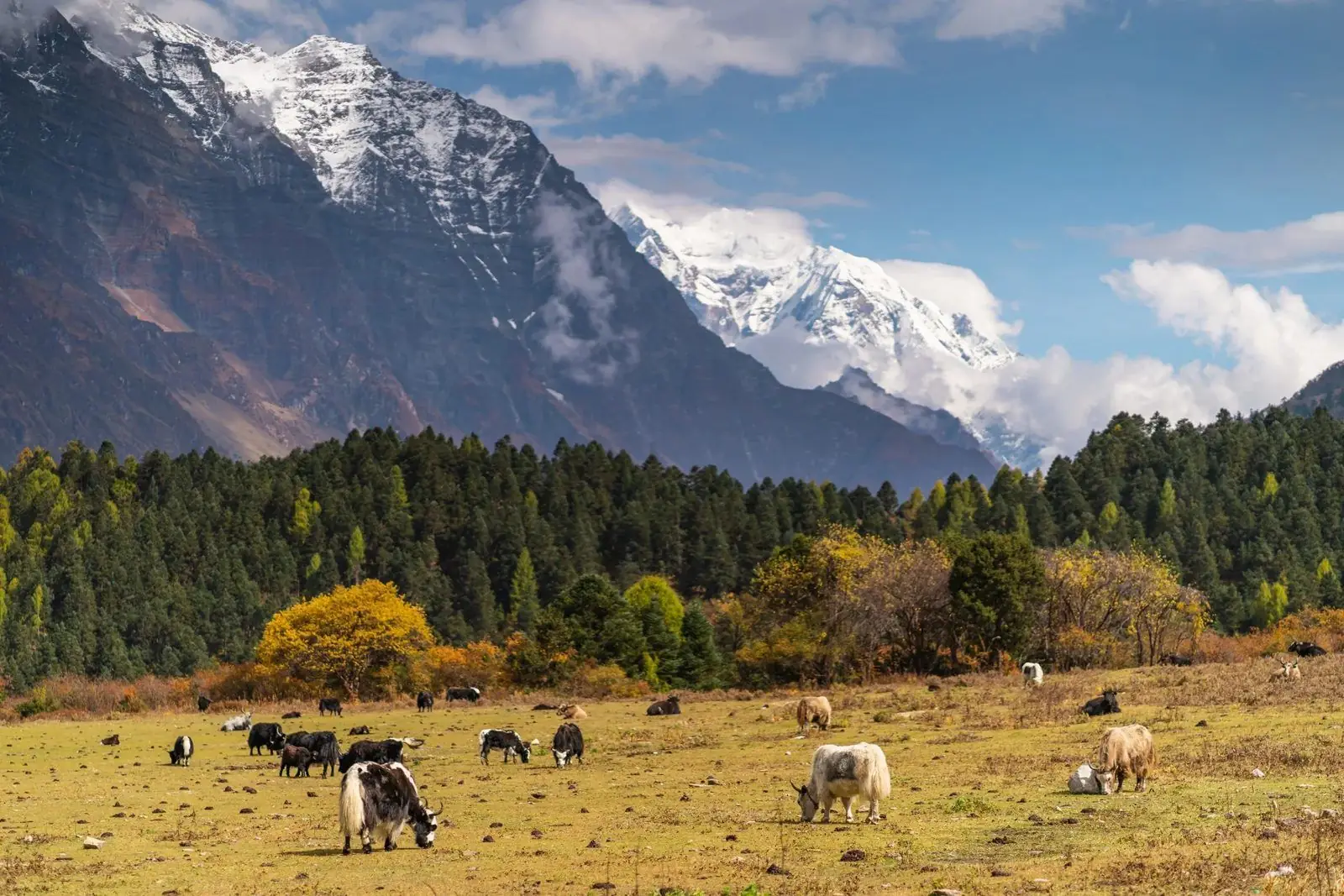
The best months for Helambu are October to November and March to May. Because the altitude is moderate, winter trekking is possible with snow at Tharepati, and the monsoon brings leeches.
A trek for most of the year
Helambu is low and close to Kathmandu, so unlike higher treks it is possible in nearly every month. The best seasons are still spring and autumn, when the mountain views open.
Spring: March to May
Rhododendron flowers bloom in March and April, painting the forest red and pink. Days are warm and walking is pleasant. Haze reduces long views in May.
Autumn: October and November
Clear skies, stable weather and sharp views of the Langtang range. Tharepati is cold at night, so bring a warm sleeping bag.
Winter: December to February
Quiet and cold, with a chance of snow at Tharepati. The air is clear, and the trek is a good choice for people who dislike crowds.
Monsoon: June to September
Warm, wet and green. Leeches are common in the forest and views are rare. It is not recommended unless you accept the conditions.
A note on air quality
After the monsoon, the sky above Kathmandu is clear, and views from Chisapani can be sharp. In late spring, haze from fires and dust builds in the valley, which can soften the views. For the clearest air, choose October or November.
Clothing by season
In autumn and spring, bring light layers and a warm jacket for the night at Tharepati. In winter, pack a heavy down jacket and gloves. In the monsoon, a good rain jacket and leech socks are essential.
How to choose
For flowers choose April. For views choose October. For quiet choose January. See permits and access for the practical side.
Common questions
- Can I trek Helambu in January? Yes, with warm clothes. Snow is possible at Tharepati.
- When do rhododendrons bloom? Mostly March and April, depending on altitude.
- Is it good in the monsoon? No, leeches and cloud make it unpleasant.
Why spring and autumn win
Both seasons have clear skies and pleasant temperatures. Monsoon brings leeches, and winter is cold at the high points.


