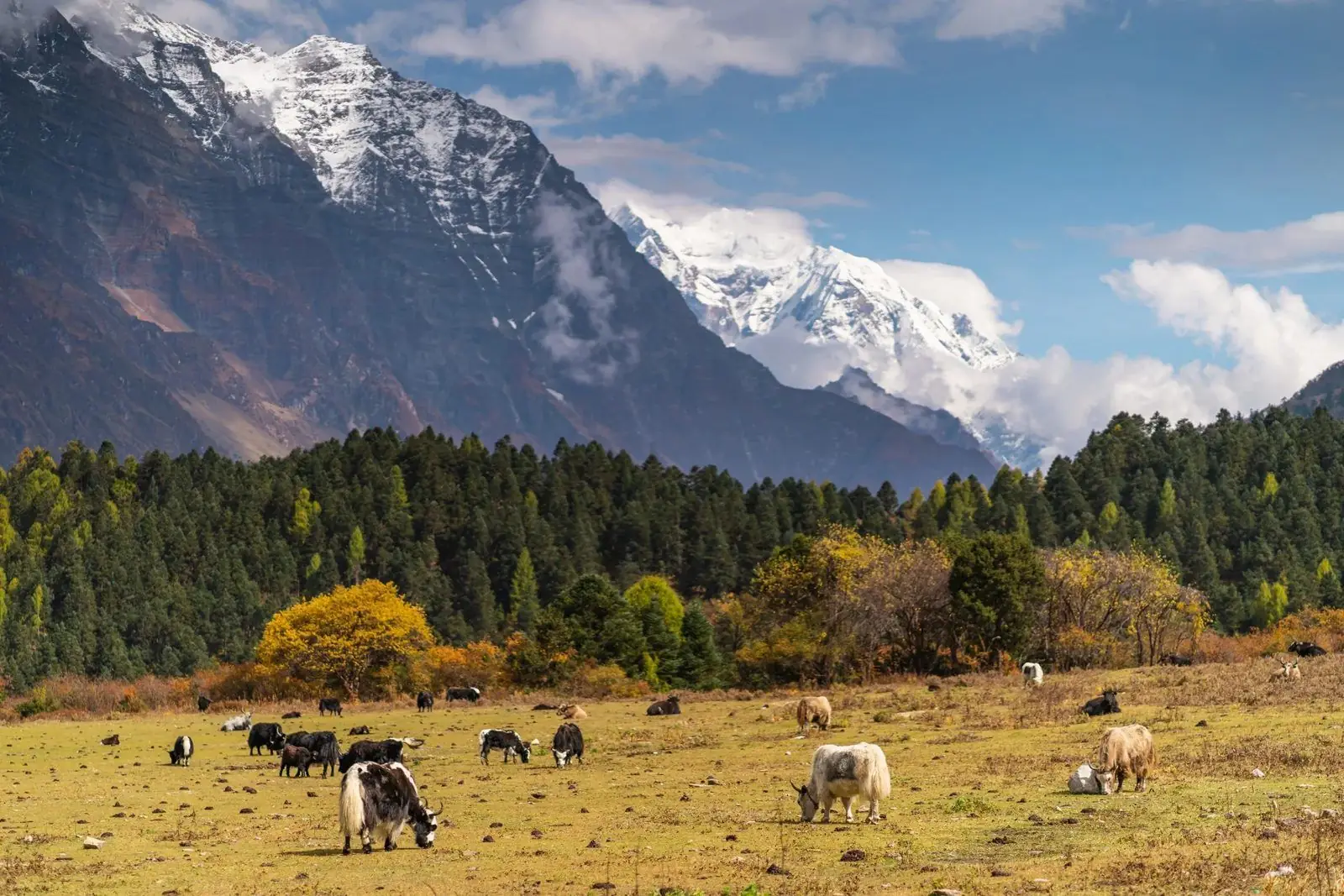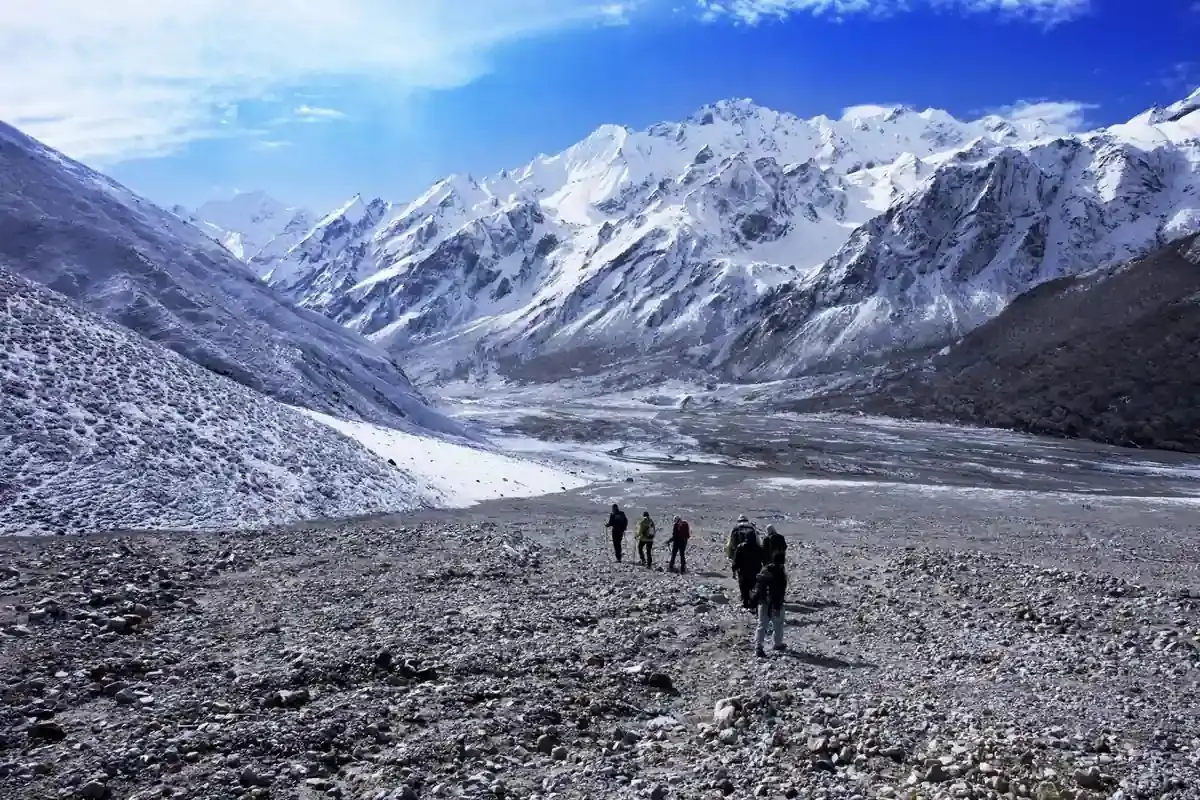
Kyanjin Gompa sits in a high bowl surrounded by peaks, and most trekkers add a rest or side-trip day here. The two best-known viewpoints are Kyanjin Ri and Tserko Ri.
Kyanjin Ri
This is the shorter and more popular option. The path climbs steeply from the village to a ridge with a close, wide view of the glaciers and peaks. It can be done as a half-day trip, usually in the morning, when the sky is clearest. The altitude is high, so it is best attempted after a night at Kyanjin Gompa.
Tserko Ri
Tserko Ri is higher and takes a full day. The route is long, steep and demanding, and the final stretch can have snow. The reward is a wider panorama including more distant peaks. It is better suited to those who feel well and have time to acclimatise.
Choosing
- Short on time or energy: Kyanjin Ri.
- Strong, well-acclimatised, seeking the big view: Tserko Ri.
- Not feeling well: Rest in the village or take the cheese factory and monastery walk.
Timing and safety
Start early to avoid cloud and wind. Carry water, warm layers and a headlamp if leaving before dawn. Turn back if conditions change or if you develop symptoms of altitude illness.
Do both?
Some trekkers do Kyanjin Ri one day and Tserko Ri the next, but this needs an extra night and good health. We suggest deciding based on how you feel.
Making the most of the morning
Start early for either viewpoint to catch clear skies, since clouds often form in the late morning. Take a headlamp, warm clothes, water and a snack. Walk at a steady pace, because the altitude makes even short climbs tiring. At the top, wait for the sun to light the peaks and take time to enjoy the silence.
Why many people prefer one over the other
Kyanjin Ri is closer and gentler, and gives a good view of the surrounding peaks and the village below. Tserko Ri is higher and longer, with a broader panorama, and it suits those with good acclimatisation and strong legs. Weather, health and daylight influence the choice, so discuss it with your guide on the evening before.
After the climb
Return to the lodge for breakfast and rest. Use the afternoon for a gentle walk, a visit to the monastery or a taste of local yak cheese. Do not overdo it, because you still have to walk down the valley the next day.
Safety reminders
- Turn back if you feel unwell, if the weather worsens or if the trail is icy.
- Carry extra layers, since the summit is windy and cold.
- Tell someone at the lodge where you are going.
Comparing effort and reward
Kyanjin Ri at about 4,773 m is a steady climb of about two to three hours with the whole valley below. Tserko Ri at about 4,984 m is higher and takes four to six hours, with views of Langtang Lirung and the high peaks near Tibet. Tserko Ri is better for experienced and well-acclimatised trekkers.
What to carry for either climb
- Warm jacket, gloves and hat, even if the morning looks mild.
- Two litres of water and snacks.
- Sun cream and sunglasses.
- Poles for the descent.