




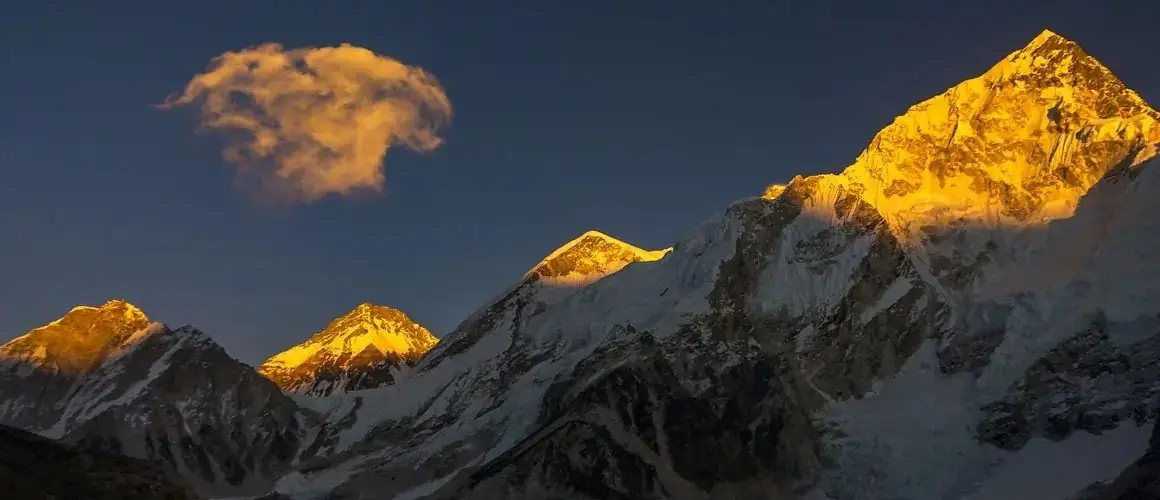
Lhotse is a very hard climb. It involves extreme altitude, the steep Lhotse Face, long days and the risks of weather, rockfall and avalanche, and it needs previous high-altitude experience.
One of the most serious climbs in the world
Lhotse is an 8,000 m peak, and climbers face the same hazards as on Everest, with the added exposure of the Lhotse Face and the narrow couloir below the summit. The difficulty comes from altitude, steepness, cold and the length of the effort rather than from extreme technical grades.
The altitude challenge
Above 8,000 m the body cannot acclimatise fully. Most climbers use supplemental oxygen. Careful acclimatisation rotations, rest and nutrition are essential, and many attempts end because of altitude symptoms.
Technical sections
The Lhotse Face is a long, steep slope of hard ice at angles of around 40 to 50 degrees. The final couloir is narrow and steep. Climbers move on fixed ropes with jumars and crampons, and rockfall from above is a danger.
Hazards
Avalanches, rockfall, cold, wind, whiteout conditions and altitude illness are the main risks. Crowding in good weather windows can cause delays at bottlenecks.
Who should attempt it
Only experienced high-altitude mountaineers with solid training, strong guides and robust insurance. Climbers need to be comfortable making hard decisions, including turning back.
A realistic summit day
Summit day from Camp 4 on the South Col starts late in the evening. Climbers leave the col, join the Everest route for a short distance, then branch into the narrow Reiss couloir. The couloir is steep, loose and shared by few climbers, and the final section to the summit is a mix of snow and rock. The round trip from Camp 4 takes 12 to 16 hours, and most of it is spent above 8,000 m in the so-called death zone.
How climbers prepare
Strong candidates build up over several seasons, often with an 8,000 m peak such as Cho Oyu or Manaslu, then attempt Lhotse or Everest. Training includes long days with a heavy pack, hypoxic training, and practice of fixed rope techniques. Medical checks, a clear cardiac history and good sleep matter as much as raw fitness.
Common questions
- Can I climb with Everest permits? No, Lhotse needs its own permit.
- How long is the expedition? Six to eight weeks.
- Is oxygen required? Most climbers use supplemental oxygen.
Planning
See the expedition guide.


