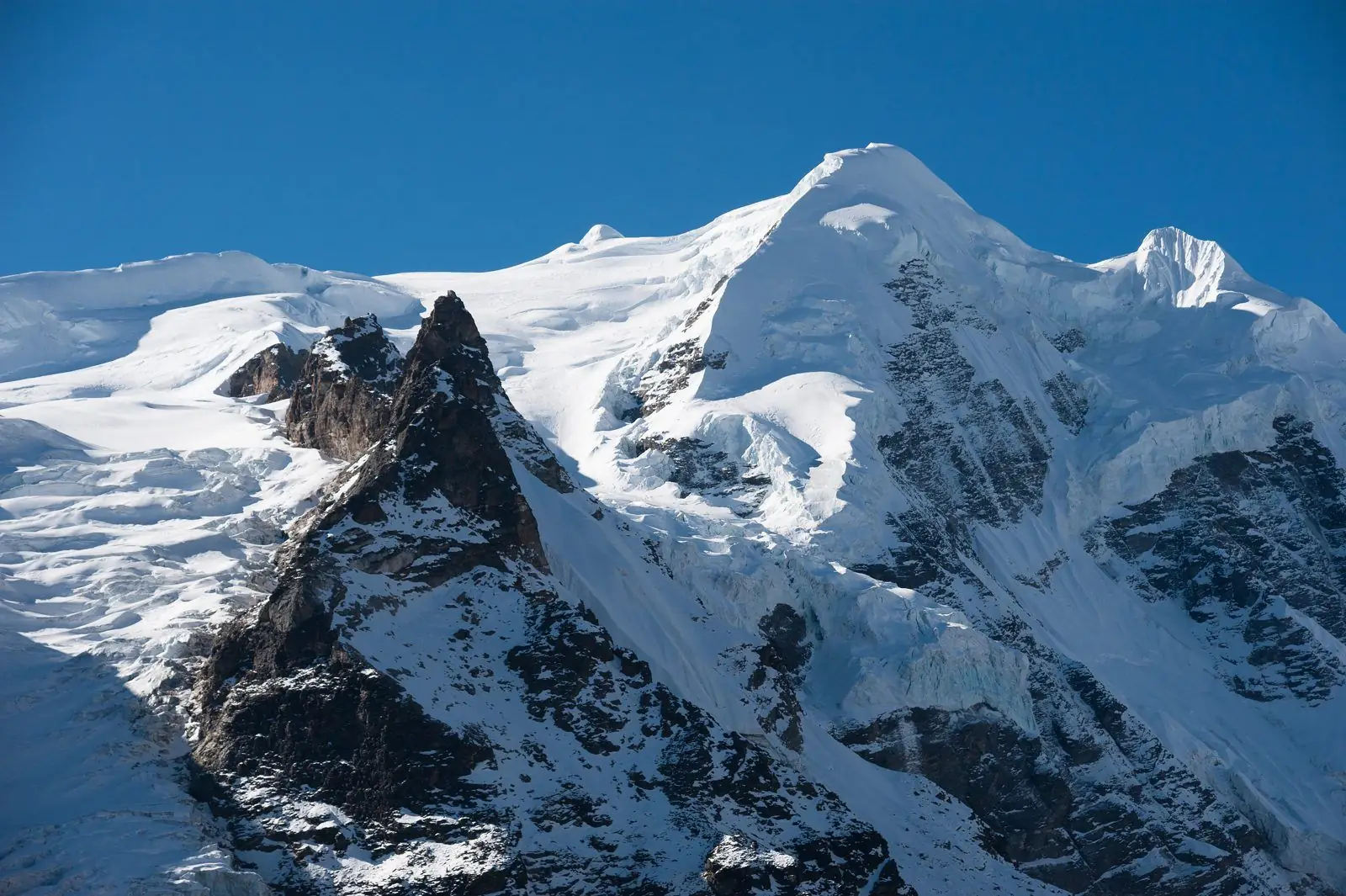
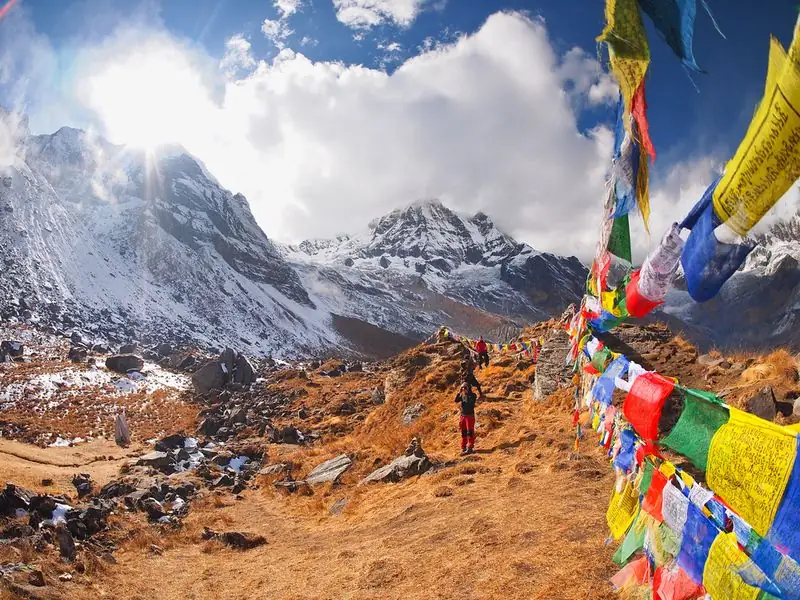
The Lower Dolpo trek starts low, around Dunai at about 2,150 m, and gains height steadily to Ringmo at about 3,330 m and Phoksundo Lake. Beyond that, the route to the Tarap valley crosses passes above 5,000 m, with remote camps. A rest day at Phoksundo and spare days are important. This is general information, not medical advice.
How the route gains height
After the flights, you walk from Juphal to Dunai, which sits at about 2,150 m, and follow the river toward Phoksundo. Camps rise steadily, and the first week is a fair build up.
Ringmo, at about 3,330 m, is the base for Phoksundo Lake. Beyond it the route climbs toward the high pass into the Tarap valley, with passes above 5,000 m, depending on the loop. Long climbs and sudden height gains come late, so the first days are for pacing. Heights are approximate and vary by source and route.
Where the highest nights are
The highest nights are usually in remote camps near the passes, rather than in villages. These camps depend on where the crew can find water and shelter, so exact heights vary with the route and the day.
Ask us how many nights we expect above 4,000 m for your plan. Where possible, it is wise to climb high during the day and sleep lower. The valleys after the pass, such as the Tarap valley, give a chance to recover with lower nights, which helps if you are tired from the pass crossing.
Why the rest day at Phoksundo matters
A rest day near Phoksundo Lake, at the Ringmo area, is built into good plans for a reason. It lets your body adapt before the high section and gives you time for a short walk to see the lake and monastery without gaining sleeping height.
Spare days matter as well. Flights to Juphal can be delayed, and passes can be affected by weather. We suggest at least two. If you want extra margin, we can add a spare day. Drink plenty of water, eat even when appetite is low, and avoid alcohol on high nights.
Symptoms to take seriously
Mild symptoms include headache, poor sleep, low appetite and unusual tiredness. Rest, drink fluids and do not climb higher until you feel better.
Tell your guide immediately if you have a headache that is getting worse, repeated vomiting, unsteady walking, confusion, a wet cough or breathlessness at rest. These signs can become serious quickly. Descent is the most reliable treatment. This is general information, not medical advice, so speak to your doctor before you travel, especially if you have a heart or lung condition. Never ignore a symptom because the schedule is tight.
Descent and getting help
Lower Dolpo is remote. Signal is weak, camps are far from roads and flights depend on weather, so help takes time. Your guide carries a first aid kit and a plan, and a satellite device is the best way to call for help.
If someone is unwell, the first move is to go down, with help if needed. Helicopter rescue may be possible, but it is not guaranteed and cloud can delay it. Make sure your insurance covers remote evacuation, tell your insurer the route and highest point, and agree a turn back plan with your guide before the pass days.
Common questions
How high are the passes on Lower Dolpo?
Passes on the route to the Tarap valley go above 5,000 m, depending on the loop. Exact heights vary by source and route, so ask your guide for current local figures.
Is a rest day at Phoksundo necessary?
It is strongly recommended. A rest day near Ringmo, at about 3,330 m, helps your body adapt before the high section, and you can still enjoy the lake and monastery. Our plans include rest time.
What should I do if I feel unwell on the trail?
Stop climbing and tell your guide. If symptoms are getting worse, descend. This is general information, not medical advice. Do not walk alone while unwell, and follow your guide's decision.