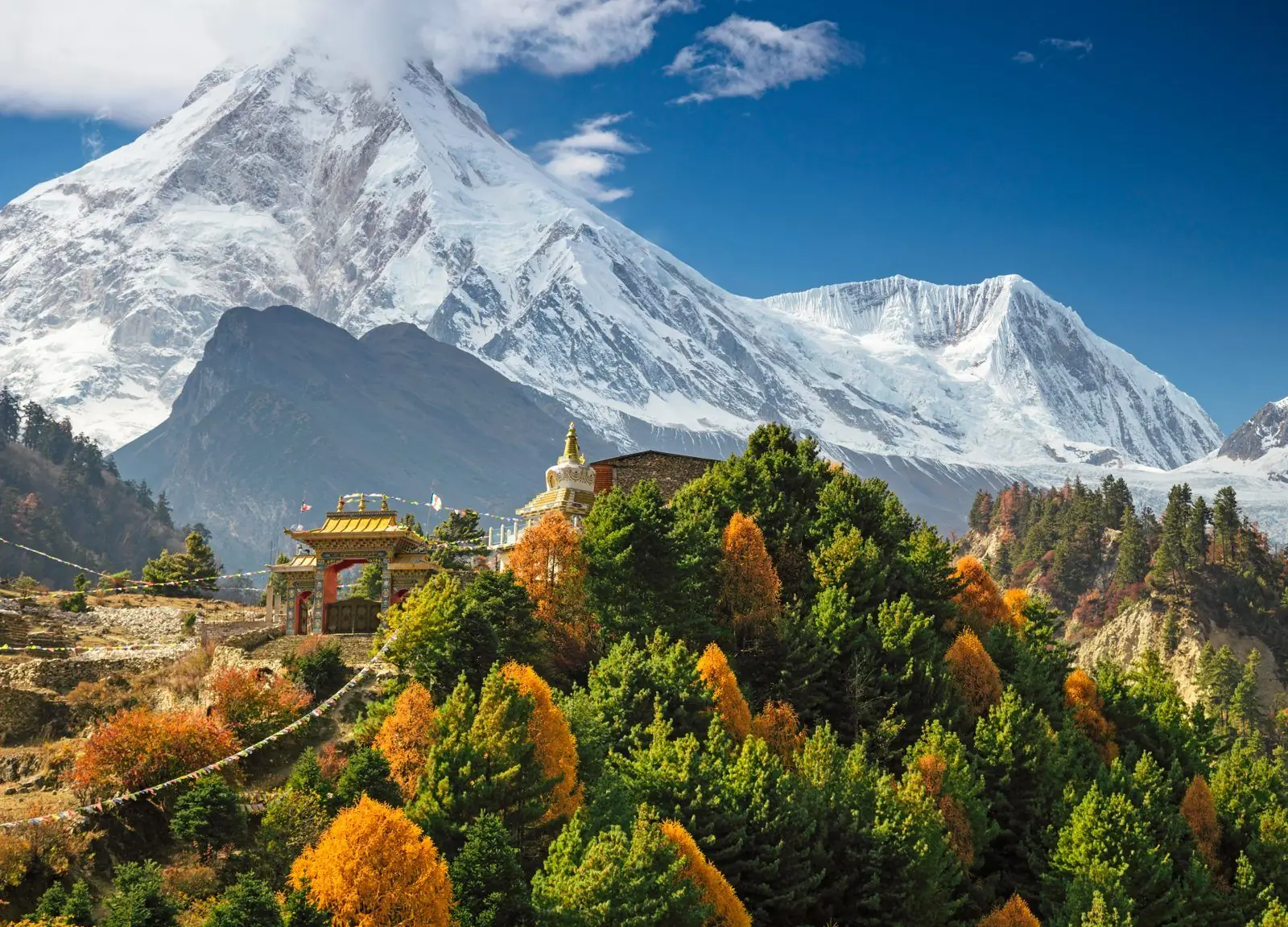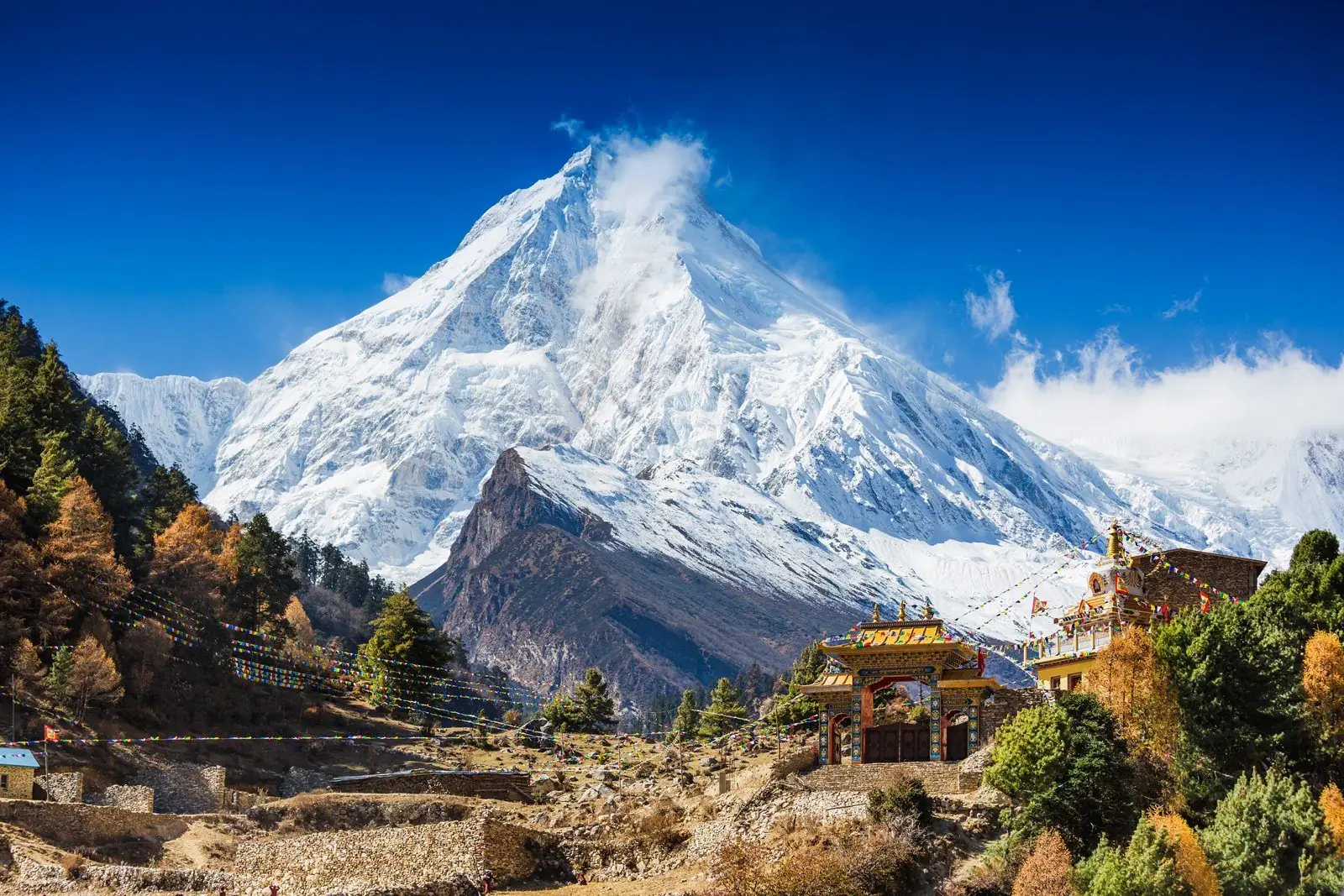
The Manaslu Circuit loops around the eighth highest mountain in the world. Most plans take two weeks or a little more, including drive days at both ends.
A typical outline
- Drive from Kathmandu to the trailhead area, usually Soti Khola or Machha Khola.
- Lower valley days: Follow the Budhi Gandaki river through Jagat and Deng, with suspension bridges and forested gorges.
- Middle valley: Reach Namrung, Lho and Samagaon, where the culture becomes Tibetan Buddhist.
- Acclimatisation day at Samagaon, with a visit to a nearby monastery or lake.
- Samdo and Dharamsala: Climb to the last settlement and the high camp below the pass.
- Pass day: Cross Larkya La and descend to Bimthang.
- Descent: Walk down to Tilije and Dharapani, then drive onward to Besisahar and Kathmandu or Pokhara.
Adding days
Extra nights allow side trips, such as the Pungyen Gompa or Birendra Tal near Samagaon, and add margin for weather on the pass. A Tsum Valley extension adds about a week.
Shortening
Vehicles can shorten parts of the lower valley as roads have extended in recent years. Check the current condition of tracks before deciding, and note that fewer days on the trail means less time for acclimatisation.
Spare day
Build in a day for weather on the pass. Snow or wind can delay the crossing, and it is safer to wait than to push on.
We can tune this outline to your dates and fitness.
How the days build
The first days follow the Budhi Gandak river through steep forests, with suspension bridges, waterfalls and small villages. As you ascend, the valley opens into higher pastures and Tibetan-style villages with stone houses and monasteries. The days near Samagaon feel quite different, with views of Manaslu close by. Then the final push to the pass involves a night at a basic camp, an early start and a long descent to Bimthang.
Why rest matters
A rest day at Samagaon lets you adjust and explore the local monastery and nearby lake or base camp walks. This is not an optional luxury but a safety measure that increases the chance of crossing the pass comfortably. Some people add another day at Sama or Samdo to improve acclimatisation, especially if they felt unwell on earlier days.
After the pass
The descent to Bimthang is long, and the trail continues through forests and villages to the road at Dharapani or Besisahar, depending on the route. The return drive to Kathmandu can take a long day, so consider an overnight stay in Besisahar or Pokhara if you want a gentler finish.
Itinerary questions
- Where are the rest days and how many nights are above 3,500 m?
- What is the contingency if the pass is closed?
- Where does the trek end and how is transport arranged?
A sample day-by-day outline
A common 14 to 16 day plan runs: drive to Soti Khola, walk to Machha Khola, Jagat, Deng, Namrung, Samagaon (with a rest day), Samdo, Dharamsala, cross Larkya La to Bimthang, then Dharapani and drive out. The route climbs from about 700 m to over 5,100 m and descends to about 1,900 m.
Acclimatisation in practice
Rest days at Samagaon and a short hike toward Pungyen Gompa or Birendra Tal help your body adapt. Do not skip them to save a day. The descent after the pass is long and steep, so allow time and energy for it.