




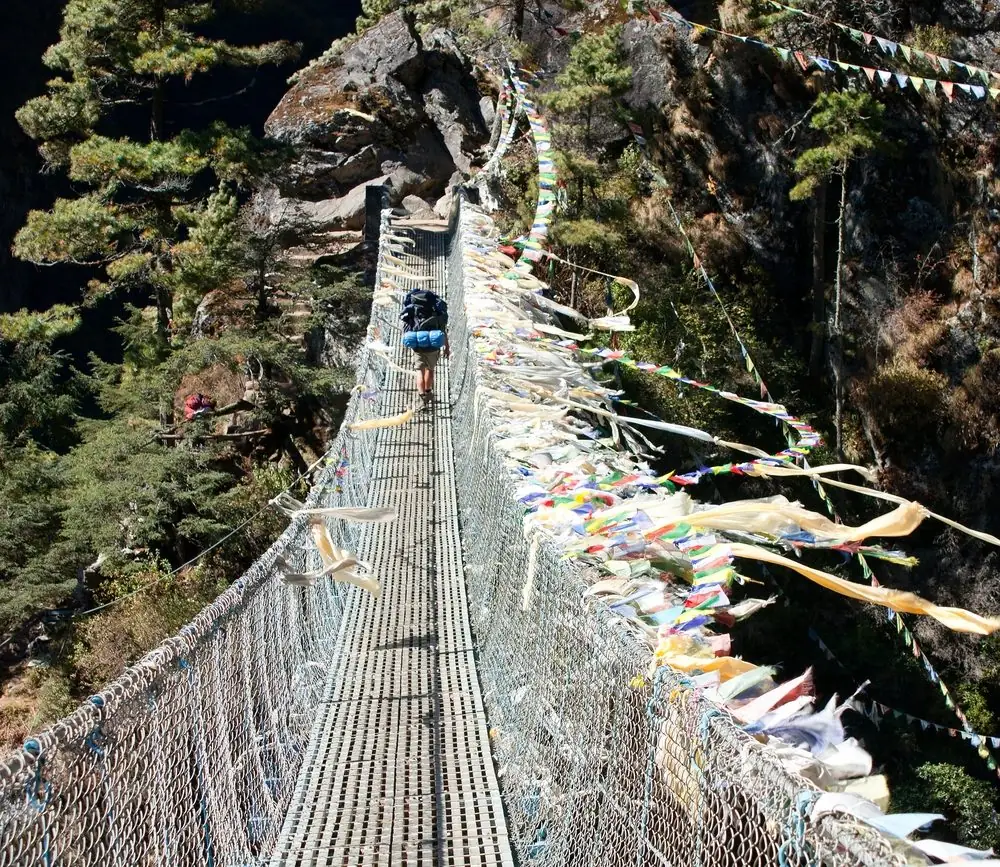
Do not drink untreated tap or stream water on a Nepal trek. The simplest reliable method is chlorine dioxide tablets or drops, which deal with bacteria, viruses and the common parasites; a filter bottle or a UV pen is faster, and boiled water from lodges is safe. Most trekkers carry two methods.
Why you need to treat water
Water in the mountains looks clean, and it often comes from a spring or a glacier stream. But villages, yaks and mule trains share the same valleys, and tap water in lodges is usually piped straight from a stream. The usual causes of illness are bacteria, viruses and parasites such as giardia. A stomach bug at 4,000 m is more than a nuisance, because dehydration makes altitude sickness more likely and can end a trek.
How much water you need
At altitude you breathe faster and the air is dry, so you lose more water than you notice. Three to four litres a day is the usual advice, including tea and soup. That means treating at least two to three litres yourself every day, which is why the method has to be easy enough that you will really use it.
Purification tablets and drops
- Chlorine dioxide tablets or drops: the best all-round chemical. They work against bacteria, viruses and giardia in about 30 minutes, and against cryptosporidium, a tougher parasite, in up to four hours. They leave little taste and are light and cheap.
- Chlorine tablets: widely sold in Kathmandu and Pokhara and effective against bacteria and viruses in about 30 minutes. They are less reliable against cryptosporidium, and they leave a swimming-pool taste.
- Iodine: an older method that works in about 30 minutes. It leaves a strong taste, is not advised for long use, in pregnancy or for people with thyroid problems, and it is no longer sold in some countries.
Always read the packet: one tablet usually treats one litre. Very cold water needs longer, so double the waiting time when the water is near freezing, and let cloudy water settle or strain it first.
Filters
Squeeze filters, pump filters and filter bottles remove bacteria and parasites straight away, with no wait and no taste. Most do not remove viruses, which are too small, unless the filter is sold as a "purifier". On busy trekking routes viruses are a real possibility, so many people filter first and then add a tablet. Do not let a filter freeze: ice can crack the fibres inside without any visible sign. Keep it in your sleeping bag at night above about 3,500 m.
UV pens
A UV purifier treats a litre in about 60 to 90 seconds and works against bacteria, viruses and parasites. It needs clear water, since silt blocks the light, and it runs on batteries that drain faster in the cold, so carry spares or a power bank and keep the device warm. It only suits wide-mouthed bottles.
Boiling and lodge water
Boiling is the most certain method. Bringing water to a rolling boil is enough, and because water boils at a lower temperature at altitude, give it about three minutes above 2,000 m. Every lodge sells boiled water by the cup, flask or litre, and the price rises with altitude because fuel is carried up. Filling a metal bottle with boiled water at night gives you a hot-water bottle for the sleeping bag and drinking water by morning.
In the Annapurna region and some other areas, safe drinking water stations sell treated water cheaply and cut plastic waste.
What about bottled water?
Bottled water is sold on most routes, but the price climbs steeply with height, and the empty bottles are a real problem: there is no easy way to carry rubbish out of the high valleys. Some areas have banned or restricted single-use plastic bottles. Treating your own water costs less and leaves nothing behind.
Which method is best?
- Simplest and lightest: chlorine dioxide tablets. Fill two bottles, treat one and drink from the other in turn.
- Fastest: a filter bottle or UV pen, with tablets as a back-up.
- Most certain: boiled water from the lodge, morning and evening, with tablets for refills in the day.
Whatever you choose, carry a second method. Filters break, batteries die and tablets run out.
Small habits that matter
- Clean your hands before eating; a small bottle of sanitiser does more than any filter.
- Treat the water you use for brushing teeth.
- Keep the threads and cap of your bottle clean, and let treated water wash over them.
- Add rehydration salts or a flavour sachet if the taste puts you off drinking.
- Avoid ice, salads washed in tap water and unpeeled fruit on the trail.
See the Nepal trek packing list for the rest of the kit.
Common questions
What are the best water purification tablets for hiking?
Chlorine dioxide tablets are the best general choice because they work against bacteria, viruses and parasites and leave little taste. Follow the waiting time on the packet.
Can you drink tap water in Nepal?
No. Treat or boil all tap and stream water, in cities and on trek.
How long do purification tablets take to work?
About 30 minutes for bacteria, viruses and giardia. For cryptosporidium, chlorine dioxide needs up to four hours, and longer in very cold water.
Do I need a filter for the Everest Base Camp trek?
You need some method. Tablets alone are enough for many trekkers; a filter or UV pen adds speed. Boiled water is sold at every lodge.
Heights, dates, fees and rules are approximate and can change, so confirm the current details with us before you book.


