




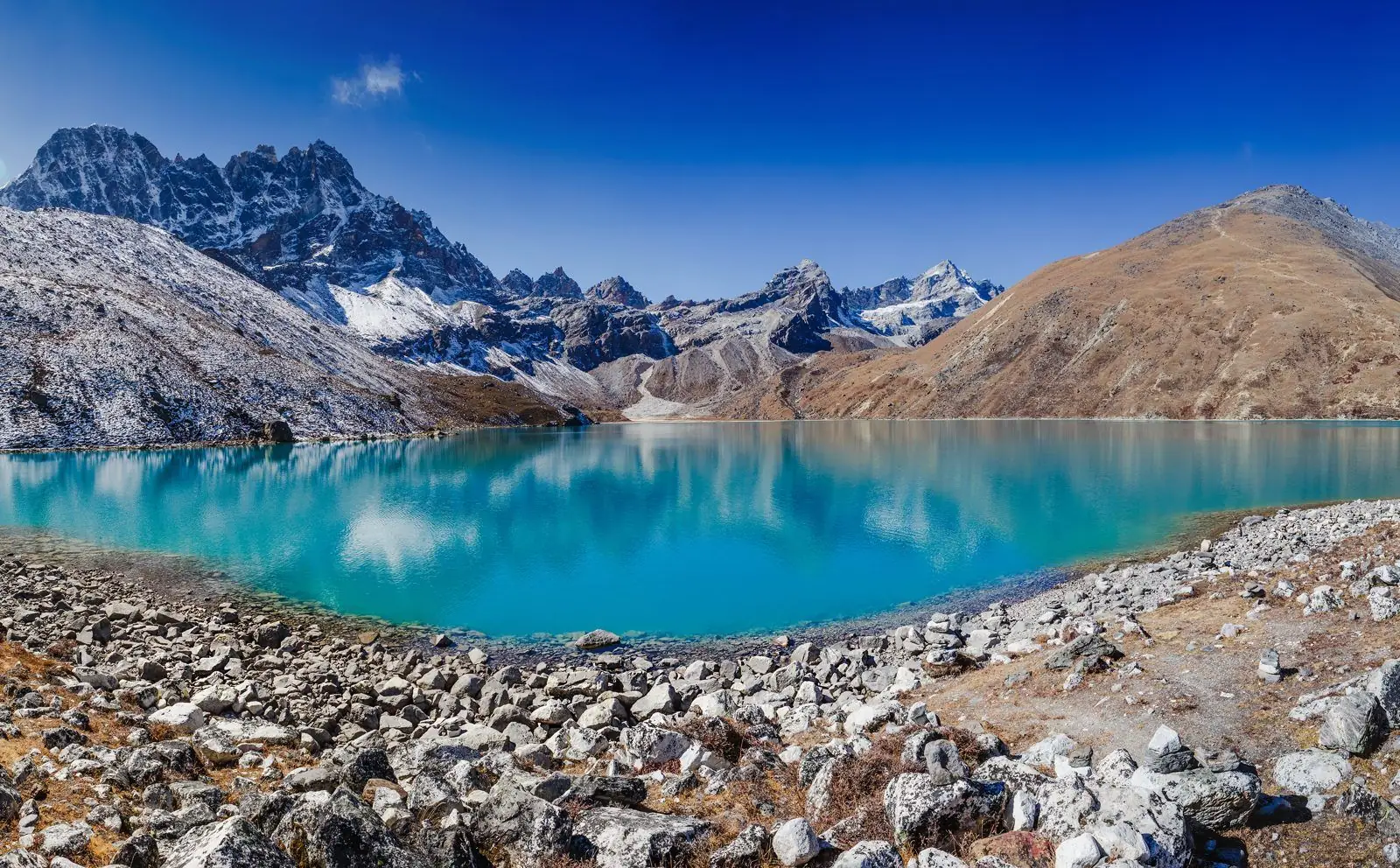
Phoksundo is a moderate trek. The altitude stays near 3,600 m, so altitude sickness is a lower risk than on higher treks, but the days are long and the trail has steep sections. Remoteness and flight delays are the main risks.
Rated easy to moderate, with caveats
Operators generally classify Phoksundo as easy to moderate, and the altitude supports that: the lake is at about 3,600 m, and the high point of the trek is around 3,700 m. That is below the level where altitude sickness becomes common, and most healthy walkers adapt well. The difficulty comes from other factors.
Terrain
The path is rolling, with river crossings, steep ascents and descents, and some sections of narrow cliff trail. In places the trail uses wooden planks and steps set into rock, with a drop beside the path. People who dislike heights should tell their guide beforehand.
Remoteness
There are no roads inside the park, no hospitals within reach and few places to buy replacements for broken gear. Medical help is mainly by helicopter from Juphal or Nepalgunj, and weather may delay it. A good first-aid kit and a guide with training matter more here than on busier routes.
Flights
The two flights are part of the trip's difficulty. The Juphal airstrip handles small aircraft in morning conditions, and delays or cancellations are common. Plan a buffer day at the end, and tell family not to expect a precise arrival time.
Fitness
You should be comfortable walking five to seven hours on rolling mountain terrain, day after day. No prior high-altitude experience is needed.
A realistic day on the trail
Expect to start walking around seven or eight in the morning, take a long lunch stop in a village or by the river, and arrive at your camp or lodge by mid afternoon. Walking days of five to seven hours are the norm, with several short steep sections and many river crossings on wooden bridges. Rain or snowmelt can make the cliff path slippery.
How to prepare
Spend a few weeks walking on uneven ground with a loaded day pack. Practise on stairs and hills. Break in your boots, and bring two pairs of socks. A set of trekking poles makes the downhill sections easier on the knees.
Related
Read the permit and flight guide for logistics.


