




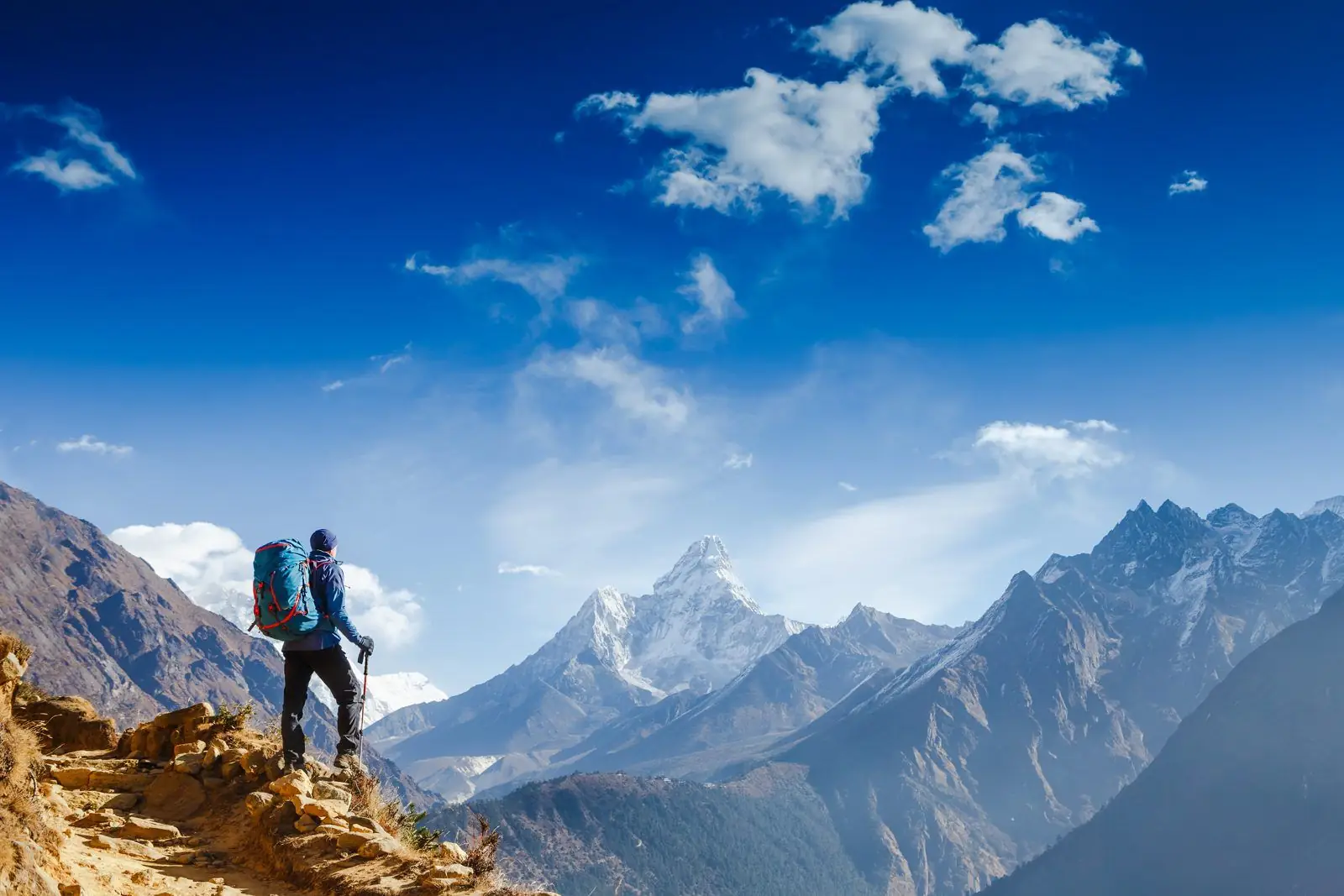
Pikey Peak is a hill and viewpoint at about 4,065 m in the Solukhumbu district. It is known for wide sunrise views of the Himalaya from Kanchenjunga to Everest, and it is a short, quiet trek that suits beginners and anyone short on time.
A viewpoint with an Everest panorama and almost no crowds
Pikey Peak rises to about 4,065 m in the Solukhumbu district, on a green ridge that most visitors never see because they fly straight past it to Lukla. It is known for sunrise views that take in Everest, Lhotse, Makalu, Kangtega, Thamserku and, on very clear days, Dhaulagiri and Manaslu far to the west. Because the trek starts low and the summit is only modestly high, it suits people who want a big mountain panorama without the effort of a base camp trek.
The people and the villages
The surrounding villages are Sherpa. Junbesi, the best known, lies in a broad green valley with a monastery on a hill above it, a lake nearby and a small cheese factory started with Swiss help. Thupten Choling monastery, about an hour from Junbesi, houses a large community of monks and nuns and can be added as a side visit. Families here run most lodges, so the money you spend stays in the valley.
The landscape
The trail climbs through pine and rhododendron forest, with fine bloom in spring, and then enters open grassland and rock near the top. The summit is windy, with prayer flags, a small cairn and a wide view. One detail surprises many walkers: from the lower ridge Everest is hidden, because closer ridges block it, and it is only from the summit area that it appears.
Why it works as a first Himalayan trek
Altitude is moderate, the route is well signed, and the start at Phaplu means you can fly or drive in without a long road section in the middle of the trek. A week is enough for the full loop, and four days is enough for a shortened version. For families, it is a gentle introduction to teahouse trekking.
Where it fits
Pikey connects naturally with the lower Solu trails and with the old Jiri to Lukla route used by the early Everest expeditions. Some travellers walk it on the way to or from the Khumbu. Read the itinerary and the access guide for planning.


