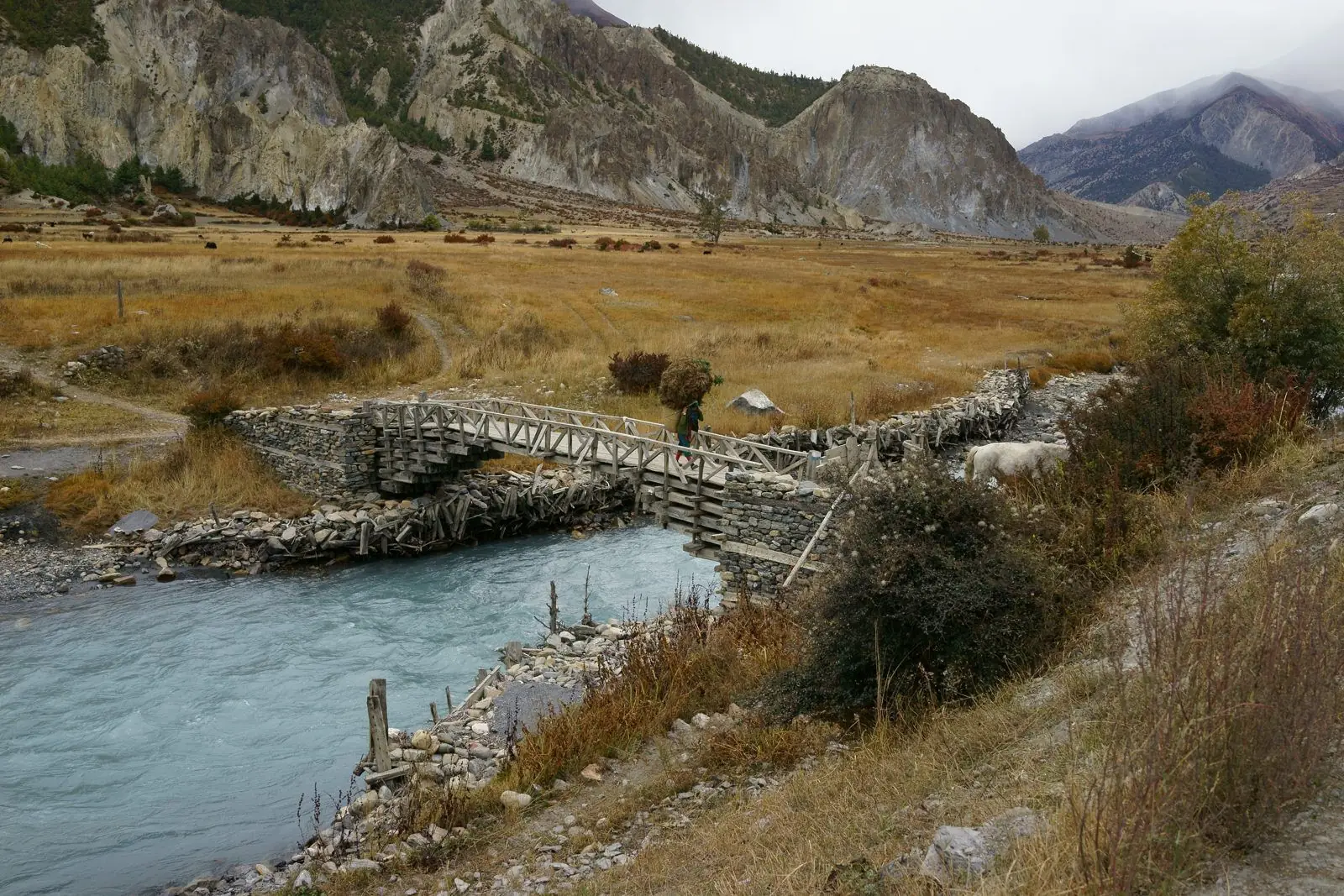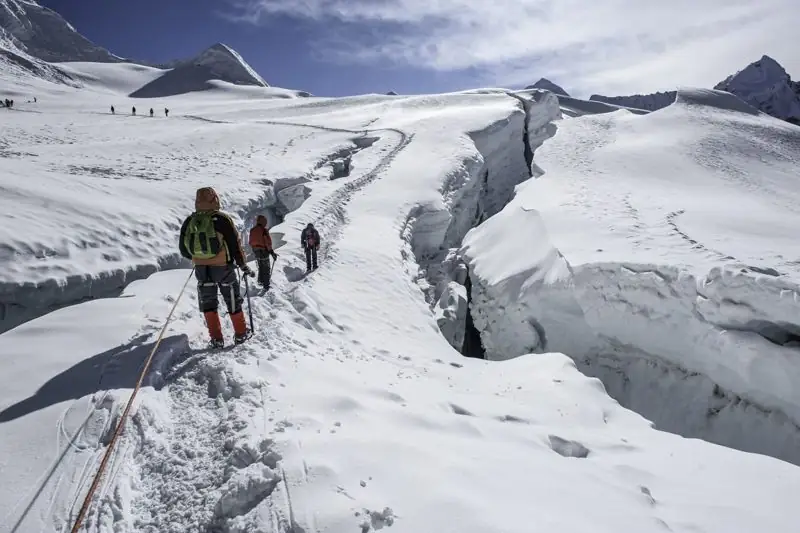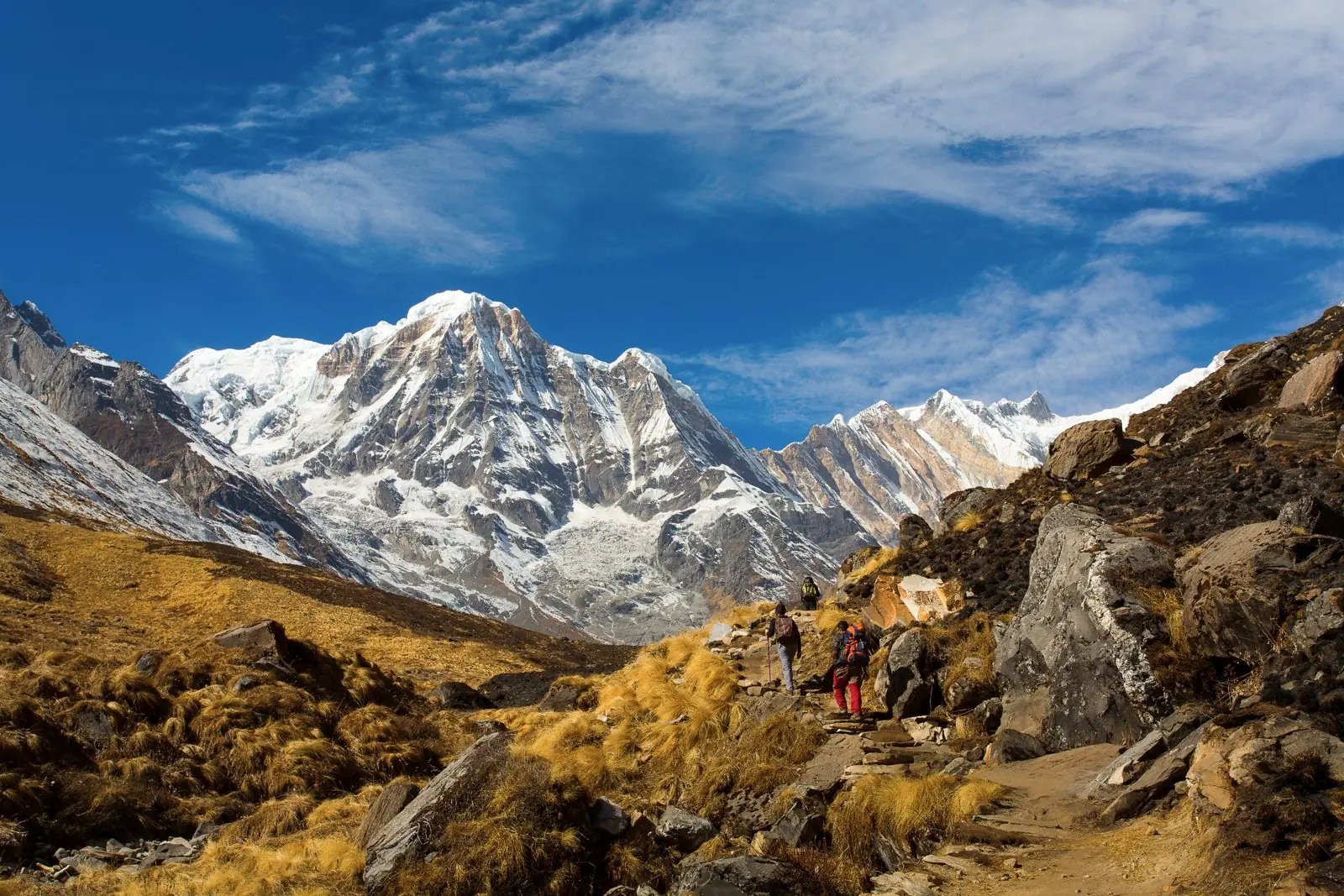
The best seasons for Pisang Peak are spring, from April to May, and autumn, from October to November. These are the windows with the clearest skies, the most stable weather and the best chance of a safe summit. Manang lies in a rain shadow, so even the monsoon is drier here than in much of Nepal, but cloud, snow and short days still affect climbing.
Autumn: October and November
October is the favourite for climbers. The air is clear, the trail is busy and the views are at their best after the monsoon. November is colder and quieter, with sharp light and cold nights. Fresh snow can fall late in the month, so a spare day is useful.
Spring: April and May
Spring brings warmer days and flowering rhododendrons in the lower valley. Snow conditions on the summit ridge can change from early to late season, and afternoon cloud is common. Early spring is still cold, and late spring is warmer but less stable.
Winter and monsoon
Winter, from December to February, is very cold, with snow and strong winds, and some lodges close. Climbing is possible in good weather windows but not recommended for beginners. The monsoon, from June to early September, brings rain on the south side and cloud, and it is a poor time for climbing.
How to choose
- Choose October for the most reliable weather and the busiest trail.
- Choose April or May for warmer days and flowers.
- Choose November for quiet trails, with warmer gear for the cold nights.
Plan a spare day
Wind and fresh snow can delay a summit attempt. A spare day gives you another chance, and many successful climbs happen on the second attempt. Ask your operator how many weather days are built in.