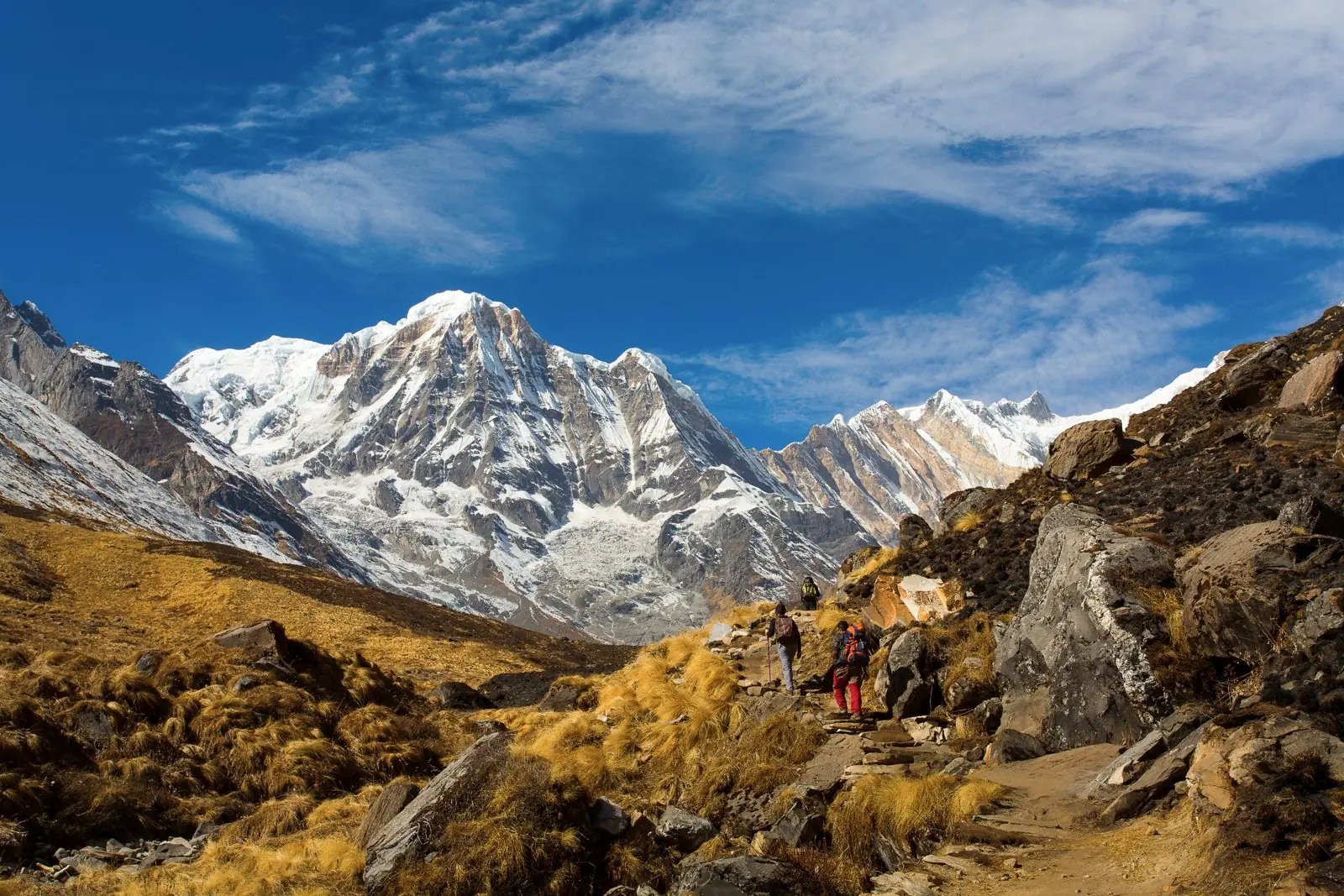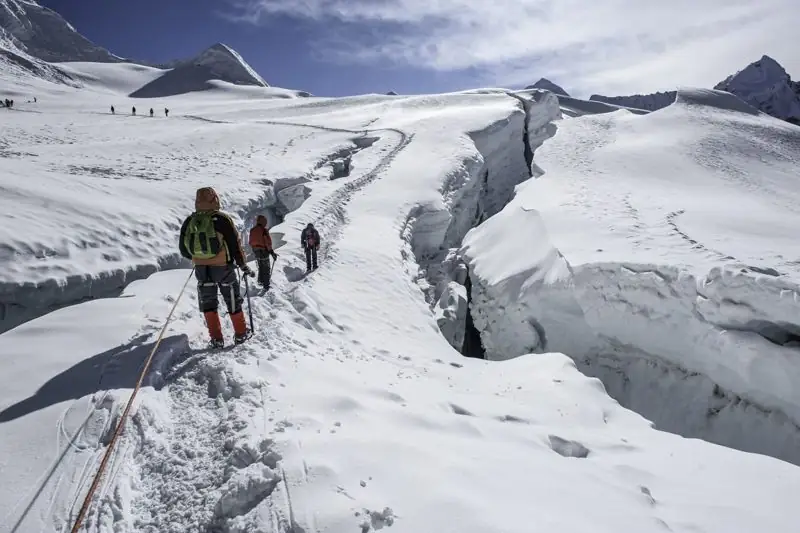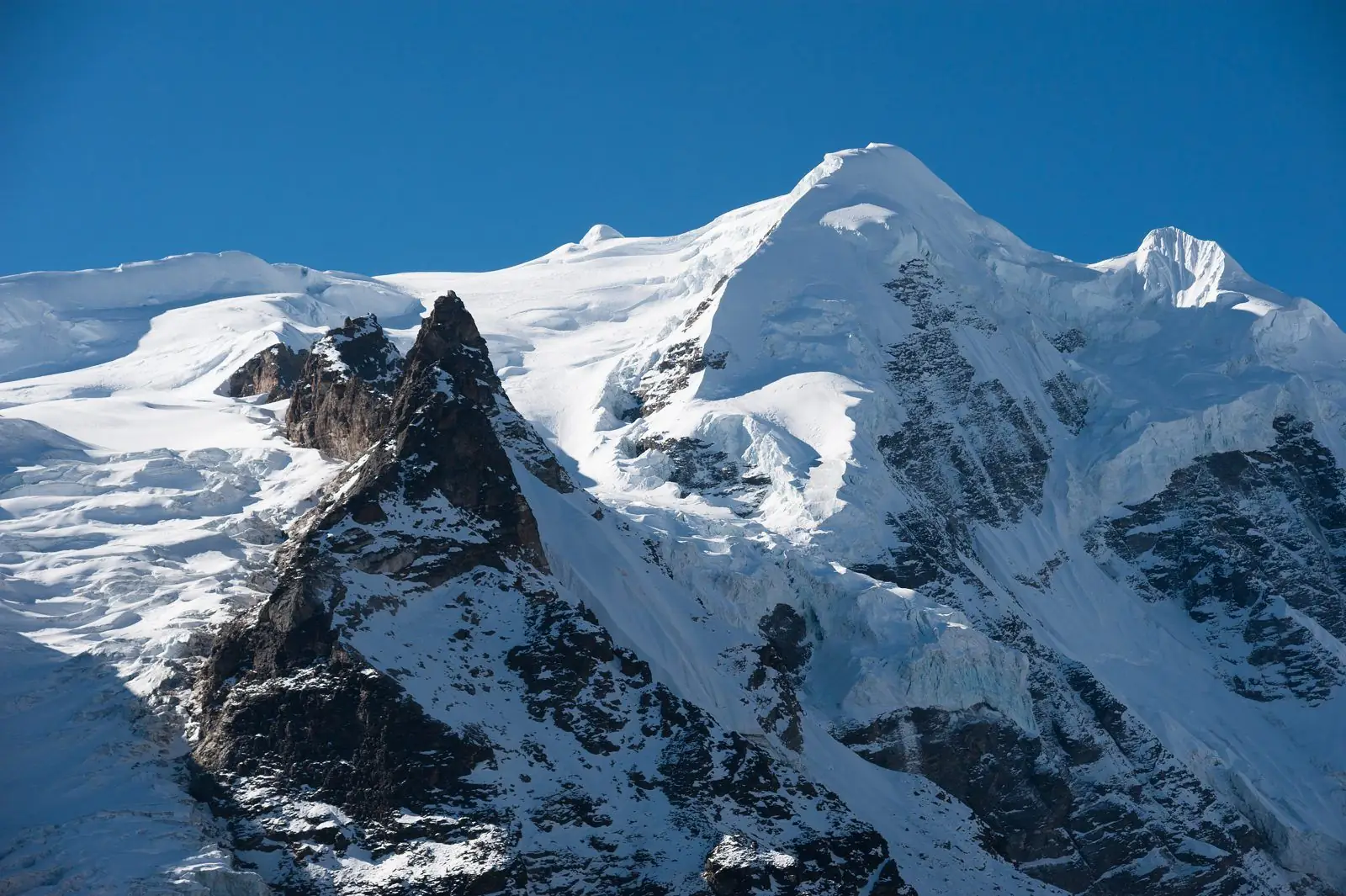
Pisang Peak is often described as one of the more approachable trekking peaks in the Annapurna region, but at about 6,091 m it is still a serious high-altitude climb. The technical difficulty is moderate, and the main challenges are altitude, cold, steepness near the top and the length of summit day. Treat it as a major step up from a teahouse trek.
What is easier
The approach is a classic trek with lodges at each stop, so you can build fitness and acclimatise gradually. The summit route does not need advanced technical skills, and fixed ropes are normally used on the steeper sections. Guides provide the equipment and instruction.
What is hard
- Altitude. The summit is above 6,000 m, where the air is thin and cold.
- Steep sections. The upper ridge includes steep snow and rock sections that need care and rope work.
- The long day. Summit day can last 9 to 12 hours including the descent.
- Cold and wind. Winds and cold on the ridge are strong and tiring.
- Camp life. You sleep in tents at base camp and high camp with simple food.
Skills you need
You do not need previous climbing experience, but you should be comfortable on steep ground and learn to use crampons, an ice axe and an ascender. Practising before you go makes summit day much easier. A short alpine course is ideal.
How fit you need to be
You should be able to hike six to eight hours on consecutive days with a daypack, and enjoy long days. Add strength and stamina work for the legs and core.
Who it suits
Pisang Peak suits fit trekkers with some altitude experience who want a first 6,000 m peak. If you have never been above 4,000 m, consider a lower peak or a high trek first. Check with a doctor if you have any heart or lung condition.