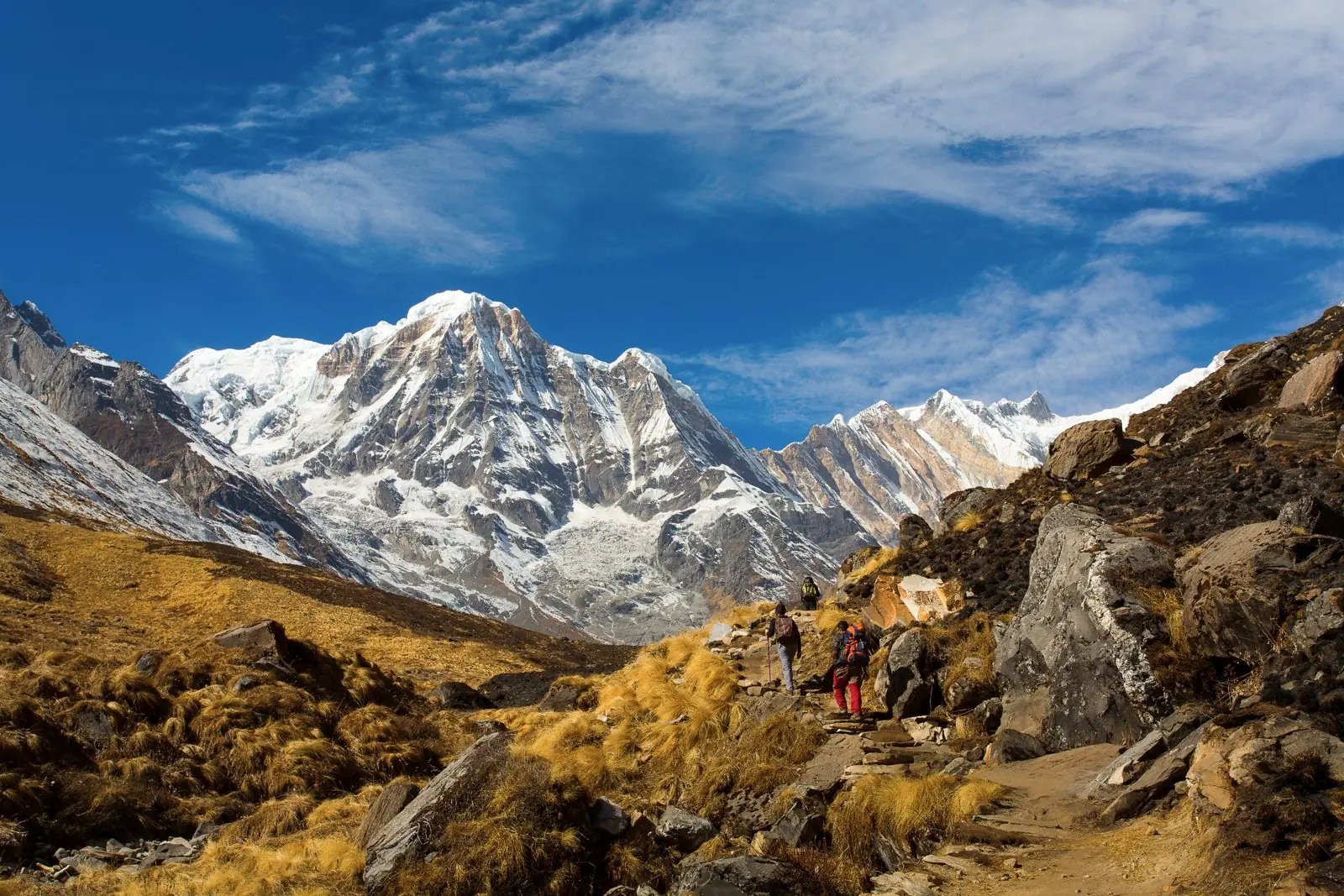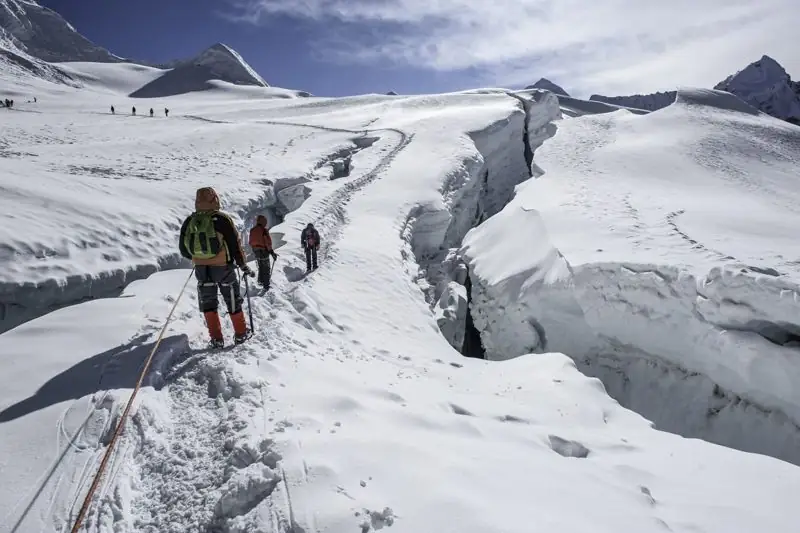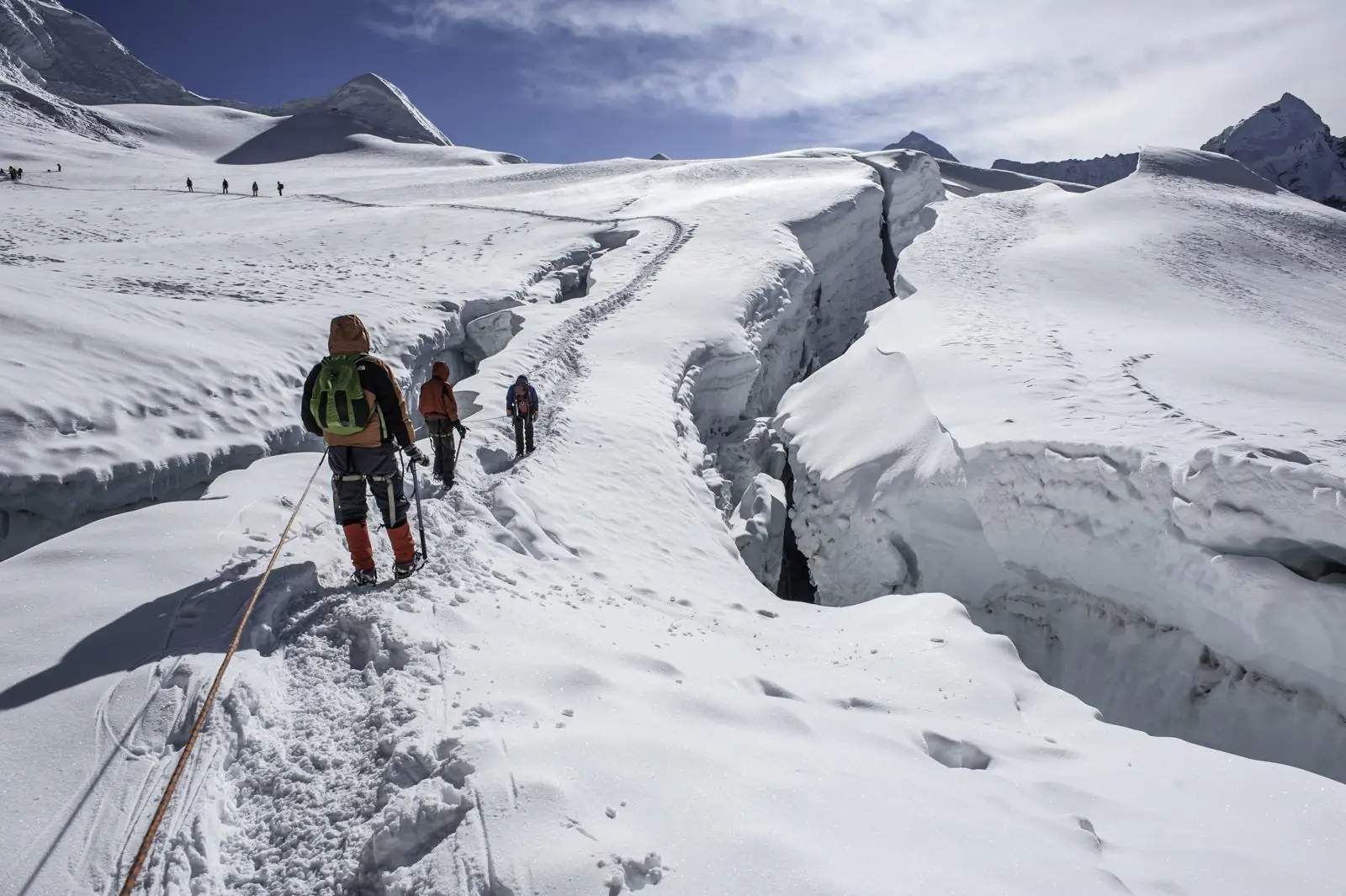
Above Pisang village the trek turns into a tented climbing trip. You spend a night or two at base camp and at a high camp, with a crew who set up tents and cook meals. Camp life is basic but friendly, and it is where you prepare for the summit.
Where the camps are
Base camp is at about 4,500 m on a meadow above the forest, and the high camp is at about 5,000 m on rock and snow below the summit ridge. Operators quote slightly different heights depending on the exact campsite and season. Your guide will explain what is planned and why.
Tents and sleeping
You usually share a tent with another climber, with a foam mat and your own sleeping bag. Nights are cold, and a bag rated to about minus 15 to minus 20 degrees is wise. A hot water bottle, a warm hat and dry socks help. Many people sleep poorly at altitude, which is normal.
Food and water
The crew serves hot meals in a dining tent. Typical food includes porridge, eggs, pasta, rice, soup and tea. Drink plenty of water and warm fluids, because dry air and altitude cause dehydration. Staff boil or treat the water.
Skills practice
At camp, guides teach or refresh crampon use, ice axe handling, ascender use and moving on a rope. Practise until it feels natural, because fumbling with gear in the cold is tiring.
Toilets and hygiene
Camps normally have a toilet tent. Use it and carry out waste where requested. Use wipes and sanitiser, and keep your tent tidy.
Why some plans skip high camp
A high camp shortens summit day but is colder, more basic and needs gear carried up. Some operators prefer a base-camp-only plan with a longer summit day. Ask which one is planned and why.
Communication
Signal is patchy. Your guide may carry a radio or satellite phone for safety. Ask how emergencies and weather forecasts are handled.